Orthopedic Surgery
Small Animal Hospital
Providing expert care for your pet's musculoskeletal system with our advanced Orthopedic Surgery services.
Request an appointment Get DirectionsWe are dedicated to improving the mobility and quality of life for pets with orthopedic conditions. We offer comprehensive Orthopedic Surgery services, aimed at diagnosing and treating diseases affecting the bones, joints, ligaments, tendons, and muscles in dogs and cats.
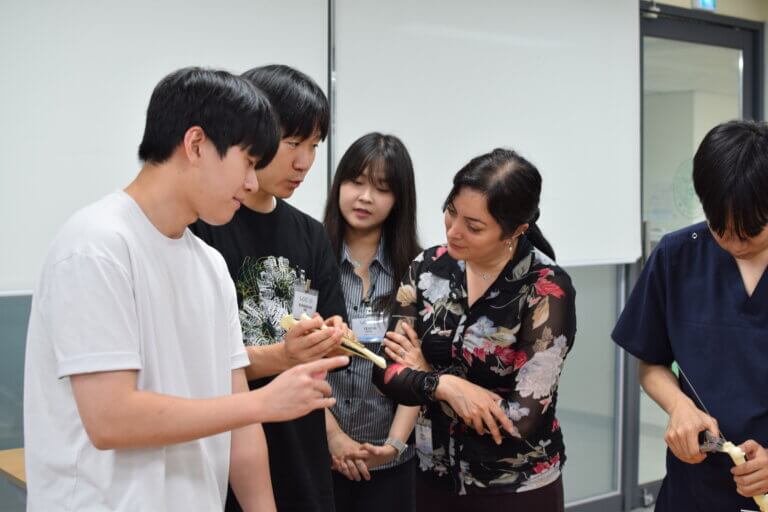
Our experienced team of surgeons is proficient in a wide range of procedures, from simple fracture repairs to complex joint surgeries. They're equipped with state-of-the-art instruments and technology to ensure that your pet receives the highest standard of care.
Wonderful experience. The doctor is so compassionate and explains everything in great detail.
Kim S.
Request an Appointment
Whether you're coming to us directly or through a referral from your veterinarian, we're here to support the next step in your pet's care. Our team is ready to help you schedule the right services and answer any questions you may have.
To request an appointment, please call or text us at 765-494-1107.
If your pet is experiencing an emergency, call our 24/7 Emergency Line at 765-494-1107.
Common Conditions
We are able to address a complete range of orthopedic conditions, including:
- Trauma: Broken bones and dislocated joints can occur due to accidents and often require surgical intervention.
- Cranial cruciate ligament disease: This is a common knee injury in dogs that causes pain and lameness.
- Hip dysplasia: A genetic condition where the hip joint does not develop properly, leading to arthritis.
- Elbow dysplasia: An abnormal development of the elbow joint, often seen in large breed dogs.
If your pet shows signs of pain (limping, difficulty moving, or changes in daily activity), it's essential to request an appointment with us.
Common Procedures
Our Orthopedic Surgery service routinely performs a wide range of procedures including:
- Fracture repair: This involves the use of a variety of different devices – interlocking nails, external skeletal fixators, and plates and screws to stabilize broken bones.
- Cranial cruciate ligament repair: While the tibial plateau leveling osteotomy is the most common procedure we perform for this condition, several surgical techniques can be used to stabilize the knee after a cranial cruciate ligament tear.
- Hip replacement: In severe cases of hip dysplasia, a total hip replacement can dramatically improve a pet's quality of life.
- Knee replacement: We are one of only a handful of places in the U.S. where knee replacement can be performed in dogs.
- Ankle replacement: We are one of only a handful of places in the U.S. where ankle replacement can be performed in dogs.
- Arthroscopy: This minimally invasive technique allows us to diagnose and treat joint problems through small incisions.
- Angular limb deformity correction: We are able to perform correction of complex limb deformities using advanced imaging techniques (CT), 3-D modeling and creation of custom (patient-specific) guides and advanced surgical techniques.
To discuss these procedures in more detail, please request an appointment with us.
Special Equipment/Technology
We employ cutting-edge technology for our Orthopedic Surgery services:
- Orthopedic surgical instruments: These precision tools assist in a variety of orthopedic procedures.
- Bone plates and screws: Used to stabilize fractures or corrective osteotomies during the healing process.
- Interlocking nails: used to stabilize fractures or corrective osteotomies during the healing process.
- External skeletal fixators: used to stabilize fractures or corrective osteotomies during the healing process.
- Arthroscopy equipment: Enables minimally invasive diagnosis and treatment of joint problems.
Our advanced technology combined with our experienced team ensures that your pet receives the best care. To learn more, request an appointment with us.
Common Questions
What is the recovery process like after orthopedic surgery?
Recovery times can vary depending on the procedure, but all pets will need rest and limited activity. Physical therapy may also be recommended.
Will my pet be in pain after surgery?
We use a variety of pain management techniques to minimize your pet’s discomfort. This can include medications, local anesthetics, nerve blocks, and other methods.
How can I prevent orthopedic problems in my pet?
Regular exercise, a healthy diet, and avoiding obesity can help maintain good orthopedic health. Some conditions, however, are genetic and may not be preventable.
For more information on our Orthopedic Surgery services, request an appointment with us.
At-Home Tips
Post-surgical care at home may involve:
- Rest: Ensure your pet has a quiet, comfortable place to recover.
- Limited activity: To protect the surgical site, restrict your pet's activity as advised by the veterinarian.
- Medication: Ensure your pet receives all prescribed medications to manage pain and prevent infection.
We will provide you with specific aftercare instructions following any surgical procedure. If you have any concerns during your pet's recovery, don't hesitate to request an appointment with us.
Orthopedic Surgery Team
Clinicians
Technicians
- Jill Marie Huenemann, RVT
- Emily A. Matson, BS, RVT
- Marcella J. Ruhana, BS, RVT
- Derek A. Simms, BS, RVT
- Courtney B. White, RVT
Residents
- Catarina Bianchi, DVM
- Kristin Reichert, DVM
- Walker Smith, DVM