Equine Pregnancy Ultrasound and High-Risk Pregnancy Care
The Equine Theriogenology Service at the Purdue University Equine Hospital provides pregnancy ultrasound, pregnancy monitoring, twin management, twin reduction, high-risk pregnancy hospitalization, and foaling out for high-risk pregnancies.
Owners and referring veterinarians may contact the service for early pregnancy detection, pregnancy monitoring, concern about twins, or additional care for mares with high-risk pregnancies.
Call us at 765-494-8548 to discuss pregnancy monitoring or request an appointment.
Pregnancy ultrasound for mares
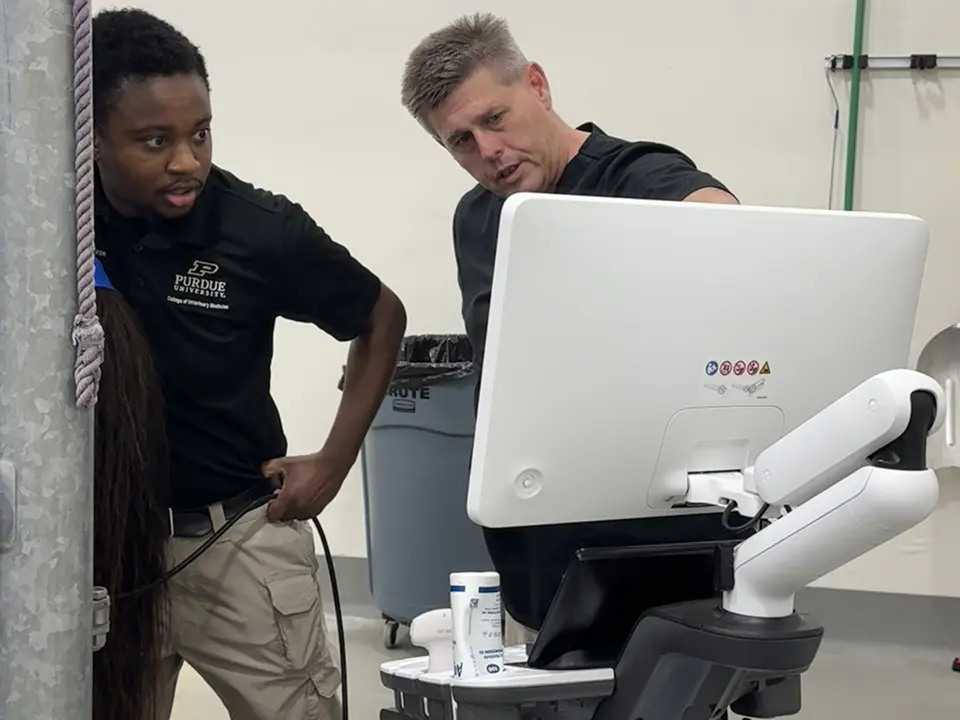
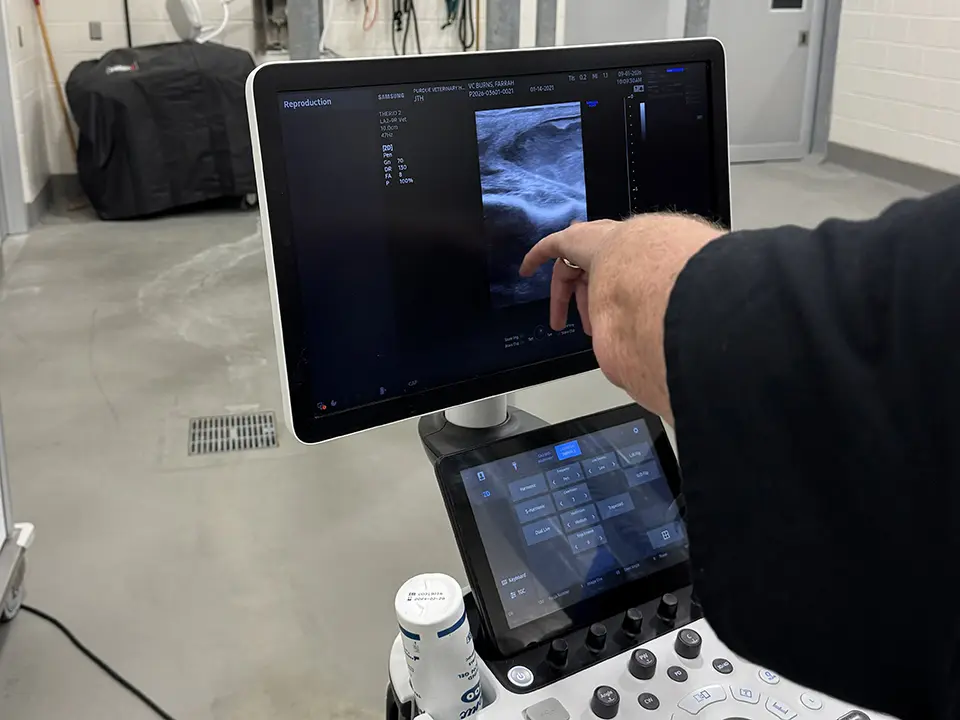
Ultrasound is an important tool for confirming and monitoring pregnancy in mares. Pregnancy can be detected by ultrasound as early as 11 days after ovulation, and follow-up examinations may be recommended to monitor the pregnancy and identify concerns.
The Equine Theriogenology Service provides pregnancy ultrasound as part of reproductive care for mares, including early pregnancy detection, pregnancy monitoring, and evaluation when a pregnancy concern has been identified.
Because timing matters, contact the service early if your mare has been bred, if you are coordinating pregnancy checks, or if your veterinarian recommends additional monitoring.
Reproductive evaluation
Breeding soundness examination
Cycle monitoring
Artificial insemination
Breeding management using cooled or frozen semen
Pregnancy ultrasound
Pregnancy monitoring
Follow-up planning after breeding
High-risk pregnancy hospitalization
Some mares need hospital-based monitoring or care during pregnancy. The Equine Theriogenology Service in conjunction with Equine Internal Medicine provides high-risk pregnancy hospitalization at the Purdue University Equine Hospital.
High-risk pregnancy care may be recommended when a mare has a pregnancy complication, history of reproductive concern, or condition that requires additional monitoring. The service can work with owners and referring veterinarians to determine what information is needed and whether hospitalization may be appropriate.
Foaling out for high-risk pregnancies
The Equine Theriogenology Service provides foaling out for high-risk pregnancies.
This service is intended for mares that need additional monitoring or hospital-based care because of pregnancy risk. It is not a routine foaling-out service for uncomplicated pregnancies or for convivence.
If your mare has a high-risk pregnancy or your veterinarian recommends hospital-based foaling support, call us at 765-494-8548 to discuss next steps.
Pregnancy complications
Pregnancy complications can include concerns such as placentitis, premature placental separation, dystocia, retained placenta, or other conditions that may affect the mare or foal.
If you are concerned about your mare’s pregnancy, contact your veterinarian or an emergency clinic right away. Your veterinarian can help determine whether referral to the Purdue University Equine Hospital is appropriate.
For urgent needs, call 765-494-8548.
What information to have ready
When you contact the Equine Theriogenology Service, helpful information may include:
- Mare’s age
- Breed and use
- Breeding date or ovulation date, if known
- Date of last pregnancy ultrasound, if applicable
- Current stage of pregnancy, if known
- Prior pregnancy history
- History of pregnancy loss, if applicable
- Current pregnancy concern
- Records from your veterinarian
- Referring veterinarian contact information
- Any medications or treatments already prescribed by your veterinarian
You do not need to have every detail before contacting the service. The team can help identify what information may be needed.
When to contact the service
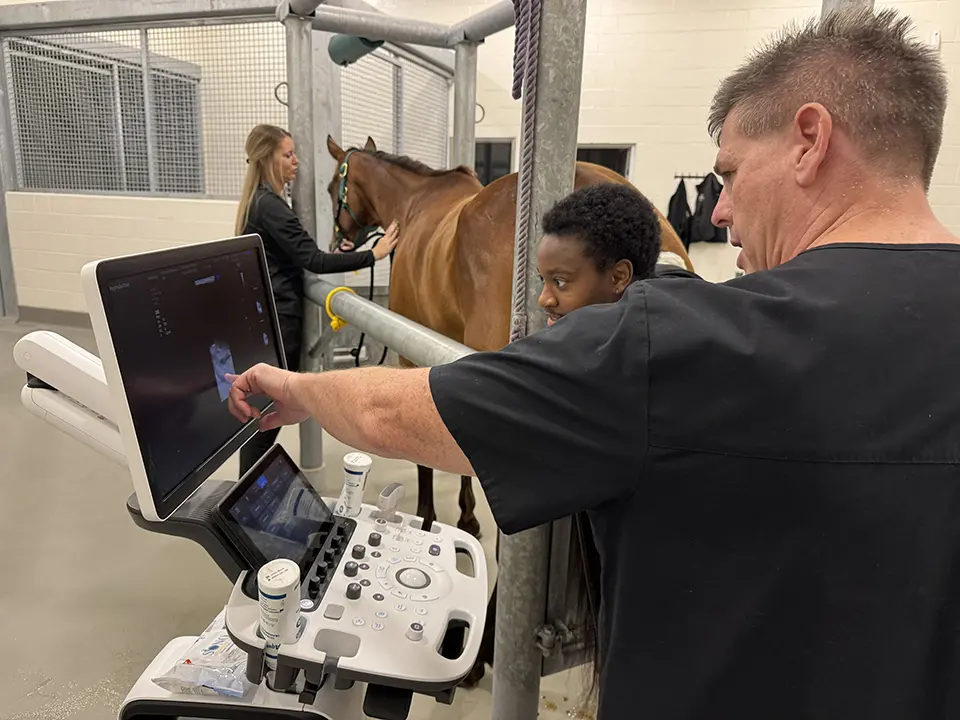
Contact the Equine Theriogenology Service for pregnancy confirmation, monitoring, or concerns that may require additional reproductive care.
765-494-8548Scheduling pregnancy ultrasound
Scheduling an ultrasound after breeding or confirming an early pregnancy.
Monitoring pregnancy
Following your mare's pregnancy and determining whether additional monitoring may be needed.
Managing a twin pregnancy
Concerned about a twin pregnancy or seeking twin management or twin reduction.
Managing a high-risk pregnancy
Caring for a mare with a high-risk pregnancy that may require additional monitoring or planning.
Planning for foaling
Preparing for foaling support when a mare has a high-risk pregnancy or requires additional care.
Coordinating veterinary care
Working with a referring veterinarian on pregnancy monitoring, management, or additional reproductive care.
Not sure whether your mare needs additional monitoring? Call us at 765-494-8548 to discuss your mare and determine the next step.
Emergency care: If you think your mare or foal is experiencing an emergency, contact your veterinarian or an emergency clinic right away.
What to expect
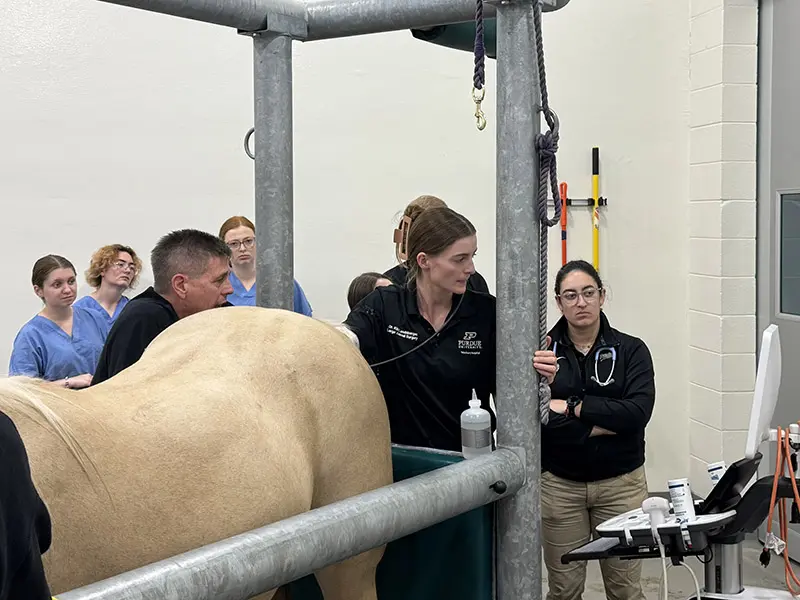
When you contact the Equine Theriogenology Service about pregnancy care, the team may ask about the mare’s breeding history, pregnancy status, prior ultrasound findings, current concerns, and records from your veterinarian.
Depending on the case, the team may recommend an appointment at the Purdue University Equine Hospital for ultrasound, monitoring, additional evaluation, or hospitalization.
Pregnancy care can be time-sensitive, especially when twin pregnancy or high-risk concerns are involved. Early communication can help the team plan the next step.
Theriogenology services
We offer a wide range of equine reproductive services.
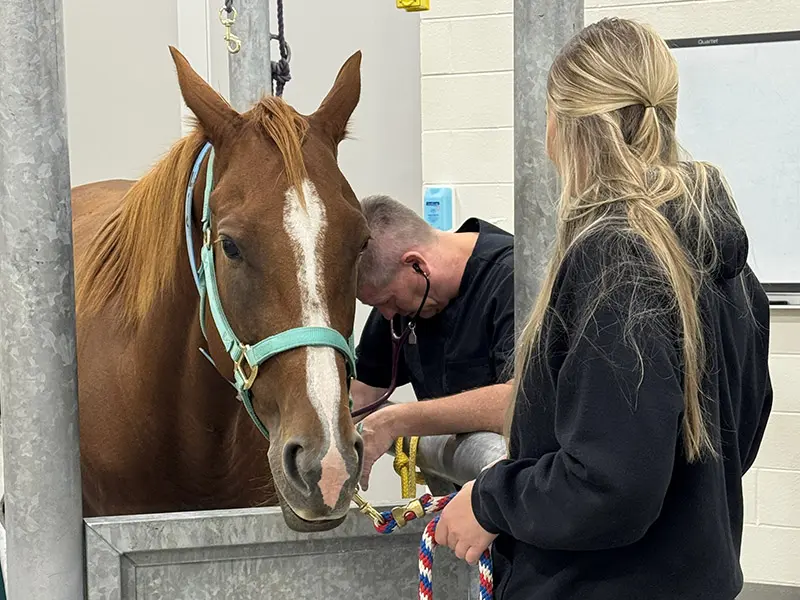
Mare Breeding Management and Artificial Insemination
For owners preparing to breed a mare using cooled or frozen semen.
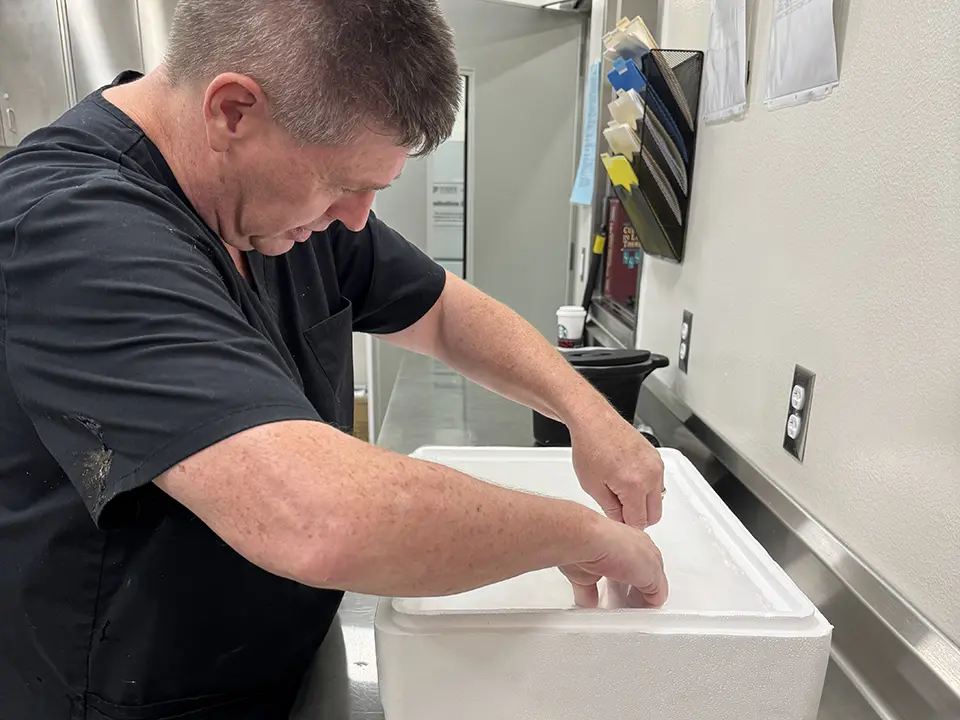
Equine Embryo Transfer and Embryo Freezing
For owners considering embryo transfer or embryo freezing as part of a breeding plan.
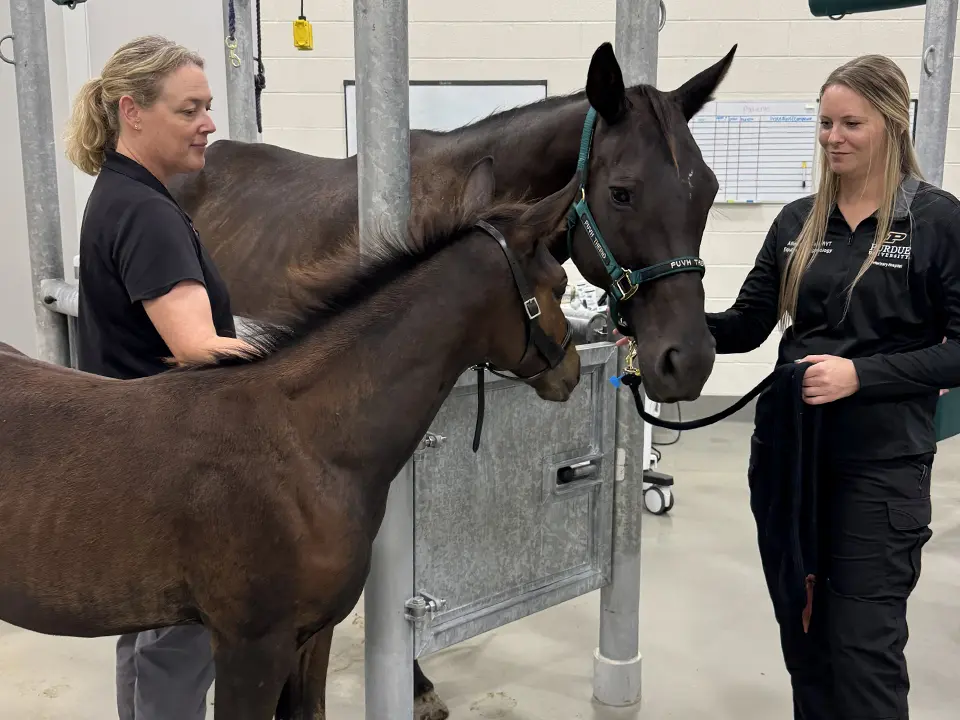
Problem Mares and Equine Infertility Evaluation
For mares that have not conceived, have a history of pregnancy loss, or need additional reproductive evaluation.
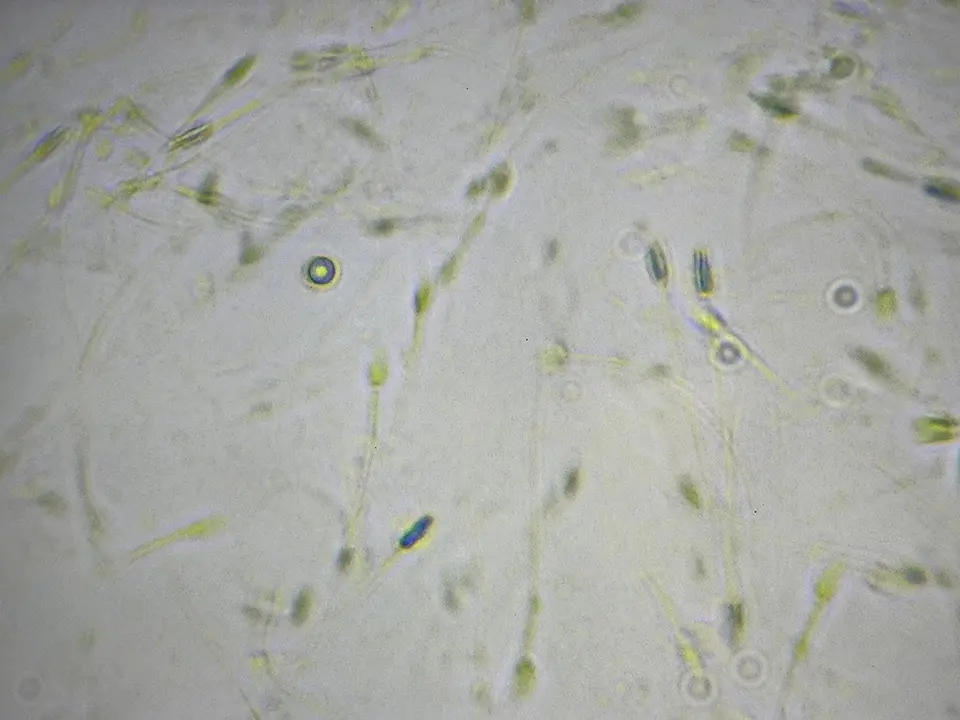
Stallion Semen Collection, Freezing, and Storage
For semen collection, semen freezing, semen storage, phantom training, and stallion fertility evaluation.

Pregnancy Ultrasound and High-Risk Pregnancy Care
For pregnancy detection, pregnancy monitoring, twin management, and high-risk pregnancy care.
Common questions
A veterinarian may contact the Equine Theriogenology Service for pregnancy monitoring, twin management, high-risk pregnancy care, foaling support for high-risk pregnancies, or other reproductive concerns that may benefit from hospital-based evaluation.
Request an appointment
The Equine Theriogenology Service at the Purdue University Equine Hospital helps owners and referring veterinarians with pregnancy ultrasound, pregnancy monitoring, twin management, high-risk pregnancy hospitalization, and foaling out for high-risk pregnancies.
Call us at 765-494-8548 to request an appointment or discuss pregnancy care needs.