Mare Breeding Management and Artificial Insemination
Breeding a mare takes planning, timing, and careful reproductive monitoring. The Equine Theriogenology Service at the Purdue University Equine Hospital provides mare breeding management and artificial insemination using cooled or frozen semen.
Owners often contact the service before breeding season, before ordering semen, or after a mare has not conceived during a previous cycle. Early planning helps the team understand the mare’s history, breeding goals, semen source, and timing needs.
Call us at 765-494-8548 to discuss mare breeding management or request an appointment.
How Purdue helps with mare breeding management
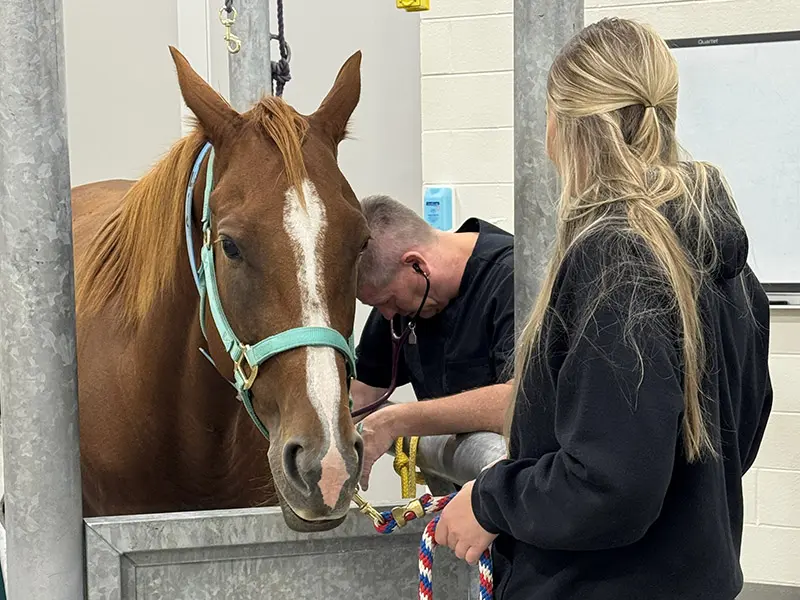
The Equine Theriogenology Service helps owners and referring veterinarians plan and manage the breeding process for mares.
The service also works with mares that need additional reproductive evaluation before or during breeding, including mares with a history of failed breeding attempts, pregnancy loss, or suspected reproductive tract concerns.
Reproductive evaluation
Breeding soundness examination
Cycle monitoring
Artificial insemination
Breeding management using cooled or frozen semen
Pregnancy ultrasound
Pregnancy monitoring
Follow-up planning after breeding
Artificial insemination for horses
Artificial insemination allows a mare to be bred using collected semen rather than live cover. The Equine Theriogenology Service provides artificial insemination as part of mare breeding management, including cases involving cooled or frozen semen.
Timing is one of the most important parts of artificial insemination. Mares must be monitored so the breeding plan can be coordinated with ovulation, semen arrival, semen handling, and the mare’s reproductive status.
Because each mare and breeding plan is different, the service works with owners to determine what information is needed and what steps should happen next.
Cooled and frozen semen
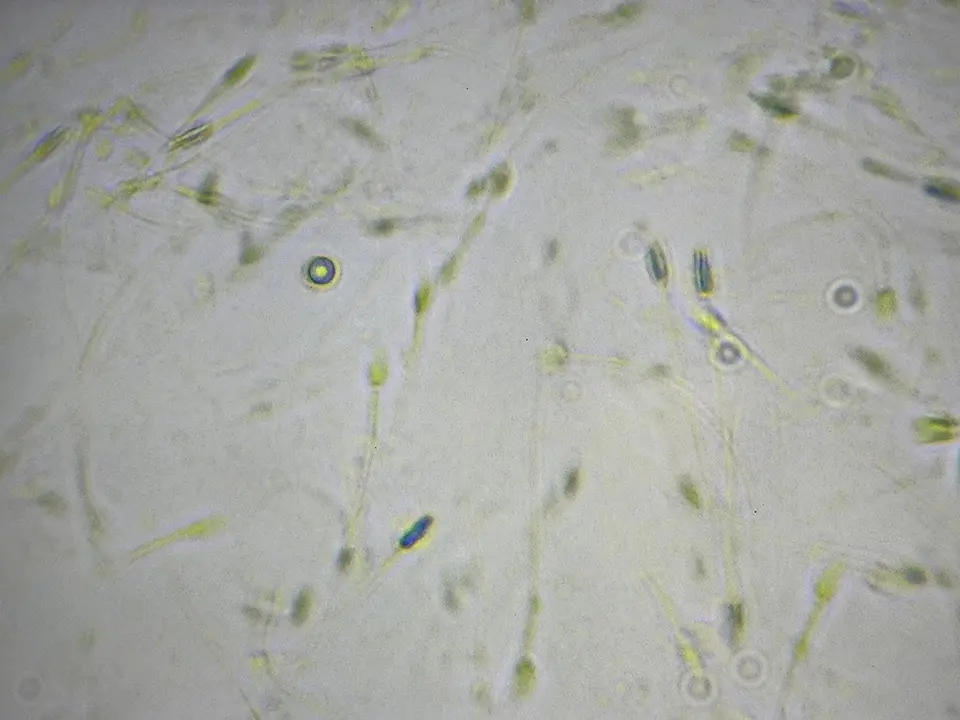
Cooled and frozen semen can help owners access stallions that are not physically present at the same location as the mare. Each semen type requires planning.
Cooled semen is typically shipped for use within a shorter time window. Frozen semen can be stored and used later, but it requires careful timing and handling.
If you are planning to use cooled or frozen semen, contact the Equine Theriogenology Service before ordering semen when possible. Early communication can help the team plan for timing, shipment, monitoring, and appointment needs.
Why timing and monitoring matter
Many owners are surprised by how much timing matters in horse breeding. Reproductive medications may be part of a breeding plan, but they do not replace observation, ultrasound monitoring, technical skill, and veterinary decision-making.
The goal of breeding management is to understand where the mare is in her cycle, coordinate the breeding plan with ovulation, and respond to the mare’s individual reproductive needs.
Contact the service early if you are preparing for breeding season, using shipped semen, or working with a mare that has had difficulty conceiving.
What to know before ordering semen
Before ordering cooled or frozen semen, it may help to contact the Equine Theriogenology Service to discuss timing and logistics.
Helpful information may include:
- Mare’s age
- Breed and use
- Previous breeding history
- Previous pregnancy history
- Recent reproductive examinations, if available
- Planned stallion
- Type of semen being used
- Expected shipment timing, if known
- Any prior difficulty conceiving or maintaining pregnancy
- Referring veterinarian information, if applicable
If you do not have all of this information yet, the team can help you understand what may be needed.
When to contact the service
Reach out when you begin planning your mare's reproductive care. Early coordination can help the team prepare for timing, semen shipment, monitoring, and other needs.
765-494-8548Planning to breed
Preparing to breed your mare this season or deciding when reproductive monitoring should begin.
Using shipped semen
Preparing to use cooled or frozen semen or coordinating semen shipment and arrival.
Addressing fertility concerns
Breeding a mare that has not conceived in a previous cycle or has experienced prior pregnancy loss.
Considering advanced options
Exploring embryo transfer or another reproductive approach that requires additional planning.
Coordinating veterinary care
Working with a referring veterinarian to develop or coordinate a reproductive plan.
Not sure what comes next
Unsure whether your mare needs an appointment or when you should begin the process.
Not sure where to start? Call us at 765-494-8548 to discuss your mare and determine the next step.
What to expect
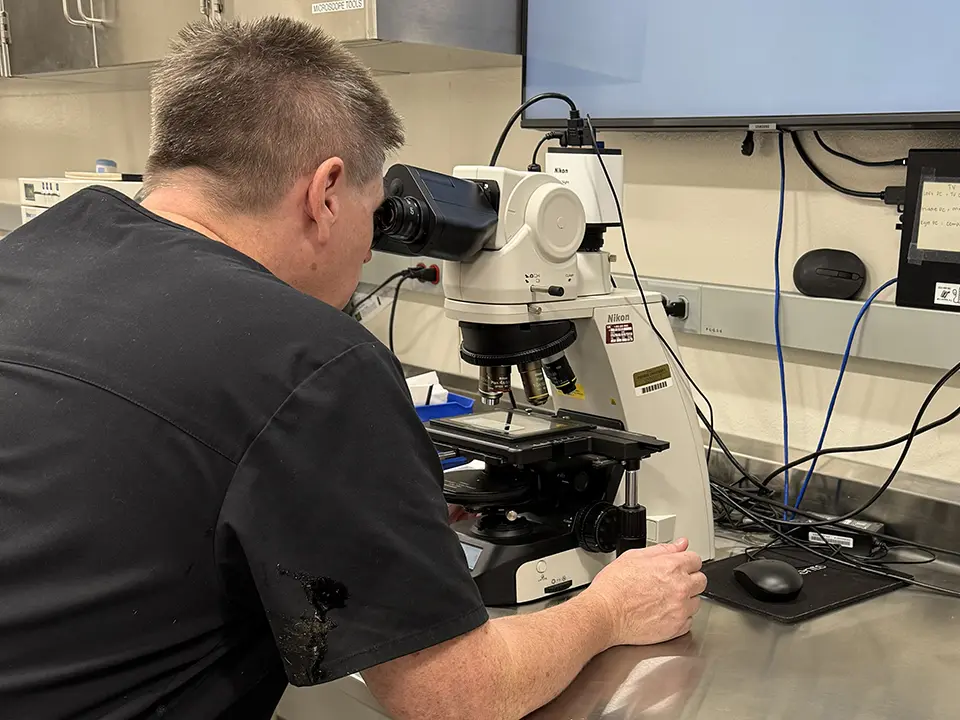
When you contact the Equine Theriogenology Service, the team may ask about your mare’s reproductive history, breeding goals, semen source, prior breeding attempts, and any records from your veterinarian.
Depending on the case, the team may recommend an appointment at the Purdue University Equine Hospital. Breeding management may involve reproductive examination, ultrasound monitoring, timing recommendations, artificial insemination, and follow-up pregnancy evaluation.
Because breeding work can be time-sensitive, early contact is helpful, especially when cooled or frozen semen is involved.
Theriogenology services
We offer a wide range of equine reproductive services.

Mare Breeding Management and Artificial Insemination
For owners preparing to breed a mare using cooled or frozen semen.
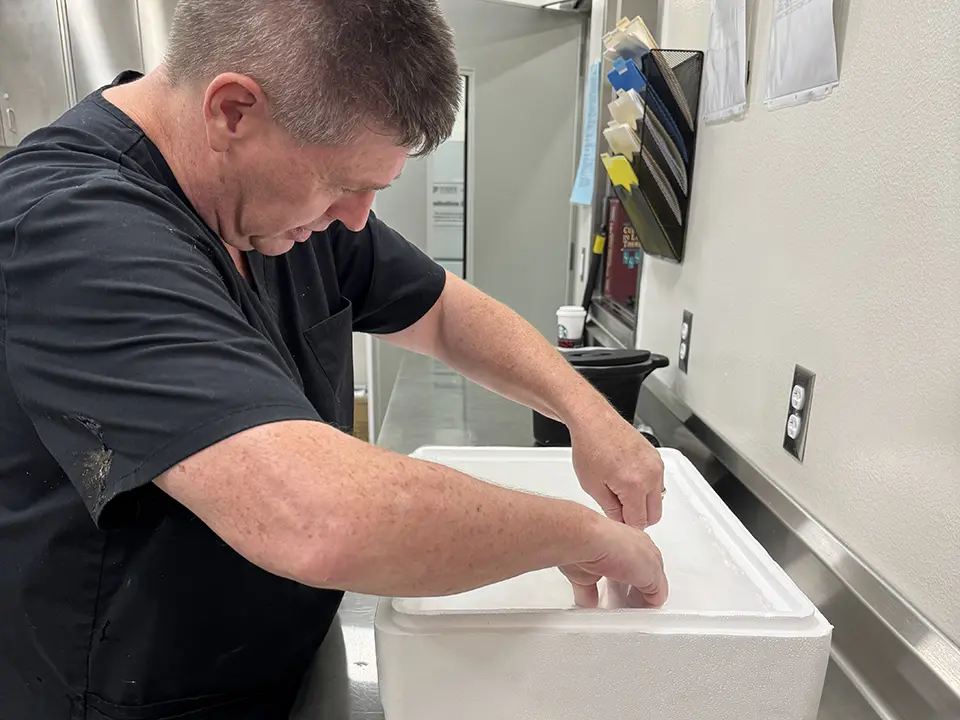
Equine Embryo Transfer and Embryo Freezing
For owners considering embryo transfer or embryo freezing as part of a breeding plan.
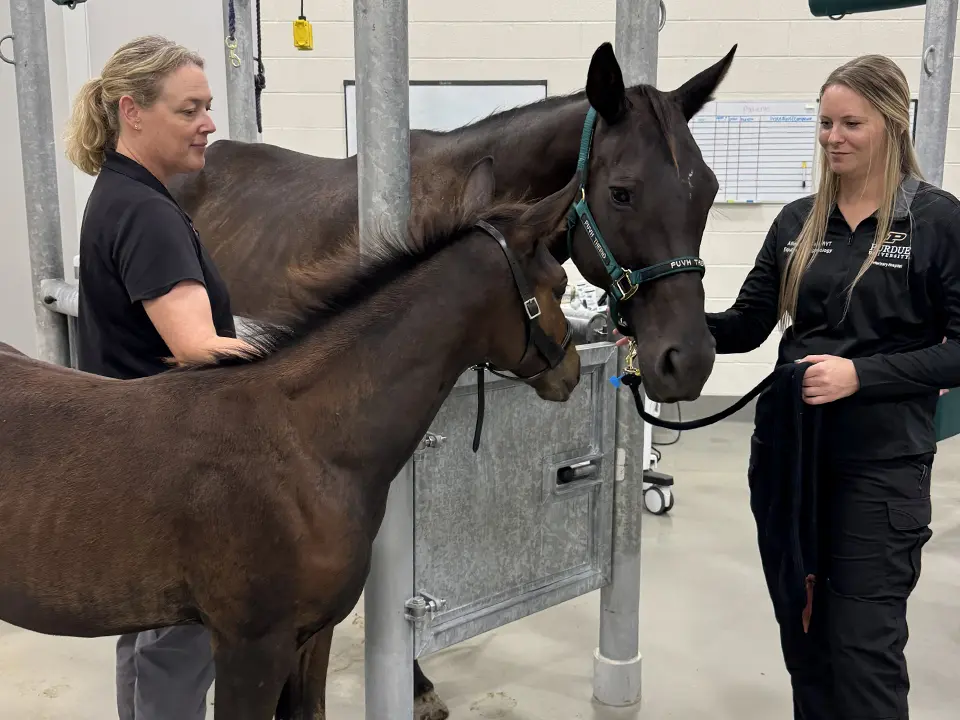
Problem Mares and Equine Infertility Evaluation
For mares that have not conceived, have a history of pregnancy loss, or need additional reproductive evaluation.

Stallion Semen Collection, Freezing, and Storage
For semen collection, semen freezing, semen storage, phantom training, and stallion fertility evaluation.
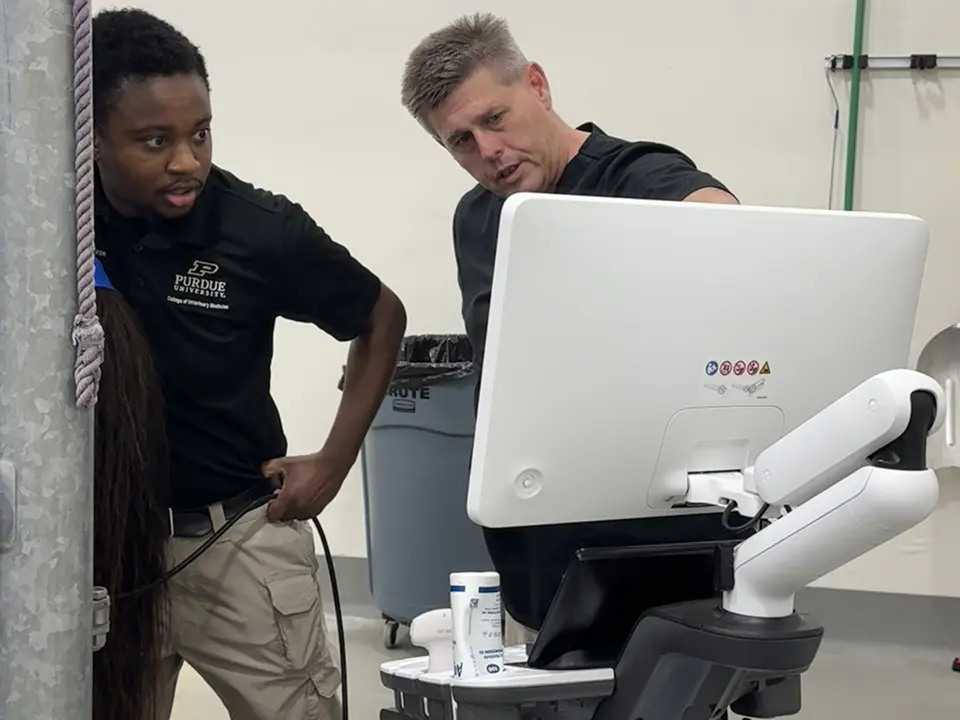
Pregnancy Ultrasound and High-Risk Pregnancy Care
For pregnancy detection, pregnancy monitoring, twin management, and high-risk pregnancy care.
Common questions
Request an appointment
The Equine Theriogenology Service at the Purdue University Equine Hospital helps owners and referring veterinarians plan and manage mare breeding.
Call us at 765-494-8548 to request an appointment or discuss breeding season planning.