
Careers in Farm Animal Medicine
Medicine for individual animals to entire operations.
Farm animal veterinarians care for individual animals while also helping manage the health of herds, farms, and livestock operations. The work brings together medicine, population health, agriculture, business, biosecurity, and public health. It also requires practical judgment, strong communication, and an understanding of the people and industries that depend on healthy animals.
See what the work involves Apply to be a Purdue DVM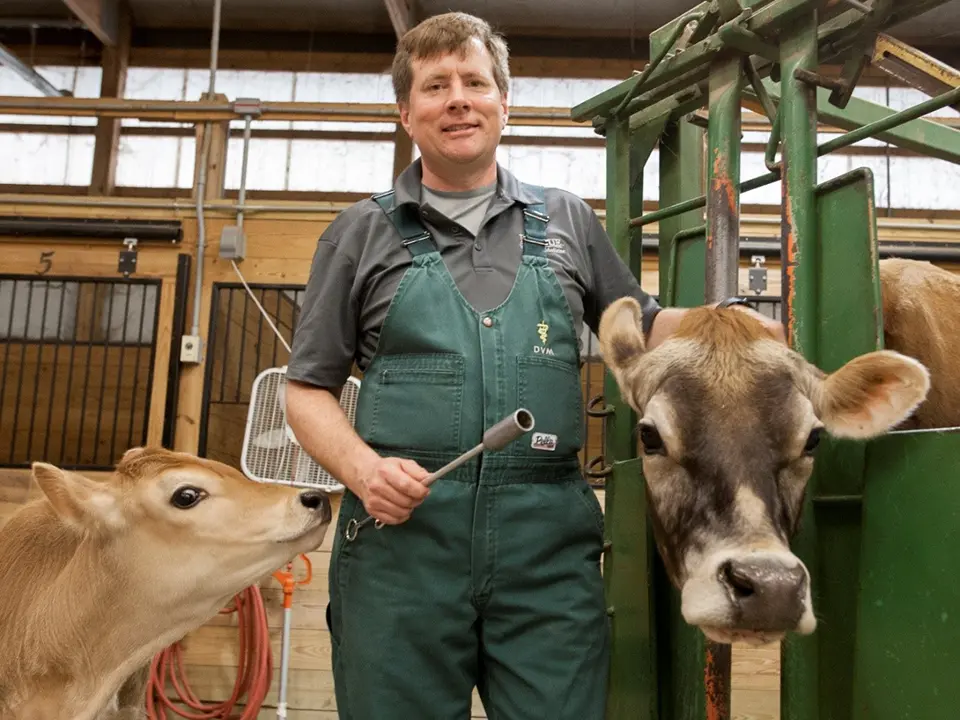
What farm animal veterinarians do
Care for one animal. Improve the health of hundreds more
Farm animal veterinarians move between individual cases and larger patterns. A single examination may reveal a problem affecting a herd, a farm operation, or a wider animal-health system.
Treat individual animals
Examine animals, diagnose illness and injury, perform procedures, and guide treatment.
Support reproduction and newborns
Guide breeding, pregnancy, delivery, and the health of young animals.
Protect herd health
Identify patterns, prevent disease, and improve health across groups of animals.
Use data to solve problems
Combine examinations, laboratory results, imaging, records, and production data to identify problems and guide action.
Guide farm decisions
Work with producers on nutrition, housing, welfare, records, and operational decisions.
Respond to outbreaks and emergencies
Investigate sudden health problems, help contain disease, and make rapid decisions that protect animals, farms, and the broader food system.
Support the food supply
Help producers maintain healthy animals, safe production practices, and reliable systems that contribute to a safe and secure food supply.
Protect animal and public health
Help prevent disease transmission and support animal health, food safety, biosecurity, and resilient agricultural systems.
Already know veterinary medicine is right for you?
Applications to Purdue’s DVM program are open.
Lower Debt, Year After Year
Lower educational debt means a more affordable education and freedom to decide where and how you want to practice.
Purdue DVM graduates with educational debt have remained below the national mean every year reported since 2020, with an affordability advantage ranging from 20% to 30%.
Taking a systems perspective
One patient or one thousand
Farm animal veterinarians solve problems at every scale. They gather evidence, understand how each part of the system connects, and make decisions that protect animal health and the people who depend on it.
Animal
Diagnose and treat individual health problems.
Herd or flock
Identify patterns, prevent disease, and improve population health.
Farm
Guide decisions about management, welfare, biosecurity, and operations.
Region
Monitor disease trends and coordinate responses across communities and industries.
Food system
Protect animal health, food safety, biosecurity, and public health.
Career directions
Shape a career around species, systems, and specialized areas of practice
Farm animal medicine can lead to clinical practice, specialty medicine, diagnostics, industry, government, research, and education.
Who succeeds in this field
Curious about biology, systems, data, and practical results?
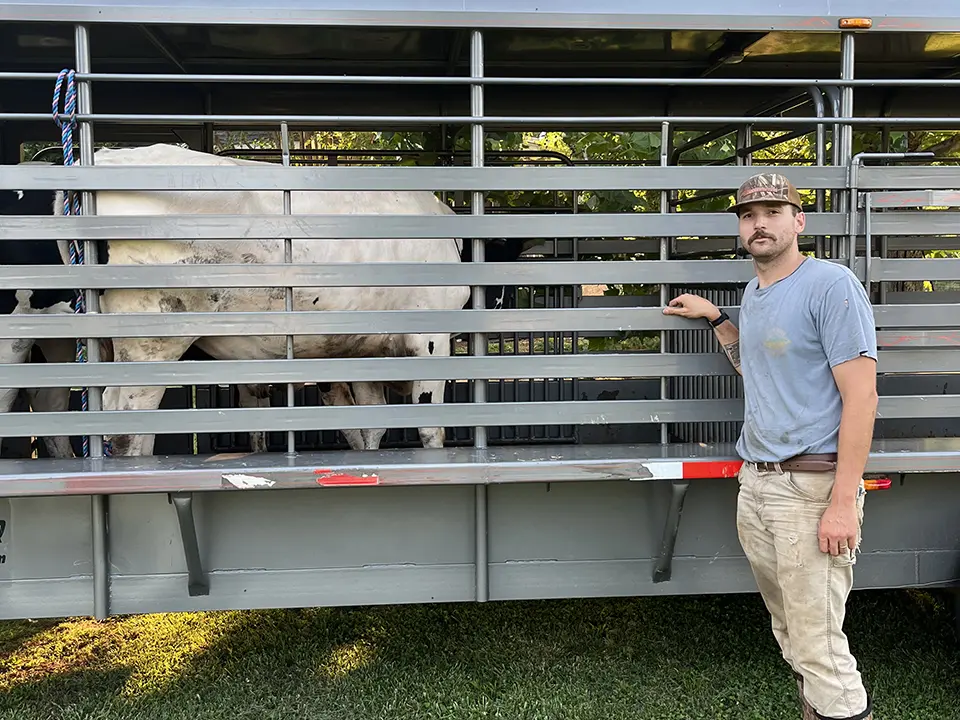
The field can be a strong fit for people who are comfortable making decisions, communicating directly, working in changing environments, and seeing how medical choices connect to a larger operation.
Training at Purdue
Build a broad foundation, then focus your experience
Purdue DVM students build broad knowledge across the major domestic species before selecting a clinical track. Students interested in farm animal medicine can pursue the Food Animal, Large Animal, or Mixed Animal tracks, then spend the fourth year entirely in clinical rotations.
Built for what comes next
From immersive clinical training to career readiness
Train Where Medicine Meets the Farm
Build experience caring for individual animals while learning to make decisions that affect entire herds and farming operations.
Purdue’s Farm Animal Hospital combines hospital-based specialty care with bovine and swine field services, giving DVM students exposure to primary care, herd health, emergency medicine, diagnostics, surgery, reproduction, and on-farm problem-solving.
From DVM to Career in One Month
A Purdue DVM can help you move quickly into a profession with strong demand for veterinarians.
Across the three most recent reported classes, an average of 96.3% of Purdue graduates were employed within one month.
Ready to take the next step?
Explore the path to Purdue Veterinary Medicine, understand what it takes to apply, and see how the DVM program can prepare you for a career in small animal medicine.
