
Careers in Equine Medicine
Where advanced medicine meets performance, partnership, and precision.
Equine veterinarians combine advanced medical care with a deep understanding of the horse. They work with owners, trainers, farm managers, specialists, and veterinary teams to prevent disease, respond to emergencies, improve performance, manage reproduction, perform surgery, and provide complex referral care.
Explore the work Apply to be a Purdue DVM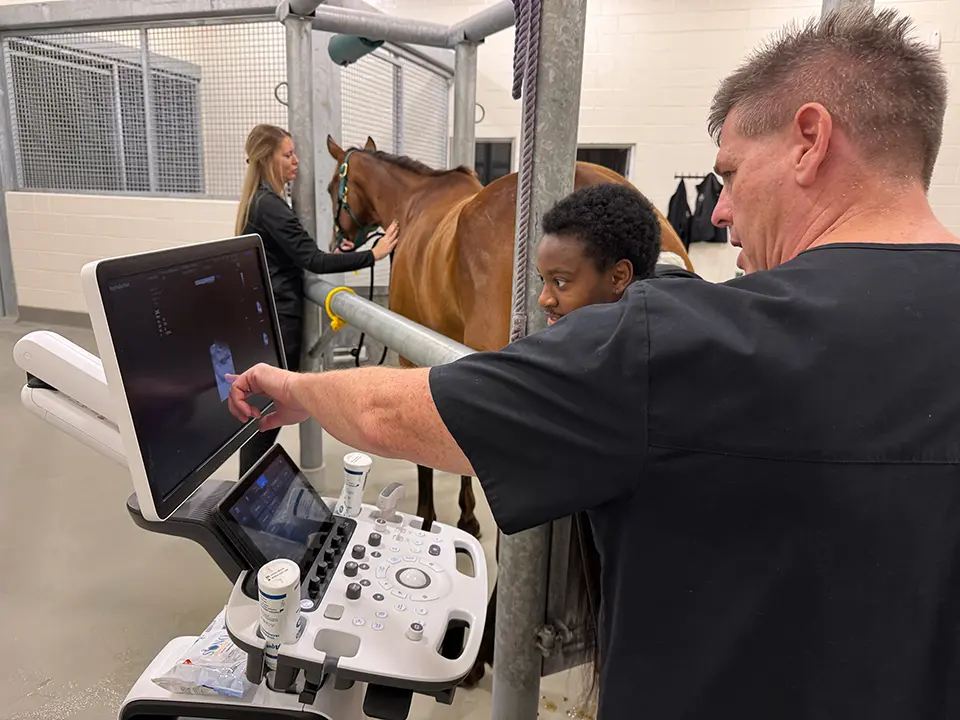
What equine veterinarians do
Technical medicine in dynamic settings
Equine veterinarians combine clinical reasoning, practical skill, and clear communication with an understanding of how health affects performance, welfare, and long-term soundness.
Promote lifelong health
Provide examinations, vaccinations, dentistry, and preventive care that support long-term health, comfort, and performance.
Respond to emergencies
Evaluate urgent cases, stabilize patients, and make time-sensitive decisions when rapid care matters most.
Solve performance problems
Identify sources of pain, lameness, or reduced performance through examination, imaging, and other diagnostics.
Provide advanced care
Work with specialists, imaging, anesthesia, and surgical teams to manage complex injuries and medical conditions.
Manage reproduction
Guide breeding decisions, manage reproductive health, monitor pregnancy, and provide care through foaling.
Guide recovery
Develop rehabilitation plans that support healing, comfort, function, and a safe return to activity.
Care for equine athletes
Assess movement, conditioning, recovery, and soundness to help equine athletes perform safely and effectively.
Support farms, herds, and stables
Help owners, barn managers, rescues, trainers, and equine facilities prevent disease, strengthen biosecurity, and protect the health of horses across their operations.
Already know veterinary medicine is right for you?
Applications to Purdue’s DVM program are open.
Advanced Equine Medicine, Real-World Preparation
Train alongside specialists and build experience with the complex cases, technologies, and decisions that define modern equine practice.
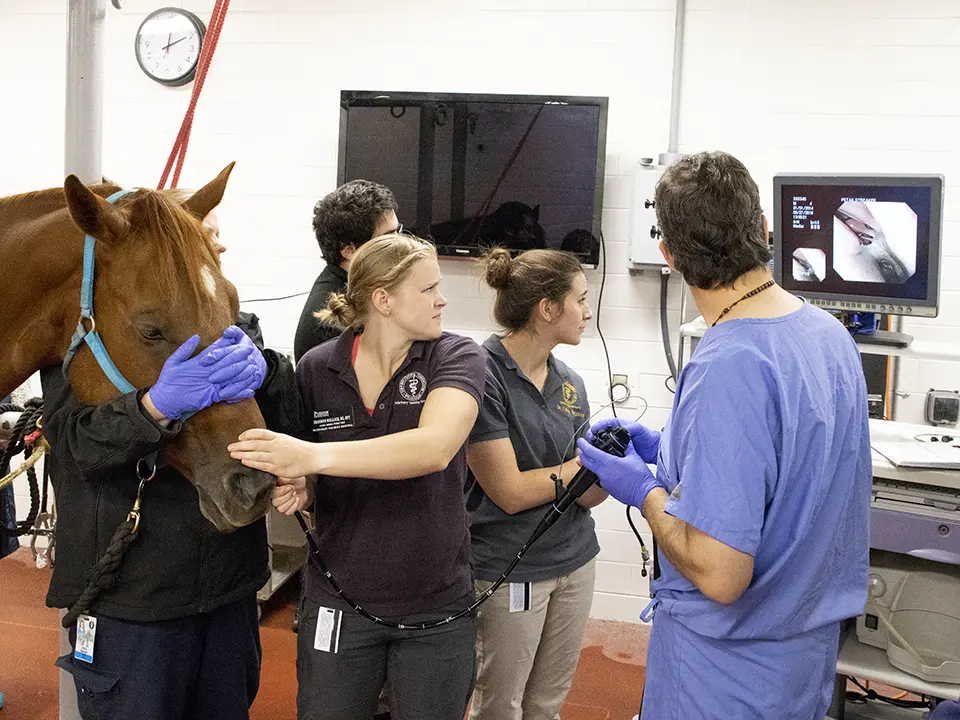
At Purdue’s Equine Hospital, DVM students learn in an environment that brings together emergency and critical care, internal medicine, sports medicine, surgery, anesthesia, reproduction, field service, and advanced diagnostics. That breadth gives future equine veterinarians exposure to the range of skills and clinical thinking they will need in practice.
Practice settings
Work in hospitals, barns, farms, and tracks
Equine careers can combine mobile practice with hospital-based diagnostics and specialty care.
Equine hospitals
Referral medicine, surgery, internal medicine, emergency care, and diagnostics.
Ambulatory practice
Travel to farms, barns, and facilities to provide on-site care.
Performance settings
Support sport horses, racehorses, and working horses through performance-focused medicine.
Research and industry
Advance diagnostics, therapeutics, nutrition, pharmaceuticals, and equine health knowledge.
More than working with horses
Medicine, movement, communication, and judgment
Equine veterinarians assess large patients safely, connect subtle findings to a diagnosis, explain options clearly, and understand the goals of the people responsible for each horse.
- Clinical reasoning under pressure
- Physical and technical skill
- Risk assessment and safety
- Client and team communication
- Business and practice awareness
Training at Purdue
Build broad clinical skills with room to focus
Purdue students can pursue the Equine Track or choose broader paths such as the Large Animal, Companion Animal, or Mixed Animal tracks. The fourth year is devoted entirely to clinical rotations, with additional opportunities through externships and approved off-campus experiences.
Purdue Equine Hospital
Train in a hospital setting that provides equine care across routine, emergency, referral, and complex clinical cases.
Explore the hospitalCaesars Entertainment Equine Specialty Hospital
Experience a specialized equine clinical environment focused on advanced diagnostics, treatment, and referral care.
Explore the specialty hospitalShape your clinical focus
Use tracks, electives, rotations, externships, and off-campus experiences to prepare for the type of equine career you want to pursue.
Gain experience beyond Purdue
Complete a required six-week supervised externship aligned with your professional interests and career goals.
Built for what comes next
From affordability to career readiness
Lower Debt, Year After Year
Begin your veterinary career with a financial advantage that can give you more flexibility in what comes next.
Graduates with debt averaged less educational debt than the national mean in every year reported from 2020 through 2025.
Career-Ready Results
Turn your veterinary training into professional opportunities soon after graduation.
Purdue reported one-month employment rates of 96% in 2023, 97% in 2024, and 95.9% in 2025 across the DVM program.
Ready to take the next step?
Explore the path to Purdue Veterinary Medicine, understand what it takes to apply, and see how the DVM program can prepare you for a career in small animal medicine.
