
Esther Oluwagbenga
CURRENT STATUS: Graduate Student
DEPARTMENT: Animal Sciences
FACULTY ADVISOR: Dr. Greg Fraley
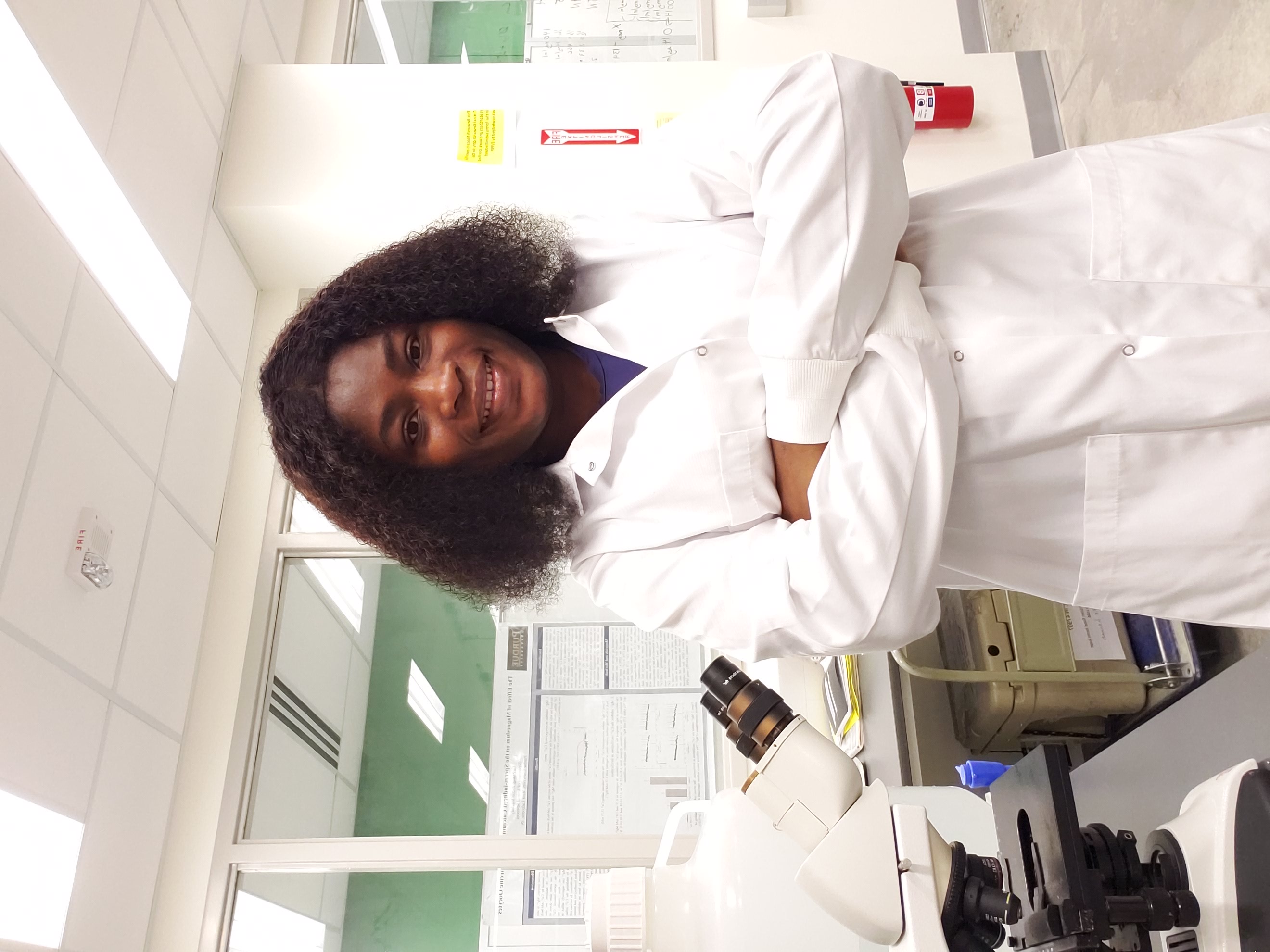
Tell us a little bit about yourself – hobbies, interests, a fun fact?
I am Esther Oluwagbenga, a native of Nigeria, and I hold a master’s degree in animal sciences with a focus on physiology, animal behavior and welfare. Currently, I am pursuing my Ph.D. in the same field. I love music and cooking.
What was your undergraduate area of study?
I obtained my bachelor’s degree in Animal Production and Health from the Federal University of Technology Akure, Nigeria.
How/where were you first exposed to ideas about animal welfare?
I initially encountered concepts related to animal welfare during my undergraduate studies, specifically through coursework focusing on animal behavior and welfare.
How did you choose your area of study and the professor you work with?
My inclination toward poultry science developed during an internship on a commercial poultry farm while pursuing my undergraduate degree. In my search for a graduate program, I came across the profile of my advisor, and upon reviewing his research interests, I found a significant alignment with mine and this prompted my decision to work with him.
Why did you select Purdue for your graduate studies?
I selected Purdue University because of its great reputation, renowned for its commitment to excellence in research, teaching, and innovation. Another key consideration is the diversity within the Purdue community.

What type of a job are you interested in after you receive your degree?
I aspire to pursue a career in academia upon completing my degree. My passion for both research and teaching has fueled the desire to contribute to the academic community.
Can you tell us about your current research focus?
Building on my master’s program, where I delved into the transgenerational effects of heat stress in Pekin ducks, I discovered that exposing parents to heat stress induced notable alterations in the hormonal and behavioral responses of the offspring in response to stress stimulation. During my PhD, my research extends to exploring the potential mitigating impact of incorporating an orange diet on the effects of heat stress in poultry. This study encompasses physiological, behavioral, and molecular aspects, aiming to contribute valuable insights to the development of sustainable and effective strategies for managing heat stress in poultry production.
What is the connection between what you are researching and animal welfare science?
Stress, particularly heat stress, is a significant concern in poultry welfare, and my research aims to explore mechanisms that underlie these impacts and also investigate and implement effective mitigating strategies. This research contributes to the broader field of animal welfare science by providing insights and evidence-based approaches to alleviate stress and improve the overall welfare of poultry.
What two pieces of advice would you give to someone who cares about Animal Welfare and wants to get started in the field or apply to grad school?
The field of animal welfare is diverse, and there are many paths to contribute positively. Embrace the diversity of the field and be confident in your pursuit. Just go for it and make a meaningful impact.
