
Clare Jensen
CURRENT STATUS: Postdoctoral Fellow at University of Arizona
PHD DEPARTMENT: Comparative Pathobiology
PURDUE FACULTY ADVISOR: Dr. Maggie O’Haire
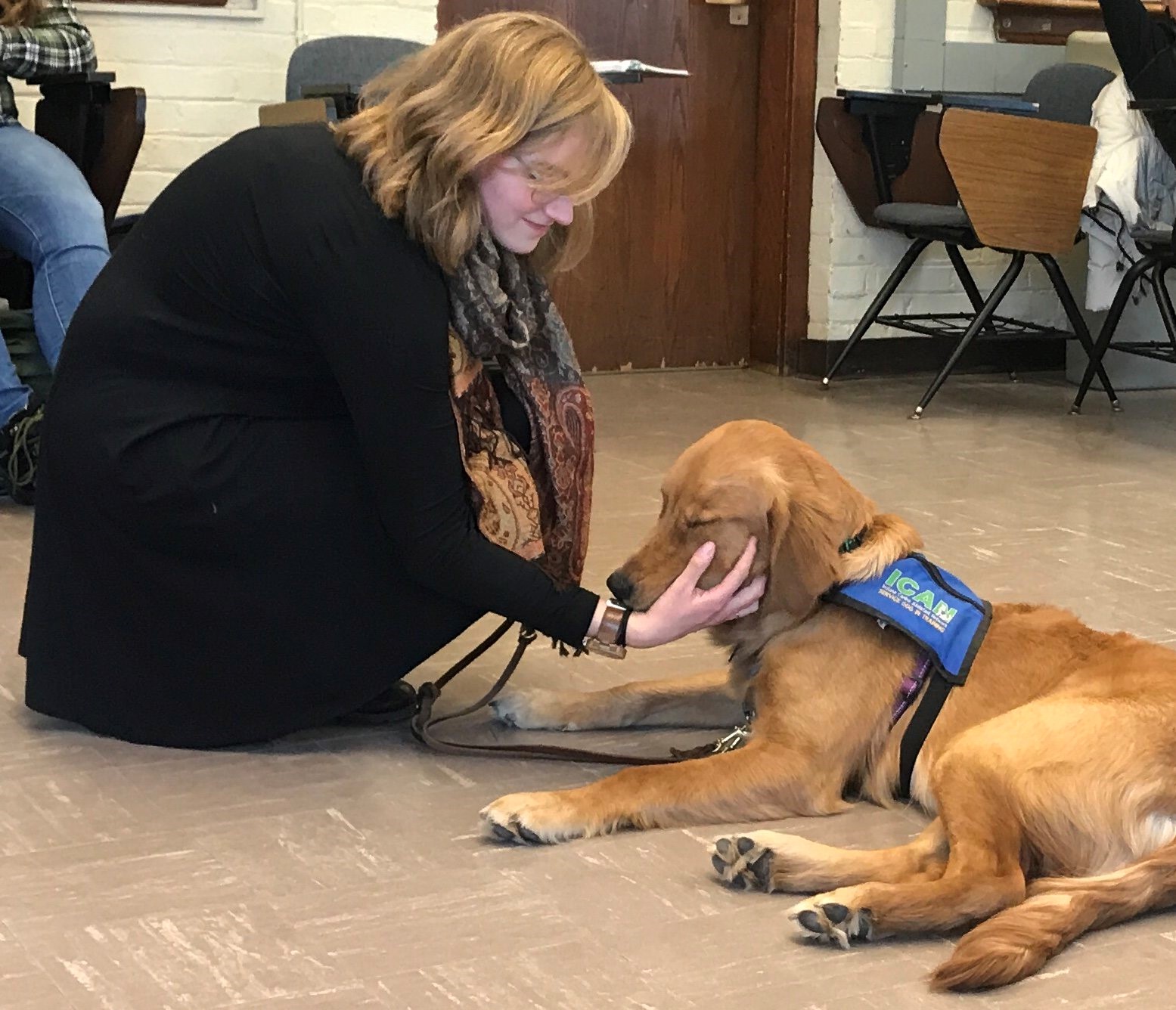
What field of study is your undergraduate degree in?
I have a B.A. in Psychology with a minor in Studio Art.
What background or experiences do you have that led you to an animal-related career?
I loved animals from a very early age, and I always had a special adoration for dogs. When I started college, I had wanted to be a veterinarian for as long as I could remember (aside from just a brief time in preschool when I wanted to be a firefighter, but that only lasted until I found out the job did not automatically include Dalmatians). My first word was “woof” and the first time I laughed was meeting a puppy. Growing up, I’m not sure that I was ever not thinking about animals, and I could never really imagine a career that didn’t relate to animals.
How/where were you first exposed to ideas about animal welfare?
My family lived in Austria during the majority of my elementary school years, and our apartment was just around the corner from the local pet store. My brother and I used to go to see the fish tanks. Soon our parents to let us bring home a couple of goldfish. I remember not understanding my mom’s curiosity about why there were no “classic” round fish bowls. When we learned that round fish bowls had been banned because they weren’t good for the fish, I was in awe of the regulation made to protect the welfare of fish.
What type of a job are you interested in when you receive your degree?
I am hoping to continue conducting research, with a focus on the unique human-animal interactions between assistance dogs and the people they are paired with. I could see this taking place in an academic setting or for an assistance dog organization.
How did you get connected with a faculty member in your area?
As soon as I figured out that a field like this existed, I began searching for opportunities for further education. Again and again, when I found research reflecting what I wanted to learn about, it traced back to Dr. O’Haire. My first successful connection to her was made by applying for a position in her research group. Although I was under-qualified at the time, I submitted the best application I could and was able to learn what experience I was still missing. When I applied again the following year, I had gained the experience recommended to be better prepared for the program, and I was offered an interview.
What led you to pursue an advanced degree in your field of study? I enjoyed conducting research in psychology during my undergraduate years and wanted to continue with research that could connect my interest in psychology back to animals. In order to do this, I knew there was an infinite amount I would still need to learn and an advanced degree seemed like the best way to get started.
Any advice for an aspiring undergraduate?
I would suggest paying close attention to the types of things you are excited about learning. I always thought I was certain about wanting to be a vet, but when I listened to my what excited me and took more of the coursework I was drawn to, I discovered an area of science I feel even more passionate about than I thought possible.
Not many schools have programs in human-animal interaction and animal welfare, and the field of study is still relatively new. Purdue’s faculty members in this area have built a strong program and have conducted a great deal of ground-breaking research at the forefront of the field’s growth. I wanted to be a part of it.
