Feeding the Pet Chinchilla
by Laura Smith
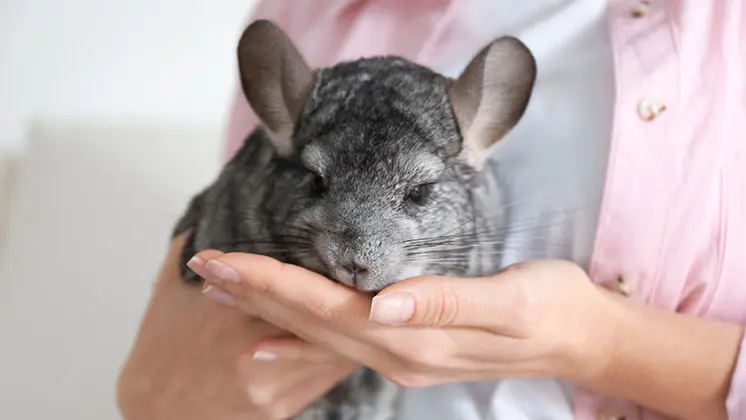
Little scientific research has been done on the dietary needs of chinchillas. Wild chinchillas in the Amazon region of South America eat a combination of grasses, cactus fruit, leaves, and the bark of small shrubs and bushes. Veterinarians and chinchilla experts have modified the wild diet to make it more accessible to the pet chinchilla owner.
Chinchillas should always have fresh roughage available and hay should be their primary source of food. Timothy grass or other grasses are preferred instead of alfalfa because alfalfa has a high calcium to phosphorus ratio. Grasses add fiber to the diet and promote good bacterial flora in the intestinal tract. The hay should be free of mold and insects to prevent disease.
Chinchillas also will benefit from a pelleted feed, although it should be limited to 1-2 tablespoons per day. Chinchilla pellets are longer than rabbit or guinea pig pellets, which allow easier handling for the chinchilla. Commercial chinchilla pellets should contain a formulation of 16-20% protein, 2-5% fat, and 15-30% fiber.
Nuts and dried fruit make excellent treats for the pet chinchilla. Treats should not exceed 10% of their total daily food intake or about 1 tablespoon per day. Some commonly used treats include grains, carrots, green vegetables, raisins, or dried cranberries and apples.
Some hard objects should also be available to the chinchilla for gnawing, such as young tree branches (elm, ash, maple, or birch) or bark from fruit trees (apple, pear, or peach). Providing gnawing toys will help prevent the chinchilla from chewing on itself. Some trees, such as cedar, plum, redwood, and cherry, are toxic and should be avoided.
A well-balanced diet with proper nutrition is necessary to ensure the health of the pet chinchilla. When changing a chinchilla diet, one must remember gradual change is always best. Abrupt diet changes can cause anorexia or intestinal problems. Food intake and fecal output should always be monitored and any change should be evaluated by a veterinarian.
Schedule a Visit
Come experience the compassionate, high-quality veterinary care provided by the Small Animal Primary Care team at Purdue University’s Veterinary Hospital. See how our veterinarians, staff, and students work together to deliver progressive, evidence-based care while building lasting relationships with you and your pet.
Suggested Articles
Shedding in Reptiles
Learn about shedding in reptiles, including what normal shedding looks like, common causes of shedding problems, and when to seek veterinary care.
Tapeworms
Tapeworms are intestinal parasites spread by fleas in dogs and cats, causing rice-like segments near the anus and requiring medication and flea control.
Exotic Zoonotic: At Home and in our Schools
Exotic pets in homes and schools can carry zoonotic diseases, making proper hygiene, veterinary care, and awareness essential to protect public health.