General Husbandry of Caged Birds
Housing Considerations
One of the first concerns when obtaining a pet bird is its housing. Birds may be allowed to remain free on perches when under supervision, however, they should be confined to a cage while their owner is away to prevent injury to themselves and destruction of the household. Unsupervised pet birds allowed “the run of the house” often get into trouble. All homes contain furnishings that are harmful (either directly or indirectly) to your bird. These include mirrors, windows, houseplants, electrical cords; open sources of water (such as an open toilet or a sink with soaking dishes) and objects containing harmful chemicals.
Birds resting on perches are usually content to remain there, and often only take flight when frightened by a sudden movement or loud noise. These unplanned flights can end up with the bird careening into walls, mirrors, and windows in because of its confusion and poor depth perception.
Birds allowed unrestricted freedom and flight within the home may escape through open doors or windows. Do not have the mistaken notion that your bird will not fly away and leave you, especially when disoriented and frightened when out in the world. This fear and confusion makes return or capture of the escaped bird very unlikely.
Birds allowed unrestricted freedom in the home may eat houseplants, many of which are poisonous, or chew on electrical cords, resulting in illness and injury. Many pet birds will chew on macramé, carpet and other similar fabrics and sometimes swallow these objects resulting in crop and intestinal impactions. Free-flying birds are also more vulnerable to injury from ceiling fans, hot stoves, and even other household pets such as dogs, cats and ferrets. It is wise not to under-estimate the prey-drive of our four-legged friends and to prevent or minimize contact between them and our birds.
A major source of poisoning in pet birds is the lead found in curtain weights, curtain pulls, leaded and stained glass, fishing sinkers, pocket change, and ammunition carelessly discarded in ashtrays or dropped on the floor, costume jewelry, and in the lead wrapping around the tops of wine bottles. Most caged birds seem to have an affinity for this soft metal and love to chew on it. Poisoning results from eating even a small amount of lead. Lead poisoning can be successfully treated if diagnosed early enough.
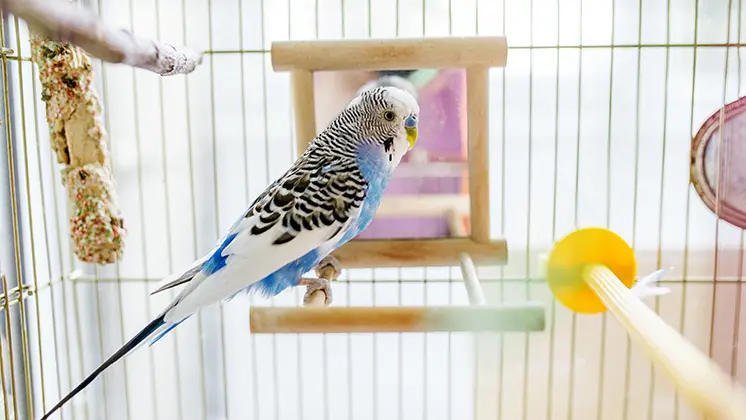
Therefore, it is very necessary to have a cage for your bird, and it is preferable to have two cages. When purchasing a bird, consider its wingspan; the cage you house the bird in should be at least twice the bird’s wingspan in width, length, and depth. Try to buy the biggest cage that your budget will allow. Also consider the distance between the bars of the cage, because if the bars are far enough apart to allow the bird to get its head out of the cage, that will be a dangerous cage and should be passed over. We recommend that you have a smaller “Night Cage” to place the bird in also, that can be covered to provide security and privacy. This cage need only be the width, length, and depth of one wingspan of your bird. It is also important to have a variety of perches in the cage. No two perches should be the same diameter so that the bird is able to exercise its feet. If it always sits on perches the same diameter, then it will always use the same group of muscles and is much more likely to develop arthritis than a bird that is able to exercise its feet.
We also recommend that a variety of toys be provided to stimulate your bird’s mind and body. A bird in the wild spends most of its time searching for food; however, your pet bird has all the food it wants readily available to it. Therefore it needs a variety of things to stimulate its mind and keep the bird busy. Toys that simulate grooming other birds and especially those for which a puzzle must be solved to allow the bird to obtain a choice piece of food are the best toys for your bird. Remember to count the calories used in any treat as a part of your total bird’s diet, however! It is also important that the toys have “planned obsolescence” (this means that you expect that the bird WILL destroy the toy and that it contains no parts that might be swallowed and cause obstruction, or other materials that might harm your bird). It is very important to examine your bird’s toys on a regular basis and remove any toys that the destruction has made dangerous.
The location of the cage and/or perch in the home is important. Some birds thrive in areas of heavy traffic, where they receive lots of attention and are part of all of the “goings on”. Others seem to prefer more privacy and solitude. A pet bird should never be kept in the kitchen. In addition to the obvious gas fumes and occasional smoke from cooking, there is another, much more dangerous, threat to birds in the kitchen. Super-heated Teflon and related brand-name non-stick pan coatings emit fumes that are deadly to all birds.
This accident happens when someone inadvertently leaves a pan, coated with a non-stick surface, on a lighted gas or electric range burner. The non-stick heating overheats, emitting toxic fumes. Birds that inhale these fumes die quickly.
There is another consideration when allowing birds unrestricted freedom and flight within the home, height is associated with dominance in the bird world and free roaming, flighted birds tend to assume a more dominant posture in their relationship with people, often becoming intolerably aggressive. Flighted birds also have a tendency to become territorial, and will frequently “dive-bomb” and harass people and other pets.
Wing Trimming
To be safe, most caged birds should have their wing feathers trimmed. If done properly, this will not prevent the bird from the ability to make a controlled glide to lower areas from higher objects, a wing trim should only prevent the bird from making prolonged flights. The decision to deny a caged bird free, unrestricted flight (as in the wild) is subconsciously made by each bird owner at the time the bird is brought into the home. Wing trimming merely makes confinement safer for the bird. Trimming the wings usually makes taming the bird easier, and shortens the time it takes to tame the bird.
We recommend that you allow an immature bird to mature and learn to fly BEFORE you trim its wings. This allows for proper development of the breast muscles, and allows the bird to make safe, controlled descents even with its wings trimmed.
Flight feathers of both wings should be trimmed. If the bird takes flight for any reason, its descent to the floor is balanced and relatively controlled. Trimming the feathers of only one wing results in a precariously unbalanced descent to the floor, often injuring the bird. Another disadvantage of trimming only one wing is that many birds have full flight with as few as one or two flight feathers re-growing on the trimmed side.
Before trimming, check your bird's wings for blood feathers. A blood feather is a new, growing feather, which has its own blood supply. The feather shaft (base) is cloudy and purple or red colored, and the feather is all or partly covered with a white, paper-like sheath. We do not trim a blood feather, and it is often a good idea to leave the feather on either side of a blood feather for protection. Although most parrots are molting (losing old feathers and growing new ones) all the time, there is a general pattern of loss and re-growth. It is easiest to wait for all the blood feathers to grow out before wing-clipping. This will give you the maximum time between wing clips. The bird owner should realize that even with a wing trim, the smaller, lighter birds (those under 100 grams), will most likely be able to get enough lift to reach high places. Special vigilance should be performed to prevent these birds from escaping.
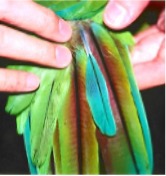
A blood feather amongst tailfeathers
Trimming the wings is like trimming your fingernails. If performed correctly, the bird will experience no bleeding, and only the mild discomfort of restraint. We recommend that each wing be trimmed in the following manner: With the bird restrained in a towel (take care NOT to grasp too firmly around the thorax, unlike mammals, birds need to expand their chests to breathe and excessive restraint can suffocate the bird), extend the wing by grasping the carpus (never grab the wingtip, if the bird continues to flail while you hold on to the wingtip, the bones of the wing can be broken). Trim the major flight feathers (see diagrams below), starting with the outermost feather at the tip, and working back until you are about even with the carpus. We prefer to trim each feather individually and to make the cut under the major coverts. This not only looks more aesthetically pleasing, but it also keeps the cut shafts from rubbing against the side of the bird and irritating it. We recommend that you have an experienced veterinarian or veterinary technician show you how to do this before attempting to do it yourself.
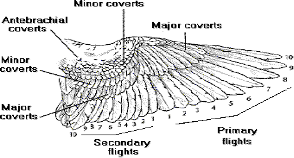
Carpus Wing Anatomy before Trimming
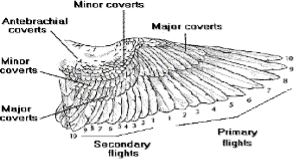
Carpus Wing Anatomy after Trimming
Beak and Claw (Nail) Trimming
Caged birds live in a very “geometric” world, in contrast to their wild counterparts. Most of the surfaces they perch on (perches, cage bars, etc.) are smooth and regular. Consequently, the claws, and occasionally the beaks, of pet birds tend to overgrow, and the surfaces of their beaks tend to become rough and irregular.
In a wild bird’s natural environment, this situation seldom arises because they are very active and wear down their claws on tree bark, rocks and other abrasive surfaces. Most pet bird’s need their nails trimmed periodically despite the gimmicks often employed to keep them shortened. Sandpaper perch covers, for example, do not prevent nail overgrowth but they do cause irritation and excessive wear of the soles of the feet. These perch covers should not be used. Natural tree branches (that are from non-toxic trees and have been sterilized prior to presentation) do help keep the bird’s beak healthier. As the bird chews and rubs on the natural wood perch with his beak, it sheds excessive dead layers on the beak – this is a normal part of parrot maintenance and an owner should realize that all of a parrot’s perches and toys should have “planned obsolescence” as the parrot will eventually destroy them. Cuttlebone may be utilized in the same manner by some small bird species. Having one concrete perch in the bird’s cage can have the same effect for larger species of parrots, however, the parrot will not get the same mental stimulation from rubbing his beak against the cuttlebone or cement perch that he does from destroying natural wood.
An emery board, nail clippers or cautery instrument can be used to shorten the nails of smaller birds. A rapidly rotating grinding stone (dremel tool) is used to trim the claws and shape the beak s of larger birds. Please allow an experienced avian veterinarian to assess and shorten your bird’s beak if it is necessary. You can, however, train your bird to allow toenail trimming at home. Start slowly and work on one nail at a time. Many birds who will not tolerate the cutting action of nail trimmers will allow the owner to file the nails with an emery board for a special treat. If you do decide to trim your bird’s nails at home, be sure to have something on hand with which you are able to stop bleeding. These clotting aids are referred to as styptics. Recommended styptics include Kwik-Stop (Animal Research Company), silver nitrate sticks and ferric subsulfate (Monsel’s solution).
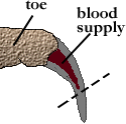
Cut Line
If bleeding occurs while trimming the claws, DO NOT PANIC. First, carefully restrain the bird by wrapping it in a towel. Second, squeeze the toe just above the claw (tourniquet effect). Then apply the styptic to the bleeding claw. Be sure to coat the tip of the nail thoroughly. Alternate the last two steps until bleeding has stopped. Always consult a veterinarian if your bird is bleeding or has bled. Bleeding always represents an emergency situation. Cornstarch, flour or a mild bar soap can be used in an emergency to help stop bleeding. The steps outlined above are first-aid procedures only and are not a substitute for veterinary assistance.
Leg Band or Quarantine Ring Removal
Leg bands and quarantine rings are often applied to the legs of caged birds for regulatory purposes or to help breeders identify individual birds. Once the bird is in its permanent home, the band or ring is unnecessary and should removed. Many limb injuries (broken or sprained legs, etc.) in caged birds involve a banded leg. Band removal should not be attempted by a bird owner. Only an experienced veterinarian or veterinary technician should perform this procedure. The veterinary should document from which leg the band/ring is removed, as well as any identifying marks on the ring/band.
Covering the Cage at Night
Covering the bird’s cage at night is recommended. It is very important that your bird’s light/dark schedule accurately mimics that of a natural day so that your bird will get an adequate amount of sleep/rest. It is a known fact that lack of sleep/rest negatively affects your bird’s health and weakens their immune system. Parrots also use the “length of day” in their environment to signal many things, including breeding season. Artificial lights allow humans to keep “summertime” hours even in the middle of winter. These “summer days” combined with the rich, varied diet we feed our bird’s year-round, can make a bird’s body believe it is breeding season year around. This is a huge stress on the bird both mentally and physically. It is much better to ensure that your bird’s light and dark cycle mimics that of nature and allow him to experience all four seasons. The easiest way to accomplish this is to have a cover for your bird’s night cage.
If you have never covered your bird’s cage previously, and find that your bird panics, or acts agitated with a cover over its cage, do not cover the cage. It would probably be best to move this bird’s night cage to a seldom-used room and just allow the whole rooms night/dark cycle to mimic the natural cycle.
Hygiene
Good hygiene is an important part of husbandry for caged birds because most are confined to a relatively small living space. Consequently, droppings often accumulate on cage parts and perches, and tend to contaminate food and water cups, resulting in bacterial proliferation and mold growth.
Perches should be kept scrupulously clean at all times. A mild soap and water, cleansers and sandpaper may be used to clean them. Cage-bottom coverings should be changed daily. Cages should be given a thorough scrubbing at least once a month. Sanitizing products (i.e. bleach) work best if the cage and perches have first had all of the organic materials scrubbed off. If chlorine is to be used, we recommend a 1:10 dilution with water and that the cage be thoroughly rinsed afterwards.
Food and water containers should be cleaned once or twice daily before they are refilled. Because water bowls are frequently contaminated with fecal matter and uneaten food, water bottles with sipper tubes are preferred. Bottle brushes work best for cleaning sipper tubes and water bottles. The corners of food and water bowls are the most likely culprits for bacterial build-up, therefore, concentrate on those trouble spots when cleaning these containers.
We recommend that several sets of food and water cups should be maintained and used interchangeably. This allows you to soak one set in a disinfectant solution, while the other set is in use. When possible, use a dishwasher for the final cleaning of these dishes because the extremely hot temperatures aid disinfection.
Rigid standards of hygiene should be maintained at all times. Disease-causing bacteria grow freely in most water containers. Small numbers of the bacteria from food or droppings can quickly multiply into millions of organisms in a water container, yet the water appears normal. Allow the tap to run for about 3 minutes before filling the water container. Bottled water dispensers should run for about 5 seconds before filling the drinking container. These bacteria usually do not affect people, but can have devastating consequences for caged birds when allowed to multiply.
Diet Supplementation
Birds, like people, “are what they eat”. Therefore, to be healthy, they must consume all of the necessary nutrients (protein, carbohydrates, fats, vitamins, minerals, and water) in the proper proportions. Unfortunately, the exact nutritional requirements for all of the various caged birds have not been established.
Many commercial birds diets advertised as “complete” or “balanced” are, therefore, not truly scientifically formulated. When assessing a commercial bird diet, it is important to find out how the diet was tested. Were the requirements of the nutrients in the diet obtained from data on previously studied species (such as poultry), or was feeding trials done on the species of birds for which the diet is recommended? One of the plusses of a “pelleted” or “extruded” diet is that it does not allow a bird to be choosy. Just as people do not always eat the healthiest items presented to them, many birds become “addicted” to a type of food and eat it to the exclusion of other foods, thus unbalancing their diet. Since pelleted diets contain the same nutrient levels in each bite, feeding these diets can help prevent this. However, because we have not yet determined the optimal nutrient levels for all bird species, it is also important to feed fresh fruits and vegetables to your bird. With the exceptions of chocolate, alcohol, and avocados, a caged bird can often eat many of the same foods you are cooking for yourself. We do recommend that the bird be fed all foods in moderation, and that high fat and high salt foods be fed in extreme moderation.
Some veterinarians recommend that vitamins be added to your caged bird’s diet. If you choose to do this, we recommend that you use a powdered form sprinkled over a wet food, such as fruit. Birds do not have saliva in their beaks; therefore, vitamins sprinkled over seeds are lost when the hull is removed. Vitamins placed in the water will provide a ripe breeding ground for bacteria and is also not recommended. You can also try mixing the powdered vitamin with a small amount of fruit juice and give it to the bird directly (this is only effective if the entire amount of the juice is immediately consumed. Talk with your veterinarian about whether your bird requires vitamins. Additional sources of minerals may be offered to caged birds as needed. Cuttlebones and oyster shell may be offered to smaller caged birds. Oyster shell and mineral blocks may be provided for larger caged birds.
Feeding Parrots, Parakeets, and Budgerigars
Psittacine birds (parrots and their relatives) are widely known to be seedeaters. Unfortunately this has led to the belief that this is all they need. In the wild parrots eat a wide variety of other foods to balance out the deficiencies of seeds. When well meaning pet owners or breeders feed only seeds, the health of the bird will suffer.
Grain products are the main source of carbohydrates for seed eating birds. They are a good source of calories, B vitamins, and fatty acids. They have some protein, but the quality of this protein is poor. Grains are generally low in vitamin A, vitamin D, calcium, certain amino acids, and many trace minerals. Also, many of the B vitamins are lost when the bird discards the shell. This group of foods should only make up 50% of the total diet! This includes all seeds, cereals, breads, pastas, and baked goods that the bird eats.
Many of the deficiencies of grains can be balanced out by vegetables. Dark green vegetables, such as broccoli, spinach, mustard greens, dandelions, and Brussels sprouts, are good sources of vitamin A, B vitamins, calcium, and trace minerals. Legumes, such as beans, peas, lentils, alfalfa sprouts, and cloverleaf, are excellent sources of protein. In addition, legume proteins improve the quality of grain proteins by providing the missing amino acids. Vegetables with yellow or orange color, such as carrots, sweet potato, corn, or squash, are excellent sources of vitamin A. All of these are good sources of fiber. Vegetables should make up about 40% of the diet. Emphasis should be put on the type of vegetables listed above.
The dairy group can provide both high quality protein and calcium for pet birds. Many parrots love cheese and it is good for them if fed in acceptable amounts. Lean meats also are excellent protein sources, which many parrots seem to like. Meat and dairy products should make up about 5% of the parrot’s diet.
In the past several years pelleted parrot foods have become available. These products combine all of the necessary nutrients in a dry pellet. Although research available in avian nutrition is not complete, many of the commercial pelleted foods are very high quality foods that provide all the known nutrients for psittacine birds. Since they are complete diets, pellets may be added to any or all of the above categories. We suggest that pellets supply at least half the grain and seed category.
If you are not feeding a pelleted diet, then to ensure that all 13 essential vitamins are provided, a vitamin supplement should be added to the diet. Powdered vitamins retain their potency longer, are less expensive, and are easier to use. Supplements are best added to moist foods so they do not filter, uneaten, to the bottom of the food dish. We do not recommend that you add vitamins to your bird’s water supply. If vitamins must be added to the water, it should be changed at least twice daily to prevent bacterial contamination.
Cuttlebones, mineral blocks, or mineral powders should be used to provide calcium and trace minerals. Birds that are eating pellets as large portion of their diet should not be given supplements since overdosing may occur with some vitamins and minerals.
Reserve the last 5% of the diet for dessert. Fruits, nuts, juice, yogurt, or whatever the bird likes! Using treats is an excellent way to improve the bond between owner and bird.
One very useful recipe for a balanced diet in pet birds follows:
Mix 1 part cooked rice (preferably brown rice), 1 part beans of several types (cooking dried beans is the most economical), and 1 part thawed frozen vegetables (carrots, broccoli, corn, spinach, cauliflower, etc.), chopped to an appropriate size for the bird. This mixture is pressed into ice cube trays and frozen. Each day the appropriate number of “bird cubes” are thawed and mixed with pellets to make up a complete diet.
While most avian veterinarians believe that grit is not necessary, and may cause problems if consumed in large quantities, it will do no harm to feed a small amount. About a pinch or so monthly will be enough to keep the gizzard full and may assist in grinding food. Do not feed unlimited grit.
We also recommend the basic rule of never feeding your bird alcohol, caffeinated products, chocolate, and avocado. All of these can be toxic to your bird in miniscule quantities.
Drafts
Contrary to popular opinion, drafts are not harmful to healthy pets. A draft is really nothing more than a slight movement of air, usually accompanied by a mild temperature drop. A bird’s feathers provide insulation against temperature extremes far in excess of what a draft represents. Drafts are, therefore, usually inconsequential to pet birds.
The notable exception to this is the cool and sometimes cold air produced by air conditioners, and the hot, dry air produced by furnaces. Most caged birds cannot tolerate the rapid temperature extremes produced by thermostatically controlled air conditioners/furnaces. For this reason, cages and perches should not be positioned directly beside, above or beneath air conditioning, heating and ventilation outflows. Further, sick birds should always be removed from drafty circumstances, as they are less able to control loss of body heat and are vulnerable to chilling.
Bathing
Many exotic pet birds originally lived in tropical climates where rainfall is a daily, or otherwise frequent, occurrence. Rainwater provides drinking water and an opportunity for bathing. Birds typically take advantage of this moisture by “showering” during a rainstorm or bathing in puddles formed by the falling rainwater. This keeps their feathers healthy, and restores and maintains a brilliant sheen to the plumage.
Caged birds should also be allowed to bathe periodically. Some prefer to bathe in a small container; others tolerate being sprayed or misted with water and a spray bottle or a plant mister should be used. Commercial solutions available for this purpose offer no particular advantage and may, in fact, be harmful. Many pet bird owners enjoy taking a bird into the shower with them on a regular basis.
Bathing activities can be undertaken once daily or as often as convenient. It is important to allow the bird to air dry in a warm, sunny room, or alternatively, a hair dryer can be used to blow dry your bird (the appliance must be held at a safe distance - at least 10 inches – away from the bird, and be set on a low setting to prevent burns).
Common Signs of Illness
All owners of caged birds must understand that birds tend to "hide" signs of illness. Birds can compensate for serious internal disease in such a way that they appear healthy externally. It is theorized that evolution has "taught" birds to hide signs of illness to avoid being harassed and possibly killed by other birds in the same flock. It is a defense mechanism that flocks of wild birds use to avoid attracting the attention of a predator.
Because of this disease-masking tendency, by the time a bird owner recognizes illness in a pet bird, the bird may have been sick for one to two weeks. Therefore, one cannot afford to take a "wait and see" approach and hope the bird improves. Be observant and act promptly. Learn to look for subtle signs of illness, and take special note of changes in the routine and habits of your pet bird. Seek veterinary assistance promptly if you suspect illness.
Much of the disease in caged birds is directly or indirectly related to malnutrition and stress. Malnutrition most often stems from what the bird eats, rather than how much it eats. Most caged birds are offered enough food, but they do not receive or eat enough of the proper foods or eat the nutrients in the proper proportions. Just as small children do not “instinctively” eat a diet that is nutritionally appropriate, many birds will refuse a proper diet even if it is presented to them. Stress results from any condition that compromises a bird's state of well-being. Examples include poor husbandry, inadequate diet, rapid temperature changes, and trauma.
Following is a list of signs of illness easily recognizable by the concerned bird owner. Alone or in combination, they signify potential illness in your bird:
- Discharge from the eyes
- Change in clarity or color of the eyes Closing of the eyes
- Swelling around the eyes Discharge from the nostrils Obstructed nostrils
- Soiling feathers on head or around nostrils Sneezing
- Inability to manipulate food within the mouth Reduced appetite or not eating at all
- Fluffed-up feathers Inactivity
- Droopy wings
- Decreased preening and feather maintenance Break in the bird's routine
- Changed or no vocalization (may be serious) Weight loss
- Equilibrium problems (very serious!) Inability to perch (bird on cage bottom) Limping or not bearing weight on one leg Swollen feet or joints
- Change in quality or quantity of droppings
- Open-mouthed breathing when at rest (very serious!)
- Tail pumping (rhythmic back and forth motion of the tail when at rest) Lumps or masses anywhere on the body
- Bleeding (always an emergency situation, regardless of the origin)
If you suspect illness in your bird, do not delay in making an appointment with your veterinarian. Either transport your bird to the doctor's office within its cage or use some other suitable container (smaller cage, pet carrier, box). Never visit the veterinarian with your bird perched on your shoulder. This method does not provide enough protection for your pet. Whatever container you choose should be covered to help minimize the stress to your sick bird during its visit. If you take your bird to the veterinarian in its own cage, do not clean it first. The material you discard could represent valuable information to the veterinarian.
After a veterinarian has initially treated a sick bird, home care is very important. Sick birds must be encouraged to eat and must be kept warm. Illness can cause significant weight loss in a matter of days, especially if the bird stops eating. If this happens, the patient must be hospitalized. However, even a sick bird with a "healthy appetite" can lose substantial weight because of the energy drain caused by the illness.
As a general rule of thumb, any caged bird that appears ill to its owner is seriously ill. One day of illness for a bird is roughly equivalent to 7 days of illness for a person. The tendency for pet bird owners in this situation is to first seek advice from pet stores and there to purchase antibiotics and other medication for their sick pet bird. With very few exceptions, these non-prescribed products are worthless. They allow the sick bird to become even sicker and greatly compromise the results of diagnostic tests that the veterinarian may require to properly diagnose and treat the patient. Contact your veterinarian at the slightest sign of illness in your bird.
Supplemental heat (space heater, heated room, heating pad under the cage bottom or wrapped around the cage, heat lamp) is vital for a sick bird. It is especially necessary if the bird's feathers are fluffed up. Provide just enough heat so that the feather posture appears normal. Overheating the patient must be avoided at all costs. Heat-stressed birds pant, hold their wings away from the body, depress their feathers close to the body, and appear anxious and agitated. Heat stroke and death can result if the bird continues to be overheated. The environmental temperature should be kept at 80-95° F for sick birds. The patient's cage should be covered (top, back and sides) during its convalescence.
If a bird refuses to eat foods that require a great deal of work, offer "easy" foods, such as hand-feeding formula, Avian Emer-aid, warm cereal, cooked rice, cooked pasta, vegetables, applesauce and other fruit sauces, and peanut butter. Remember, birds that refuse to eat must be hospitalized. Few people can successfully force-feed a sick bird at home.
Droppings can Reflect Illness
A bird's droppings reflect its state of health. Therefore, it is a good idea to pay close attention to them. A bird's digestive, urinary and reproductive tracts empty into a common receptacle called the cloaca and the products from them are expelled through the vent, which is the opening at the bird's "south end."
A normal dropping may contain excretory products from the intestinal tract, urinary tract or both. The fecal (stool) portion of the dropping should be green or brown. The color is influenced by the bird's diet. Normal droppings are formed into a coil, reflecting the size and diameter of the intestine. Along with the fecal portion is a variable amount of uric acid or urate ("whitewash") and urine ("water"). The urates are usually in a blob or mixed in with the feces and should be white or beige. The urine portion soaks the papers on the cage bottom for a variable distance beyond the perimeter of the dropping. It is important to regularly observe the amount of urine being excreted in the droppings. For this reason, such material as crushed corncobs or walnut shells should not be used on the cage bottom. It is impossible to evaluate each dropping when these materials cover the cage bottom. They also tend to promote rapid growth of disease-causing fungi on the cage bottom, especially when wet with urine or water. Newspapers or paper towels are preferable. Smaller caged birds (finches, canaries, and parakeets) tend to have an individual blob of fecal material with an accompanying amount of urate. The amount of urine excreted is usually quite small. A bird has diarrhea when the fecal portion of the dropping lacks form ("pea soup"). Diarrhea is not very common in birds. A dropping with a normal fecal portion but a large amount of urine around it represents a watery dropping (polyuria), not diarrhea! All diarrheic droppings appear loose, but not all loose or watery droppings constitute diarrhea. This is a very important distinction. Polyuric droppings may indicate disease (diabetes or kidney disease), but more often they result from increased water consumption or consumption of large amounts of fleshy fruits and vegetables.
The color, consistency and amount of each component of the droppings of normal caged birds frequently change, depending on the type of food consumed, amount of water consumed, amount of stress experienced, mood changes, and other factors. Abnormal droppings typically remain abnormal in appearance during the entire course of a bird's illness.
It is also important to note where the droppings are in the cage. A normal, healthy bird in a cage that allows adequate movement, will leave droppings all over the cage, with a concentration under his favorite perch. A sick bird will often not move groom one perch at all and its droppings would tend to be piled all in one spot. If a bird stops eating, a drop in the number of droppings will shortly become noticeable. If the cage papers are changed frequently, the owner will quickly notice problems with their pet bird.
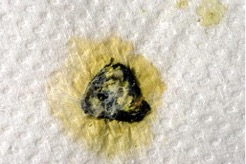
Normal bird droppings
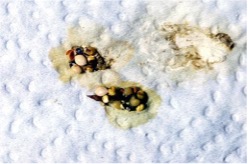
Bird droppings with undigested seeds (abnormal)
Behavior – Normal and Abnormal
Juvenile Feeding Behavior and Defensive Behavior
Baby altricial (hatched naked and fed by the parents) birds have normal behaviors designed to either obtain food or protect themselves from danger. The first is the begging/chirping that prompts the parents to regurgitate food. When the parents begin to feed, the young bird begins head-bobbing to keep the flow of food coming from the parent.
Another normal behavior of baby psittacines is "swaying" and "growling" when the nest is disturbed. This behavior is self-defense designed to frighten away predators and gradually ceases as the bird weans.
Social Noise
In the wild, many species of birds congregate morning and at dusk for social interaction. These activities include screaming, eating, and grooming. Birds resume these social activities at dusk. A common complaint in the pet home is that pet psittacines scream morning and evening. This is normal behavior of the bird and it may be unrealistic to expect it to change. The bird will consider the humans in its home as its social contact and want to maintain the "communication" it would normally have with other birds. Try using this time to interact with the bird. Social activity is an important part of the bird's day and may serve to form a bond between you and the bird. The best attitude is to let the bird have its social noise and accept it as part of keeping a bird as a pet. If the bird(s) are outdoors try to prevent neighbor complaints; create a sound buffer between the birds and neighbors.
Biting Birds
Birds bite, some more than others. Controlling or deflecting the biting reflex is the answer.
Birds also bite to hold on to lift themselves up, like using a third hand. This is "grasping" rather than aggression biting.
Birds bite in self-defense. Until a bird is tamed and accustomed to handling by humans, it will try to bite. Avoidance of the bite until the bird is conditioned to handling is the best response. If biting becomes a problem, consult your veterinarian for the name of a reputable trainer.
Sleeping Habits
Many birds, especially smaller psittacines sleep comfortably hanging on the side of the cage or aviary by their beak and feet. Birds may also choose to sleep or bathe out in the rain or unprotected in cold weather and do not seem to suffer from the inconvenience. It is best not to disturb birds that have roosted outdoors for the night no matter how uncomfortable they may appear as they may not find another suitable perch before dark.
Inappropriate Copulating Behavior
Birds that are not paired with suitable mates or that are bonded with their owners, may attempt unnatural copulation. The targets of this misplaced behavior are often cage fixtures, toys, human hands, or other species cage mates. Such behavior should not be encouraged. Seeking a same species mate for the bird or removing the inappropriate objects of the bird's affection, are the most common responses to this problem. Birds ideally should be paired with a mate of the same species. If two species are paired that may produce hybrid offspring, it is best they be separated and properly paired. If the birds are cage mates where reproduction cannot possibly occur, such as a cockatiel and a budgie, the birds are of similar size, and one is not injuring the other, no harm is done by permitting them to remain together.
Talking Birds
Some parrots and softbills talk, most do not. If you want to teach the bird a few words, it is best to separate them from other birds as early as possible, and teach them by repetition. Investigate which species are likely to talk before purchase if talking ability is important in your choice of a pet bird.
Feather/Skin Picking
Birds that have underlying disease problems or psychological problems may pull feathers or tear at their own or another bird's skin. At the first sign of feather picking an avian veterinarian should see the bird. Watch for an unusual number of feathers on the bottom of the cage. This behavior is often precipitated by the absence of the primary owner, or by isolation or boredom. Birds with nothing to do all day are strong candidates for this disorder. If one bird is pulling feathers from a cage mate. the birds should be separated as this behavior can sometimes lead to injury if the feather pulling becomes too aggressive. Normal molt is a semiannual event not related to behavior.
Obsessive/Compulsive Behavior
If the bird develops a pattern of behavior that is nonsensical, incessant, or habitual, such as pacing, head bobbing, rocking, swinging the head or body, or spinning, it should be examined by a veterinarian. Causes could range from disease to boredom. Disease should first be ruled out as a cause, but boredom is a frequent cause of obsessive behavior. Every attempt should be made to provide the bird with environmental enhancements such as toys or interesting foods. Nontoxic, non-injurious items that the bird can destroy or take apart are the best choice.
Enriching Your Bird’s Life
Visual and physical stimulation is important in a bird's life. One of the easiest things to provide for a bird is a clean environment. Take time each day to provide clean food and water in clean dishes, change or clean the floor substrate, and change or clean soiled cage items.
Toys provide activity involving the beak and feet, and give the bird distraction from boredom. Many toys are available from stores, and many can be made or improvised at home. If toys are purchased, check to be sure that they cannot be broken by the bird. Some toys, such as wood objects, are designed to be chewed apart by the bird, but birds should not be able to break plastic or glass into shards.
Some toys for smaller birds, such as lories or conures or the small cockatoos, include tennis balls, appropriately sized wood blocks or beads, sections of heavy nautical rope (natural fiber) tied in knots, and short lengths of PVC pipe that the bird can either climb into (larger) or carry around (smaller). Large birds, such as macaws and cockatoos, need heavy-duty toys that cannot be shredded or that can be shredded safely. Some birds such as lories will play in a paper bag and most birds will get hours of enjoyment from bottle caps and kitchen utensils. Keep enough toys so they can be alternated and washed often.
Toys to avoid include breakable plastic toys, toys that contain lead weights, leaded glass, lead wine seals, toxic plants, synthetic materials such as pieces of looped nylon carpet or nylon yarn, and toys with openings where the bird can become trapped or get a foot or neck caught.
Food and natural toys are ideal. Fresh nutshells, (walnut, coconut, Brazil nut) are excellent. The list of foods that provide interest, taste and nutrition is varied and the foods easy to obtain: Granola cereals; fresh corn-on-the-cob with part of the husk left on (birds like to tear up the husk), oranges, peas in the pod, fresh broccoli, and popcorn (no salt, no butter) are just a few. Anything that your bird can open and eat, or not tear up and still play with without danger, is entertainment. Junk or salted foods, chocolate, alcohol, or sugar (candy) should not be offered at any time.
Socialization is important in preventing boredom. Pet birds should be included in the family unit. If the bird is tame and not afraid of noises such as vacuum cleaners, taking the bird from room to room on a freestanding perch while you perform household chores can be a social event. Some families take their birds to work with them.
Play and time outside of the cage can be an important daily activity. Give pet birds time each day for individual attention. If the bird can safely come out of the cage, time on a playpen is beneficial. Most playpens have areas for climbing and swinging. Wood or rope ladders, swings, and dangling articles such as keys all make interesting toys. Be sure that the bird is supervised when it is outside of its cage and not permitted to climb onto cages of other birds or have access to household dangers such as toxic plants, lead or toxic items (e.g. leaded glass, window putty). Trimmed wings are essential for birds permitted access out of their cages, Never leave a bird unattended outside of its cage. Use a cage that can be seat-belted into the car so the bird can see out of the window and take the bird with you on short trips. Don't permit the bird freedom in a moving car. Do not leave a bird alone in a car during the day. Taking your pet bird into the shower every morning or once a week provides socialization, entertainment, and encourages bathing behavior.
Shower perches are available commercially. Bathing is a popular social event for birds and they need the baths. Daily bathing has helped many birds with self-mutilation habits, cease these behaviors.
Visual stimulation is important if the bird is left alone for long periods. Place the cage by a window. Be sure there is no direct sun-light on the cage during the day, or that there are places in the cage that are always shaded. If there is no perception of threat on the bird's part, you can also place other birds' cages nearby so they can see each other. Do not place raptors next to other species. Pet birds, however, can usually be placed side by side so long as they can't reach into each other's cages. Many birds enjoy the company of birds of the same species or other similar species (such as pionus with Amazons), but check for compatibility. Bonded pairs may not benefit from being placed near other birds.
Auditory stimulation is also important. CDs, radio, or TV can provide sound for the bird(s). The things that make a bird's life more interesting and rewarding are easy for most people to provide. We are responsible for their lives and we need to meet that responsibility.
Schedule a Visit
Come experience the compassionate, high-quality veterinary care provided by the Small Animal Primary Care team at Purdue University’s Veterinary Hospital. See how our veterinarians, staff, and students work together to deliver progressive, evidence-based care while building lasting relationships with you and your pet.
Suggested Articles
Feeding the Pet Chinchilla
A healthy chinchilla diet should focus on high-fiber hay, limited pellets, and small treats, with gradual diet changes to prevent digestive problems.
Shedding in Reptiles
Learn about shedding in reptiles, including what normal shedding looks like, common causes of shedding problems, and when to seek veterinary care.
Care for Sugar Gliders
Learn about sugar glider care, including diet, housing, behavior, preventive care, common health concerns, and what owners should know.