
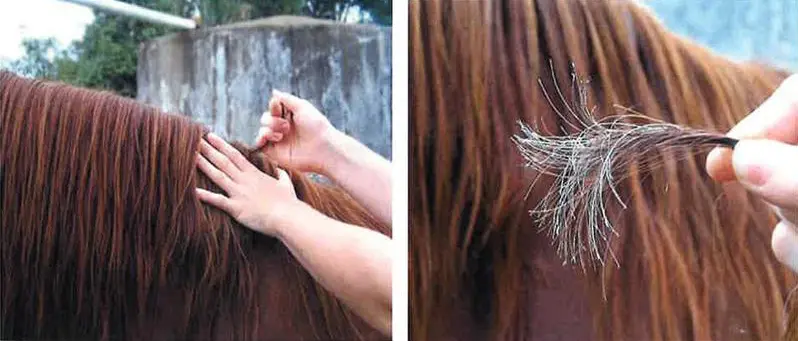
Genetic testing can help horse owners and veterinarians understand inherited health risks in Quarter Horses and related breeds. The Quarter Horse 6-panel test screens for variants linked to six conditions: glycogen branching enzyme deficiency (GBED), hereditary equine regional dermal asthenia (HERDA), hyperkalemic periodic paralysis (HYPP), myosin-heavy chain myopathy (MYHM), malignant hyperthermia (MH), and polysaccharide storage myopathy type 1 (PSSM1).
These conditions may affect foal survival, skin integrity, muscle function, or responses to anesthesia. Emma Nikolai, DVM, explains how each condition is inherited, the health problems it may cause, and why test results are useful when making breeding and veterinary care decisions.
Most horse owners have heard of the Quarter Horse genetic panel (or ‘the 6-panel'), but what exactly does it test for? The Quarter Horse genetic panel test for 6 debilitating genetic diseases: glycogen branching enzyme deficiency (GBED), hereditary equine regional dermal asthenia (HERDA), hyperkalemic periodic paralysis (HYPP), myosin-heavy chain myopathy (MYHM), malignant hyperthermia (MH), and polysaccharide storage myopathy (PSSM1). This genetic panel is required by the American Quarter Horse Association (AQHA) and the American Paint Horse Association (APHA) for all registered breeding stallions. In addition, testing is recommended for any Quarter Horse or related breed, including Paint Horse, Appaloosa, Appendix, and Pony of the Americas. While testing breeding horses is essential to prevent the propagation of these genetic diseases, the information can also be important for the long-term care of any horse. The panel is a simple noninvasive test, requiring only 20–30 mane or tail hairs submitted to the UC Davis Veterinary Genetics Laboratory. The panel can also be purchased directly through AQHA, which can be beneficial when trying to register a breeding stallion. It is great to have this panel done, but it is also important to understand what each disease entails and why preventing them is so important.
Glycogen branching enzyme deficiency (GBED)
Glycogen branching enzyme deficiency (GBED) is a mutation in the GBE1 gene, resulting in the inability to properly form branched glycogen, which is required for energy storage and survival. Unfortunately, GBED causes abortion or birth of severely weak foals which die in the first few months of life, and sadly, there is no cure or treatment available. Thankfully, GBED is a recessive trait, meaning a horse must inherit two copies of the mutation to be affected; carriers (horses with only one copy of the mutated gene) are clinically normal.
Hereditary equine regional dermal asthenia (HERDA)
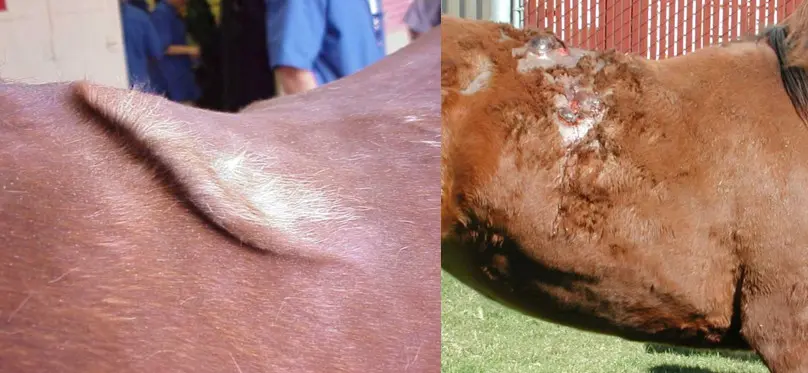
Hereditary equine regional dermal asthenia (HERDA) is caused by a mutation in the cyclophilin B gene, resulting in abnormal connective tissue. Affected horses have loose, stretchy, fragile skin, which can easily slough off and leave severe wounds. Hypermobile joints can also be seen with HERDA. Clinical signs are often first observed around 2 years of age when the horse begins training. There is evidence that heat and UV light can exacerbate clinical signs as well. There is no cure at this time, but it can often be managed via night turnout, minimizing skin trauma, providing proper wound care, and feeding a balanced diet with adequate protein, vitamins, and minerals but this condition frequently severely limits or prevents athletic performance. Similar to GBED, HERDA is a recessive trait.
Hyperkalemic periodic paralysis (HYPP)
Hyperkalemic periodic paralysis (HYPP) is caused by a defect in sodium channels within skeletal muscles, causing prolonged channel opening. This results in excess sodium entering and excess potassium leaving muscle cells, leading to prolonged muscle depolarization leading to severe muscle dysfunction. Clinical signs include muscle fasciculations, weakness, staggering, recumbency, and paralysis. The severity of this disease is variable between individuals. Episodes of HYPP are often triggered by stressors such as trailer rides, fasting, or anesthesia, and affected horses are typically clinically normal between episodes. HYPP is linked to the influential Quarter Horse sire Impressive and is inherited as an autosomal dominant trait, meaning only one copy of the mutation is required to cause disease. HYPP can often be managed through a low-potassium diet, regular exercise, and sometimes potassium-wasting diuretics such as acetazolamide or hydrochlorothiazide. While many episodes resolve spontaneously, some require veterinary intervention and intensive care.
Myosin-heavy chain myopathy (MYHM)
Myosin-heavy chain myopathy (MYHM) is the most recent addition to the panel. This mutation can cause one or more of three clinical presentations: immune mediated myositis, calciphylaxis, and nonexertional rhabdomyolysis. Each presentation is slightly different in its pathology, but the clinical signs are similar: painful muscle damage and sevre atrophy. MYHM is often triggered by an inflammatory process, such as vaccinations, trauma, or infections. MYHM is inherited as an autosomal codominant trait, meaning one copy of the mutation can cause disease, while two copies typically result in more severe clinical signs. For affected horses, it is recommended to space out vaccinations and avoid the strangles and influenza vaccines. When an episode occurs, some horses may respond to treatment with steroids and supportive care, while in others, attacks can be fatal.
Malignant hyperthermia (MH)
Malignant hyperthermia (MH) results from a mutation in the ryanodine receptor 1 (RYR1) gene, causing excess release of calcium within muscle cells, leading to a hypermetabolic state. This hypermetabolic state causes elevated heart rate, hyperthermia (dangerously elevated body temperature), muscle rigidity, and electrolyte derangements, which can progress rapidly and become fatal. MH is inherited as an autosomal dominant trait, requiring only one copy of the mutation to cause disease. MH events are often triggered by general anesthesia, but can also follow other stressful events, strenuous exercise, or extreme heat. Unfortunately, it is often fatal, but, if recognized quickly, intensive supportive care can be implimented.
Polysaccharide storage myopathy (PSSM1)
Polysaccharide storage myopathy (PSSM1) is caused by a mutation in the glycogen synthase 1 (GYS1) gene, which causes increased glycogen concentrations and abnormal polysaccharide formation in skeletal muscles. Clinical signs are variable but commonly include muscle soreness, prolonged muscle contractions, severe weakness, reluctance to move, and recumbency. Chronically, it can also lead to atrophy of the topline muscles and marked reductions in athletic performance. PSSM1 is often referred to as “Monday Morning Disease” because episodes frequently occur after exercise following periods of rest. Management typically includes regular exercise and feeding a low carbohydrates and high fat diet. Individual episodes usually require treatment with intravenous fluids, muscle relaxants, and pain medications. A similar condition, PSSM2, presents in a similar manner, but is not currently detectable with genetic testing.
In conclusion, the Quarter Horse 6 Panel is an essential tool for identifying genetic diseases that significantly impact breeding decisions and long-term quality of life of Quarter Horses and related breeds. It is important to also note that these are not the only genetic diseases that can be tested for. For example, the APHA also requires their breeding stallions to be tested for lethal white overo syndrome (LWOS). Therefore, it is important to discuss with your veterinarian or breed association to determine what genetic tests are most appropriate for your horse.
References
5 Panel Genetic Testing: What to Know. (2018, April 18). American Quarter Horse Association. https://www.aqha.com/-/genetic-test-roundup
Aleman, M., McCue, M., & Bellone, R. R. (2025). Allele Frequencies and Genotypes for the Ryanodine Receptor 1 Variant Causing Malignant Hyperthermia and Fatal Rhabdomyolysis With Hyperthermia in Horses. Journal of Veterinary Internal Medicine, 39(3). https://doi.org/10.1111/jvim.70081
Aleman, M., Nieto, J. E., & Magdesian, K. G. (2009). Malignant Hyperthermia Associated with Ryanodine Receptor 1 (C7360G) Mutation in Quarter Horses. Journal of Veterinary Internal Medicine, 23(2), 329–334. https://doi.org/10.1111/j.1939-1676.2009.0274.x
Durward-Akhurst, S. A., & Valberg, S. J. (2025). Myosin Heavy Chain Myopathy and Immune-Mediated Muscle Disorders. Veterinary Clinics of North America: Equine Practice, 41(1), 61–75. https://doi.org/10.1016/j.cveq.2024.10.005
Firshman, A. M., & Valberg, S. J. (2025). Polysaccharide Storage Myopathy. Veterinary Clinics of North America Equine Practice, 41(1), 125-134. https://doi.org/10.1016/j.cveq.2024.11.004
Genetics 101. (2025, July 8). APHA: American Paint Horse Association. https://apha.com/registration/genetics-101/#1710188826286-f63985c5-ff26
Gershony, L. (2022, November 30). AQHA has added MYHM to the American Quarter Horse Genetic Health Panel offered through the Association. Veterinary Genetics Laboratory; UC Davis Veterinary Medicine. https://vgl.ucdavis.edu/news/AQHA-adds-MYHM-to-health-panel
LABOKLIN (UK)| Genetic Diseases | Horses| Bundle: Quarter Horse / Appaloosa (PSSM + HERDA + GBED + HYPP). (2026). Laboklin Laboratory for Clinical Diagnostics. https://www.laboklin.co.uk/laboklin/showGeneticTest.jsp?testID=8250
Quarter Horse & Related Breeds Disease Panel (5-panel plus). (n.d.). UC Davis Veterinary Genetics Laboratory. https://vgl.ucdavis.edu/panel/quarter-horse-disease-panel
Rashmir-Raven, A. (2013). Heritable Equine Regional Dermal Asthenia. Veterinary Clinics of North America: Equine Practice, 29(3), 689–702. https://doi.org/10.1016/j.cveq.2013.09.001
Spier, S. (2006). Hyperkalemic Periodic Paralysis: 14 Years Later. AAEP Proceedings, 52, 347–350.
Young, A. (2020, July 7). High Five - AQHA’s Dedication to Research and Success of the “Five-Panel Test.” Horse Report - Center for Equine Health; UC Davis School of Veterinary Medicine. https://cehhorsereport.vetmed.ucdavis.edu/news/high-five-aqhas-dedication-research-and-success-five-panel-test


