
It’s Not Far-fetched to Find Drew Brees in the College of Veterinary Medicine

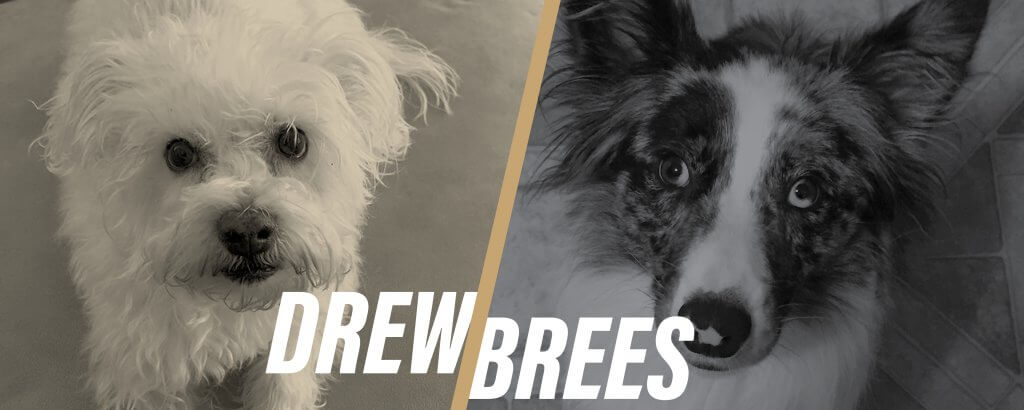
A split image featuring two dogs, one fluffy white and the other with a patterned coat, overlaid with the name Drew Brees.

Did you know that Drew Brees is a professor at the College of Veterinary Medicine? A pet professor that is, or rather pet professors.

The legendary football player is represented in the college in the form of two dogs, a Terrier mix named Drew and an Australian Shepherd border mix named Brees. Brees is owned by Dr. Ellen Lowery, director of the Purdue University Veterinary Hospital, while Drew is owned by Dr. Jim Weisman, assistant dean for student affairs.
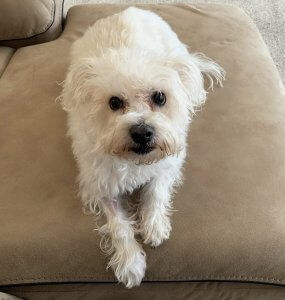
Drew the dog pictured laying on a chair looking up at the camera

“As far as the name Drew goes, it’s basically my admiration for Drew Brees. I’m a Boilermaker through and through,” Dr. Weisman says. Drew is about nine-years-old and Dr. Weisman describes him as a very self-sustained dog. He enjoys playing fetch by himself by dropping a ball down a flight of stairs and bringing it back up to the top. Dr. Weisman says, for a dog, Drew is rather organized. He has his own toy box that he gets his things out of at the beginning of the day, but always brings them back and puts them away at the end of the day.

Brees the dog sits looking up at the camera

As for Brees, Dr. Lowery says, “I’m not the biggest football fan, but I have so much respect for Drew Brees.” She says that Brees is about five-years-old and has a calm demeanor overall, but also is not afraid to act like a watchdog when she needs to. Dr. Lowery explains that when they’re home, “She keeps all of the squirrels and chipmunks in line.” When Brees is off-duty from her watchdog role, she enjoys being a “greeter” in the College of Veterinary Medicine. Students may find her in a hallway between classes always happy to be petted. Dr. Lowery says that students and staff love having Brees as a local mascot for the college.

Both of these dogs are involved in the college’s Pet Professor program. Animals in the program are often the pets of staff and faculty and provide a way for students to learn the foundations of conducting physical examinations and giving vaccinations to domestic pets as well as practicing ultrasounds and minor physical therapy techniques. Animals like Drew and Brees get a free examination while students get fun friends to play with and learn from, and who wouldn’t want a teammate like Drew Brees!

Writer(s): Jonathan Martz, PVM Communications Intern | pvmnews@purdue.edu

Recent Stories

“Paws Up” for Jennifer Danaher – brought to you by the PVM Wellness Committee

This week we express our gratitude to Jennifer Danaher, who is department secretary for Veterinary Clinical Sciences.

‘Purdue Pursuits’: A PVM angle on Purdue’s teaching and learning reading groups

Crafting meaningful and engaging course experiences has been at the top of Dielson Vieira’s mind ever since he joined the Purdue University College of Veterinary Medicine’s faculty in 2024. As a clinical assistant professor in the Department of Basic Medical Sciences, Vieira is already adept at applying innovative teaching practices to classroom environments, but that doesn’t stop him from seeking out new ideas, approaches and perspectives — insights he gains through outlets like Purdue’s teaching and learning reading groups.

Top tier biology journal publishes PVM study that unlocks secrets of a drug-resistant fungal pathogen, which causes serious infections in humans

Though the name “Candida auris” is far from a household term, public health experts know it well because the multi-drug-resistant fungal pathogen, which causes serious human infections, has been classified as an urgent threat by the U.S. Centers for Disease Control and Prevention (CDC) Antibiotic Threats Report (2019). Dr. Shankar Thangamani, Associate Professor of Microbiology and University Faculty Scholar in the Purdue University College of Veterinary Medicine’s Department of Comparative Pathobiology, is researching C. auris, aided by a 2.4 million grant from the National Institutes of Health (NIH). New research findings, just published in Nature Microbiology, show how C. auris adapts and evades the immune system.

In Print: ‘Translational Research Methods for Tauopathies’

A just-published 300-page volume edited by Jessica Fortin, Purdue assistant professor in the College of Veterinary Medicine’s Department of Basic Medical Sciences, provides a significant new resource for researchers studying a group of neurodegenerative diseases known as tauopathies. “Translational Research Methods for Tauopathies” provides detailed protocols intentionally selected to serve as a basis for research laboratories seeking to further treatments for such debilitating neurodegenerative diseases as Alzheimer’s and chronic traumatic encephalopathy (CTE).

It’s Almost Here!

Though the annual Purdue Veterinary Conference is almost upon us, there’s still time to register and take advantage of this time-honored College of Veterinary Medicine fall tradition that combines excellent continuing education with fun opportunities for reconnecting with colleagues and classmates, networking, and learning about the latest veterinary trends and products. The 2026 Purdue Veterinary Conference takes place September 23–26 on the Purdue University campus. The annual event has something for everyone, from veterinarians to veterinary technicians, faculty, staff and students.