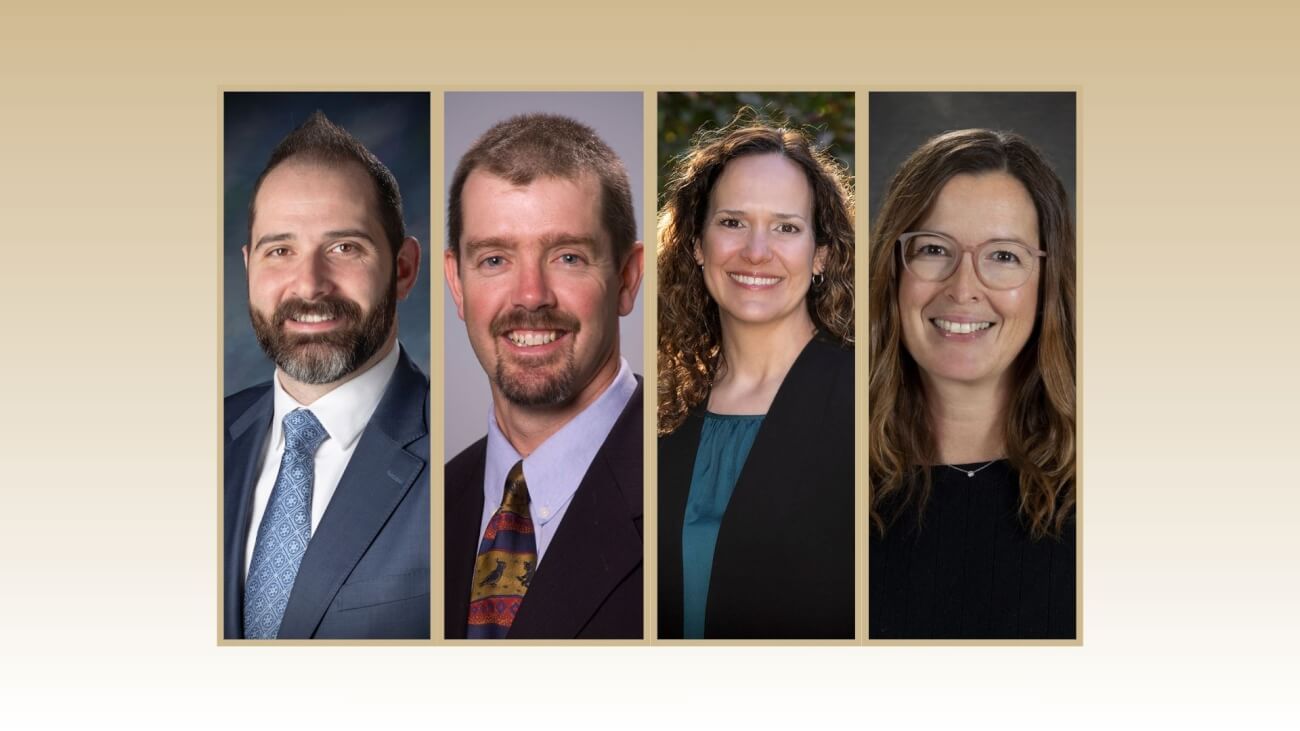
As the Purdue University College of Veterinary Medicine’s Leadership Cabinet carries out its oversight of departments and units, Dean Bret Marsh announced three appointments since the end of 2025 to further solidify the leadership team. The appointments include positions in the Departments of Comparative Pathobiology and Veterinary Clinical Sciences and the Purdue University Veterinary Hospital.
Associate Dean for the Purdue Veterinary Hospitals

The most recent appointment was announced July 1, when Dr. Christopher Fulkerson was named as Associate Dean for Clinical Affairs and Chief Veterinary Officer for the Purdue Veterinary Hospitals. The announcement came on the same day that his academic promotion to full clinical professor of veterinary medical oncology took effect.
“Dr. Fulkerson has provided effective leadership as Interim Associate Dean of Hospital Operations since September 2025, and I am very pleased he agreed to move into his new role,” Dean Marsh said. “Please join me in congratulating Dr. Fulkerson on this significant achievement!”
Dr. Fulkerson earned his Purdue DVM degree in 2010 and then completed a small animal internship at the Texas A&M College of Veterinary Medicine and Biomedical Sciences. Afterward, he returned to Purdue, completing an Oncology Residency in 2014 before joining the Purdue Veterinary Medicine faculty as clinical assistant professor of veterinary medical oncology in the Department of Veterinary Clinical Sciences. In 2015, he became board certified by the American College of Veterinary Internal Medicine (ACVIM) in the Specialty of Oncology. He was promoted to clinical associate professor in 2021 and the following year was appointed as the head of the Medical Oncology Section.
With 23 peer reviewed publications, Dr. Fulkerson has made significant contributions to the discovery mission of the Werling Comparative Oncology Research Center (WCORC) as a collaborator and a lead investigator. Additionally, he is a member of the Purdue University Institute for Cancer Research and has presented his research at ACVIM and Veterinary Cancer Society meetings.
Dr. Fulkerson also serves as the Chair of the ACVIM Certification Council and the oncology representative. He just recently received the ACVIM William R. Fenner Early Career Award for Outstanding Service, which is presented to a diplomate exemplifying exceptional service in the ACVIM and/or their specialty in a volunteer capacity within the first 15 years following board-certification.
Following the announcement of his appointment, Dr. Fulkerson shared, “Purdue is a great place to work, learn, and bring animals for care. Together, we have made significant progress on the financial health of our hospitals over the last fiscal year. I am looking forward to this opportunity to continue building on that success!”
Veterinary Clinical Sciences Department Head

Dr. Timothy Lescun, a board-certified large animal surgeon and professor of large animal surgery, was announced as the head of the Department of Veterinary Clinical Sciences March 9. “I am grateful for Dr. Lescun’s service as Interim Department Head since January 2025, and I know he will continue to provide exceptional service to the Department and to our College,” Dean Marsh said.
Dr. Lescun earned his BVSc degree at the University of Melbourne, Australia in 1994 and completed his residency at Purdue in 1999. He became a Diplomate of the American College of Veterinary Surgeons (ACVS) a year later, joined the PVM faculty in 2002, and earned his PhD at Purdue in 2015. He has been involved in training 25 veterinary surgery residents, acting as program director since 2024. He also serves as director of the college’s Center for Clinical Translational Research.
“It is an honor to be given this opportunity to lead the VCS department,” Dr. Lescun said. “I am excited to serve in this role and to help our faculty, staff and students achieve their goals as we move into a new chapter for PVM.”
Last fall, Dr. Lescun was elected to the ACVS Board of Regents as the new ACVS large animal regent. He has an extensive record of involvement in the ACVS, having served on the Research Committee and the Examination Committee, including as chair of each; the ACVS Foundation Board of Trustees; and most recently as chair of the Working Group to Reassess the Examination Process. He also has served as a seminar chair, abstracts reviewer, Large Animal Residents’ Forum judge, and as a member of the editorial review board for the Veterinary Surgery journal.
Dr. Lescun’s election to the ACVS Board of Regents coincided with another honor he received through the ACVS last fall when he became an “Honored Mentor” – a designation that is a result of past residents recognizing him through donations to the ACVS Foundation. Dr. Lescun says as a Purdue faculty member, he has enjoyed teaching surgery to veterinary students and residents and helping them develop their careers. Dr. Lescun is recognized as a leader in the field of equine and translational orthopedic medicine and has pioneered a finite element analysis method to investigate the response of bone to implants such as screws in fracture repair. In his role as CCTR director, he oversees core facilities in the college that support preclinical biomedical research on campus. His current research interests include modeling and simulation of orthopedic conditions of the horse. His clinical interests include general surgery, lameness and orthopedic disease in performance horses, orthopedic infections, and fracture fixation.
Interim Head and Assistant Head of Comparative Pathobiology
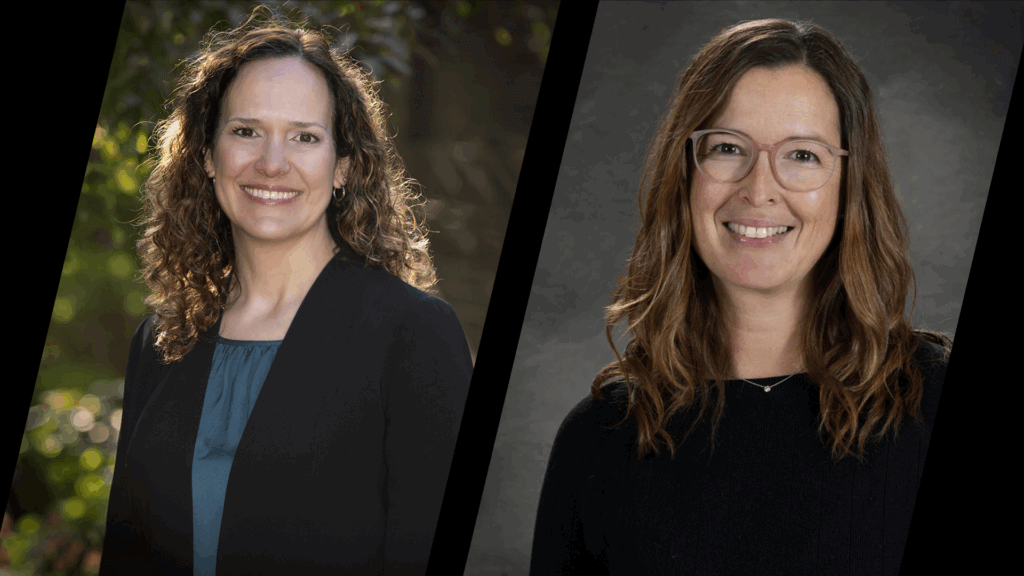
At the end of 2025, Dean Marsh announced interim leadership for the Department of Comparative Pathobiology (CPB), naming two CPB faculty members as interim head and assistant head of the department while a department head search is conducted. Clinical Professor and Associate Dean for the Veterinary Diagnostic Laboratories, Dr. Kenitra Hendrix, was named as interim department head, and Dr. Abigail Cox, the Dr. William O. Iverson Associate Professor of Comparative Pathology, agreed to work alongside her as assistant department head, taking the lead on the department’s graduate student affairs.
“Dr. Hendrix brings her extensive leadership experience as the director of the Indiana Animal Disease Diagnostic Laboratory to this added role, while an external search is conducted to identify the next CPB Department Head,” said Dean Marsh. He added that Dr. Cox’s knowledge of the department also is very beneficial during this transition period. “I am grateful to both colleagues for their willingness to assume these roles on an interim basis, and I appreciate how they are providing the leadership and direction needed to guide the department until a permanent department head is named.”
In her role as director of the Indiana Animal Disease Diagnostic Laboratory (ADDL), Dr. Hendrix oversees two laboratory facilities – the Willie M. Reed Animal Disease Diagnostic Laboratory located in West Lafayette, and the Dennis R. Heeke ADDL at the Southern Indiana Purdue Agricultural Center (SIPAC) in Dubois, Indiana. In July of 2025, she was promoted to associate dean, in recognition of the expanded scope of her leadership and strategic oversight across the diagnostic laboratory enterprise.
A DVM graduate of Auburn University, Dr. Hendrix completed a clinical microbiology residency and earned her PhD at Washington State University. She is board-certified by the American College of Veterinary Microbiologists in all three specialties – Virology, Immunology, and Bacteriology and Mycology, and joined the Purdue Veterinary Medicine faculty in 2013.
Dr. Cox earned her undergraduate degree in biology at Washington University in St. Louis before coming to Purdue where she earned her DVM degree in 2008. She then completed a residency in anatomic pathology and earned her Master of Science degree in 2011, after which she continued her studies at Purdue, earning her PhD in 2016. A diplomate of the American College of Veterinary Pathologists, Dr. Cox also serves as director of the college’s Histology Research Laboratory, and is the head of the Pathology Section of the Comparative Pathobiology Department.