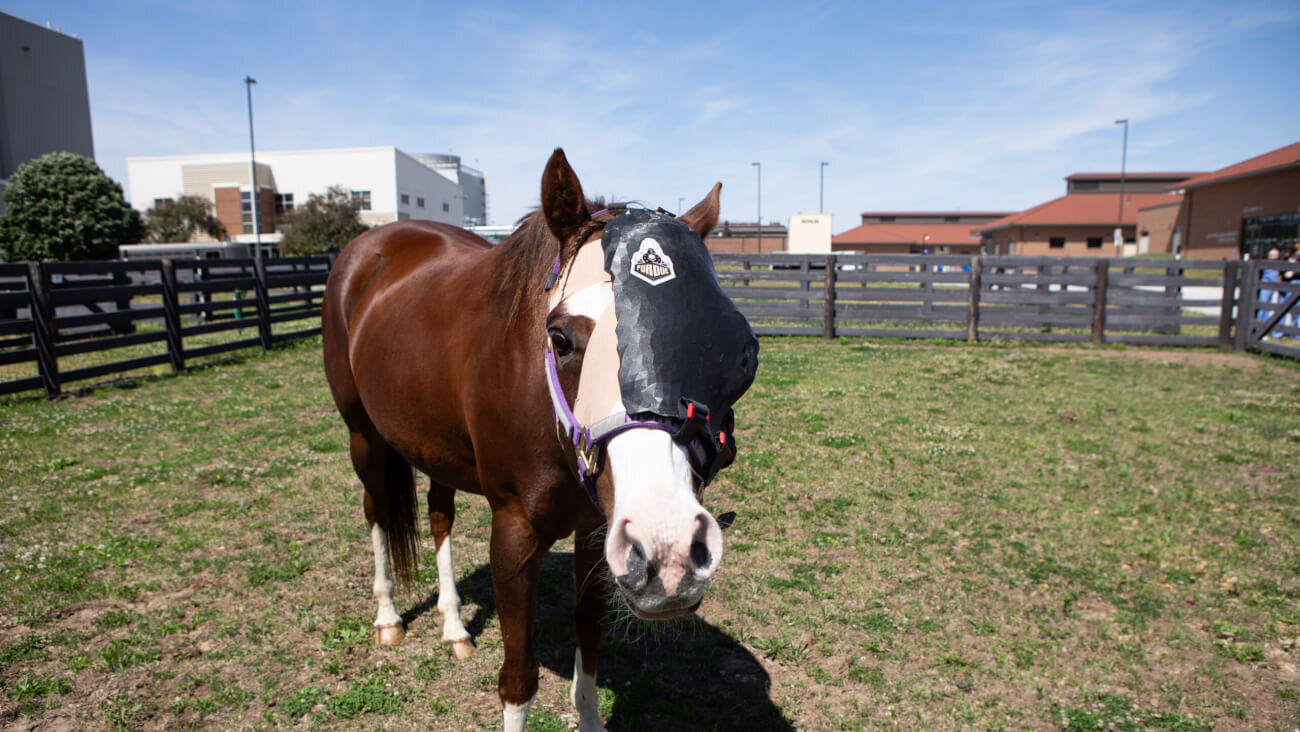
For a horse named Sassy, Purdue Veterinary Medicine’s Brunner Equine Hospital proved to be the right place at the right time to recover from a scary accident that happened during a violent spring storm in Michigan. According to Dr. Danielle Cucuzella, Purdue visiting assistant professor of large animal surgery, the Quarter Horse was seriously hurt during near 100 mile-per-hour winds where she lives in Saint Louis, Michigan.
“Due to severe trauma to Sassy’s face, skull, sinuses, and left orbit [eye socket] after being struck by a fallen tree limb during the storm, Sassy was seen by her local veterinarian and then referred and hospitalized for emergency stabilization by our colleagues at Michigan State University,” Dr. Cucuzella explained. Initial evaluation and x-rays showed severe fractures to multiple bones of her skull and face. “Additional imaging in the form of CT was recommended in order to more precisely map the damage,” Dr. Cucuzella said. Once she was stable enough for travel, Sassy was sent to Purdue because of the standing CT machine at the College of Veterinary Medicine’s Brunner Equine Hospital, which makes it possible for the head to be scanned with the horse standing.
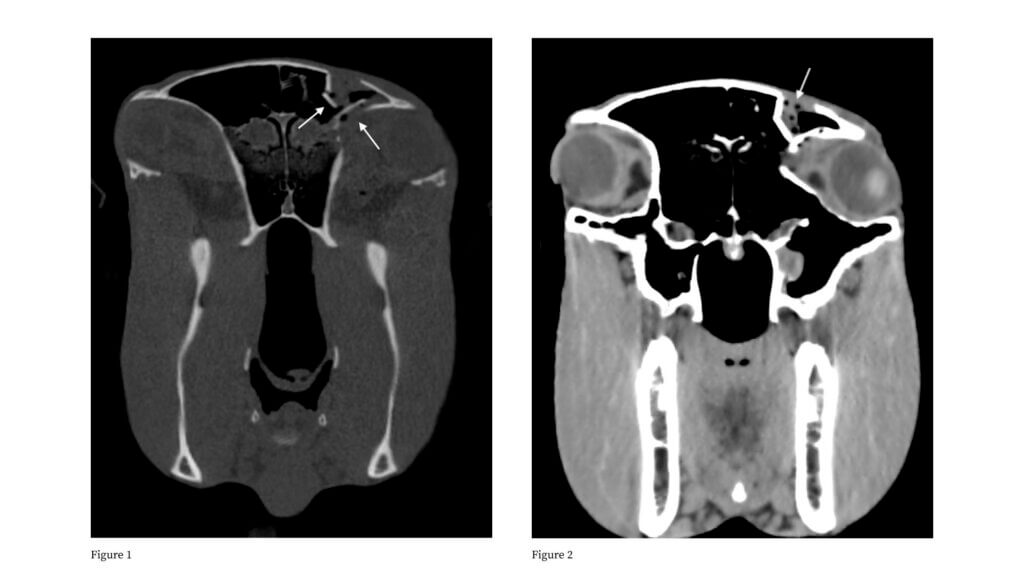
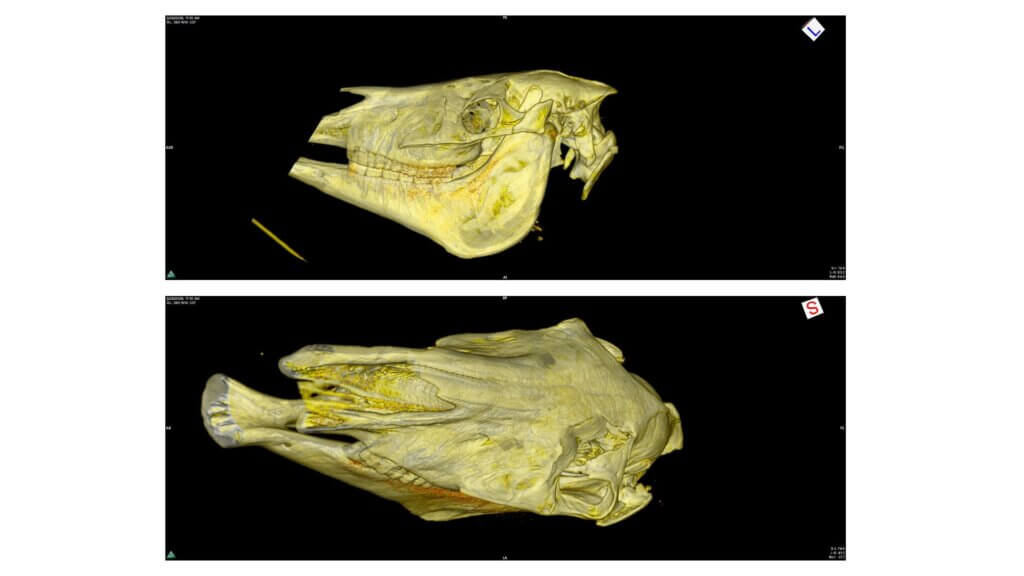
“Thankfully, we have the Qalibra standing CT system that makes it possible to perform a CT scan without having to anesthetize the horse,” Dr. Cucuzella said. “Putting Sassy under anesthesia would have been extremely dangerous given the nature of her injuries.” Purdue has the only Qalibra standing CT equipment in the Midwest.
“The Qalibra CT scan unfortunately showed that there was much more extensive damage deeper in the skull, including multiple fractures of her orbit that were in danger of damaging her globe [eyeball] or optic nerve at any time if displaced,” Dr. Cucuzella shared. “This would result in Sassy losing her vision or her eye completely. For that reason, it was decided to pursue additional protective measures. Sassy’s CT was used to build her a 3-D-printed reconstruction external fixation helmet to protect her eye and other important structures during healing.”
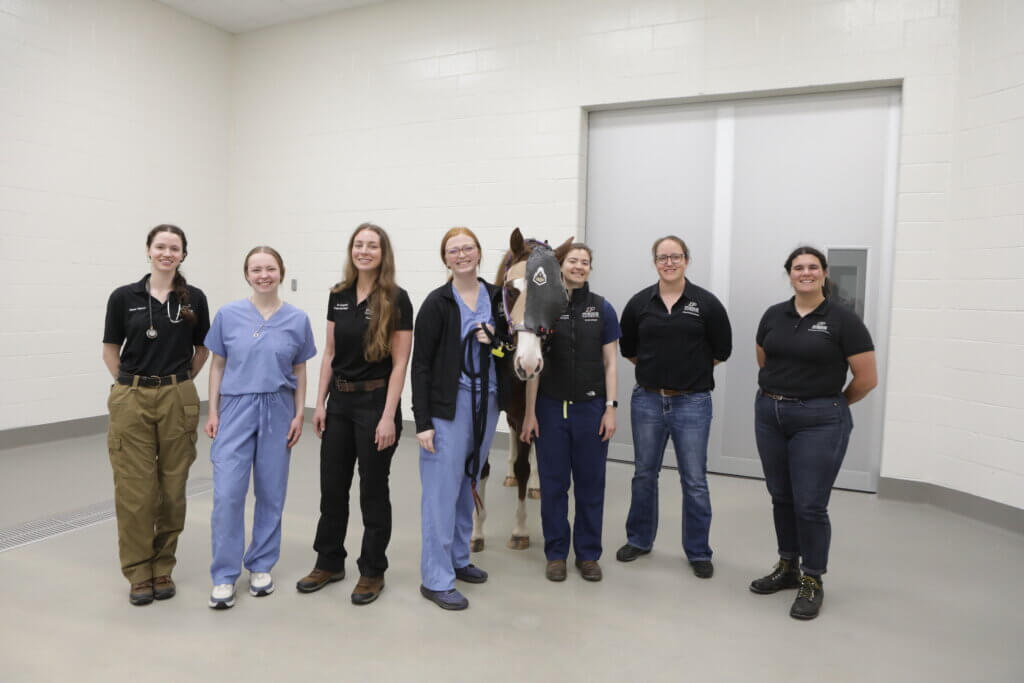
Together, the large animal surgery, diagnostic imaging, and ophthalmology services worked with the help of expertise from Purdue’s School of Aeronautics and Astronautics to 3-D print a protective helmet for Sassy that would hopefully prevent her fractured bones from dislodging and causing further complications, and allow them time to heal.
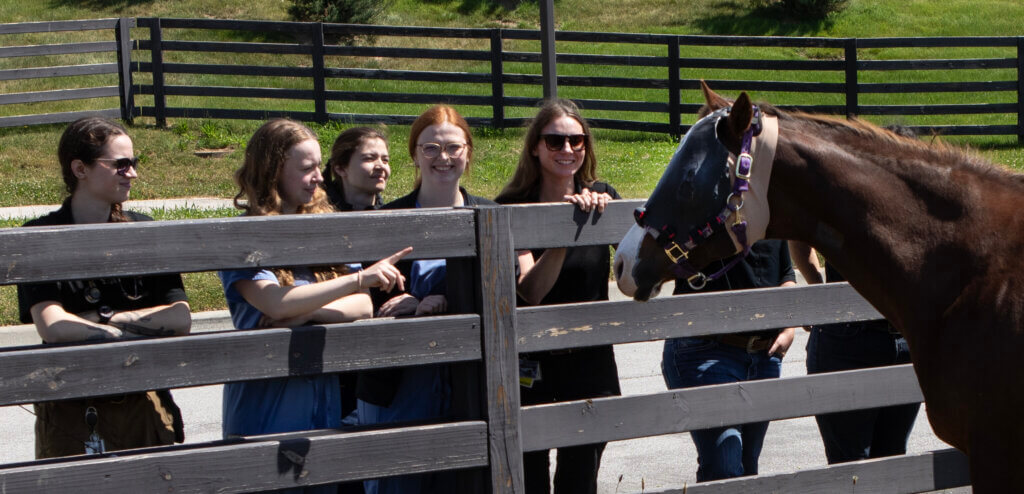
The helmet has the appearance of a black mask that covers just the side of her face that was injured, giving her a Phantom of the Opera-esque look, and she wore it without objection as she recovered at the Equine Hospital. With the recovery progressing smoothly, Sassy was released from the hospital June 1 to go home with her owner to continue recovering there.
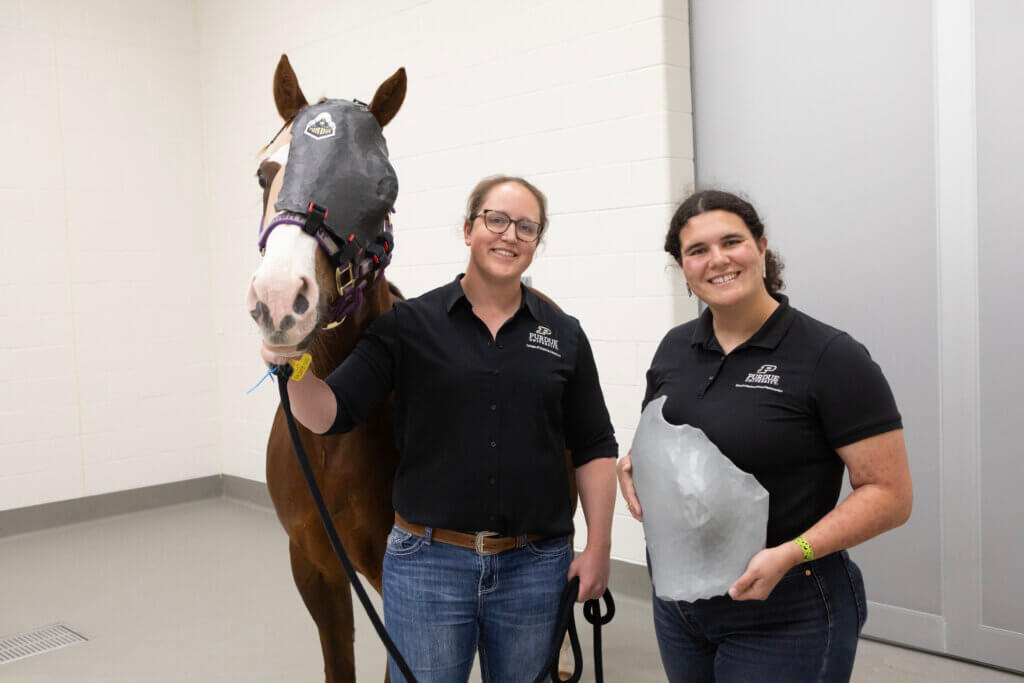
“She has a great prognosis for survival, and with the addition of our 3-D printed helmet, she also now has a good prognosis for maintaining her vision and hopefully can soon get back to the young child who rides her,” Dr. Cucuzella said.
Sassy’s treatment proved to be a total team effort that even linked veterinary medicine and engineering, with the guidance of Dr. Michelle Tucker, assistant professor of large animal surgery, who also holds an engineering degree and works with 3-D printing as part of her research. And just in time to help with Sassy’s care and treatment, she added a new research team member, Ece Inanc, a graduate research assistant currently working toward earning a PhD from the School of Aeronautics and Astronautics in Purdue’s College of Engineering.
A big thank you to PVM’s Equine Surgery team for providing excellent care and treatment of Sassy, with the hope that she will again be able to carry her rider at their Michigan home.