It was December 2024, just four days before Christmas, when Jackie Albrecht woke up to excruciating eye pain. At 15 years old, she was a freshman at Lyons Township High School in LaGrange, Illinois, and had been looking forward to winter break.
Instead, the holiday season turned into a frantic race for Jackie and her family to find a viable treatment for a mysterious, painful disease.
Over a span of 14 days, Jackie visited 10 doctors, including urgent care physicians, ophthalmologists and cornea specialists. Eventually, she was referred to Dr. Elmer Y Tu at the University of Illinois College of Medicine, who specializes in treating Acanthamoeba keratitis, or AK.
AK is a rare condition caused by a microscopic amoeba (Acanthamoeba) that binds onto contact lenses, often when someone showers, swims, bathes or simply rinses their lenses in tap water. Municipal water treatments that lower bacteria levels can’t destroy the amoeba, leaving them free to enter the eye. Without timely treatment, people with AK can lose their sight.
Thankfully, Jackie received a definitive diagnosis and proper treatment quickly, and she’s experienced no long-term effects.
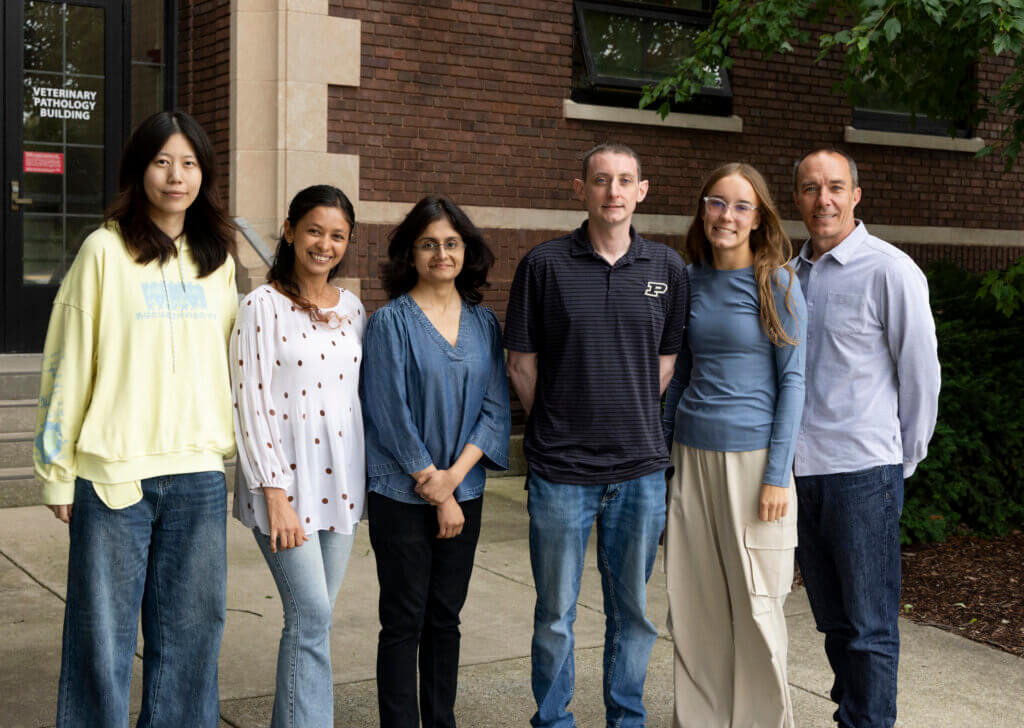
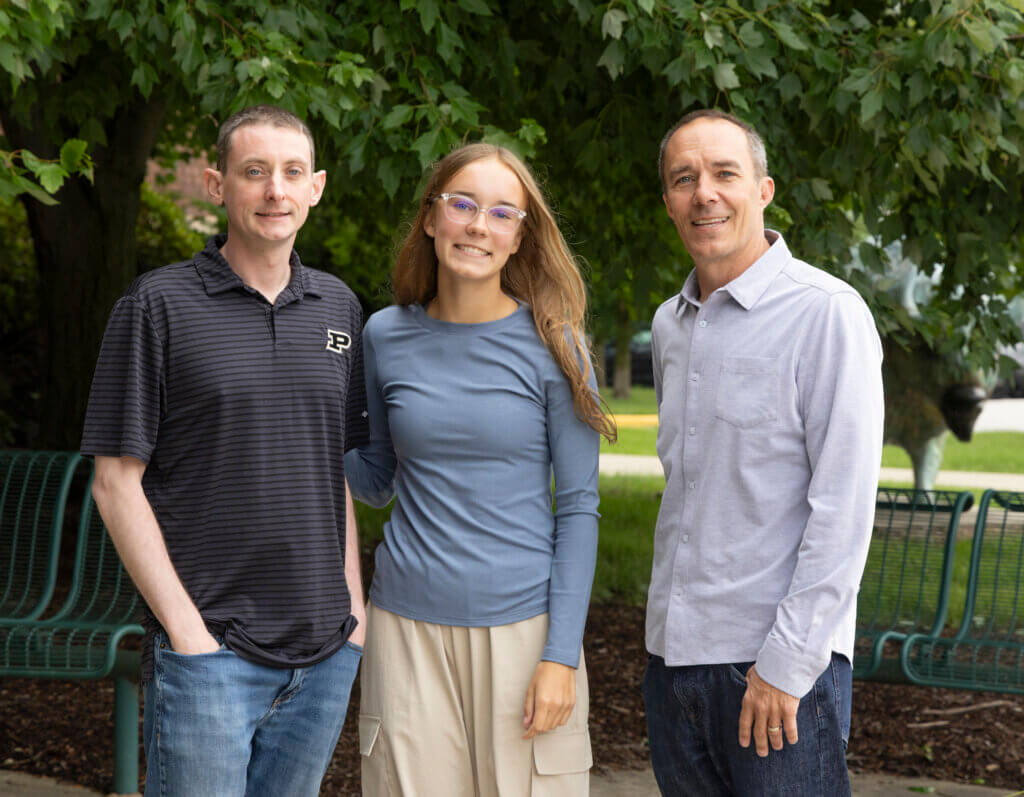
Now an advocate for AK disease awareness, Jackie spent several weeks this summer in the lab of Dr. Christopher Rice, assistant professor of parasitology in the Purdue University College of Veterinary Medicine, who’s seeking to develop more effective medications for this rare disease.
The ‘pool cleaner’ drops
Jackie’s treatment initially required round-the-clock dosing with two different eye drops: PHMB (a broad-spectrum antiseptic and anti-amoebic medication) every hour and Gatifloxacin (an antibiotic) one to two times a day.
“I was on PHMB drops hourly around New Year’s Eve, even when I was hanging out with my friends or playing soccer,” Jackie says. “They were very painful. We had to keep them refrigerated also, so it was hard to go on vacation or go to family around the holidays.”
When Jackie’s father, Matthew Albrecht, researched his daughter’s medications, he was stunned to find that PHMB includes chlorine-containing compounds. “It’s like a diluted version of what – when you Google it – is a pool cleaner, which is kind of frightening as a parent.” The medication, which causes intense redness and burning, requires meticulous dosing and monitoring to prevent permanent eye damage.
Compounding the grueling treatment was Jackie’s extreme sensitivity to light and facial pain, common effects of the disease. As AK damages the cornea, it forces the trigeminal nerve (the largest and most complex of the cranial nerves) into a state of overdrive, causing standard light signals to be misinterpreted by the brain as physical facial pain.
Even household lights can be painful, requiring patients to wear sunglasses inside or to use blackout curtains. Some can’t go outside at all.
Often, Dr. Rice says, people with AK must go on medical leave until they’ve completed their treatment, which can take months or years. “It takes a huge toll on the patient, their family, their caregivers, if they have one,” he says.
The study of neglected diseases
Dr. Rice, the section head for Microbiology, Immunology and Molecular Genetics in the Department of Comparative Pathobiology, is seeking to develop new anti-amoebic therapeutics for four neglected diseases: AK and three brain-eating infections from other amoeba.
A member of the scientific advisory board for the Acanthamoeba Keratitis Eye Foundation, Dr. Rice also advocates for insurance coverage of AK treatments, and he interacts with patients and clinicians to better understand other challenges from the disease.
Globally, the field of amoebic research is alarmingly small, with only about 150 people studying amoebae worldwide. Because they fall under the category of rare and neglected diseases, funding and attention are scarce.
Dr. Rice is determined to find new treatments for diseases such as AK, ones without such a punishing regimen and with higher success rates. He uses techniques such as high-throughput screening, which employs robotics to rapidly test chemical or biological compounds against whole-cell pathogens or specific targets, compressing months of manual testing into days.
In just three years at Purdue, Dr. Rice’s team has screened over half a million compounds in their quest for new amoebic disease treatments.
A fortuitous discovery
The Albrechts have a close family friend in Valparaiso, Indiana, who lost vision in one eye to AK. In addition to seeking out her advice, the family did extensive online searches into current research and treatments. That’s when they discovered Dr. Rice’s research program.
The discovery seemed fortuitous. Both Matt and his wife grew up in Indiana, and they vacation in the state every summer. “Purdue is in my backyard,” Matt says. “What are the odds?”
Jackie had already coded and launched her own website to raise awareness, and she had advocated with her school to promote AK-prevention techniques during swim class. Still, she wanted to do more. On a whim, she reached out to Dr. Rice.
A first-generation scientist who prides himself on making complex research accessible, Dr. Rice set up stringent safety protocols in collaboration with the Youth Protection office, part of Purdue’s Office of the Vice President for Ethics and Compliance, and the Institutional Biosafety Committee, part of Purdue’s Office of Research. The process, which took around 10 months, was complete in time for Jackie to do a research project this summer.
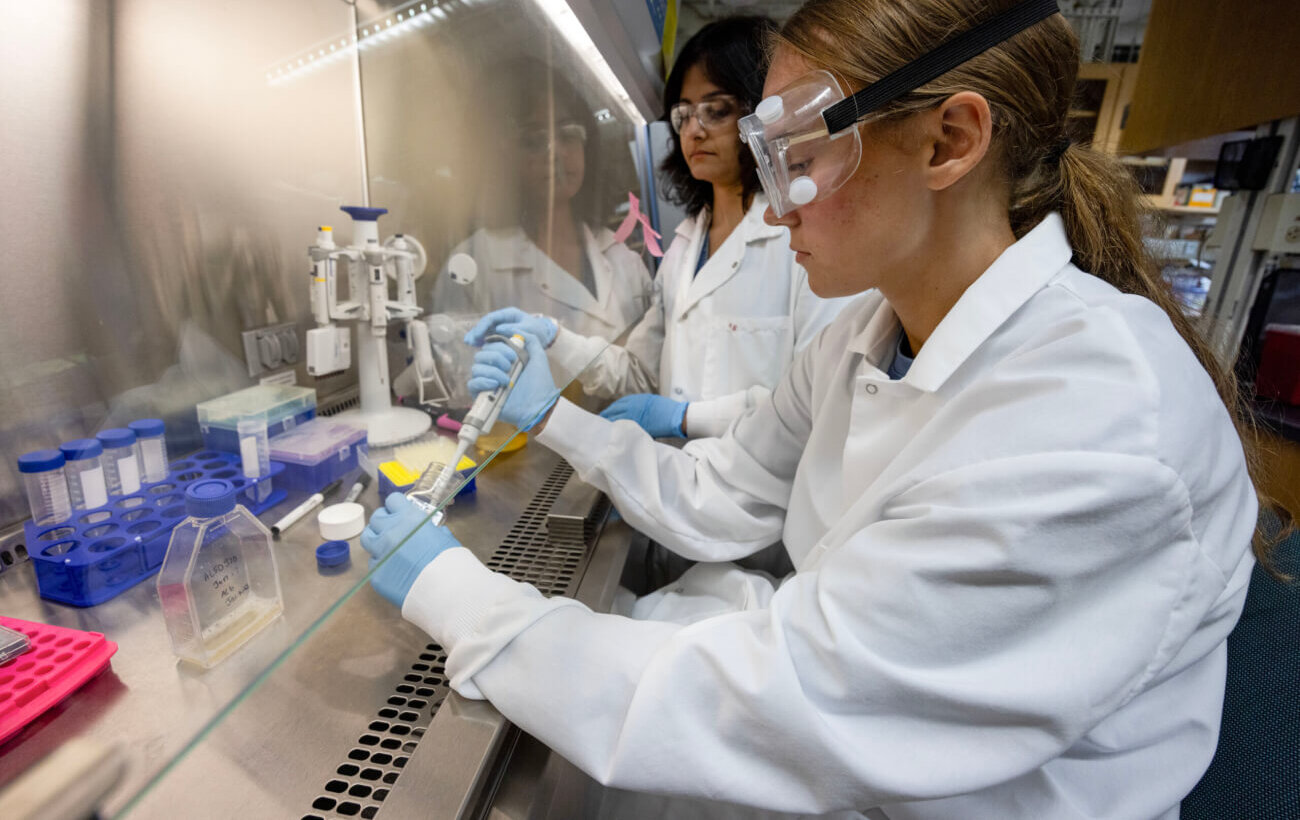
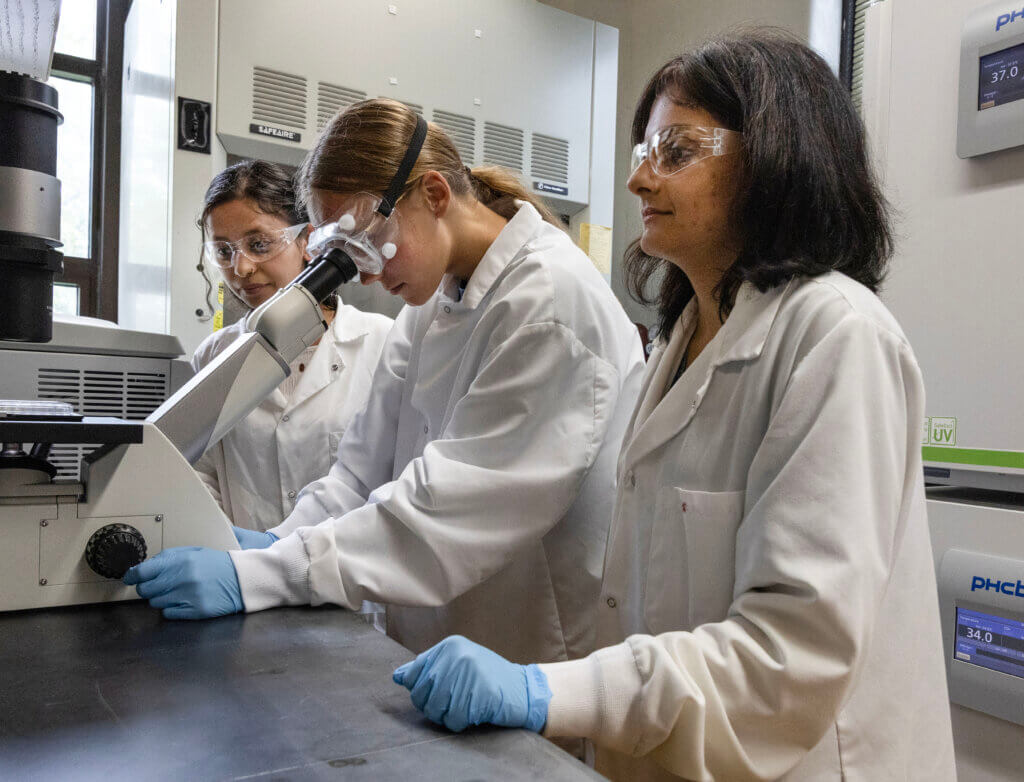
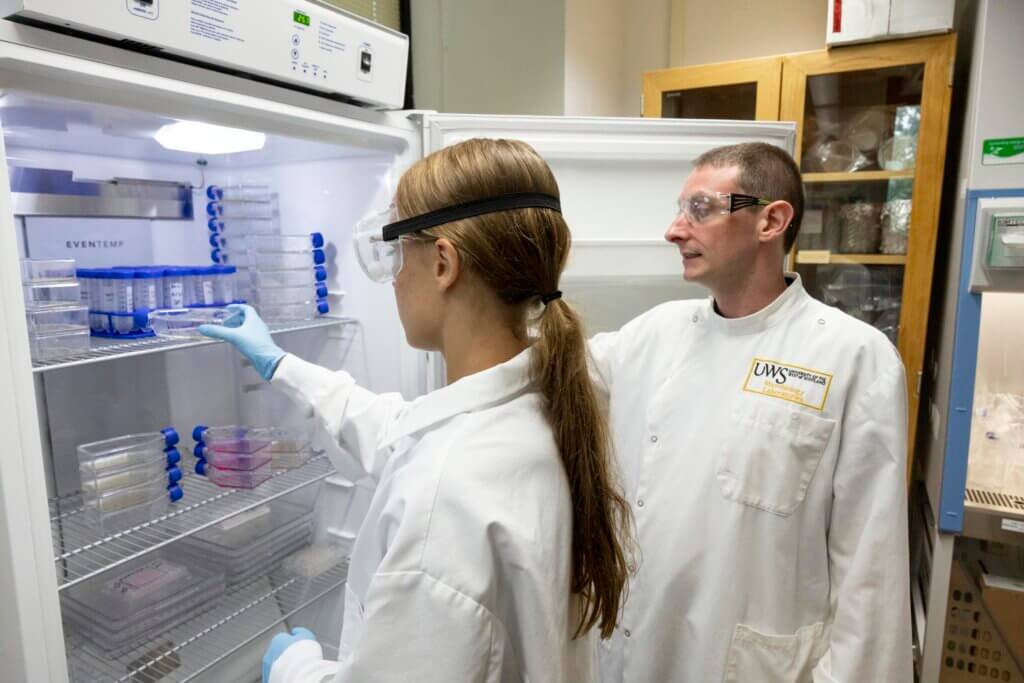
This June, Jackie spent several days a week working alongside Dr. Rice’s team in the Veterinary Pathobiology Building. “I was a little worried going into it that I would not know anything, but it was super easy,” she says. “They taught me everything I need to know.”
Kamana Thapa, a master’s-level graduate student in Dr. Rice’s lab, says that it’s understandable for a high school student to be concerned about their lack of experience. “But what stood out the most is Jackie’s confidence, and her dedication to learning,” she says. “She quickly picked up the techniques that we showed her, and she was commendable in her work.”
A global open-access database
Jackie contributed to one of the lab’s primary drug development pipelines. After growing trophozoites – the active, feeding stage of the Acanthamoeba parasite – she screened multiple strains of AK causing Acanthamoeba against a panel of suggested and recommended drug compounds, plotting the data on charts to determine which compounds and dosages would kill the organism or not.
She also tackled the most treatment-resistant stage of AK, the cyst. When the amoebas are threatened, they form a late-phase, resistant and persistent cyst stage – a microscopic protective “shield” that becomes notoriously strong and difficult to penetrate. Jackie conducted an experiment using bleach, testing what percentage dilution of the chemical could destroy the cysts.
The results of Jackie’s work will be housed in Dr. Rice’s open-access database, RADAR, the Repository of Amoeba Drug Activity Records. “It’s to put these organisms and diseases on people’s radars,” Dr. Rice explains.
By sharing the data openly with the global scientific community, he hopes to build a large foundation for understanding drug susceptibility and resistant patterns, which could lead to standard treatment protocols with better and faster disease resolution. This essential and impactful repository and project idea is currently under review as a grant submission to the National Institutes of Health (NIH).
“Through the RADAR database, the information Jackie generated on the trophozoite stage supports the researchers, clinicians and policymakers in selecting effective treatments and establishing microbial breakpoints for improved patient care from amoebic pathogens,” says Dr. Chayan Sharma, a postdoctoral research associate in Dr. Rice’s lab.
Beyond the scientific impact, “Jackie’s personal experience brings a unique sense of purpose and motivation to the work, reminding our team of the real patients behind the science and reinforcing the importance of developing better treatments for this devastating disease.”
A possible career direction
Now entering her junior year, Jackie says her time in Dr. Rice’s lab has piqued her interest in a scientific career. Previously, she thought she would pursue engineering. Now, she says, it could be engineering or hard science or a combination of the two, such as biomedical or chemical engineering.
Whatever major she decides on, Jackie knows one thing for sure: When it’s time to complete her college applications, Purdue University will definitely be on the list.
Her father, meanwhile, says that he and his family are thankful for the support they received from the university. “I just have a lot of gratitude to Purdue University and Dr. Rice and his team for all the work that they’re doing in giving a voice to what are very big issues to a very small group of people,” Matt says. “To shine a light on it means a lot.”