
We continue our series of articles about animals and their owners who’ve found help and healing at the Purdue University Veterinary Hospital by sharing the story of a beloved dog named Zeus. This is just one of the heartwarming tributes provided by hospital clients to highlight the vital care and treatment their animal companions receive from the hospital’s teams of clinicians, veterinary nurses, staff and students.
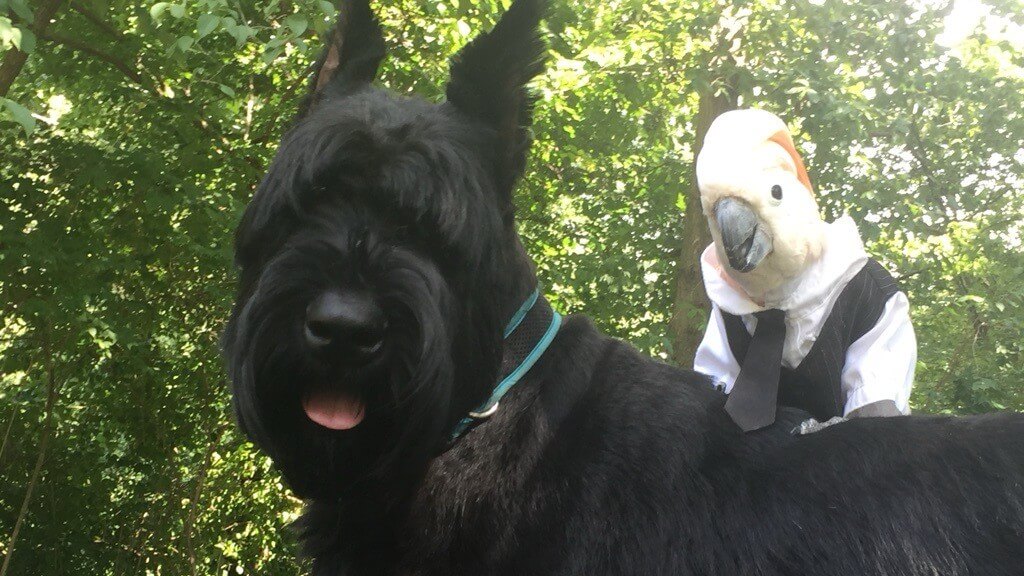
For Amy Fitzsimmons-Blaising, Zeus wasn’t just a dog, he was her spirit animal and best friend. A proud Giant Schnauzer bred in Bedford, Indiana, Zeus had been the heart of Amy’s home for 11 unforgettable years. He shared life with his fellow dogs, Lopez and Domino; a Moluccan Cockatoo named Sweetie; two cats, Egg and Skinny Longjon; and a loving family that adored him.
Zeus’s health challenges began in October 2024, when he started coughing and showing signs that looked like seizures. Alarmed, Amy rushed him to a local veterinary urgent care facility, where she received devastating news: Zeus was in congestive heart failure and might not make it through the night. Faced with the unimaginable, she brought him home, but she wasn’t ready to say goodbye.
Amy turned to the Purdue University Veterinary Hospital, where the Cardiology team diagnosed Zeus with congestive heart failure secondary to dilated cardiomyopathy (DCM). He also received a diagnosis of atrial fibrillation, a type of abnormal heart rhythm. The team acted quickly, relieving fluid buildup, stabilizing the dog’s blood pressure, and laying out a treatment plan. As part of the diagnostic process, Zeus wore a heart monitor for 24 hours, which allowed the cardiology team to monitor for arrhythmias. His follow-up appointments included other diagnostics such as heart ultrasounds, chest x-rays, blood work, and blood pressure monitoring. Dr. Anna Reuter, a cardiology resident, said, “These tests helped us guide adjustments to his treatment and maximize his response. His family was very dedicated to him, and his success largely has to do with their diligence with his follow-up care, including following all the recommendations given, closely monitoring Zeus for any changes, and staying consistent in administering his medications.”
While the DCM couldn’t be cured, his veterinary team assured Amy that with medication and care, Zeus could still enjoy quality time with his family. He was given an estimated six to nine months to live, a bittersweet prognosis, but one that offered hope.
Back at home, Zeus resumed his routine with energy and enthusiasm, surrounded by the comfort of his family, both humans and animals.
Zeus passed away in March, but not before making the most of the time he had left. His days were filled with love, his normal routine, and the joy of being with those who mattered most to him. Amy remains deeply grateful for the care he received at Purdue, which gave her precious months she might not have had otherwise. “We took a last ditch chance with Purdue, and I’m so glad we did,” she said.
Zeus’ story is a powerful reminder of how expert veterinary care can extend not just life, but the quality of time shared. His legacy lives on in the hearts of those who loved him, and in the compassionate care provided at Purdue’s Veterinary Hospital, which offers hope and healing to others facing similar journeys.
Remembering Zeus: A Legacy of Loyalty and Love
Writer(s): Mackenzie Martin | pvmnews@purdue.edu
