Tapeworms
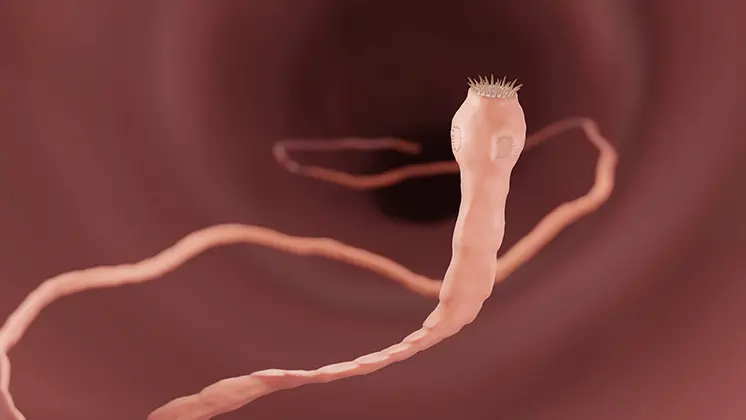
A tapeworm is a parasite that lives in the small intestine. The most common tapeworm to affect dogs and cats is Dipylidium caninum. This worm consists of a head segment which attaches to the intestinal wall. From this region, smaller segments grow to form the tail of the tape worm. All of the segments put together can produce a worm up to about 6 inches long. Each segment is like an independent body in that it has its own digestive and reproductive systems. As the tail grows, the segments closest to the tip of the tail mature and eventually all that is left in the segment are tapeworm eggs. At this point the segment drops off and is passed from the dog or cat’s rectum.
The segment that you most often see looks like a grain of rice and is able to move. If the segment is dried up, it looks more like a sesame seed. When the segment is dry it breaks open and the tapeworm eggs are released into the environment.
How does my dog or cat get tapeworms?
Dipylidium caninum is transmitted by fleas. Larval fleas eat dirt and debris on their host (the dog or cat). With all this dirt and debris, they also ingest the tapeworm eggs. The larval flea matures and the tapeworm inside it also matures. Once the flea becomes an adult, the tapeworm inside it is infective to the dog or cat. As the flea is feeding on the dog or cat, it is licked up by the dog or cat and swallowed. Now the tapeworm is in the animal’s stomach and it migrates to the small intestine where it attaches and begins producing segments. The time from which a flea is ingested to the point where you will be able to observe segments around the anus is three weeks.
How do I know if my pet has tapeworms?
If you see rice-like segments around the anus and/or in its feces, your animal has tapeworms. One of the reasons for perianal irritation and “scooting” behavior is tapeworm infestation (another common reason for scooting is anal sac problems).
How are tapeworms treated?
Tapeworms can be killed by administration of specific medications. One of these medications is praziquantel (Droncit). It can be given by tablet or injection. The medication kills the tapeworm and it is digested. You will not see segments of worm in the feces. It is also vital that the flea control be implemented with a monthly topical product such as Frontline or Advantage. After the flea control has been implemented, it is recommended that the animal receive a second dose of medication in three weeks to ensure that reinfection didn’t occur before the fleas were controlled.
Are tapeworms dangerous to me or my family?
Tapeworms are zoonotic, meaning they can infect people. To become infected you would have to ingest a flea. This most often occurs via accidental ingestion in children. Some clinical signs of possible tapeworm infestation in children include non-specific GI upset, nausea, irritability, and perianal irritation. If you suspect you or your child has contracted tapeworms, please contact your physician.
Schedule a Visit
Come experience the compassionate, high-quality veterinary care provided by the Small Animal Primary Care team at Purdue University’s Veterinary Hospital. See how our veterinarians, staff, and students work together to deliver progressive, evidence-based care while building lasting relationships with you and your pet.
Suggested Articles

Guinea Pig Care
Learn about guinea pig care, including housing, bedding, nutrition, water, common health issues, reproduction, and daily care needs.
Feeding the Pet Chinchilla
A healthy chinchilla diet should focus on high-fiber hay, limited pellets, and small treats, with gradual diet changes to prevent digestive problems.
Care for Sugar Gliders
Learn about sugar glider care, including diet, housing, behavior, preventive care, common health concerns, and what owners should know.