
Public Perceptions of Dog Welfare, Sourcing and Breeding Regulation
By Courtney Bir (birc@purdue.edu), Dr. Candace Croney (ccroney@purdue.edu) and Dr. Nicole Olynk Widmar (nwidmar@purdue.edu)
Published by the Center for Animal Welfare Science at Purdue University
RP.2016-02 | June 2016 © Purdue University
Executive Summary
Researchers conducted an online survey of U.S. residents in Fall 2015 to understand their perceptions of dog breeding and procurement, along with related animal welfare concerns. The majority of respondents were unsure or neutral about whether dogs in pet stores come from irresponsible breeders; whether breeding dogs for sale is socially irresponsible; if shelter dog populations would decrease if people stopped buying purebred dogs; if importing dogs for adoption is irresponsible; and whether the sale of dogs is socially irresponsible. The greatest percentage of respondents indicated that they strongly agreed people should have choices as to where they obtained dogs and that they should be able to buy purebred dogs compared to other response options. A higher percentage of participants also chose “strongly agree” over other options in response to the statement that importing dogs for sale is irresponsible. Survey participants indicated that virtually all parties involved in dog breeding, care and welfare had some ability to influence dog welfare, with the American Society for the Prevention of Cruelty to Animals (ASPCA) having the most influence. Responses to regulation of dog welfare were ambiguous. Although there was strong consensus that breeders should be regulated, respondents were neutral or unsure on several aspects of regulation. Legislative bans on dog breeding and pet store sales did not appear to have strong support. More respondents appeared to favor legislation of breeder practices over voluntary certification of dog welfare, which was not unexpected given that the primary form of animal welfare protection with which most people are familiar is legislation. Specifically, there was strong support for mandatory compliance with best practices, breeder education and increased transparency of dog-breeding practices. Since the latter two areas would present legislative and implementation challenges and are more easily mandated via voluntary regulation, further investigation is needed. Specifically, researchers need to explore public understanding and expectations of what can be accomplished via voluntary versus legislative approaches to ensuring animal welfare. The majority of respondents thought that dogs could be bred ethically and responsibly.
Given that the results presented here are preliminary and absent of statistical analysis that might provide greater insight and clarity, they should be interpreted cautiously. Further analyses are pending.
Keywords: public perceptions, animal welfare, regulation, dogs
Introduction
Given concerns about the care and welfare of animals used for food, fiber, teaching, research and conservation, it is not surprising that certain aspects of companion-animal well-being are increasingly debated. Over the past few years, high-volume commercial dog breeding has drawn significant attention, resulting in numerous attempts to regulate or tighten existing regulations on standards of care for breeding dogs in the United States. In addition, efforts to curtail the sale of pets from retail pet stores have escalated in an effort to deter people from purchasing dogs sourced from commercial breeders.
Commercial dog-breeding operations are uniformly represented in the media as “puppy mills” rife with animal welfare problems, and likened to “factory farming” operations. The conditions at commercial dog-breeding facilities are usually characterized as being so deficient that physical and behavioral health problems are inevitable. For those who feel strong attachments to animals, and dogs in particular, images from the facilities are likely to evoke unsettling reactions. Some may feel so strongly that their voting and purchasing behavior rejects obtaining dogs from high-volume breeders and avoiding stores that sell their puppies. Existing public concerns are probably worsened by arguments that commercial dog breeding exacerbates existing pet overpopulation problems and contributes to already high rates of animal relinquishment, abandonment and euthanasia, along with the draining of humane organizations’ financial resources.
However, experts do not all agree that there is a dog overpopulation problem. Also, while vast numbers of dogs are euthanized each year, behavioral problems, rather than the breeding source, have been implicated as the leading cause of relinquishment to shelters (Scarlett et al., 2002; Scarlett et al., 1999; Patronek et al., 1997; Kwan and Bain, 2013). Further, recent findings suggest that only a small percentage of shelter dogs are purebred (NAIA, 2016), which would contradict the notion that dogs from commercial-breeding operations significantly contribute to shelter dog populations. Nonetheless, many newly proposed laws and media reports infer that the most ethical course of action for those seeking companion dogs is to procure them solely from shelters.
Given the conflicting information available to the public and the fact that demand for purebred dogs remains high in the U.S., this study aimed to understand public perceptions related to dog welfare, dog sourcing and dog-breeding regulation.
Research Methods and Data
Survey Instrument
The Purdue University research team used Qualtrics, an online survey tool, to gather the U.S. public’s perspectives on dog welfare and dog welfare sources in October 2015. They also included questions about the acceptability of dog breeding, what respondents would like to see changed about dog breeding, and whether respondents would vote on legislation pertaining to dog breeding.
Online surveys have become a popular method of study administration due, in part, to the increasing Internet availability in the U.S. (Fricker, R. D., & Schonlau, M., 2002). More than 93 percent of the population lives in areas offering wired broadband service, and about 98 percent have access to either wired or terrestrial wireless connectivity at speeds of at least 3 megabits per second for download and 768 kilobits per second for upload (NTIA & FCC, 2013).
Lightspeed GMI, a New Jersey-based company that specializes in online data collection, administered the survey and used a double opt-in panel to obtain a representative sample of the U.S. population based on gender and age (U.S. Census Bureau, 2010 Census, Revised 2014); education and income (U.S. Census Bureau, 2008-2012); and resident region of the United States. Participants had to be at least 18 years old.
Sample Summary Statistics and Demographics
The national-scale survey sample contained 1,523 responses. Table 1 shows respondent demographics compared with the census statistics for gender, age, education, income and resident region of the United States. Table 2 illustrates respondents’ political affiliation and race. As seen in Table 1, the sample had slightly more respondents from the 25- to 34-year-old category and the Midwest region than desired. Additionally, there were fewer respondents from the south than desired. All other categories were similar to the census data.
| Variable Descriptions | Survey Frequency (%) | Census Frequency (%) |
|---|---|---|
| Gender | ||
| Male | 49% | 49% |
| Female | 51% | 51% |
| Age | ||
| 18-24 years | 13% | 13% |
| 25-34 years | 14% | 18% |
| 35-44 years | 15% | 17% |
| 45-54 years | 19% | 19% |
| 55-65 years | 19% | 16% |
| 66-88 years | 20% | 17% |
| Annual Pre Tax Income | ||
| Less than $25,000 | 25% | 25% |
| $26,000-$50,000 | 25% | 25% |
| $51,000-$75,000 | 18% | 18% |
| $76,000-$100,000 | 12% | 12% |
| $101,000 or more | 20% | 20% |
| Educational Background | ||
| Did not graduate from high school | 2% | 2% |
| Graduated from high school | 29% | 30% |
| Attended college, no degree earned | 25% | 25% |
| Attended college, bachelor's (BS or BA), associate or trade degree earned | 27% | 27% |
| Attended college, advanced (MS, PhD, law school) degree earned | 16% | 16% |
| Region of Residence | ||
| Northeast | 18% | 18% |
| South | 22% | 22% |
| Midwest | 38% | 38% |
| West | 22% | 22% |
| Variable Descriptions | Survey Frequency (%) |
|---|---|
| Political Affiliation | |
| Democratic Party | 32% |
| Republican Party | 27% |
| Independent | 28% |
| None of the above | 13% |
| Race | |
| White or Caucasian | 82% |
| Black or African American | 7% |
| Asian | 4% |
| Hispanic or Latino | 5% |
| American Indian or Alaska Native | 1% |
| Pacific Islander or Native Hawaiian | 2% |
| Other (please describe) | 1% |
Results and Discussion
Acceptability of Dog Breeding
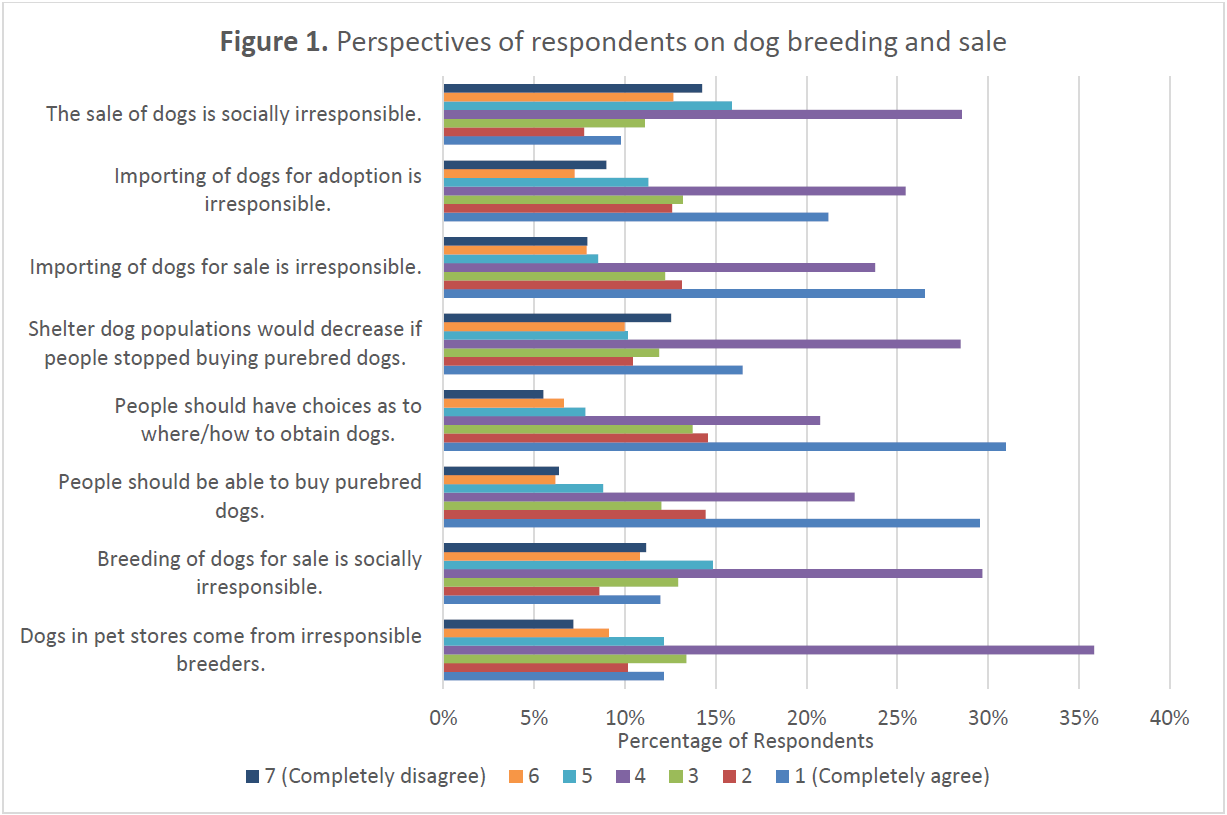
The research team gained a better understanding of respondents’ overall views on dog acquisition and breeding by asking them to indicate on a scale from 1 (completely agree) to 7 (completely disagree) their level of agreement when presented with a series of statements.
As seen in Figure 1, respondents chose scale point 4, in between completely agree and completely disagree, most frequently for the statements: “dogs in pet stores come from irresponsible breeders” (36 percent), “breeding of dogs for sale is socially irresponsible” (30 percent), “shelter dog populations would decrease if people stopped buying purebred dogs” (28 percent), “importing of dogs for adoption is irresponsible” (25 percent), “the sale of dogs is socially irresponsible” (29 percent). Respondents selected 1 (completely agree) most frequently for the statements: “people should be able to buy purebred dogs” (30 percent ), “people should have choices as to where/how to obtain dogs” (31 percent), and “importing of dogs for sale is irresponsible” (27 percent).
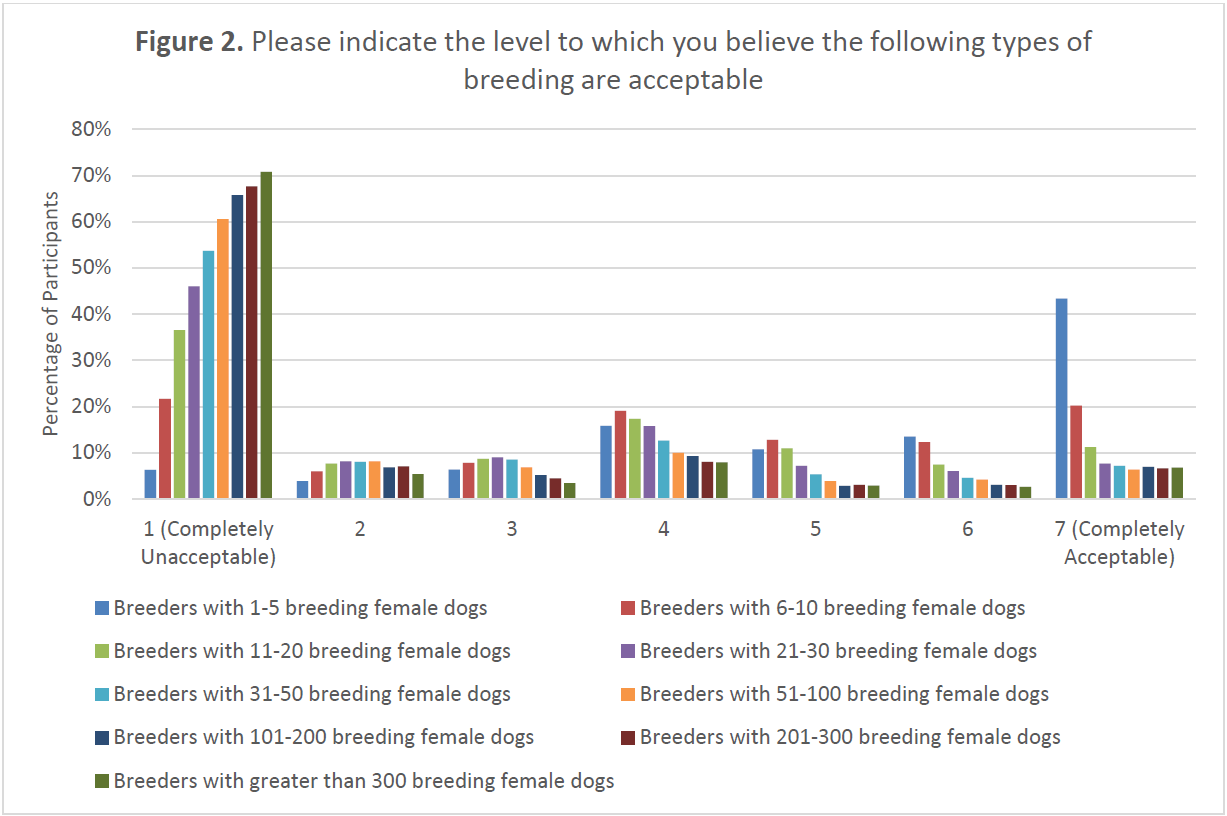
Respondents also answered questions about the acceptable number of dogs for breeding operations. The survey presented varying numbers of breeding dogs, and participants indicated how acceptable they found that number using a scale from 1 (completely unacceptable) to 7 (completely acceptable). As seen in Figure 2, scale point 7 was most commonly selected when respondents considered breeders with one to five breeding female dogs. Respondents were less consistent when presented breeders with six to 10 breeding females. Twenty-two percent of the respondents selected “completely unacceptable,” 19 percent were neutral, and 20 percent of respondents found six to 10 breeding females “completely acceptable.” As the number of breeding dogs increased, more respondents selected scale point 1 (completely unacceptable). When presented with greater than 300 breeding female dogs, 71 percent of respondents selected “completely unacceptable.”
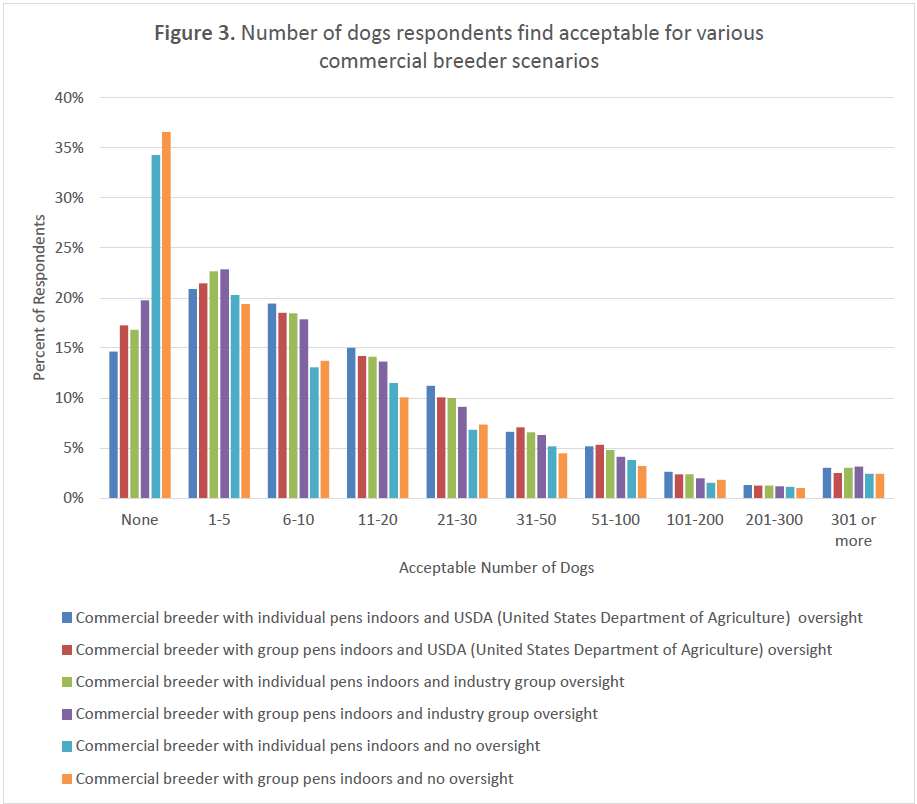
The research team wanted insight regarding respondents’ acceptability of dog breeders of various sizes, pen type and oversight type. Consequently, the survey presented respondents with different combinations of breeder types and were asked to indicate how many dogs they found acceptable living in the given scenario. Figure 3 shows the number respondents found acceptable for various commercial breeder scenarios. Respondents most frequently selected one to five and six to 10 dogs as an acceptable number for a commercial breeder with individual pens indoors and United States Department of Agriculture (USDA) oversight (21 and 19 percent, respectively), a commercial breeder with group pens indoors and USDA oversight (21 and 19 percent, respectively), a commercial breeder with individual pens indoors and industry group oversight (23 and 18 percent, respectively), and a commercial breeder with group indoor pens and industry group oversight (23 and 18 percent, respectively). Respondents most frequently selected “none” as the number of acceptable dogs for a commercial breeder with individual pens indoors and no oversight (34 percent) and for a commercial breeder with group pens indoors and no oversight (37 percent). Based on these results, respondents appeared to believe that regardless of the number of dogs maintained, breeders needed to have some kind of oversight. The most frequently selected number of acceptable dogs was still small, less than 10, even with oversight and specified pen type.
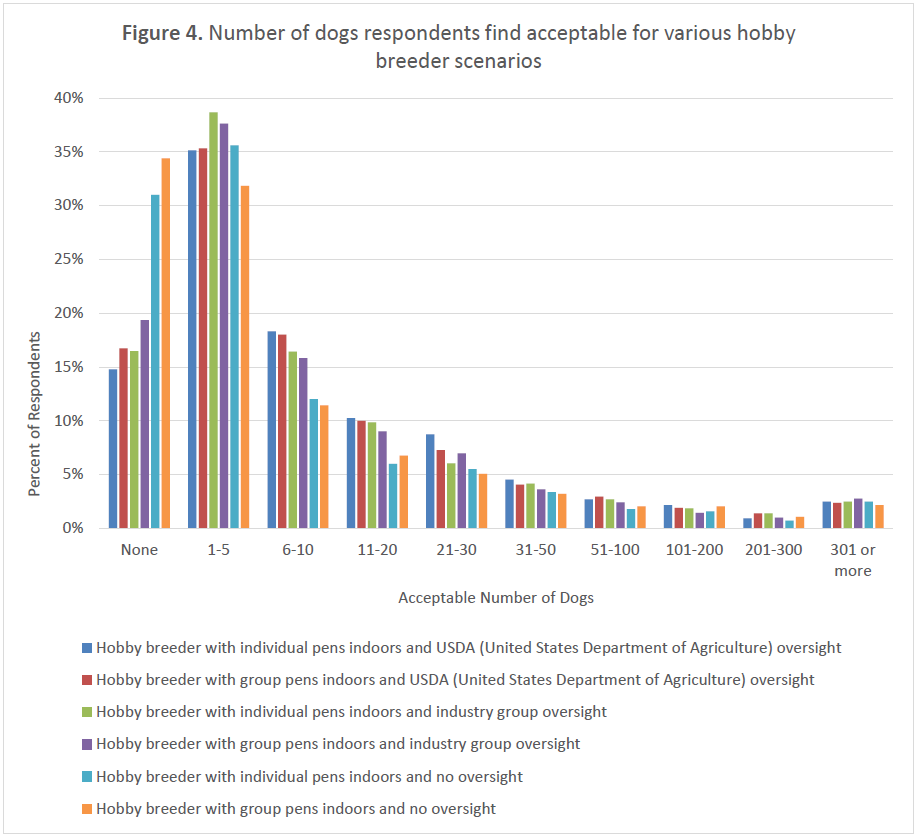
It was important to determine if respondents’ opinions changed when breeders were described as “hobby,” instead of “commercial.” Figure 4 shows the number respondents found acceptable for various hobby breeder scenarios. Respondents most frequently selected one to five dogs as an acceptable numberfor a hobby breeder with individual pens indoors and USDA oversight (35 percent), a hobby breeder with group pens indoors and USDA oversight (35 percent), a hobby breeder with individual pens indoors and industry group oversight (39 percent), a hobby breeder with group pens indoors and industry group oversight (38 percent). Respondents most frequently selected “none” and one to five as the acceptable number of dogs for hobby breeders with individual pens indoors and no oversight (31 and 36 percent, respectively), and hobby breeders with group pens indoors and no oversight (34 and 32 percent, respectively). Similar to commercial breeders, respondents selected a lower number of acceptable dogs for scenarios lacking oversight. For regulated scenarios, respondents more frequently selected a smaller number of acceptable dogs for hobby versus commercial breeders. This finding is surprising given that hobby breeders are not typically represented as negatively as commercial breeders in common media sources. It is possible that some respondents may have equated the term “hobby breeder” with “backyard breeder,” and the latter may hold negative connotations.
Breeding-Dog Welfare
In addition to the acceptable number of breeding dogs, the survey inquired about breeding-dog welfare. Presented with a scale from 1 (very low ability) to 7 (very high ability), respondents indicated how much influence various parties had to assure proper animal welfare/humane treatment practices for breeding dogs. Respondents could also choose “I do not recognize this organization” or “I recognize this group, but I do not know how much influence they have.” As seen in Table 3, respondents most frequently selected a scale number above 4, indicating they believed all of the parties had some amount of influence.
| Party | 1 (Very Low Ability) | 2 | 3 | 4 | 5 | 6 | 7 (Very High Ability) | I do not recognize this group | I do recognize this group, but I do not know how much influence they have |
|---|---|---|---|---|---|---|---|---|---|
| Pet buyers/purchasers | 9% | 7% | 8% | 13% | 17% | 12% | 14% | 9% | 10% |
| Local veterinarians | 4% | 4% | 6% | 11% | 19% | 20% | 20% | 5% | 11% |
| Local humane societies/shelters | 5% | 4% | 6% | 11% | 21% | 18% | 19% | 5% | 11% |
| Breeders | 8% | 6% | 9% | 13% | 18% | 14% | 16% | 6% | 11% |
| American Veterinary Medical Association (AVMA) | 4% | 3% | 4% | 9% | 18% | 17% | 18% | 16% | 11% |
| American Society for the Prevention of Cruelty to Animals (ASPCA) | 3% | 2% | 4% | 8% | 19% | 19% | 27% | 7% | 11% |
| Humane Society of the United States (HSUS) | 4% | 3% | 5% | 9% | 18% | 17% | 18% | 14% | 12% |
| American Humane Association (AHA) | 4% | 2% | 4% | 9% | 19% | 18% | 17% | 16% | 11% |
| American Kennel Club (AKC) | 4% | 3% | 5% | 11% | 19% | 18% | 18% | 9% | 12% |
| Pet food companies | 13% | 8% | 9% | 12% | 18% | 9% | 9% | 7% | 14% |
| Pet stores | 13% | 8% | 9% | 14% | 18% | 11% | 11% | 5% | 12% |
| United States Department of Agriculture (USDA) | 7% | 5% | 6% | 11% | 22% | 14% | 14% | 7% | 15% |
Respondents most frequently selected scale point 7 (very high ability) to assert influence when presented with the American Society for the Prevention of Cruelty to Animals (ASPCA); 27 percent made that selection.
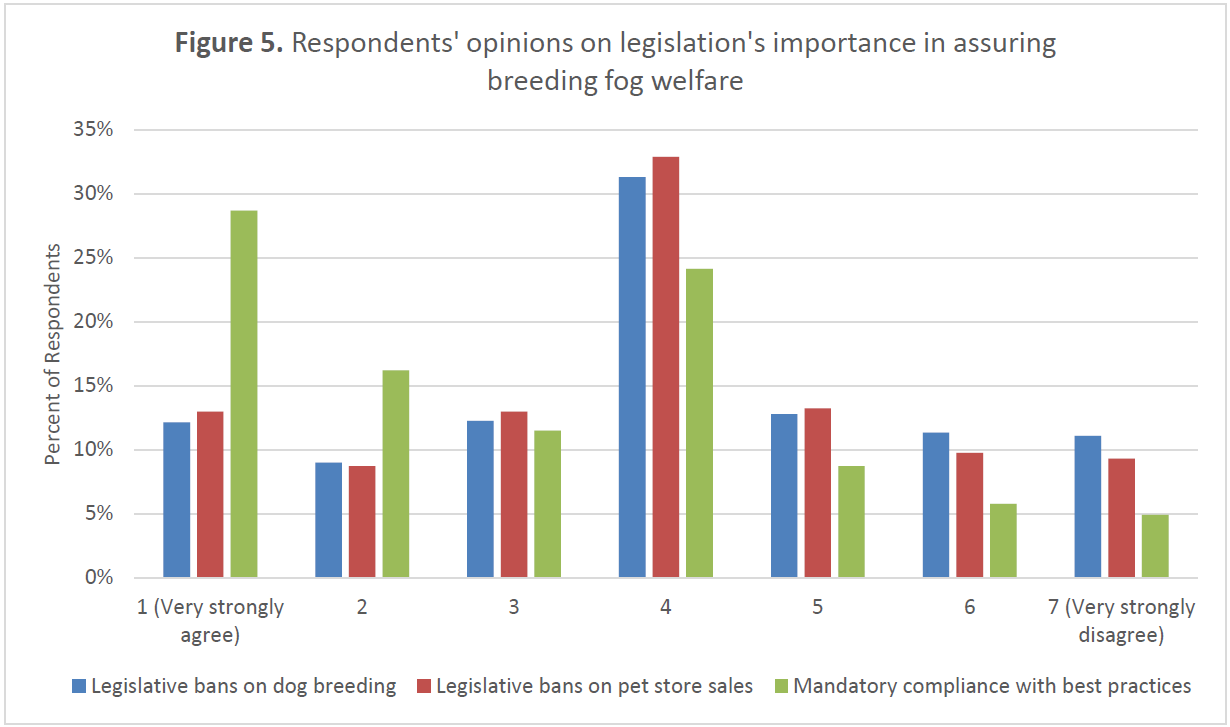
Respondents also indicated how important they thought three legislative aspects were to ensuring breeding-dog welfare as seen in Figure 5. Respondents selected scale point 4, or neutral, for legislative bans on dog breeding (31 percent) and legislative bans on pet store sales (33 percent). This illustrates that most respondents did not have a strong opinions regarding the importance of legislative bans on dog breeding and pet store sales in assuring dog welfare. Respondents most commonly selected 1 (very strongly agree) when presented with “mandatory compliance with best practices” (29 percent).
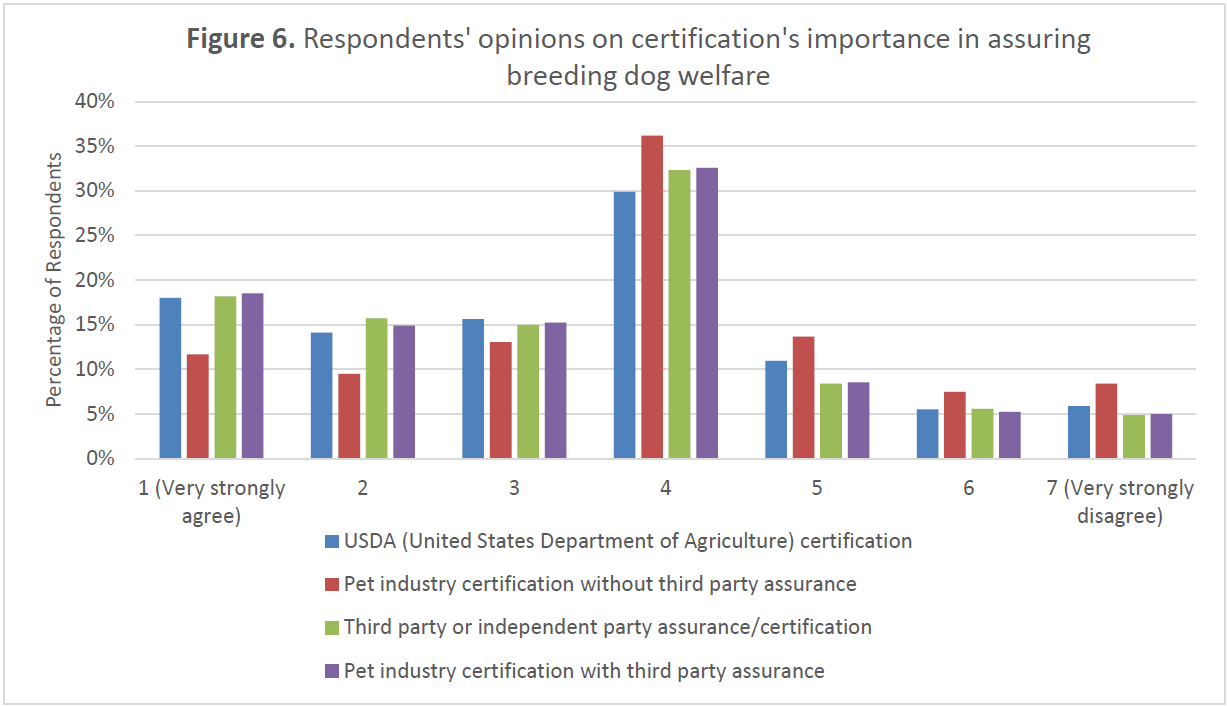
The survey also included questions asking participants to consider which aspects were most important in ensuring breeding-dog welfare. Respondents indicated on a scale from 1 (very strongly agree) to 7 (very strongly disagree) which aspects they agreed were most important. Figure 6 shows the certification options participants considered. The most frequently selected response was scale point 4, or neutral, for each of the certification options. Thirty percent of respondents made that selection for USDA certification; 36 percent of respondents selected scale point 4 for pet industry certification without third-party assurance; 32 percent of respondents made that selection for third-party or independent-party assurance/certification; and 33 percent of respondents selected scale point 4 for pet industry certification with third-party assurance. These responses indicated that most respondents did not have a strong opinion on the importance of certifications in assuring breeding dog welfare.
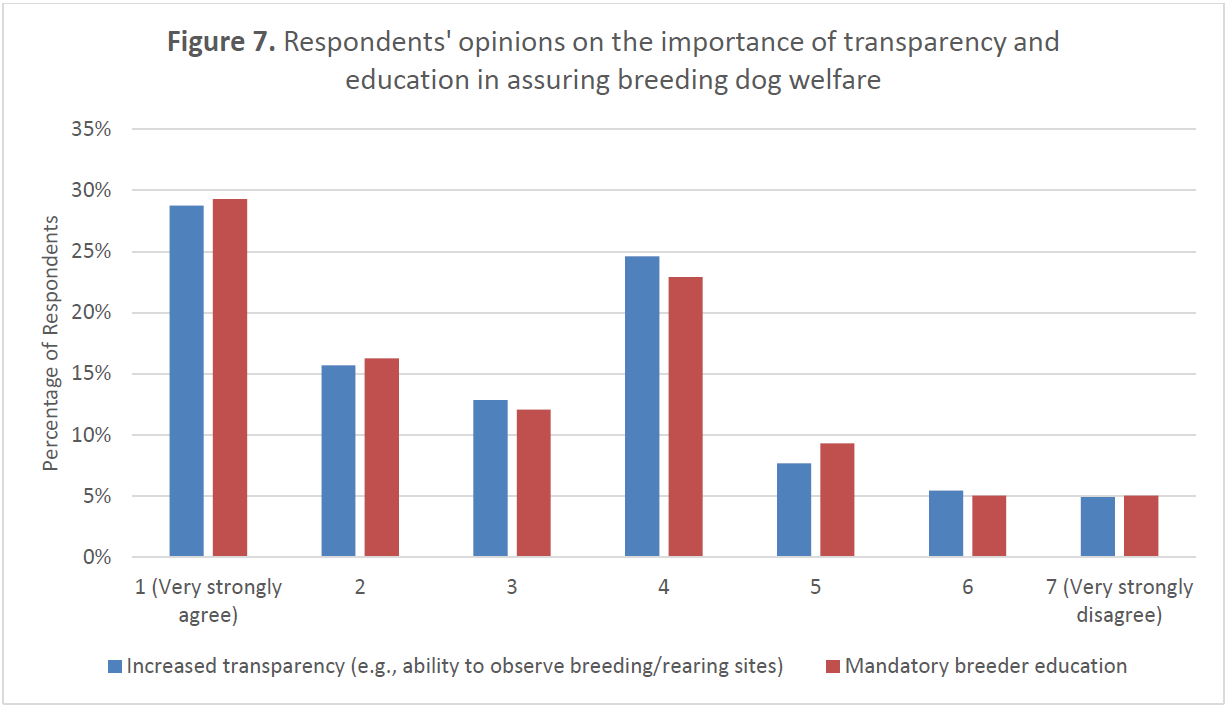
The research team asked respondents about the importance of placing certain expectations on breeders relative to assuring breeding-dog welfare as seen in Figure 7. Twenty-nine percent of respondents selected “very strongly agree,” and 25 percent selected scale point 4 when presented with increased transparency (e.g., ability to observe breeding/rearing sites) as an aspect in assuring breeding-dog welfare. These results indicated respondents often either had a strong positive opinion or they were neutral toward increased transparency in assuring breeding-dog welfare. Twenty-nine percent of respondents selected “very strongly agree,” and 23 percent selected scale point 4 when presented with mandatory breeder education as an aspect in assuring breeding-dog welfare. These results also indicated respondents often had either strong positive opinions or they were neutral toward mandatory breeder education in assuring breeding-dog welfare.
Dog-Breeding Regulation and Legislation
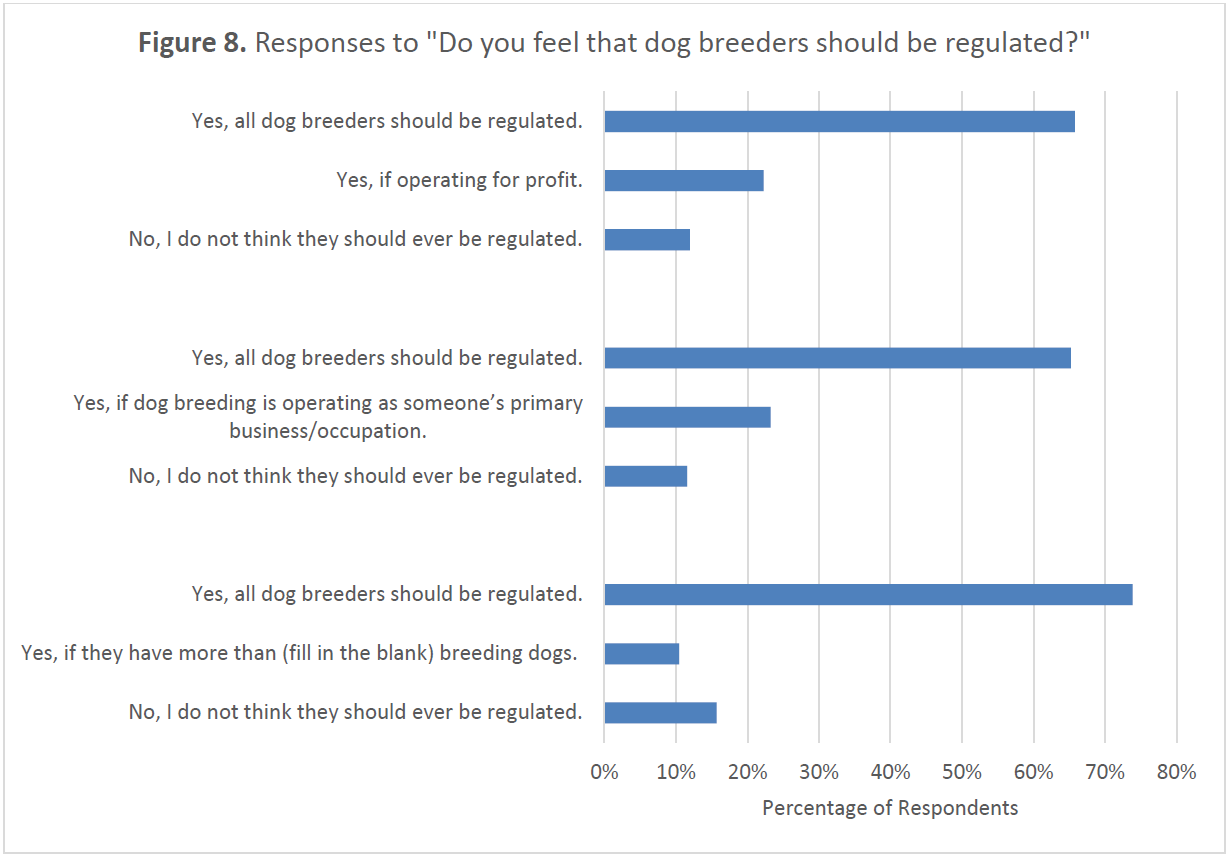
To better understand respondents’ opinions on dog-breeding regulation, the survey presented the same question – “Do you feel that dog breeders should be regulated?” three times with different response options. Response options always included: “no, I do not think they should ever be regulated” and “yes, all dog breeders should be regulated.” The first time respondents encountered the question, “Yes, if they have more than (fill in the blank) breeding dogs” was included in the response options. The second time, “Yes, if dog breeding is operating as someone’s primary business/occupation” was included in the response options. The third time, “Yes, if operating for profit” was included in the response options. As seen in Figure 8, despite varying the response options, the most commonly selected response was “Yes, all dog breeders should be regulated” with 74, 65 and 66 percent, respectively.
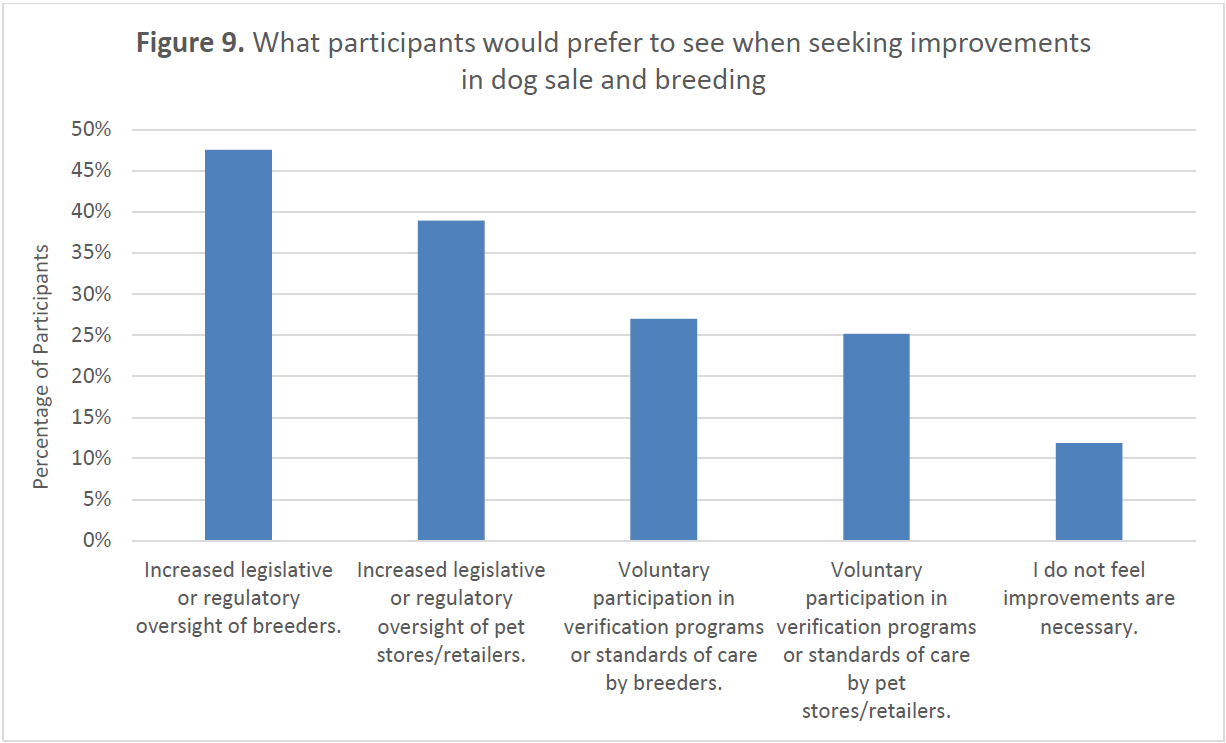
To further understand respondents’ opinions on regulating dog breeding, they selected what type of regulation they would prefer to see when seeking improvements in dog sale and breeding. They were allowed to make more than one selection. Figure 9 shows the most commonly selected response was increased legislative or regulatory oversight of breeders, with 48 percent, and increased legislative or regulatory oversight of pet stores/retailers (39 percent). The most infrequently selected option was “I do not feel improvements are necessary” (12 percent).
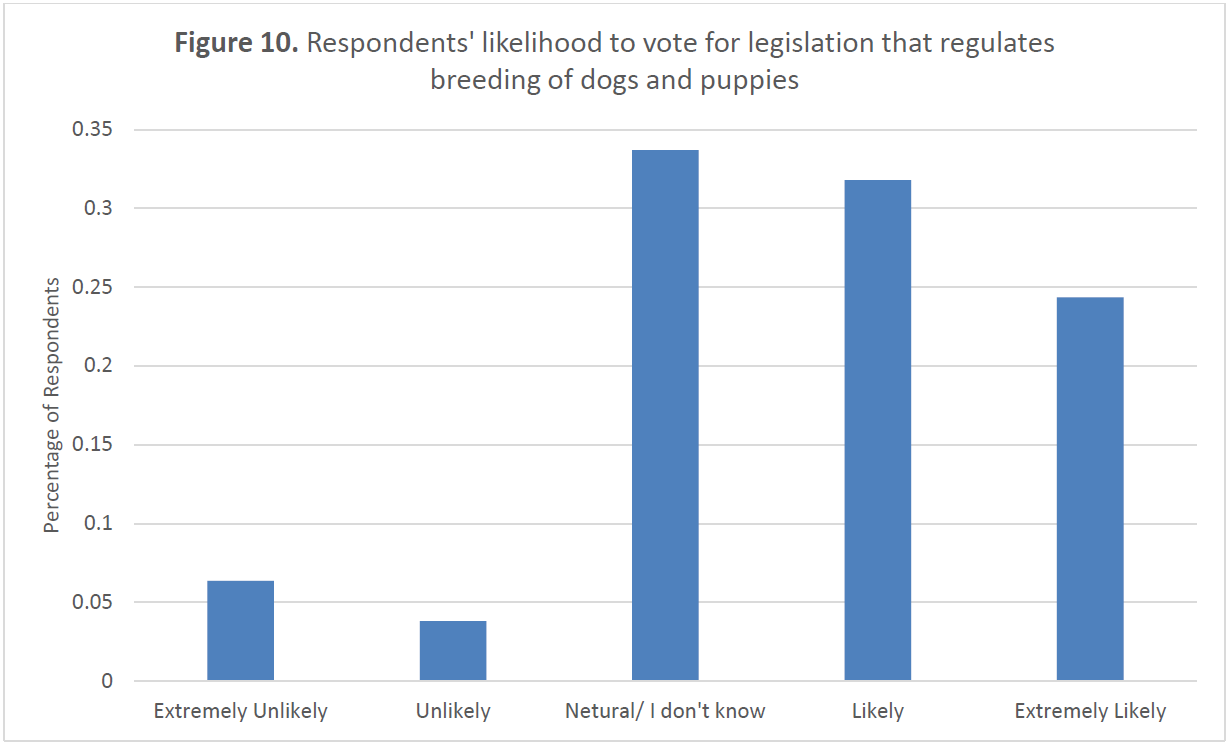
To determine if respondents would take action on their opinions, they indicated how likely they were to vote for legislation that regulates breeding of dogs and puppies. As seen in Figure 10, the most frequently selected answer choices were “neutral/I don’t know” (34 percent), “likely” (32 percent) and “extremely likely” (24 percent).
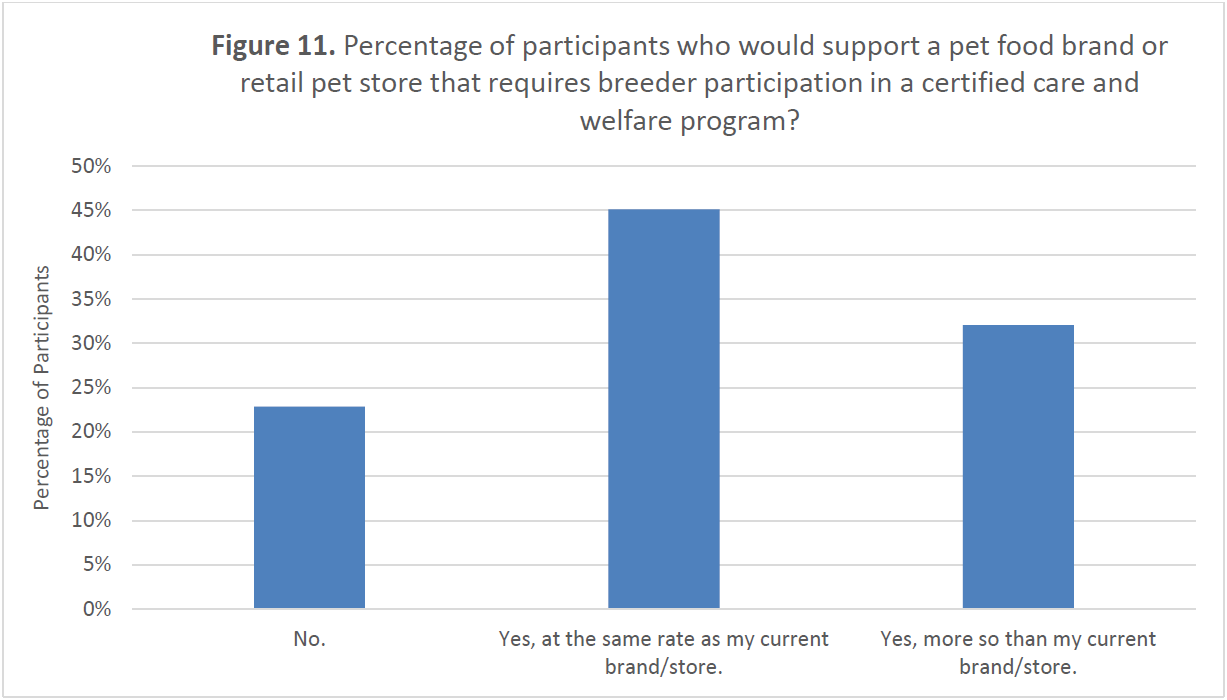
Participants also answered a question regarding whether they would support a pet food brand or retail pet store that requires breeder participation in a certified care and welfare program. As seen in Figure 11, the most commonly selected answer choice, with 45 percent, was, “Yes, at the same rate as my current brand/store.”
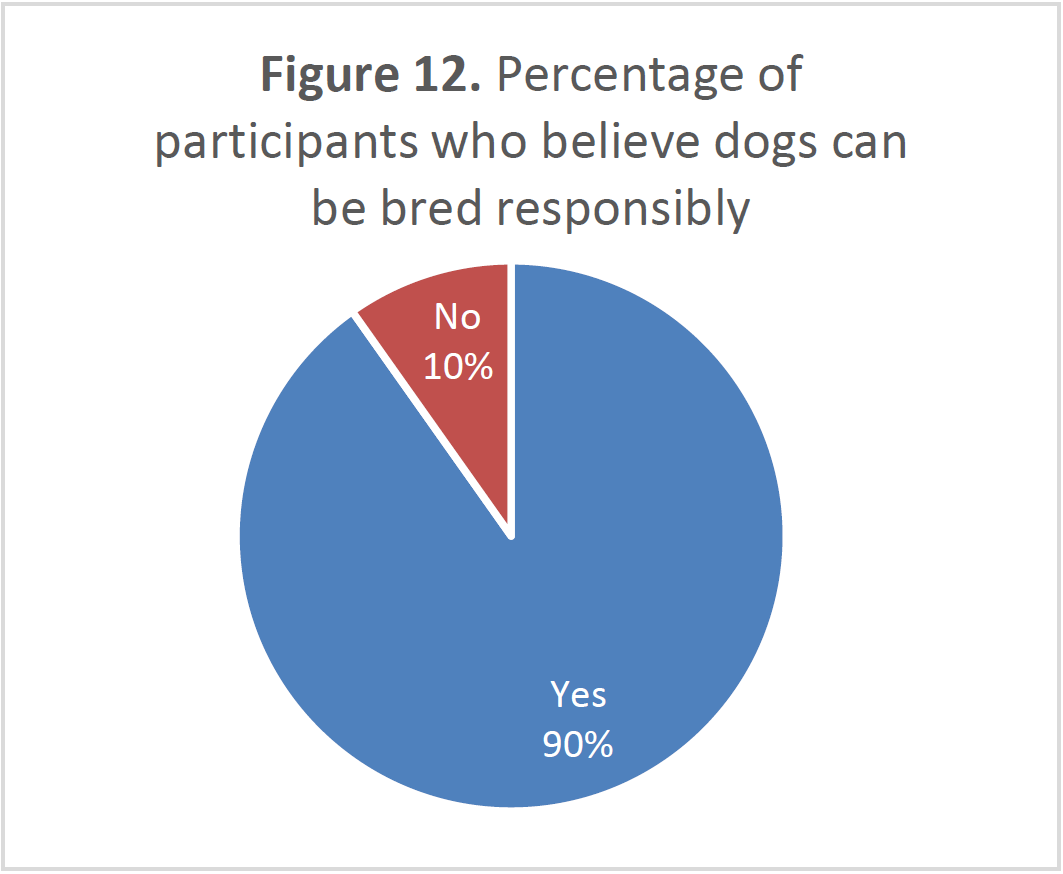
Finally, respondents provided their opinions on if they felt dogs could be bred responsibly and ethically. Figure 12 shows that the most common response to the statement “I believe dogs can be bred responsibly” was “yes” (90 percent).
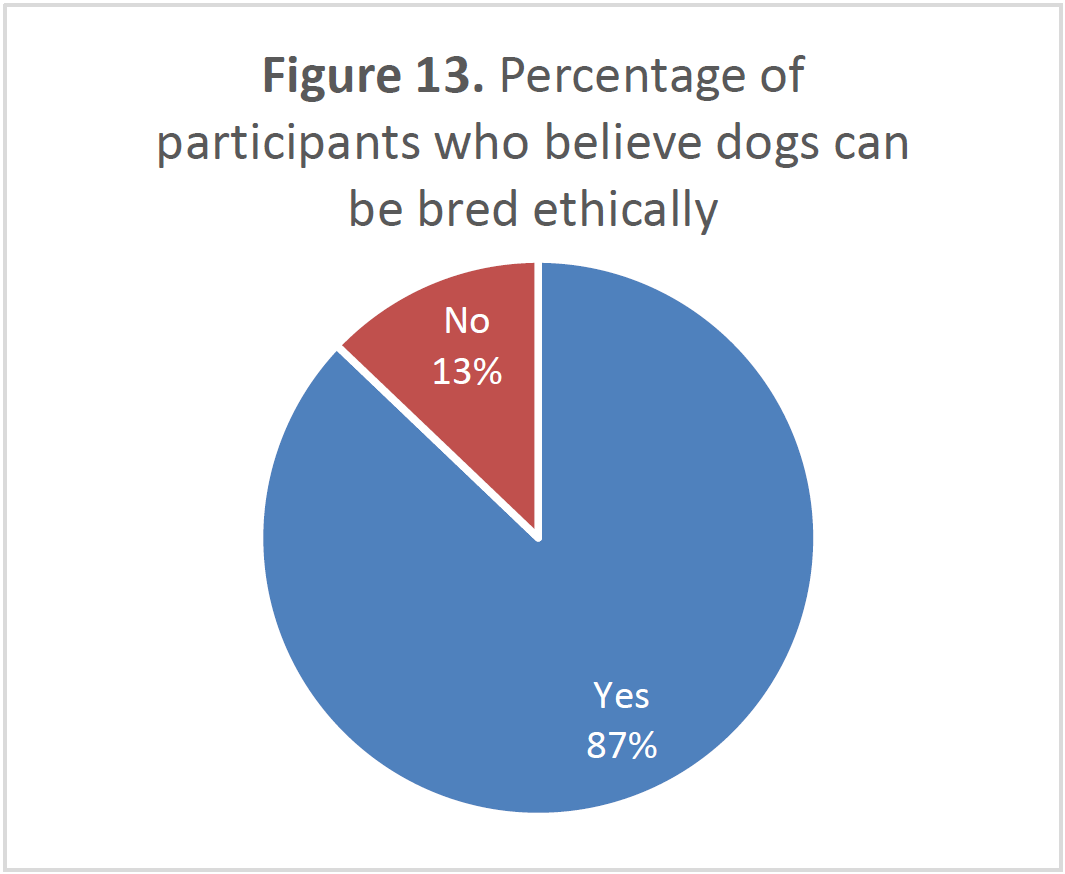
Figure 13 shows the most commonly selected answer to the statement “I believe that dogs can be bred ethically” was “yes” (87 percent). Despite having concerns about dog breeding, the majority of respondents felt dogs could be bred both ethically and responsibly.
Conclusion and Impacts
In general, respondents appeared to be either unsure or neutral when considering statements suggesting that dogs in pet stores come from irresponsible breeders, breeding of dogs for sale is socially irresponsible, shelter dog populations would decrease if people stopped buying purebred dogs, importing of dogs for adoption is irresponsible, and the sale of dogs is socially irresponsible. Agreement was most often indicated for the idea that people should have choices as to where they procure dogs and that they should be able to buy purebred dogs. People also agreed most often that importing dogs for sale is irresponsible.
Scale of breeding operation appeared to be associated with level of concern as gauged by perceived acceptability of breeding-dog numbers. The research team found that level of acceptability for breeding decreased as the number of dogs increased from more than five females, regardless as to whether breeders were characterized as “commercial” or “hobby.” This is not surprising given the public tendency to associate animal operation size with animal welfare outcomes. The prevailing notion is that higher animal numbers by default result in poor animal welfare (Skarstad et al., 2007) or greater challenges in regard to meeting animals’ needs. Such beliefs persist despite evidence indicating that it is the quality of care and management, rather than animal numbers or even ratios of caretakers to animals, that dictates animal welfare outcomes. Indeed, due to variation in competence, motivation, skill, experience, resource level and other such factors, it would be difficult to establish an optimal animal caretaker ratio or even an ideal number of animals that can be kept at an acceptable standard of well-being. Nonetheless, the idea that level of animal welfare declines with increasing animal numbers appears to be immutable.
Respondents thought that numerous parties, ranging from pet buyers to breeders and including veterinarians and non-government organizations (NGO), all had some ability to influence dog welfare. Respondents were unfamiliar with several of the U.S. pet industry and NGO groups. Of the groups with which they were familiar, the ASPCA was most frequently identified as having high ability to influence dog welfare.
Responses varied in regard to regulating dog welfare. There was strong consensus that dog breeders should be regulated via legislative or regulatory oversight, regardless as to whether operating for profit, raising dogs as their primary occupation or as a function of the number of dogs they owned. The lowest level of agreement was with the idea that improvements are not necessary. Respondents, however, were mostly neutral or unsure about legislation’s importance in ensuring breeding-dog welfare. Legislative bans on dog breeding and pet store sales did not appear to have strong support. Respondents most strongly supported the idea of mandatory breeder compliance with best practices.
Most respondents did not have a strong opinion on the importance of certifications in assuring breeding-dog welfare. This finding is not surprising given both the ambiguity of their responses on legislative or regulatory oversight and the absence of comprehensive and impactful U.S. dog welfare certification models to date. It should be noted that the question’s wording on oversight may have inadvertently created confusion given that regulatory oversight can encompass both legislative and voluntary (e.g., certification) efforts to reform practices. Transparency issues have already caused significant strife for U.S. food animal production, and stimulated debates about the public’s right to be informed versus farmers’ rights to privacy and attempts to assert those via “ag gag laws” (Frye, 2014). Despite concerns for legislation and transparency, the vast majority, (87 percent to 90 percent) of respondents felt that dogs could be bred ethically and responsibly. Additionally, respondents did not highly favor dog breeding or sale bans, but did support choices of dog sourcing and the ability to buy purebred dogs. These results indicate a combination of legislative and voluntary approaches to ensuring breeding-dog welfare may afford the highest likelihood of addressing public concerns about breeding dogs.
However, given that the results presented here are preliminary and absent of statistical analysis that might provide greater insight and clarity, they should be interpreted cautiously. Further analyses are pending.
References
- National Animal Interest Alliance (NAIA). 2016. Survey of Shelter Dog Composition: Mutts vs. Purebreds. http://www.shelterproject.naiaonline.org/purebred/. Accessed Jan 29, 2016.
- National Telecommunications and Information Administration and Economics and Statistics Administration in the US Department of Commerce. (2013). Exploring the Digital Nation: America’s Emerging Online Experience. Retrieved from: http://www.ntia.doc.gov/files/ntia/publications/exploring_the_digital_nation__americas_emerging_online_experience.pdf.
- Frye, J. 2014. Big Ag Gags the Freedom of Expression. First Amendment Studies, 48(1), 27-43.
- Kwan, J. Y., & Bain, M. J. (2013). Owner attachment and problem behaviors related to relinquishment and training techniques of dogs. Journal of Applied Animal Welfare Science, 16(2), 168-183.
- Patronek, G.J., Glickman, L.T., Beck, A.M., McCabe, G.P., Ecker, C. 1996. Risk factors for relinquishment of dogs to an animal shelter. J. American Vet. Med. Assoc. 209(3): 572-581.
- Scarlett, J.M., Salman, M.D., New, J.G., Kass, P.H. 1999. Reasons for relinquishment of companion animals in U.S. animal shelters: Selected health and personal issues. J. Appl. Anim. Welf. Sci., 2, 41–57.
- Scarlett, J. M., Salman, M. D., New, J. G., & Kass, P. H. 2002. The role of veterinary practitioners in reducing dog and cat relinquishments and euthanasias. Journal of the American Veterinary Medical Association, 220(3), 306-311.
- Skarstad, G. A., Terragni, L., & Torjusen, H. 2007. Animal welfare according to Norwegian consumers and producers: definitions and implications. International Journal of Sociology of Food and Agriculture, 15(3), 74-90.
- U.S. Census Bureau. (2012). Statistical abstract of the United States: 2012. Retrieved from http://www.census.gov/compendia/statab/2012/tables/12s0229.pdf.
- U.S. Census Bureau. (2010 Census, Revised 2013). Annual Estimates of Housing Units for the United States Regions, Divisions, States and Counties: April 1, 2010 to July 1, 2013: 2013 Population Estimates. Accessed December 31, 2015 at: http://factfinder.census.gov/faces/tableservices/jsf/pages/productview.xhtml?pid=PEP_2013_PEPANNHU&prodType=table.
- U.S. Census Bureau. (2010 Census, Revised 2014). DP-1 Profile of General Population and Housing
- Characteristics: 2010, 2010 Demographic Profile Data. Accessed December 31, 2015 at: http://factfinder.census.gov/faces/tableservices/jsf/pages/productview.xhtml?pid=DEC_10_DP_DPDP1&prodType=table.
- U.S. Census Bureau. (2008-2012). DP01: Selected Economics: 2008-2012 American Community Survey 5-Year Estimates. Accessed December 31.
- U.S. Census Bureau. (2008-2012). DP01: Selected Economics: 2008-2012 American Community Survey 5-Year Estimates. Accessed December 31, 2015 at: http://factfinder.census.gov/faces/tableservices/jsf/pages/productview.xhtml?pid=ACS_14_1YR_S1501&prodType=table.
