
Hen behavior as a tool for detecting pest infestations and improving hen welfare
Submitted to
Dr. Candace CroneyCenter for Animal Welfare Science
Purdue University
ccroney@purdue.edu
Submitted by
M. Erasmus1, Y. Dong1, K. VanDeWater1, A. Ashbrook2, S. Gaire2, C. Foley2 and A. Gondhalekar2
1Department of Animal Sciences, Purdue University, West Lafayette, IN 47907
2Department of Entomology, Purdue University, West Lafayette, IN 47907
Project summary
External parasites such as bed bugs (Cimex lectularius) are a threat to laying hen welfare and
farm worker health, and are becoming increasingly problematic as the U.S. egg industry
transitions to cage free production systems. A field trial was conducted to 1) examine the effects of bed bug infestations on hen welfare and productivity, 2) estimate the size of the infestation in commercial barns and 3) examine the efficacy of bleach and Virkon S against bed bugs. Data were collected on a total of 4 flocks housed in commercial egg barns (2 barns with bed bugs (BUG) and 2 control (CON) barns) with the same type of housing system and genetic line of hens. Data were collected when hens were 39 (1 BUG and 1 CON flock), 48 (1 BUG and 1 CON flock), 57 (2 BUG and 2 CON flocks), 66 (2 BUG and 2 CON flocks) and 75 (1 BUG and 1 CON flock) weeks. At each age, hen welfare (feather condition of the head, neck, back, wings and tail; keel bone fractures and deviations; and footpad condition) was scored based on the Welfare Quality® Assessment Protocol using 100–120 hens/barn. Bed bugs were counted during farm visits. Average hen body weight, hen day production and mortality were obtained from flock records. Age-related differences in welfare measures were analyzed with the Friedman test, differences in welfare measures between BUG and CON flocks were analyzed with the Mann- Whitney U test, and hen mortality, productivity and body weight data were analyzed using PROC MIXED (SAS 9.4). No bed bugs were found in CON barns. Bed bug populations ranged from an estimated 7,000 to >100,000 bugs and varied depending on the season and the barn. Hen feather condition, footpad condition and keel damage worsened with age (P < 0.0001). Feather damage on the head (P = 0.03), neck (P < 0.0001), back (P = 0.0006), rump (P < 0.0001), right wing (P < 0.0001), left wing (P < 0.0001) and tail (P < 0.0001), and footpad condition (P < 0.0001) were worse for hens in CON barns. However, keel bone deviations and fractures (P < 0.0001) were worse for hens in BUG barns. Mortality increased with age (39 weeks: 0.09 ± 0.06%; 48 weeks: 0.2 ± 0.06%; 57 weeks: 0.02 ± 0.04%, 66 weeks: 0.49 ± 0.04%, 75 weeks: 0.52 ± 0.06%, P = 0.02) and did not differ between CON and BUG flocks. Hen-day production decreased with age (39 weeks: 93 ± 1.4%; 48 weeks: 91 ± 1.4%; 57 weeks: 90 ± 1.0% , 66 weeks: 87 ± 1.0%, 75 weeks: 82 ± 01.4%, P = 0.02) but did not differ between CON and BUG flocks. While bed bugs did not negatively influence hen feather condition and productivity in this field trial, keel bone fractures and deviations were more severe, indicating a possible relationship between bed bugs and hen skeletal health. Industrial grade bleach (25 to 50% solution) appears to be a good disinfectant to kill adult and immature bed bugs as well as their eggs. Virkon S is slightly less effective than industrial grade bleach and the 1% solution (1:100 dilution) can provide anywhere between 50 to 70% mortality of bed bug adults and their nymphs. However, it is not effective against eggs. Treatment with both of the disinfectants that we tested is only expected to reduce bed bug population numbers, but may not completely eliminate them from the poultry environment. Research is ongoing to understand the influence of bed bugs on hen activity level, behavior and skeletal health.
Introduction
The U.S. Egg industry is transitioning to cage-free housing systems such as aviaries that provide laying hens with greater behavioral opportunities (e.g., perching, dustbathing and nesting). However, problems that were absent in caged facilities are becoming increasingly prevalent in cage free systems. Particularly, blood-feeding ectoparasites such as bed bugs (Cimex lectularius.) are common in cage free systems (Mullens and Murillo, 2017). Bed bugs are a major threat to hen health and welfare (as well as being a threat to human health). Bed bug infestations in poultry houses can result in anemia in laying hens and up to a 10% drop in egg production (Cater et al., 2011). Compared to other farmed poultry, laying hens have a much longer production cycle, with single cycle laying hens being kept in production for up to 80 weeks of age or more. The longer production cycle means that bed bugs have a long period in which they can affect laying hens. Once bed bug populations are established, infestations are extremely difficult to eradicate, partly because of bed bug resistance to pesticides (Vaidyanathan and Feldlaufer, 2013). Another issue is that laying hens are typically beak trimmed in order to prevent other problems such as feather pecking and cannibalism. However, beak trimming may affect the hens’ ability to protect themselves from ectoparasites (Mullens et al., 2010), further compounding the problem. The extent to which bed bugs influence laying hen productivity and welfare are unknown. The objective of this research was to examine the effects of bed bug infestations on hen welfare and productivity. Another objective was to examine how hen behavior changes as a result of bed bug infestations; analyses are ongoing to examine behavioral changes. Lastly, we also estimated bed bug population numbers in infested barns and identified the efficacy of common disinfectants for the control of bed bugs.
Materials and methods
Animals and housing
Data were collected on a total of 4 flocks housed in commercial egg barns (Fig. 1); 2 barns with bed bugs (BUG) and 2 control (CON) barns. Barns had the same housing system (Big Dutchman Inc., MI) and genetic line of hens (commercial brown). Data were collected when hens were 39, 57, 66 and 75 weeks of age. Hen welfare was assessed every 9 weeks for 100–120 hens/barn at each age using measures described in the Welfare Quality® Assessment Protocol for Poultry (Welfare Quality, 2009). Welfare measures that were examined included feather condition of the head, neck, back, wings and tail; keel bone fractures and deviations; and footpad condition. Data pertaining to hen productivity were collected from farm records and included average hen body weight, hen day production and mortality.
Estimation of bed bug population/infestation size
Bed bugs were counted at each age at the same time that hen welfare assessments were conducted (Fig. 2). Traps or monitors to determine the presence or absence or population size of bed bugs in layer hen barns are not available. Therefore, visual counts were used to estimate bed bug population numbers in infested barns (BUG barns). Since it was not possible to enter the roosting area of the housing equipment, bed bugs that were in the outer frame of the metal housing were counted. The sampled area (10 feet high x 8 feet wide x 2 feet deep) corresponded to a single section of the housing equipment. Approximately 12 to 15 sections in an entire barn were sampled for bed bugs. Using the average bed bug count data from each section, an estimate of bed bug population size from the entire barn was calculated (average number of bed bugs per section x number of sections in a barn). Because bed bugs were only counted in the outer frame of the housing equipment, our population size estimate is approximately 2 to 5-fold lower than the actual number of bed bugs in the entire barn. Barns where bed bug infestations had never been reported (i.e., CON barns) were inspected for bed bug presence using similar procedures outlined for BUG barns. Both BUG and CON barns were surveyed for bed bug infestations on a bi-monthly, quarterly basis for one year. This survey period also spanned flock age intervals of 39, 57, 66 and 75 weeks.
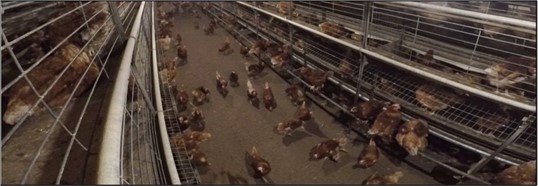
Figure 1. Data were collected in commercial cage free barns with the same type of housing
system and genetic strain of laying hens.
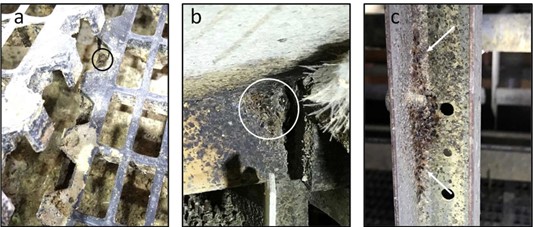
Figure 2 a, b and c. The presence of bed bugs was verified and the number of bed bugs was
counted at each welfare assessment data collection period. Bed bugs are indicated in the circled areas (a and b) and between the arrows (c).
Determination of efficacy of industrial grade bleach and Virkon S against bed bugs
Industrial grade bleach (12.5% sodium hypochlorite) and Virkon S (21.41% potassium
peroxymonosulfate) are commonly used as antimicrobial agents for reducing microbial loads in poultry environments. For efficacy determination, we conducted laboratory studies with a range of dilutions of these chemicals in distilled water and sprayed them directly (using a hand held mist sprayer) on either bed bug adults, nymphs (immature bed bugs) or eggs held in a Petri dish. Control insects or eggs were treated with distilled water. After treatment, bed bug adults and nymphs were observed for mortality every 24 hours up to 72 hours. Eggs were observed daily until 7-10 days or until all water-treated (control) eggs hatched. The dilutions used for both antimicrobial agents were such that they provided a range of mortality between 0 to 100%. The concentration-mortality data were used for probit analysis in SAS 9.4 (Cary, NC, USA). Probit analysis of mortality or efficacy data revealed concentrations of bleach and Virkon S that resulted in 50% and 90% bed bug mortality (data not shown). However, from a practical standpoint, only the concentrations that provided mortality in the range of 50 to 90% are reported in the results section.
Statistical analysis
Age-related differences in welfare measures were analyzed with the Friedman test. Differences in welfare measures between BUG and CON flocks were analyzed with the Mann-Whitney U test. Hen mortality, productivity and body weight data were analyzed using a repeated measures ANOVA. All analyses were conducted using SAS 9.4 and P values of ≤ 0.05 were considered significant.
Results and discussion
Estimates of bed bug population
No bed bugs were found in CON barns. In the first BUG barn, bed bug population estimates ranged from ~13,000 bed bugs (June 2018) to 114,000 (Dec 2018). After December 2018, bed bug population in that barn declined to ~15,000 (March 2019), likely due to dryer/colder weather and also due to the use of 50% bleach solution and propane/weed torch by the producer to control/kill bed bugs. Before the end of the flock cycle, the bed bug population increased to ~30,000 bugs (June 2019). In the second BUG barn, bed bug populations at the start of the monitoring period were ~7000 (June 2018) and increased in a more or less linear fashion to ~45,000 at the end of the flock cycle (March 2019).
Hen Welfare
Feather and footpad condition, and keel damage of all hens worsened with age (P <
0.0001). Feather damage on the head (P = 0.03), neck (P < 0.0001), back (P = 0.0006), rump (P < 0.0001), right wing (P < 0.0001), left wing (P < 0.0001) and tail (P < 0.0001), and footpad
condition (P < 0.0001) were worse for hens in CON barns (Table 1).
Keel bone damage was worse for hens in BUG barns (P < 0.0001). Mortality increased with age (P = 0.02) but did not differ between CON an BUG flocks (Fig. 3). Hen-day production declined with age but did not differ between CON and BUG flocks (Fig. 4). While bed bugs did not negatively influence hen feather condition and productivity in this field trial, results indicate that there may be a possible relationship between bed bug infestation and keel bone fractures and deviations. However, results need to be interpreted with caution because other factors related to management could also have affected keel bone damage.
| Farm | Score 0 | Score 1 | Score 2 |
|---|---|---|---|
| Head feather damage | |||
| BUG | 61 | 22 | 17 |
| CON | 56 | 21 | 23 |
| Neck feather damage | |||
| BUG | 59 | 14 | 27 |
| CON | 41 | 15 | 44 |
| Back feather damage | |||
| BUG | 76 | 10 | 14 |
| CON | 69 | 11 | 20 |
| Rump feather damage | |||
| BUG | 83 | 7 | 10 |
| CON | 65 | 11 | 24 |
| Right wing feather damage | |||
| BUG | 13 | 23 | 64 |
| CON | 3 | 19 | 78 |
| Left wing feather damage | |||
| BUG | 12 | 24 | 64 |
| CON | 3 | 18 | 79 |
| Tail feather damage | |||
| BUG | 11 | 22 | 67 |
| CON | 3 | 19 | 78 |
| Footpad feather damage | |||
| BUG | 88 | 10 | 2 |
| CON | 71 | 28 | 1 |
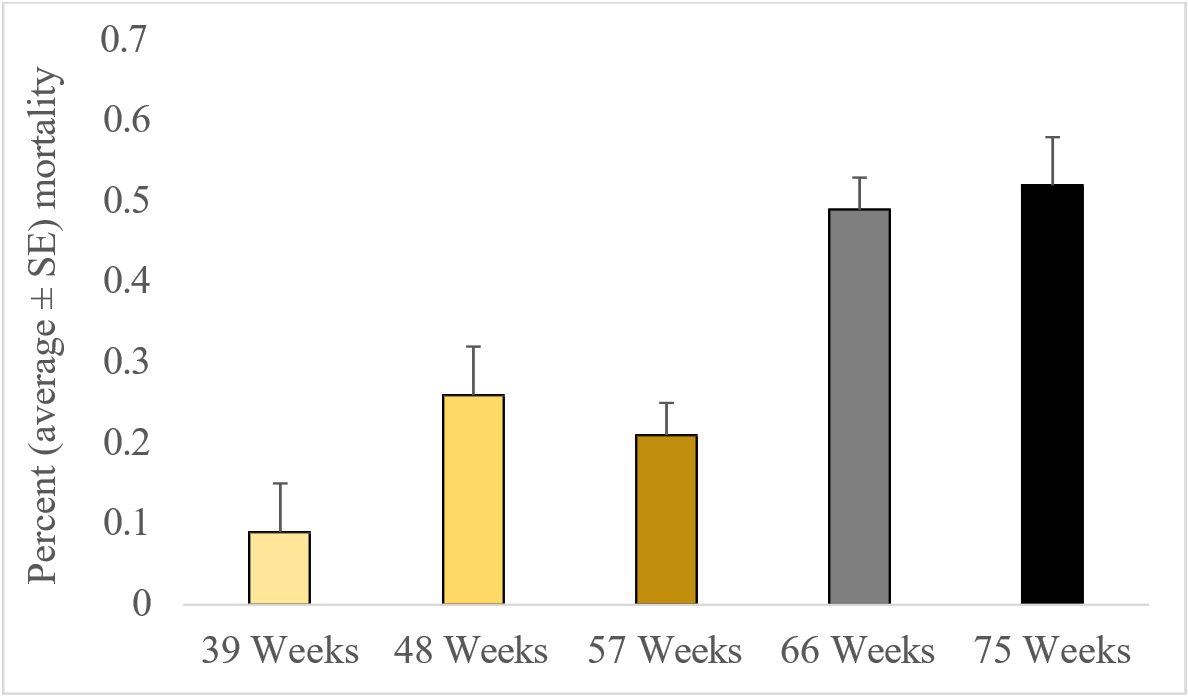
Figure 3. Percent mortality across all flocks
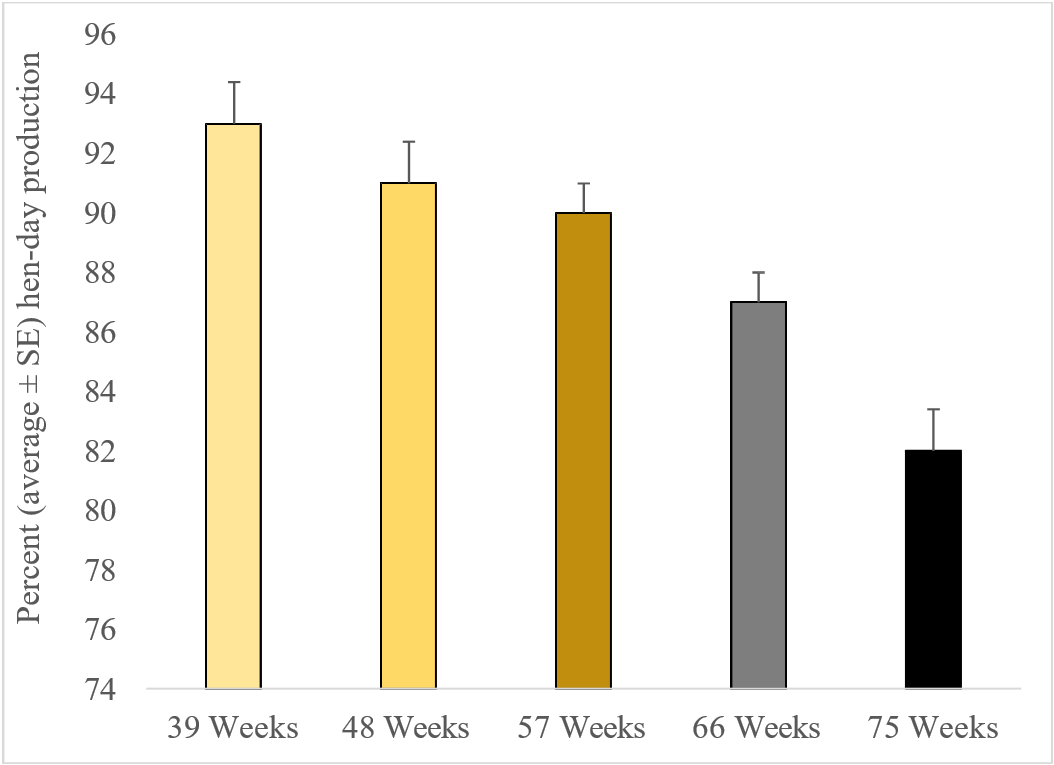
Figure 4. Percent hen-day egg production across all flocks
Effectiveness of disinfectants/antimicrobial agents againt various bed bug life stages
Little information is available about which chemical (i.e., insecticidal) and non-chemical methods are effective for eradicating bed bug infestations in poultry houses. Another problem is that chemicals that can be used in other facilities where bed bugs are found (e.g. hotels) cannot be used in poultry houses while live birds are in the house and while birds are producing eggs for human consumption. Therefore, different strategies need to be devised that can be used in poultry houses to decrease bed bug numbers and prevent them from spreading to other areas. Since antimicrobial sprays such as industrial grade bleach and Virkon S are routinely used for microbial load reduction in poultry environments, we tested the efficacy of these products against bed bugs. When directly sprayed on bed bugs, 25 to 50% industrial grade bleach or 3 to 6% sodium hypochlorite concentration (diluted in water) killed 70 to 100% of bed bug adults and nymphs (immature life stages) either instantly or within the next 24 to 72 hours. With Virkon S, 1% solution (1:100 dilution rate) in water caused 50 to 70% mortality of adult bed bugs and nymphs. With bed bug eggs, which are much harder to kill due to the impermeability of the shell to various chemicals, Virkon S 1% solution was not effective against them. However, 25 to 50% bleach solution provided complete mortality of eggs (i.e., 0% hatch rate). Efficacy of bleach and Virkon S were also dependent on direct application of these chemicals on the insect body. However, in the cage-free poultry environment, it is likely impossible to directly spray all bed bugs or their eggs with bleach or Virkon S. Therefore, a large proportion of bed bugs that are hiding in cracks and crevices, the housing equipment or in other areas of the barn would escape chemical exposure, thus leading to inadequate bed bug control.
Conclusions
This is the first study that shows how bed bug populations build up during the flock growing
cycle and the first research to document the effects of bed bug infestations on laying hen welfare and productivity. However, the effects of bed bug bites on overall chicken health and behavior are not clear yet. Further research is ongoing to examine how hen behavior changes as a result of bed bug infestations.
We also report the overall bed bug population estimates in a cage-free layer hen barn based on visual counts. In the absence of any interventions, bed bug populations can increase to substantial numbers (>100,000 bed bugs in a single barn as per the lower end visual estimates). This population increase throughout the growing cycle is associated with the staring propagule of a few hundred to thousands of bed bugs at week 0. In the absence of interventions, farm workers can be bitten. In addition, because bed bugs are hitchhikers, farm workers can become carriers or spread bed bugs to other areas, including their homes. These data suggest the need for identifying new control measures that can effectively reduce or eliminate bed bug infestations in cage-free poultry barns. Also, there is a need to develop bed bug traps or monitors for the poultry environment because the visual population estimation procedure used in this study is time consuming and requires the surveyor to be acquainted with identifying various bed bug life stages.
Industrial grade bleach (25 to 50% solution) appears to be a good disinfectant to kill adult and immature bed bugs as well as their eggs. Virkon S is slightly less effective than industrial grade bleach and the 1% solution (1:100 dilution) can provide anywhere between 50 to 70% mortality of bed bug adults and their nymphs. However, it is not effective against eggs. Treatment with both of the disinfectants that we tested is only expected to reduce bug population numbers, but may not completely eliminate them from the poultry environment. This is because both of these chemicals are effective only if they are sprayed directly on the insect body or their eggs. Therefore, bed bugs and their eggs hidden in cracks and crevices of the housing equipment are unlikely to be affected or killed by bleach or Virkon S. Lastly, it should be noted that due to reduced ventilation in poultry barns during winter months (to maintain temperature), the use of 25 to 50% solution of industrial grade bleach is not feasible due to the respiratory irritation it may cause to the birds and farm workers. Therefore, the use of bleach in cage-free barns should be limited to warmer months of the year when ventilation is not reduced. Virkon S on the other hand does not have any odor or vapor accumulation issues and can be used during winter months to reduce bed bug population numbers.
Acknowledgements
Many thanks to the Purdue University Center for Animal Welfare Science for providing funding for this project, and to our commercial producers for opening their doors and allowing us to collect data on their farms. We would also like to thank Allie Megl, Emily Furlong, Rachel Jarrett, Laura Zimmerman and Aspen Bond for assisting with welfare assessments on farms and behavioral analyses.
References
- Mullens, B. A. and A. C. Murillo. 2018. Chapter 14. The future of poultry pest management. In: Mench, J. A. (Ed) Advances in Poultry Welfare. Pp 303. Woodhead Publishing, Cambridge, MA.
- Mullens, B.J., B.L. Chen and J.P. Owen. 2010. Beak condition and cage density determine
abundance and spatial distribution of northern fowl mites, Ornithonyssus sylvarum, and chicken body lice, Menacanthus stramineus, on caged laying hens. Poult. Sci89: 2565-2572. - Vaidyanathan, R. and M.F. Feldlaufer, 2013. Review article: bed bug detection: current
technologies and future directions. Am. J. Trop. Med. Hyg., 88: 619–625
Conference presentations and abstracts related to the project
Erasmus, M., K. VanDeWater, Y. Dong, A. Ashbrook, S. Gaire and A. Gondhalekar. 2019.
External parasites (bed bugs, Cimex lectularius) in cage free housing systems: hen welfare and productivity. Poultry Science Association Annual Meeting, Montreal, Canada. Poster and 5-minute oral presentation.
