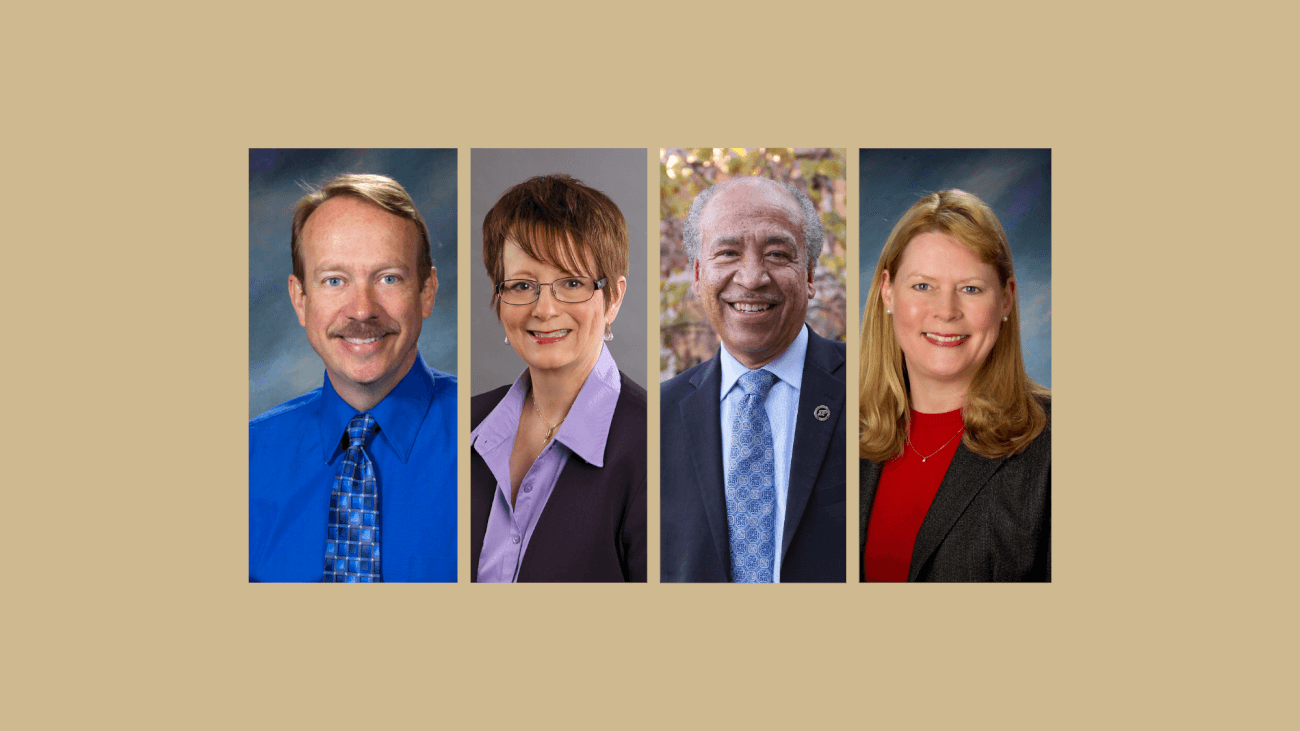
2025 marked a major milestone in the careers of four prominent Purdue Veterinary Medicine faculty members who retired. Each of them touched the lives of many students and alumni through their dedication as mentors, educators, scholars and leaders. Their accomplishments and influence reached across the college and university and reverberated through the veterinary medical profession that they loved and served with passion and pride. Congratulations to the following 2025 Purdue Veterinary Medicine faculty retirees
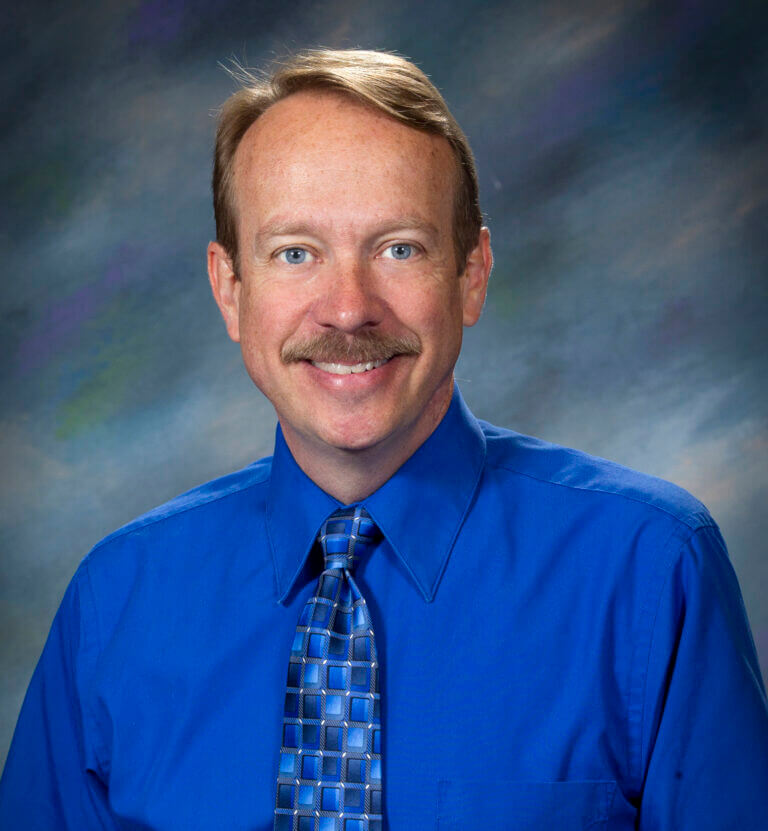
Dr. Larry Adams, professor of small animal internal medicine in the Department of Veterinary Clinical Sciences, and Small Animal Internal Medicine section head for the Purdue University Veterinary Hospital retired effective September 30, after a long and distinguished career as an effective educator and respected specialist in urology and nephrology.
Dr. Adams earned his bachelor’s degree at the University of Kentucky and his DVM degree at Auburn University. After serving for a year as a staff veterinarian at a veterinary clinic in Skokie, Illinois, he completed a small animal internship and small animal medicine residency at the University of Minnesota, where he also earned his PhD. Board certified by the American College of Veterinary Internal Medicine (ACVIM), Dr. Adams joined the Purdue Veterinary Medicine faculty in 1991 as an assistant professor. He rose through the academic ranks, and was promoted to professor in 2008. In 2022, he became a founding member of the American College of Nephrology-Urology.
Dr. Adams received numerous awards for his teaching, including the college’s prestigious Raymond E. Plue Outstanding Teacher Award both in 2001 and 2022, and the National Pfizer Distinguished Teacher Award in 2009, regarded as the most prestigious teaching award in veterinary medicine in the United States. He also is a three-time recipient of the Zoetis Distinguished Teacher Award and twice received the Weedon Faculty Award. Moreover, he was named a University Faculty Scholar for 2013 to 2018, and in 2006 was inducted into Purdue’s Teaching Academy. From 2001 to 2014, he received the All-student Recognition for Excellence in Teaching and he was chosen by the students in the DVM Class of 2027 to receive the PVM Award for Excellence in Teaching First-Year DVM Students. Dr. Adams taught the first-year students renal physiology and was praised for making complex concepts easy to understand and for demonstrating their clinical application.
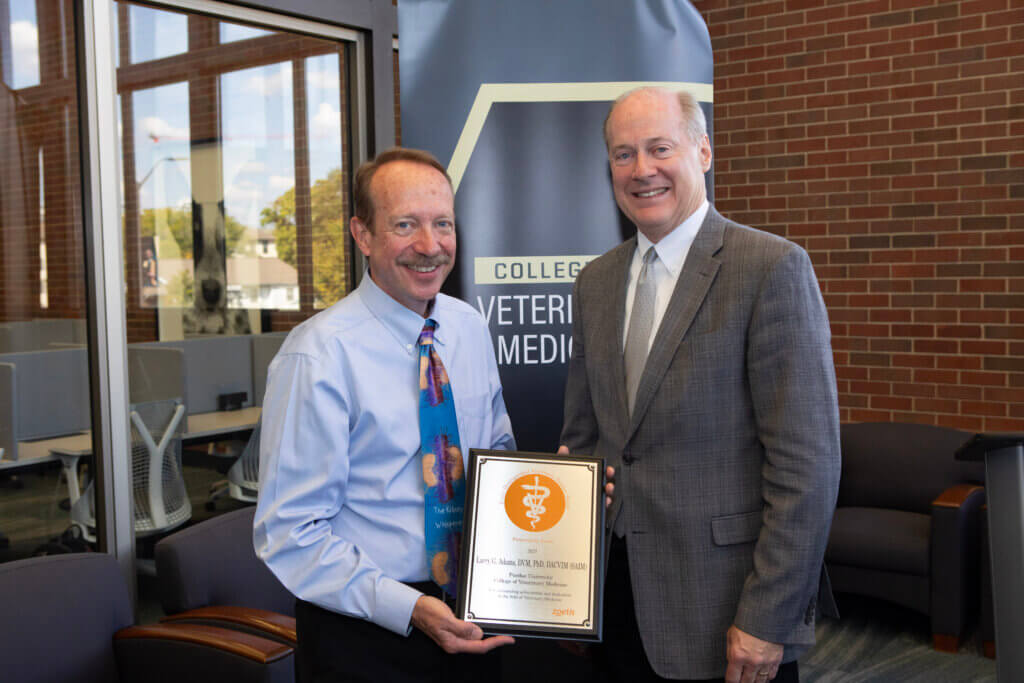
Recognized as an educator, innovator and leader in the college and the Department of Veterinary Clinical Sciences, Dr. Adams served as a core faculty member involved in the successful effort to incorporate problem-based learning into the curriculum with the addition of Applications and Integrations courses as part of a significant curriculum change implemented in 1994. He remained involved in the courses ever since – a reflection of his dedication to education, and to teaching, and to the students and residents. In addition he served as primary advisor to eight internal medicine residents and participated as a residency committee member for 50 other internal medicine residents in his career. He also was the advisor of 72 veterinary students.
Dr. Adams’ research interests involved clinical veterinary nephrology and urology including hemodialysis, minimally invasive management techniques for urinary tract diseases and nutritional therapy of urinary tract diseases. He also presented lectures at more than 220 veterinary meetings throughout North America, Europe and Asia, authored many publications and textbook chapters, and secured numerous research grants.
Dr. Adams is regarded as one of the pioneers in the use of extracorporeal shockwave lithotripsy. Other accomplishments include initiating the nephrology/urology service in the Purdue Small Animal Hospital and establishing a study abroad program that has provided an international learning experience in Switzerland for students and residents since 2011.
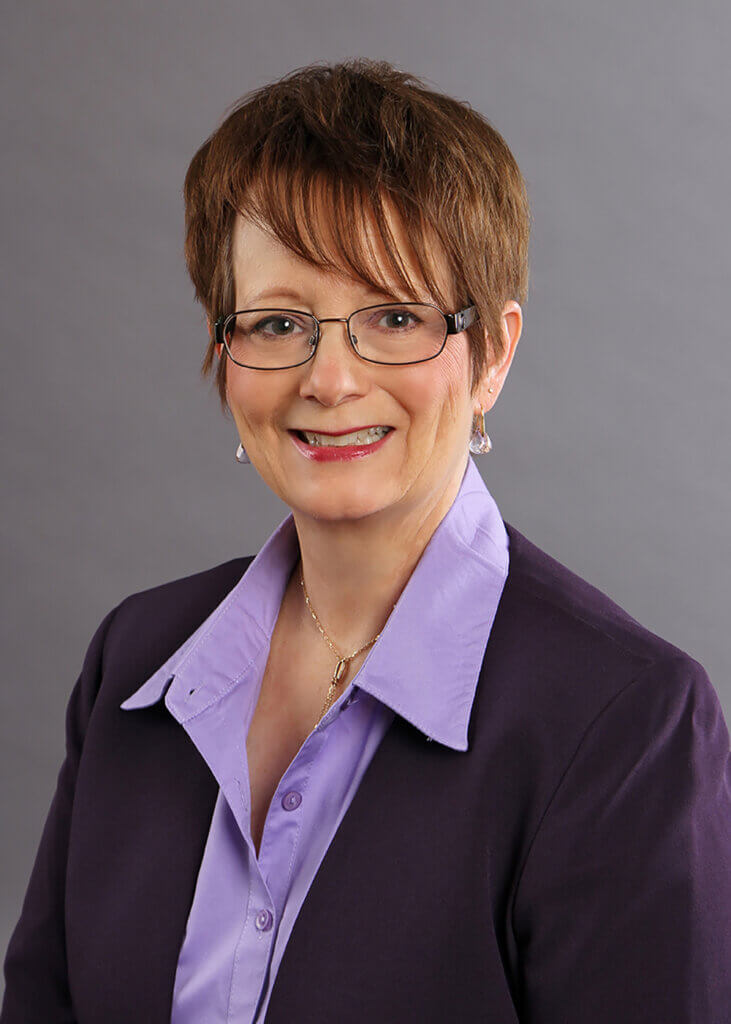
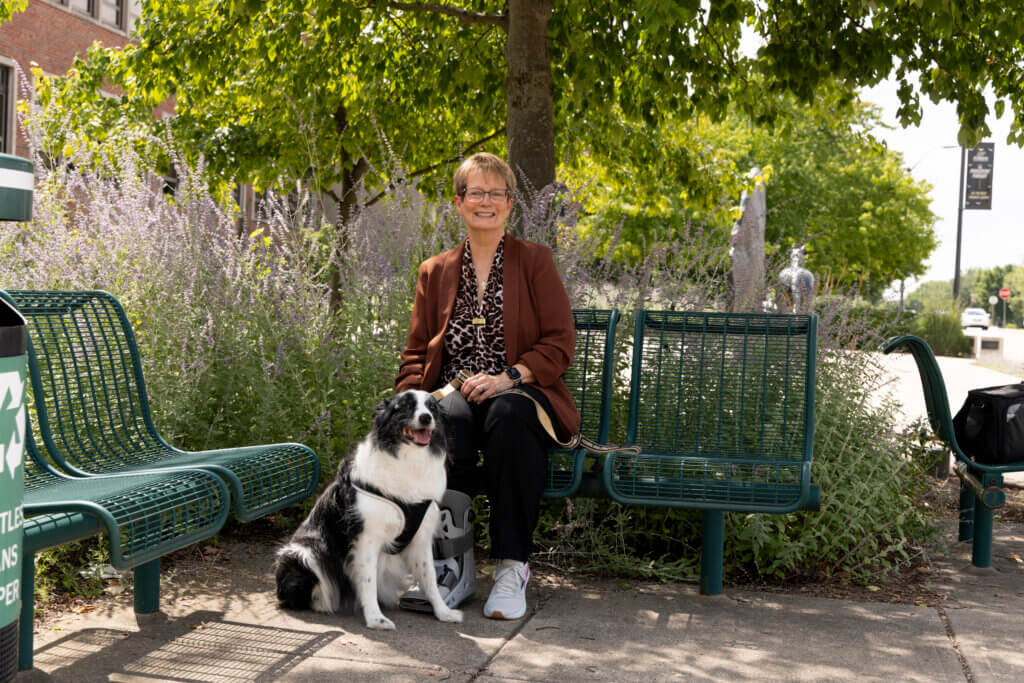
Dr. Ellen Lowery, who served as associate dean of hospital operations and chief veterinary officer, was honored at a retirement reception July 28 for her dedicated leadership and service at a pivotal time in the history of the College of Veterinary Medicine and the Purdue University Veterinary Hospital.
Dr. Lowery joined the college February 1, 2020, a few weeks before the COVID pandemic hit, and just as the college was beginning a major hospital construction project. She was praised for leading the hospital through that challenging time with professionalism, grace, thoughtfulness and a calm demeanor.
Dr. Lowery earned her DVM and PhD degrees at Kansas State University and during her graduate program served as the university veterinarian. She later did additional graduate study at the University of Kansas, where she earned her MBA. Before coming to Purdue, Dr. Lowery served 23 years at Hill’s Pet Nutrition. She joined Hill’s in 1994 as a research scientist, and was promoted multiple times to increasingly important leadership positions, including director of U.S. Professional and Veterinary Affairs. In that role, she led the development and execution of programs to support and strengthen Hill’s engagement with the profession.
Dr. Lowery then transitioned to academia, serving two years as professor of practice in animal health in the School of Applied and Interdisciplinary Studies at Kansas State University’s Olathe campus. During that time, she taught in graduate level classes in the Veterinary Biomedical Science Program and worked on the design and implementation of educational programs and courses tailored to the animal health industry.
Dr. Lowery also served as director of the Veterinary Oral Health Council, is a past president of the American Association of Industry Veterinarians (AAIV) and served as the AAIV Delegate to the AVMA House of Delegates. In addition, she served on the board of directors for a number of professional organizations, including Pride Veterinary Medical Community, the American Veterinary Dental Society, the Kansas Veterinary Medical Association, Partners for Healthy Pets, the Pet Nutrition Alliance, the Veterinary Innovation Council and the Mark Morris Institute.
She also published numerous scientific articles, was a reviewer for the Journal of Veterinary Dentistry and served as CE editor for the Journal of the National Association of Veterinary Technicians.
Dr. Lowery was appointed to her position at Purdue by then Dean Willie Reed, now Dean Emeritus, who spoke at her reception and thanked her for her nearly five-and-a-half years of service to the college. He praised her for her tireless, professional and calm leadership during the pandemic as the new Brunner Purdue Veterinary Medical Hospital Complex was built. He emphasized that she addressed multiple challenges while supporting the college’s goals of protecting staff, faculty and students; maintaining service to the clients; and sustaining the teaching environment for students, even as caseload rose significantly due to service cutbacks at private veterinary practices impacted by the pandemic, and pandemic-induced staffing issues mounted. All the while, she also was responsible for managing the Caesars Entertainment Equine Specialty Hospital in Shelbyville, Indiana.
Through all of that, the new hospital facilities were completed and opened. Additionally, Dr. Lowery was praised for supporting other areas of the college outside of the hospital, and for consistently participating in a variety of college events and activities, especially those involving students. Moreover, Dr. Lowery was appreciated for always seeking to make others better by providing positive leadership and mentoring, and for her positive influence, poise and professionalism.
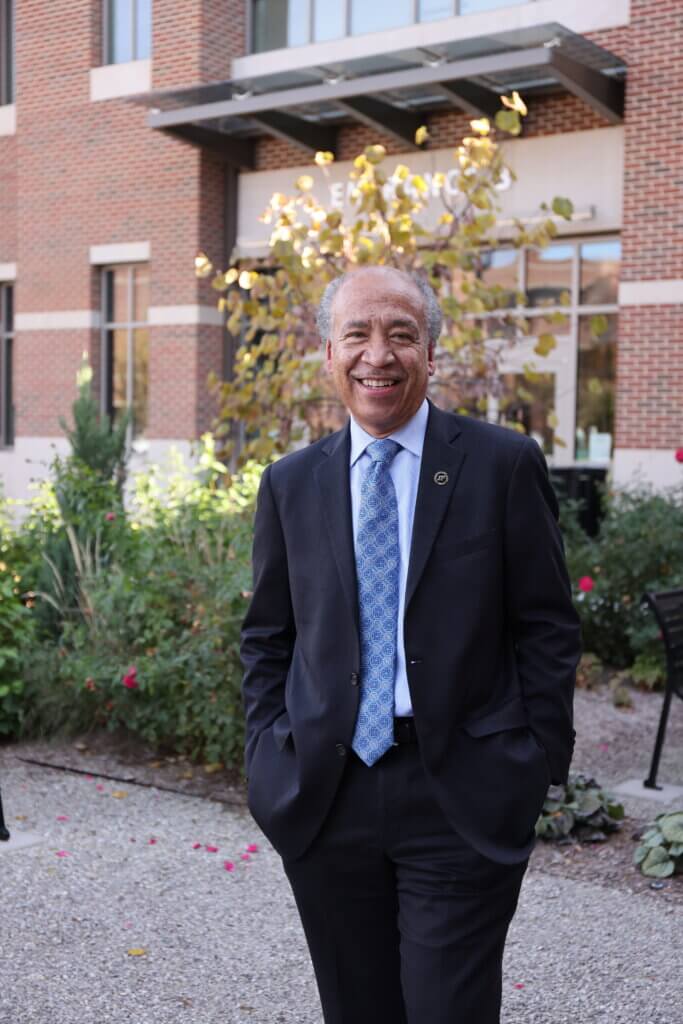
Dean Emeritus Willie Reed retired as of June 30, following a long and distinguished career as a faculty member, pathologist, avian diagnostician and senior academic administrator. His retirement came one year after he stepped down as the college’s dean, at the conclusion of 17-and-a-half years in that role, among 26 total years of service to Purdue.
Dr. Reed earned his Bachelor of Science and Doctor of Veterinary Medicine degrees at Tuskegee University before coming to Purdue University to pursue a graduate degree in veterinary pathology. After earning his PhD in 1982, he joined the Purdue Veterinary Medicine faculty, serving as associate professor of avian pathology and as chief of Avian Disease Diagnostic Services in the Animal Disease Diagnostic Laboratory. In 1990, he accepted an offer at Michigan State University to become a full professor and director of the Animal Health Diagnostic Laboratory (now called the Veterinary Diagnostic Laboratory). He remained at Michigan State until his appointment as dean of the College of Veterinary Medicine at Purdue.
As dean, Dr. Reed was praised for consistently championing One Health at Purdue — bringing together animal health, human health and environmental health. The university is continuing to strengthen and accelerate his groundbreaking approach to excellence and education in these areas.
Dr. Reed was also recognized for guiding the College of Veterinary Medicine in developing and executing a series of three visionary strategic plans to enhance the future of the college through innovative educational initiatives, groundbreaking research, and creative and effective engagement programs. His strategic planning initiatives culminated in the opening of the David and Bonnie Brunner Purdue Veterinary Medical Hospital Complex in 2022 — expanding the college’s Small Animal Hospital and creating new Equine and Farm Animal hospitals to replace the Large Animal Hospital.
The new David and Bonnie Brunner Equine Hospital actually is the second equine hospital established under Dean Reed’s leadership. The first is the Caesars Entertainment Equine Specialty Hospital, which opened as a satellite facility in 2017 in Shelbyville, Indiana, offering outstanding equine health expertise, state-of-the-art equipment, a location in proximity to Indiana’s two racetracks, and a focus on treating cases involving performance horses.
Dean Reed’s leadership of the college also led to the improvement of Purdue DVM and veterinary technology education through implementation of new approaches to clinical-skills training and the use of innovative technology. In addition, he fostered growth in research programs, achieving record-level research funding through expanded external support for scientific discovery that advances medicine for both animals and humans. He also spearheaded efforts that enhanced the teaching, clinical and research facilities in Lynn Hall; increased the DVM class size by 20%; fostered successful recruitment of faculty members from around the globe in many disciplines; and significantly expanded the college’s global engagement programs.
In 2023, Dean Reed’s many achievements were recognized when he was selected by the American Veterinary Medical Association as its inaugural recipient of the AVMA Frederick Douglass Patterson Lifetime Achievement Award, honoring his innovative leadership and contributions in supporting and promoting diversity, equity and inclusion in the veterinary profession.
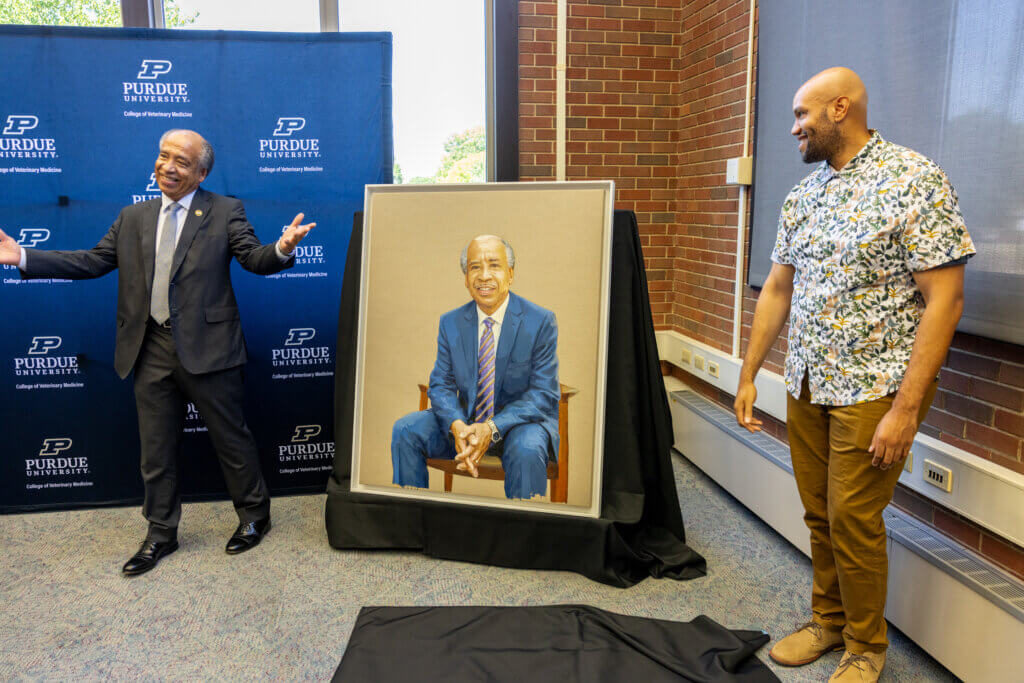
To honor Dr. Reed’s loyalty and service to Purdue, the veterinary medicine profession and the state of Indiana, the trustees approved renaming the Animal Disease Diagnostic Laboratory building in West Lafayette as the Willie M. Reed Animal Disease Diagnostic Laboratory. As a result, Dr. Reed became the first dean in Purdue history to have a building named in his honor. Dr. Reed also received the designation of Dean Emeritus.
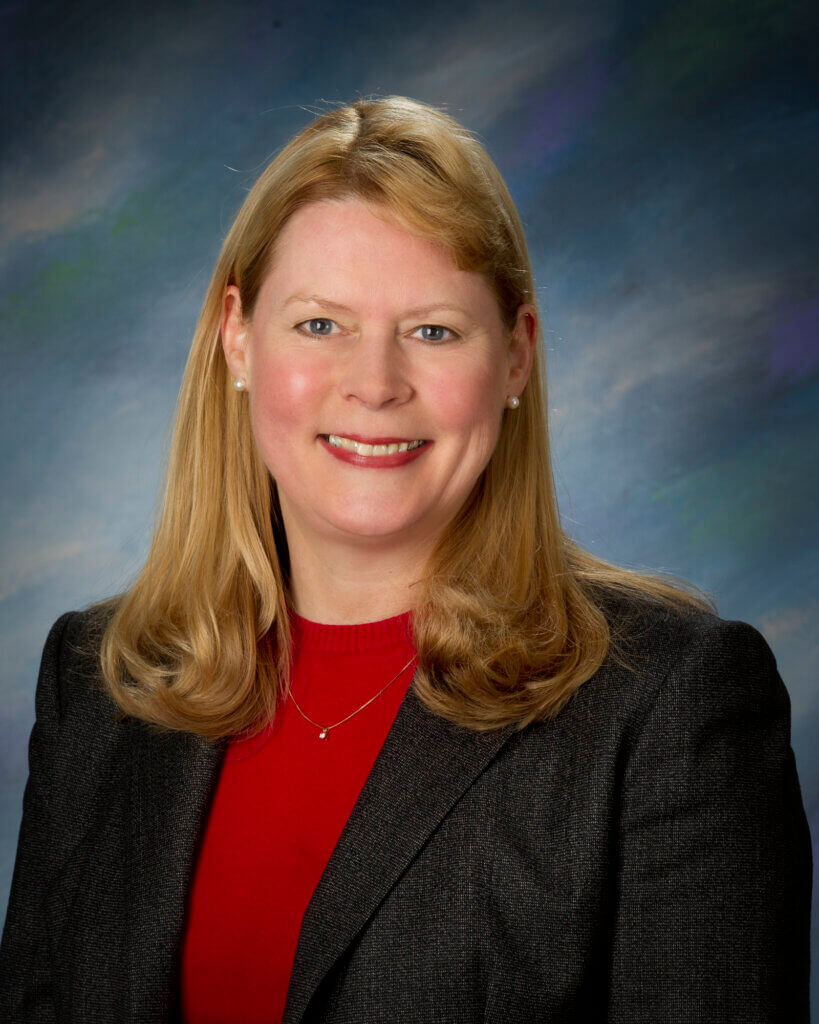
Dr. Kathy Salisbury, associate dean for academic affairs and professor of small animal surgery, retired effective June 30, concluding a legendary career as an educator, scholar, boarded veterinary surgeon, mentor and administrator.
Dr. Salisbury earned her DVM degree at Michigan State University in 1979 and then joined a mixed animal practice in Michigan for two years, before coming to Purdue University for a residency in small animal surgery. She completed the program in 1984, earning her master’s degree and accepting an appointment as assistant professor in the college’s Department of Veterinary Clinical Sciences.
Board certified by the American College of Veterinary Surgeons in 1986, Dr. Salisbury was named as chief of small animal surgery in 1988. Rising through the academic ranks she received a promotion to associate professor with tenure in 1989 and to full professor in 2000. She then was named assistant dean for academic affairs in 2005 and was appointed as associate dean for academic affairs in 2010.
Dr. Salisbury is well known and highly regarded as a passionate educator. She was a driving force in the college’s major curriculum revisions, and co-developed and led a series of problem-based learning courses that enriched the first two years of the DVM curriculum. Her mentorship and unwavering commitment to student success and well-being inspired and encouraged Purdue Veterinary Medicine students to excel. Her significant role as a mentor was reflected in her service as a faculty advisor for nearly 130 second-, third-, and fourth-year DVM students.
Dr. Salisbury’s enduring loyalty to the college also was reflected in her willingness to take on additional administrative responsibilities. She agreed in the summer of 2024 to serve as interim dean until the appointment of Dr. Bret Marsh as dean effective in November of that year. In addition Dr. Salisbury stepped up to serve as interim director of the Veterinary Technology Program until May, 2025, when Basic Medical Sciences faculty member Mindy Anderson assumed those responsibilities.
During her more than 40-year career as a Purdue faculty member, Dr. Salisbury received numerous awards and honors including being named a 150th Anniversary Professor at Purdue in conjunction with the university’s sesquicentennial in 2019. She also was inducted into Purdue’s Book of Great Teachers and is a founding fellow of the Purdue University Teaching Academy. Moreover, Dr. Salisbury received the National Carl J. Norden-Pfizer Distinguished Teacher Award as well as PVM’s prestigious Raymond E. Plue Outstanding Teacher Award. Between 1995 and 2011, 4th year DVM students voted to award Dr. Salisbury the annual Weedon Faculty Recognition Award a total of nine times.
In 2020, the American Association of Veterinary Medical Colleges (AAVMC) presented Dr. Salisbury and the other members of the Competency-Based Veterinary Education Working Group (CBVE) with its Presidential Award for Meritorious Service for their distinguished work in the development of the CBVE Framework. She also served as a member of the AAVMC’s Council for Outcomes-Based Veterinary Education.
In addition, Dr. Salisbury was recognized as an American College of Veterinary Surgeons Foundation Honored Mentor and received the Purdue Veterinary Medicine Alumni Faculty Award for Excellence as well as the Indiana Veterinary Medical Association 2025 President’s Award.
Furthermore, Dr. Salisbury actively participated in scientific discovery, contributing to 35 published studies in refereed scientific journals. She also authored 15 book chapters in published scholarly works.
Dr. Salisbury touched the lives of countless students through her utmost dedication to outstanding teaching and mentoring. She also was extremely dedicated to mentoring junior faculty to help improve their teaching skills. It is well understood that no one worked harder or gave more generously of their time and effort to support the college’s mission than Dr. Salisbury, whose legacy as a remarkably caring and talented veterinarian and faculty member will have a lasting influence on the college and veterinary medical profession for years to come.