
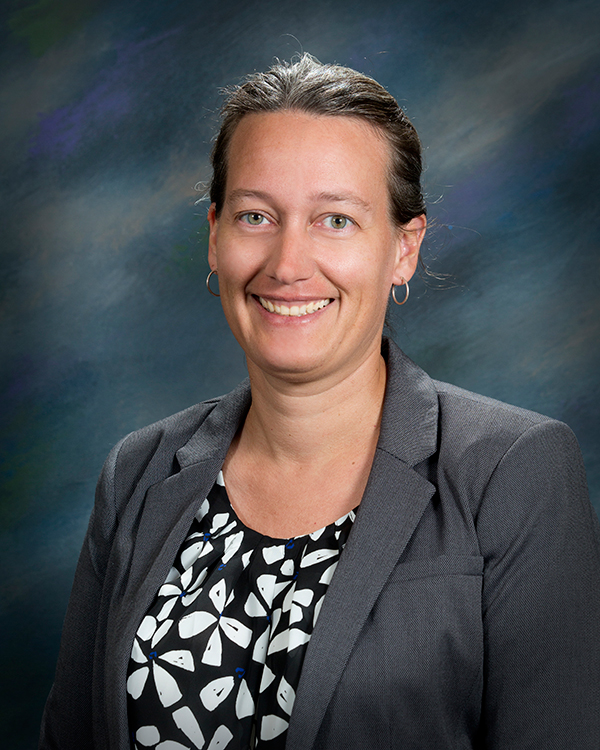
Faculty Spotlight: Dr. Marije Risselada

Dr. Marije Risselada


This week the Vet Gazette continues a series of stories on new Purdue Veterinary Medicine faculty members by shining the spotlight on Dr. Marije Risselada, assistant professor of small animal soft tissue surgery. As a member of the Department of Veterinary Clinical Sciences, Dr. Risselada says her responsibilities involve clinical work, including consulting with other services, treating patients as a referral surgical service and teaching students, interns, and residents; research; and formal instruction through lectures and labs. She also plans to support the College by volunteering to serve on committees.

Dr. Risselada was born and raised in the Netherlands, and earned her DVM at Ghent University in Belgium, where she continued her education by completing an internship, residency, and PhD program. As a specialist in small animal soft tissue and oncologic surgery, Dr. Risselada sees a variety of cases and treats a wide variety of surgical diseases. She never quite knows what will come her way. Some cases require advanced imaging and creation of detailed surgical plans, while others are emergencies in which she must deal with a variety of unexpected circumstances.

“A large part of what we do is set client expectations and make sure that we recommend the correct surgical approach for the disease, the pet, and the client,” said Dr. Risselada. “Oftentimes it entails getting to know the client and presenting different surgical options and their inherent risks and ascertaining what would be the best fit. This also involves being an advocate for the patient and its quality of life during recovery or post-procedure.”

When she’s not working in the College, Dr. Risselada enjoys traveling, hiking (among other outdoor activities), and landscape/wildlife photography.

Dr. Risselada said she was drawn to Purdue by the possibility of furthering her research and having the opportunity to utilize existing research facilities within PVM and on Purdue’s main campus, as well as by PVM’s supportive and collegial work environment. When asked about her biggest career achievement to date, Dr. Risselada said she is most proud to see former trainees do well – whether that involves their success in obtaining internships or residencies, or finding jobs that they love.

If you haven’t had the chance to already, be sure to greet Dr. Risselada and extend a warm welcome when you see her in the classroom and hallways!

Writer(s): By Helen Thimlar, PVM Communications Intern | pvmnews@purdue.edu

Recent Stories

“Paws Up” for Jennifer Danaher – brought to you by the PVM Wellness Committee

This week we express our gratitude to Jennifer Danaher, who is department secretary for Veterinary Clinical Sciences.

‘Purdue Pursuits’: A PVM angle on Purdue’s teaching and learning reading groups

Crafting meaningful and engaging course experiences has been at the top of Dielson Vieira’s mind ever since he joined the Purdue University College of Veterinary Medicine’s faculty in 2024. As a clinical assistant professor in the Department of Basic Medical Sciences, Vieira is already adept at applying innovative teaching practices to classroom environments, but that doesn’t stop him from seeking out new ideas, approaches and perspectives — insights he gains through outlets like Purdue’s teaching and learning reading groups.

Top tier biology journal publishes PVM study that unlocks secrets of a drug-resistant fungal pathogen, which causes serious infections in humans

Though the name “Candida auris” is far from a household term, public health experts know it well because the multi-drug-resistant fungal pathogen, which causes serious human infections, has been classified as an urgent threat by the U.S. Centers for Disease Control and Prevention (CDC) Antibiotic Threats Report (2019). Dr. Shankar Thangamani, Associate Professor of Microbiology and University Faculty Scholar in the Purdue University College of Veterinary Medicine’s Department of Comparative Pathobiology, is researching C. auris, aided by a 2.4 million grant from the National Institutes of Health (NIH). New research findings, just published in Nature Microbiology, show how C. auris adapts and evades the immune system.

In Print: ‘Translational Research Methods for Tauopathies’

A just-published 300-page volume edited by Jessica Fortin, Purdue assistant professor in the College of Veterinary Medicine’s Department of Basic Medical Sciences, provides a significant new resource for researchers studying a group of neurodegenerative diseases known as tauopathies. “Translational Research Methods for Tauopathies” provides detailed protocols intentionally selected to serve as a basis for research laboratories seeking to further treatments for such debilitating neurodegenerative diseases as Alzheimer’s and chronic traumatic encephalopathy (CTE).

It’s Almost Here!

Though the annual Purdue Veterinary Conference is almost upon us, there’s still time to register and take advantage of this time-honored College of Veterinary Medicine fall tradition that combines excellent continuing education with fun opportunities for reconnecting with colleagues and classmates, networking, and learning about the latest veterinary trends and products. The 2026 Purdue Veterinary Conference takes place September 23–26 on the Purdue University campus. The annual event has something for everyone, from veterinarians to veterinary technicians, faculty, staff and students.