
Comfort for Koda

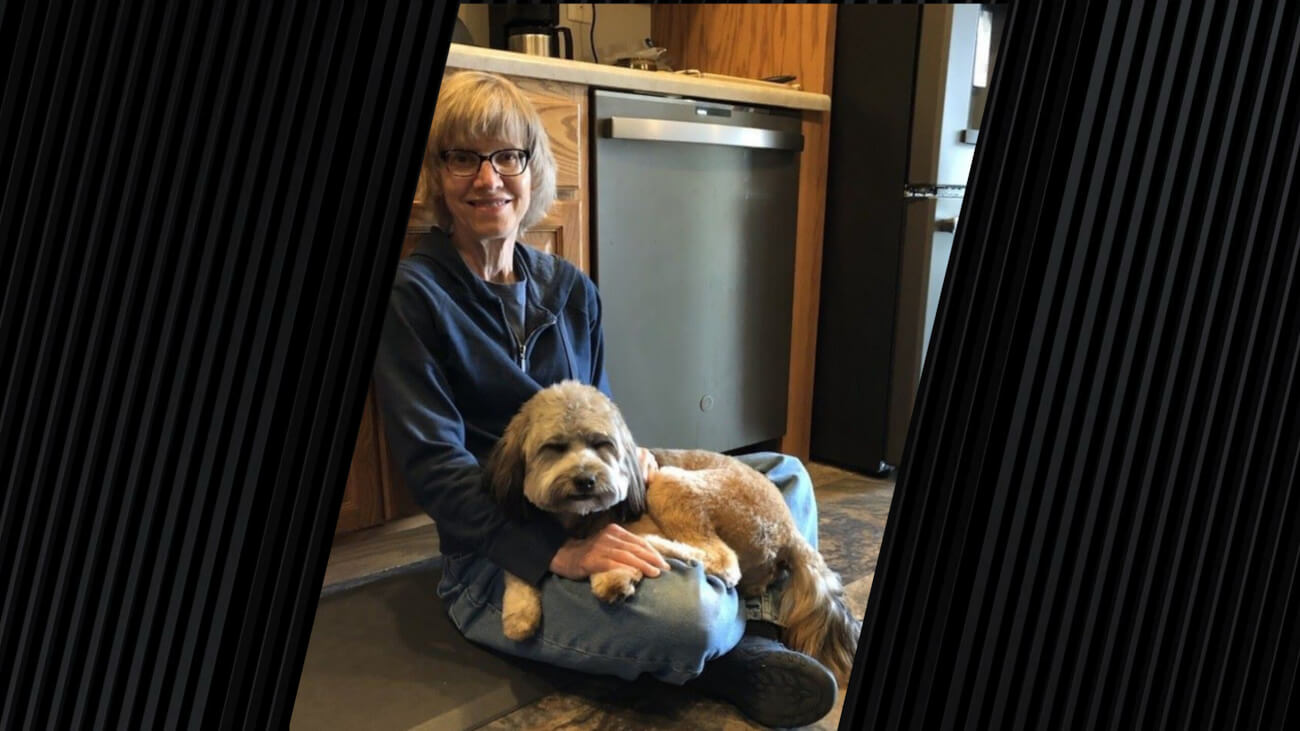
Koda, a young poodle mix, sitting on his owner's lap.

Purdue Veterinary Hospital Helps Family and Pet Find Peace of Mind

Today we continue a series of stories about animals and their owners who’ve found help and healing at the Purdue University Veterinary Hospital as we share the tale of a dog named Koda. This is just one of the heartwarming tributes provided by hospital clients to highlight the vital care and treatment their animal companions received from the hospital’s teams of clinicians, veterinary nurses, staff and students.

Koda is a young poodle mix that had experienced ongoing bladder issues early in life. After numerous trips to the local veterinary clinic, Koda’s family was referred to the Purdue University Small Animal Hospital for answers.

Koda’s owner, Marianne Hoke, took her beloved companion on the several-hour drive to West Lafayette in search of clarity and found it. Purdue’s specialists diagnosed Koda’s condition and developed a treatment plan, working in collaboration with her local veterinarian to ensure continuity of care once Koda returned home.

What had once seemed like a string of frustrating accidents in the house now had an explanation, and with it, a way forward. Marianne recalled that initially, she followed up with the hospital every three months and after two cycles of that, during which Koda was stable, the hospital care team advised that the follow-ups would only need to be done every six months. Her local veterinarian runs Koda’s kidney function tests and sends them to the Veterinary Hospital’s Nephrology/Urology service. Marianne said she usually receives a text with results the same day.

At first, Marianne interacted with the resident who had seen Koda at Purdue. After the resident concluded her residency program, the senior clinician on the case, Dr. William Whitehouse, assistant professor of small animal internal medicine, handled the communication with her. Beyond the clinical care, Marianne appreciated the personalized touches, the follow-up communication, appointment reminders, and encouragement to keep sharing updates about Koda’s progress. “It makes you feel like you have that team behind you if they ever are needed,” Marianne said.

With Purdue’s support, Koda’s discomfort is now being managed, and Marianne has a deeper understanding of his condition and how to care for him. It’s the kind of partnership that makes a lasting difference for pets and the people who love them.

Writer(s): Mackenzie Martin | pvmnews@purdue.edu

Recent Stories

“Paws Up” for Jennifer Danaher – brought to you by the PVM Wellness Committee

This week we express our gratitude to Jennifer Danaher, who is department secretary for Veterinary Clinical Sciences.

‘Purdue Pursuits’: A PVM angle on Purdue’s teaching and learning reading groups

Crafting meaningful and engaging course experiences has been at the top of Dielson Vieira’s mind ever since he joined the Purdue University College of Veterinary Medicine’s faculty in 2024. As a clinical assistant professor in the Department of Basic Medical Sciences, Vieira is already adept at applying innovative teaching practices to classroom environments, but that doesn’t stop him from seeking out new ideas, approaches and perspectives — insights he gains through outlets like Purdue’s teaching and learning reading groups.

Top tier biology journal publishes PVM study that unlocks secrets of a drug-resistant fungal pathogen, which causes serious infections in humans

Though the name “Candida auris” is far from a household term, public health experts know it well because the multi-drug-resistant fungal pathogen, which causes serious human infections, has been classified as an urgent threat by the U.S. Centers for Disease Control and Prevention (CDC) Antibiotic Threats Report (2019). Dr. Shankar Thangamani, Associate Professor of Microbiology and University Faculty Scholar in the Purdue University College of Veterinary Medicine’s Department of Comparative Pathobiology, is researching C. auris, aided by a 2.4 million grant from the National Institutes of Health (NIH). New research findings, just published in Nature Microbiology, show how C. auris adapts and evades the immune system.

In Print: ‘Translational Research Methods for Tauopathies’

A just-published 300-page volume edited by Jessica Fortin, Purdue assistant professor in the College of Veterinary Medicine’s Department of Basic Medical Sciences, provides a significant new resource for researchers studying a group of neurodegenerative diseases known as tauopathies. “Translational Research Methods for Tauopathies” provides detailed protocols intentionally selected to serve as a basis for research laboratories seeking to further treatments for such debilitating neurodegenerative diseases as Alzheimer’s and chronic traumatic encephalopathy (CTE).

It’s Almost Here!

Though the annual Purdue Veterinary Conference is almost upon us, there’s still time to register and take advantage of this time-honored College of Veterinary Medicine fall tradition that combines excellent continuing education with fun opportunities for reconnecting with colleagues and classmates, networking, and learning about the latest veterinary trends and products. The 2026 Purdue Veterinary Conference takes place September 23–26 on the Purdue University campus. The annual event has something for everyone, from veterinarians to veterinary technicians, faculty, staff and students.