

Standards and Welfare Assessments
Welfare of Dogs in Commercial Breeding Kennels
Related Studies
Establishing Science-based Standards for the Care and Welfare of Breeding Dogs
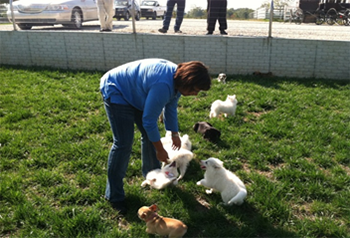
Commercial dog breeding, which helps to meet high public demand for purebred dogs, faces significant scrutiny and criticism relative to the health and well-being of the dogs and puppies produced. Regulated commercial breeding kennels often have difficulty distinguishing themselves from puppy mills, wherein profit is prioritized over the well-being of dogs. This project aims to help the US pet industries address the socio-ethical and scientific (well-being) concerns embedded in commercial dog breeding by developing and testing voluntary standards for the care and well-being of dogs in commercial breeding facilities that far exceed minimum (legislated) standards.
Project Leaders: Candace Croney (PI)
Funding Source: World Pet Association & Pet Food Institute
Related Publications:
Development of Field-Ready Welfare Assessment Tools for Breeding Kennels and Shelters
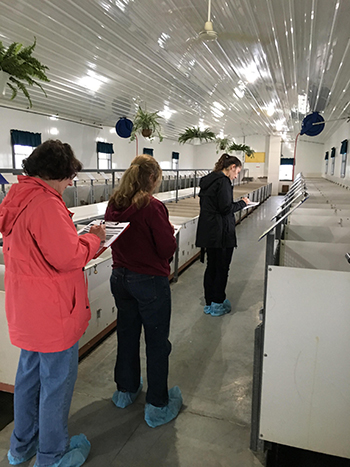
Quick and accurate assessments of the health and welfare of kenneled dogs are essential for ensuring and promoting dog welfare. Because many welfare metrics exist and observers or inspectors may prioritize these differently, reliable, standardized measures of welfare may facilitate consistent, objective evaluation of dogs. A non-invasive tool, incorporating behavior was developed and pilot-tested by experts and novices in animal behavior and welfare with dogs housed in commercial breeding facilities and at shelters.
Project Leaders: Candace Croney (PI), Amy Bauer
Funding Source: World Pet Association & Pet Food Institute
- Developed a field assessment tool that allows for a rapid assessment of the health and welfare of kenneled dogs by individuals with limited training.
Related Publications:
- Advancing canine welfare assessment in kennels: evaluating the validity of Field Instantaneous Dog Observation (FIDO) scoring in commercial breeding kennels
- Evaluating FIDO: Developing and pilot testing the Field Instantaneous Dog Observation tool
- Assessing kennel dog welfare
- Kenneled dog welfare: Challenges of field assessment
