

Impact of Canine Care Certified™
Program Development
Ensuring that the Canine Care Certified™ (CCC) program translates into positive outcomes for the quality of life dogs experience is our top priority. Accurately assessing the welfare of a dog (or any other animal) requires us to look past our own preconceptions and focus on the perspective of the dog. Our research team has been designing studies to ‘ask’ dogs how well they are doing in kennels for over a decade. In fact, before the Canine Care Certified™ program was released, we worked with breeders in the Midwest to pilot-test it and study the effects on key indicators of dog welfare (quality of life). The results were remarkable. In kennels that followed our standards for a full year, dogs showed few health problems, they were in good body condition, and behavior improved even in kennels that scored high in that area initially.
Pilot Test Results
| Pre-test Health Results | Body Condition Score (BCS) | Tear Staining (moderate or severe) | Other Health Problems |
|---|---|---|---|
| Few, minor problems observed | <10 | <10 | <10 |
Behavior: Majority scored green.
Improvement in 83% (10) of the 12 sites that tested for 1 year.
Ten years later, after collecting data from dogs in commercial kennels across the US, including those that are not CCC certified, the data is even more impressive. Dogs from CCC kennels had better behavior scores and lower markers of long-term stress than all others in our data set. What we did not expect is that even dogs from kennels in the process of becoming certified showed more positive indicators of their welfare than those from non-CCC kennels.
Dogs from Canine Care Certified™ kennels were more comfortable with people who approached them
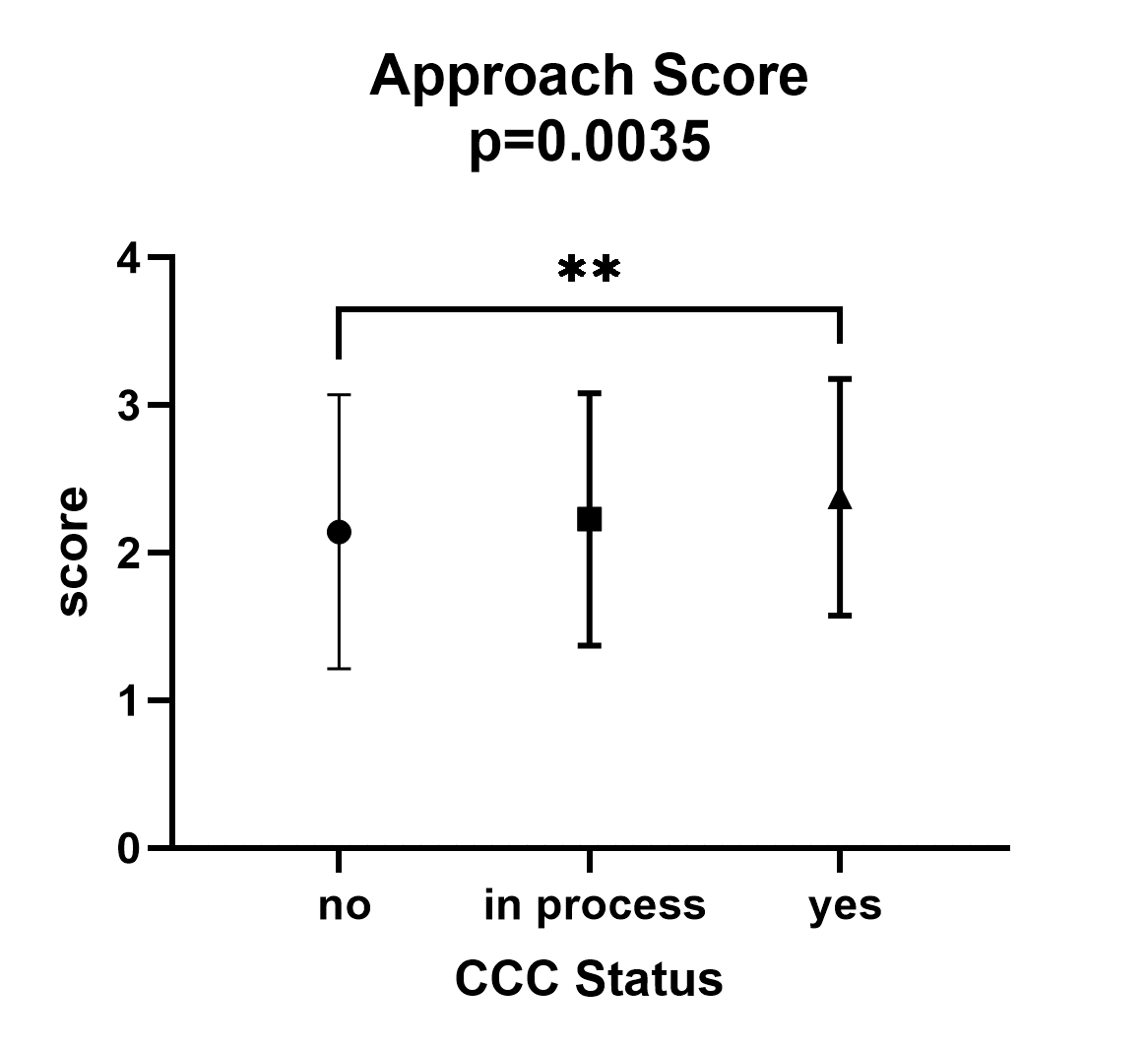
More dogs housed in CCC kennels showed friendly behavior toward a stranger than dogs in non CCC kennels. Dogs from CCC kennels also had higher average approach-test scores.
Signs of Chronic Stress were lower in Canine Care Certified™ kennels
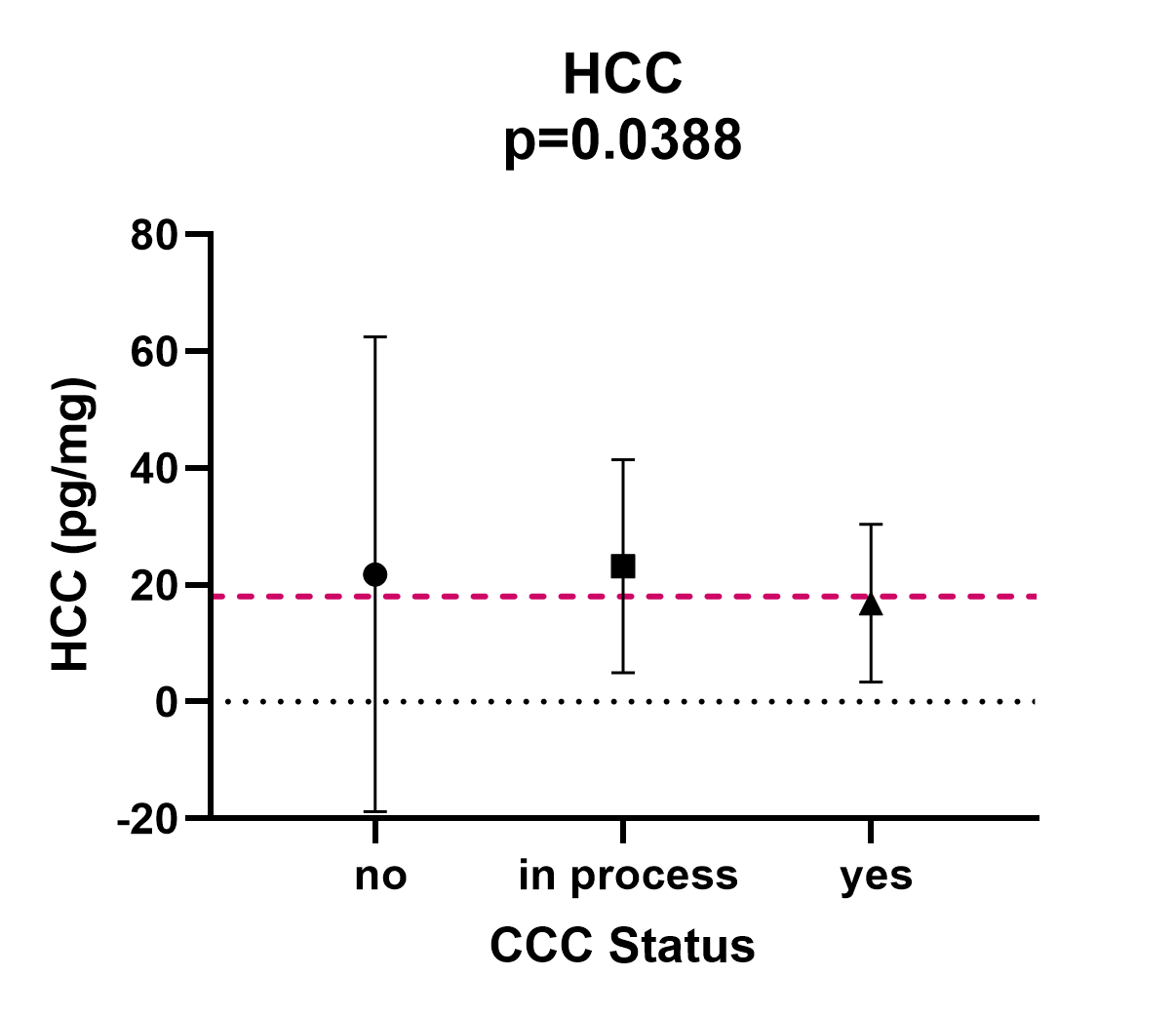
Hair cortisol concentration (HCC) was 22% lower in dogs from CCC kennels compared to those from non-CCC kennels, suggesting certified breeders’ dogs experienced less stress.
What does this all mean?
The scientific evidence from dogs housed at Canine Care Certified™ kennels indicates that when breeders follow our comprehensive standards, dogs benefit. Even better yet, because our program works directly with breeders to improve their knowledge about dog behavior and welfare and their ability to apply it, certified breeders are getting the tools they need to continuously raise the bar on dog welfare and help others in their communities to do so as well. It’s a win-win-win for dogs, breeders, and all those who are concerned about canine welfare.
References
Croney, C., and Shreyer, T. (2018). #67 Establishing science-based standards for the care and welfare of dogs in US commercial breeding facilities. Abstract presented at ISAE 2018.
Footnotes
- Data were collected from 59 commercial breeding facilities in 6 Midwestern states.
- Facilities were categorized by Canine Care CertifiedTM status as follows:
- Not certified n=383
- In process (have a copy of the standards and working toward certification) n=170
- Certified n=288
- 841 dogs were assessed: 751 females and 90 males, representing 63 breeds and crossbreeds.
- Dogs were assessed on response to an unfamiliar person approaching them in their kennels (stranger approach test) and were also assessed on indicators of physical stress [hair cortisol concentrations (HCC)].
Want to learn more about our research?
Check out the Croney Research Group’s website.
Want to see the Canine Care Certified™ approach in action?
Ask us how to do so with assurance that what you get to see is really what happens (even when auditors or inspectors are not onsite). Contact us by phone at 765-496-0277 or email caninecarecert@purdue.edu.
Want to learn more about dog behavior and welfare?
Check here for educational opportunities or contact us by phone at 765-496-0277 or email crg@purdue.edu.
The Canine Care Certified™ program is administered by the Croney Research Group at Purdue University.
