Evaluation of Clinical Facilities
Purdue Veterinary Technology Distance Learning (VTDL) students are required to submit a narrated video tour of their proposed clinical mentorship facility as part of the site approval process.
The tour is reviewed by the Purdue VTDL Clinical Mentorship Coordinator to determine whether the facility reflects the standards of contemporary veterinary practice and provides an appropriate environment for student learning.
This review process supports the Committee on Veterinary Technician Education and Activities (CVTEA) accreditation standards, which are intended to ensure students receive a safe and effective educational experience during their clinical mentorship. Through the narrated facility tour, Purdue VTDL can verify that the site meets the minimum safety, operational, and regulatory requirements necessary to support student education before the mentorship experience begins.
Ultimately, the narrated video tour serves as an essential quality assurance measure, helping Purdue VTDL confirm that students are placed in facilities that promote both high-quality veterinary care and meaningful hands-on learning experiences.
During the video review, a variety of areas and operational practices will be assessed, including but not limited to:
- General Facility Standards: cleanliness, organization, maintenance, lighting, accessibility, and hazard prevention throughout the facility.
- Clinical Areas: exam rooms, treatment areas, laboratories, pharmacy, radiology suites, dental areas, and surgical facilities.
- Safety and OSHA Compliance: eye wash stations, SDS access, OSHA postings, safety signage, PPE, sharps management, radiation safety measures, emergency equipment, and other workplace safety requirements.
- Surgery and Anesthesia: dedicated surgical suites, anesthesia and monitoring equipment, scavenging systems, oxygen storage, instrument sterilization practices, and infection control measures.
- Diagnostic and Laboratory Equipment: laboratory analyzers, microscopes, radiology equipment, patient positioning aids, and evidence of equipment maintenance and quality control.
- Animal Housing and Patient Care Areas: kennel and housing conditions, sanitation and disinfection practices, environmental controls, security, and noise protection measures.
- Pharmacy and Drug Management: medication storage, expiration date monitoring, vaccine storage, controlled-substance security, recordkeeping, and regulatory compliance.
- Waste Management and Biosecurity: disposal of sharps, biological waste, pharmaceuticals, chemicals, and other regulated waste streams.
Approval is based on the facility's ability to provide a safe, professional, and educationally appropriate setting while meeting established standards for veterinary practice and student supervision. Following the review, students will be notified whether the site has been approved for mentorship activities. If deficiencies are identified that prevent approval, students may be asked to address the concerns or consider alternative facilities for future mentorship experiences.
Questions should be directed to the Clinical Mentorship Coordinator – Jennifer Smith, MS, RVT, LATG @ jensmith@purdue.edu
Narrated Tour Guidelines: Materials to be Submitted
The facility tour must be narrated by the student and should clearly explain all criteria listed below. The mentor must be present at the beginning of the video to introduce themselves and the facility; however, they do not need to remain present for the entire tour. The video should be recorded slowly, with the camera panning around each area to clearly show all aspects of the space. If possible, it is recommended that the tour be recorded outside of normal business hours. Multiple short videos may be submitted if needed to capture all required areas.
The items listed below represent the minimum requirements for the facility review. Additional areas, equipment, records, or safety measures may be requested during the evaluation process if clarification is needed.
The narrated tour of the facility must include the following:
- Introduction
- Student and mentor introductions (show face and state name in the video)
- Introduce the tour, including the name and location (city, state) of the facility
- General Facility Areas
- Outside of facility (including sign on the building)
- Client waiting area
- Exam room
- Treatment area
- Pharmacy and Drug Storage
- Non-controlled drugs
- Controlled drug storage (including how lockboxes are secured and accessed, must open for viewing)
- Controlled drug log (show entries)
- All drugs must be within date (not expired)
- Refrigerator contents showing separation of pharmaceuticals, animal food, and patient samples
- Vaccine refrigerator must have a thermometer
- Laboratory and Diagnostics
- Lab area including diagnostic equipment, verbally state what testing is available
- Radiology
- Radiation warning signage on door
- Fixed x-ray machine, including evidence of recent service
- Individual dosimetry badges and their storage location
- Safety equipment
- Lead aprons, lead gloves, thyroid shields
- Lead gloves must have 360-degree coverage (no fingers out)
- Patient positioning aids such as troughs, sandbags, etc.
- Lead aprons, lead gloves, thyroid shields
- Surgery and Anesthesia
- Surgical prep area for patients outside the surgical suite
- ET tubes and anesthesia breathing tubes/hoses must be stored in a covered area such as a drawer or cabinet
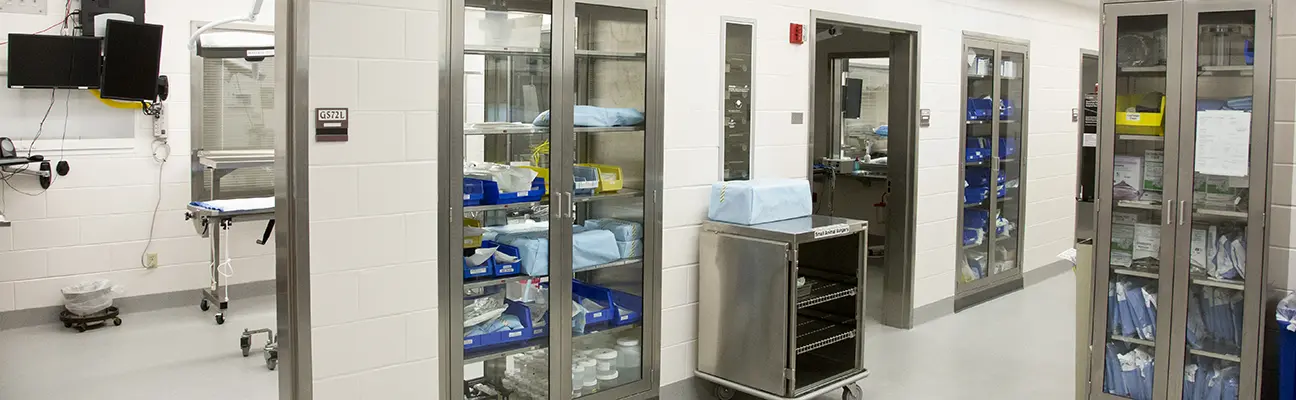
- Surgical suite
- Show the door of the room, enter the suite
- Describe the surgical equipment in the room (no other equipment allowed in the suite)
- Pack and instrument storage in closed cabinetry
- No open storage of supplies within the surgical suite. Extra ET tubes, anesthetic tubing, and other supplies must be stored in closed cabinets or drawers. Countertops should be free of items unrelated to an active surgical procedure.
- Anesthesia machines
- Evidence of recent service of vaporizer
- Verbally describe and show the anesthetic scavenging system
- Anesthesia monitoring equipment, stating what parameters are monitored
- Storage of oxygen tanks, showing clearly how tanks are secured (chains, dolly, rope)
- Surgical prep area for patients outside the surgical suite
- Dentistry (or verbally state if it is not available in the facility)
- Area where dentistry is performed
- Ultrasonic scaler
- Manual instruments
- Dental radiology machine
- Instrument Cleaning and Sterilization
- Ultrasonic cleaner
- Autoclave
- Animal Housing
- Kennel area(s) showing walls and flooring clearly, and hearing protection
- Safety and Compliance
- Sharps containers
- Examples of several appropriately labeled secondary containers*
- Eye wash stations in areas where chemicals are used
- SDS resources for employee reference (binders or online- demonstrate how to access)
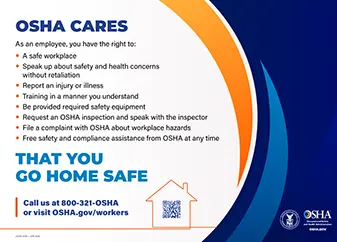
- OSHA posters displayed for employees**
- Must have the “OSHA Job Safety and Health Workplace” poster displayed
- Emergency lighting, if needed in areas of the facility
- First aid kits for employees
- No food or drinks outside of designated break areas or offices
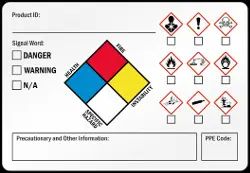
*Secondary containers must be appropriately labeled. These include anything that is put into a different container (spray bottle, squeeze bottle, etc.) from a large container such as a gallon jug (alcohol, hydrogen peroxide, cleaners, etc.) that does not have an original label. OSHA requires these labels to have either the full Globally Harmonized System (GHS) label or a rating system such as the National Fire Protection Associate (NFPA) diamond, shown below:

**The tour must show the “OSHA Job Safety and Health Workplace” poster and that it is displayed in a conspicuous place where employees can see it. If the facility does not have this, it may be downloaded and printed for display via https://www.osha.gov/publications/poster.