
Does a Vet Tech Degree Help Me Become a Veterinarian?


by Kelsey Wirt, MS, LVT and Josh L. Clark, MS, RVT
Many individuals interested in veterinary medicine find themselves at a crossroads when deciding whether to become a veterinarian or a vet tech/nurse. A common question is can a vet tech degree serve as a stepping stone toward becoming a veterinarian? While both fields share a common love for animals and involvement in their care, the paths to becoming a vet tech/nurse versus a veterinarian differ significantly.
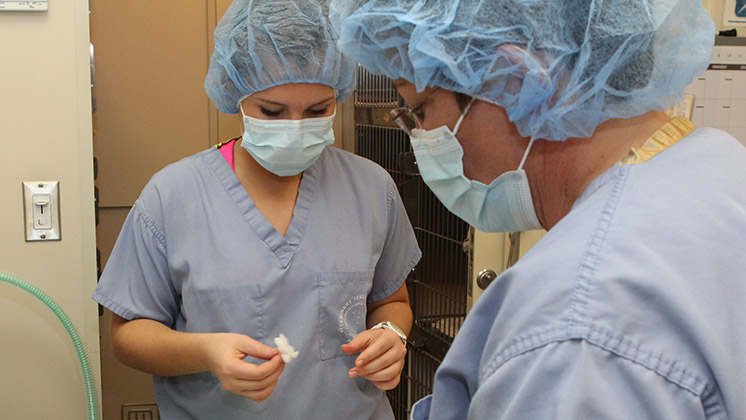
A vet tech degree, typically obtained through an AVMA accredited two to four-year associate or bachelor's program, focuses on providing students with the practical skills and knowledge needed to support veterinarians in clinical settings. Vet techs play a vital role in animal healthcare, performing nursing tasks such as administering medications, conducting laboratory tests, assisting during surgeries, and more.
Compare and contrast becoming a vet tech instead of a veterinarian.
However, it's important to recognize that a vet tech degree alone does not qualify individuals to practice as veterinarians. Veterinarians undergo more extensive and intensive training, completing a Pre-Vet undergraduate degree then apply and get accepted in a Doctor of Veterinary Medicine (DVM). DVM programs span over four years of rigorous academic study and clinical rotations. The DVM curriculum covers a broad spectrum of veterinary medicine that prepares graduates to diagnose, prescribe medications, and perform surgery in various animal species.
Despite the differences in educational requirements and scope of practice, a vet tech degree can still provide valuable experience and knowledge beneficial to aspiring veterinarians. Working as a vet tech allows individuals to gain firsthand experience familiarizing themselves with clinic operations which can offer insights into the realities of veterinary practice, strengthen communication and teamwork skills, and provide exposure to different animal species and medical conditions.
While it is possible for vet techs to transition to becoming veterinarians, it is not the most efficient route and is not very common. Even if you have a degree in veterinary technology, most DVM programs require more standards and different coursework than what you learn in a vet tech program. This will require longer schooling and time commitment to complete all the requirements to apply, let alone get accepted into a DVM program.
Learn more about the educational path to becoming a veterinarian.
After working in practice, some vet techs might find that they are more drawn to the role of the veterinarian. While a vet tech degree does not qualify individuals to become veterinarians, vet techs can switch career paths if they choose. In conclusion, the best choice of becoming a veterinarian or a vet tech depends on the individual’s goals and career aspirations.
Start Your Veterinary Technician Journey
Find your calling as a Purdue Veterinary Technician!
Not quite ready to apply? Connect with us to learn more.
Suggested Articles
Comprehensive Guide to Vet Tech
Learn what a veterinary technician does, how to become one, career paths, challenges, salary outlook, and future trends in vet tech.
What Do You Need to Be a Vet Tech/Nurse?
Learn the education, credentialing, continuing education, and skills needed to become a vet tech/nurse, from K-12 preparation to AVMA-accredited programs.

How Long Does It Take to Pay Off Vet Tech School Debt?
Learn how vet tech school debt is repaid, including factors like total debt, repayment plans, tuition costs, and post-graduation income.
