
Even as the ongoing COVID-19 pandemic continued to influence events and programs at the start of the new academic year, the Purdue University College of Veterinary Medicine successfully hosted the 2021 Purdue Veterinary Conference, conducting the entire continuing education program virtually. Held September 7-10, the conference attracted 645 registered attendees, including veterinarians, veterinary nurses, and Purdue Veterinary Medicine faculty, staff, and students, who were able to attend without leaving home or office.
The conference line-up featured 67 sessions presented by 40 speakers. In the virtual Exhibit Hall, a total of 17 exhibitors provided videos, chat opportunities, and prizes for attendees who were able to peruse the virtual exhibits with a simple click or two. Conference participants also found ample opportunities to network through the conference app, “Whova.” The attendees utilized the app to share more than 1,280 messages and over 240 photos either privately or via community message boards.
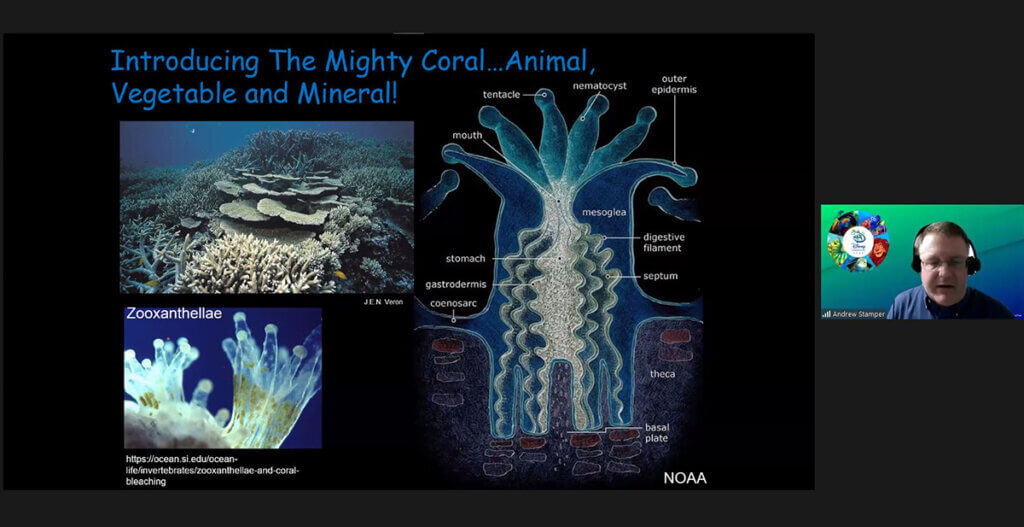
Conference highlights included several keynote lectures and special presentations. The Dr. Jack and Naomi Stockton / Class of 1971 Lecture focused on the environment, as Dr. Andrew Stamper, conservation science manager/veterinarian with Disney Conservation addressed the topic, “Marine Ecosystem Health: One Vet’s Adventures Using Veterinary Skills to Save Coral Reefs.”
The Diversity Keynote was delivered by Dr. Ian Moore, investigative veterinary pathologist and section chief of the Infectious Disease Pathogenesis Section at the National Institutes of Health. Entitled, “The Ever Evolving Role of Veterinary Medicine in World Health: COVID-19 and Beyond”, Dr. Moore’s presentation spotlighted the roles of veterinary medicine in identifying emerging viruses, developing vaccines and predicting the next pandemic. He emphasized that animal and human health care no longer exist merely as disjointed issues, but are now tethered tightly together by the fabric of One Health with all of the world watching.
Dr. Jen Brandt, director of member wellbeing, diversity, and inclusion initiatives for the American Veterinary Medical Association delivered the Wellness Keynote, with a captivating talk entitled, “Wellbeing and the Snake Oil Parable: Discerning and Deconstructing the Current Wellbeing Landscape in Veterinary Medicine”. She addressed the widespread scope of practice issues that frequently impact veterinary professionals and invited the audience to deconstruct popular social media wellbeing-based narratives. Dr. Brandt then concluded with six foundational criteria everyone can apply to become more qualified discerners of wellbeing programming, to maximize safety and efficacy, and to reduce the risk of unintended harm.
Kicking-off the conference Tuesday evening, September 7, the annual Elanco Human-Animal Bond Lecture featured a talk by Dr. Sandra Barker, professor emeritus of psychiatry at Virginia Commonwealth University. Her talk entitled, “Who Let the Dogs In? The Challenge of Canine-Assisted Interventions in Hospitals and the Need for Veterinary Involvement,” focused on the expansion of canine-assisted interventions to healthcare facilities as an emerging trend in human-animal interactions. She addressed the challenges of implementing sound canine-assisted interventions in hospitals and the need for veterinary expertise to maximize human safety and canine welfare.
In the true “can-do” spirit characteristic of Purdue Boilermakers, the virtual conference-goers attending the Purdue Veterinary Conference took advantage of the all of the opportunities to participate in four days of high-quality tracks on small animal, equine, food animal, practice management, exotics, and topics focused on veterinary nursing. In the process, they were able to earn up to 24 hours of continuing education.
The college’s Office of Lifelong Learning continues to pursue innovative ways to offer safe opportunities for continuing education within the framework of the Protect Purdue Plan. Visit the Lifelong Learning webpage to learn more about upcoming events, including the 2021 Centers for the Human-Animal Bond Conference and the Coppoc One Health Lecture.
