
Sophie’s Comeback: Purdue Veterinary Specialists Help a Lame Dog Walk Again
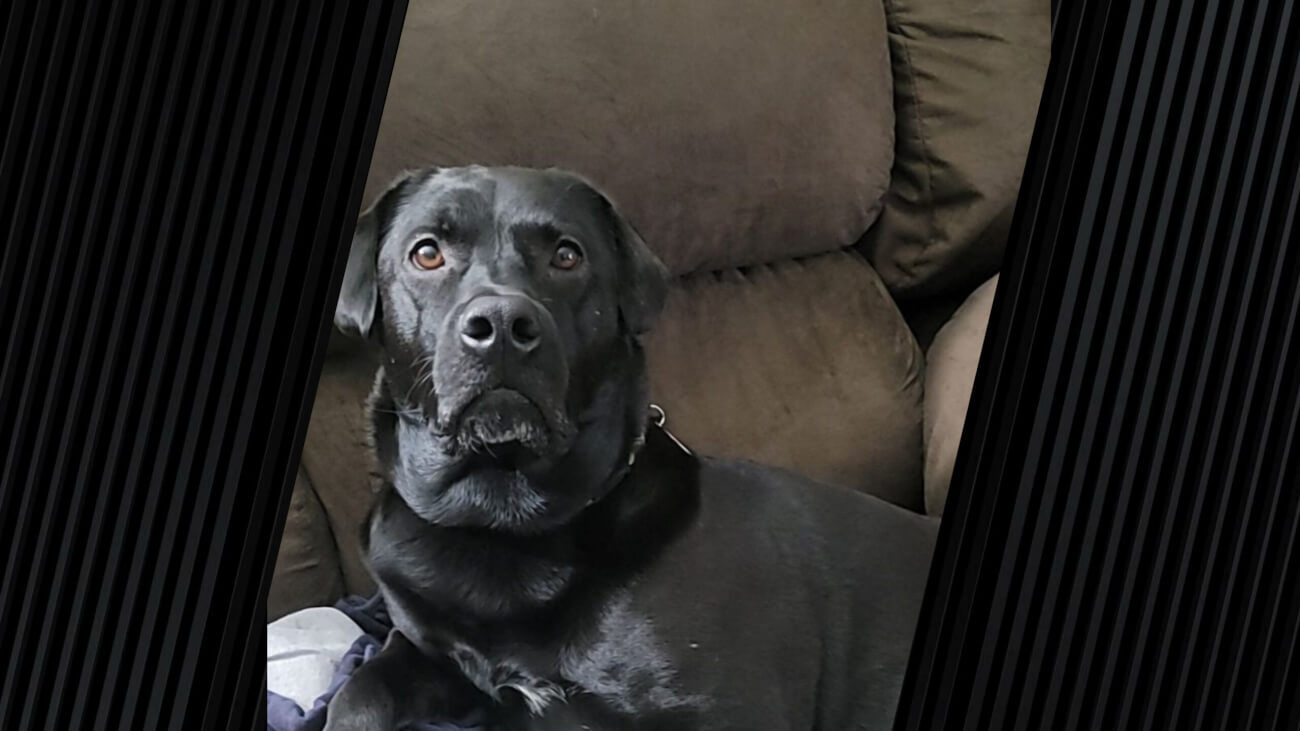
A black dog named Sophie is sitting on a brown couch

Today our series of articles about animals and their owners who’ve found help and healing at the Purdue University Veterinary Hospital continues as we share Sophie’s story. This is just one of the heartwarming tributes provided by hospital clients to highlight the vital care and treatment their animal companions received from the hospital’s teams of clinicians, veterinary nurses, staff and students.

Veterinarians in the Neurology and Neurosurgery Service at the Purdue University Veterinary Hospital gave a paralyzed dog named Sophie a second chance to walk after an Easter morning emergency two years ago.

Sophie’s owner, Cody White, awoke that holiday to find his dog dragging her hind legs across the floor. He drove Sophie straight to the hospital’s 24 hour emergency room, where specialists diagnosed a spinal disc injury that was compressing her spinal cord.

Surgeons recommended immediate spinal surgery, explaining that Sophie had about a 50 percent chance of regaining the use of her back legs. White agreed, and the neurology team operated the same day.
Recovery was slow. Sophie showed no movement in her lower body for nearly two months. With daily rehabilitation and follow-up visits at Purdue, she progressed from standing with assistance to now happily walking unassisted.

“Purdue was there to help with any question I had and truly cared about her well-being,” White said. “I got my fur friend back thanks to Purdue and will always recommend the Purdue Veterinary Hospital to anybody with serious concerns about their animals. Boiler up.”

Today Sophie enjoys walks, play sessions with other dogs, and yard time with White, who praises the hospital’s neuro team for her comeback.

Writer(s): Mackenzie Martin | pvmnews@purdue.edu

Recent Stories

“Paws Up” for Jennifer Danaher – brought to you by the PVM Wellness Committee

This week we express our gratitude to Jennifer Danaher, who is department secretary for Veterinary Clinical Sciences.

‘Purdue Pursuits’: A PVM angle on Purdue’s teaching and learning reading groups

Crafting meaningful and engaging course experiences has been at the top of Dielson Vieira’s mind ever since he joined the Purdue University College of Veterinary Medicine’s faculty in 2024. As a clinical assistant professor in the Department of Basic Medical Sciences, Vieira is already adept at applying innovative teaching practices to classroom environments, but that doesn’t stop him from seeking out new ideas, approaches and perspectives — insights he gains through outlets like Purdue’s teaching and learning reading groups.

Top tier biology journal publishes PVM study that unlocks secrets of a drug-resistant fungal pathogen, which causes serious infections in humans

Though the name “Candida auris” is far from a household term, public health experts know it well because the multi-drug-resistant fungal pathogen, which causes serious human infections, has been classified as an urgent threat by the U.S. Centers for Disease Control and Prevention (CDC) Antibiotic Threats Report (2019). Dr. Shankar Thangamani, Associate Professor of Microbiology and University Faculty Scholar in the Purdue University College of Veterinary Medicine’s Department of Comparative Pathobiology, is researching C. auris, aided by a 2.4 million grant from the National Institutes of Health (NIH). New research findings, just published in Nature Microbiology, show how C. auris adapts and evades the immune system.

In Print: ‘Translational Research Methods for Tauopathies’

A just-published 300-page volume edited by Jessica Fortin, Purdue assistant professor in the College of Veterinary Medicine’s Department of Basic Medical Sciences, provides a significant new resource for researchers studying a group of neurodegenerative diseases known as tauopathies. “Translational Research Methods for Tauopathies” provides detailed protocols intentionally selected to serve as a basis for research laboratories seeking to further treatments for such debilitating neurodegenerative diseases as Alzheimer’s and chronic traumatic encephalopathy (CTE).

It’s Almost Here!

Though the annual Purdue Veterinary Conference is almost upon us, there’s still time to register and take advantage of this time-honored College of Veterinary Medicine fall tradition that combines excellent continuing education with fun opportunities for reconnecting with colleagues and classmates, networking, and learning about the latest veterinary trends and products. The 2026 Purdue Veterinary Conference takes place September 23–26 on the Purdue University campus. The annual event has something for everyone, from veterinarians to veterinary technicians, faculty, staff and students.