
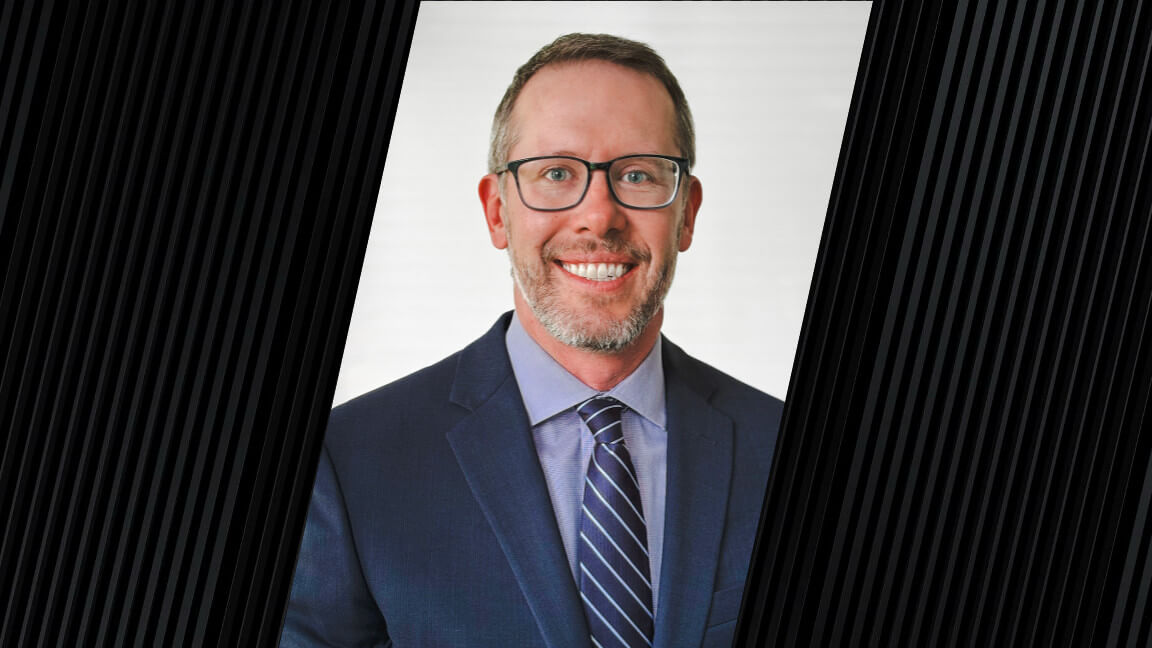
The Purdue University College of Veterinary Medicine’s Department of Basic Medical Sciences (BMS) has a new leader as of November 1. Michael K. Wendt, Ph.D., was appointed as department head and professor of basic medical sciences last month. He succeeds Dr. Susan Mendrysa, who has been serving as interim department head and was named as the college’s associate dean for research in March.
“Dr. Wendt is a nationally recognized cancer biologist and educator whose career exemplifies excellence in research, mentorship, and academic leadership,” said Purdue Veterinary Medicine Dean Bret Marsh as he announced Dr. Wendt’s appointment. “He brings a strong record of securing competitive extramural funding, fostering interdisciplinary collaborations, and contributing nearly a decade of previous impactful service at Purdue.”
The new appointment indeed represents a homecoming for Dr. Wendt, who had served on the faculty of Purdue’s Borch Department of Medicinal Chemistry and Molecular Pharmacology in the College of Pharmacy from 2014 to 2023, initially as an assistant professor and then as associate professor with tenure. He also served as the director of the Cancer Biology Training Group in the Purdue University Life Sciences Education (PULSE) program from 2019 until 2023. Dr. Wendt then left to accept an appointment at the University of Iowa as the Arlene Holden Professor of Breast Cancer Research, director of the translational breast cancer research program, and co-leader of the Experimental Therapeutics program within the Holden Comprehensive Cancer Center – positions he has held until his return to Purdue.
“I started my first faculty position here at Purdue, within the College of Pharmacy,” Dr. Wendt shared as he talked about his reasons for accepting the new appointment. “I love the area and really enjoy the energy of the university. I benefited greatly from the mentorship and support of a great number of people across the Purdue campus, including several from the College of Veterinary Medicine.”
Dr. Wendt also said that during the last several years, he has benefited from the opportunity to begin to mentor and lead groups of faculty in several settings. “Through these experiences I became acutely aware that in addition to my own successes, I derive as much if not a greater amount of satisfaction from helping others succeed. Thus, when I learned of the opportunity to lead the BMS Department, I jumped at it.”
Dr. Wendt earned his bachelor’s degree in biology at St. Norbert College in De Pere, Wisconsin and went on to pursue graduate study at the Medical College of Wisconsin, where he earned his PhD in molecular genetics in 2007. He then worked as a postdoctoral fellow in the Department of Pharmacology at the University of Colorado, Denver before accepting a research position with the Case Comprehensive Cancer Center at Case Western Reserve University, where he was serving when he first was recruited to Purdue.
Speaking of Dr. Wendt’s qualifications, Dean Marsh points out that most recently, Dr. Wendt has filled key leadership positions at the University of Iowa’s Carver College of Medicine, where he oversaw interdisciplinary research strategy, faculty engagement, and clinical-academic integration. “This experience will inform his leadership of our Basic Medical Sciences Department and its contributions to the DVM program,” Dean Marsh said. “In addition, his prior involvement in Purdue’s PharmD program, spanning assessment, curriculum, and admissions, demonstrates strengths that align directly with the needs of the DVM professional program and the BMS Department’s preclinical teaching mission.”
Dr. Wendt says his involvement in the last few years in various leadership positions in graduate programs and the Case Comprehensive Cancer Center has provided invaluable experience. “In these positions I’ve been introduced to the benefits and challenges of leadership – things that I’m confident in committing to as a department head.” He also emphasizes the value of the strong mentorship he received from faculty at Purdue and beyond. “These experiences have allowed me to create an extremely strong advisory network. With this diverse group of advisors in my corner, I’m confident in my ability to serve in this role.”
In addition, Dean Marsh highlights Dr. Wendt’s success as a researcher. “His research program, supported by over $13 million in extramural funding, reflects a deep commitment to translational science and interdisciplinary collaboration. His ongoing partnerships with Purdue faculty and the Purdue Institute for Cancer Research offer exciting opportunities to strengthen comparative oncology and One Health initiatives within our college.”
Thinking ahead, Dr. Wendt says he’s looking forward to multiple aspects of his new role. “I’m excited to work with the strong cohort of existing faculty, staff, and students in the department in achieving their goals on all fronts,” Dr. Wendt shared. “I’m also looking forward to recruitment of new faculty. Overall, I want to create a group of researchers and educators passionate about the joys and benefits of discovery and training the next generation of health professionals. My desire is to foster an environment where people feel valued, inspired, engaged, and equipped to achieve their full potential.”
Those views align well with the vision of Dean Marsh. “With strong institutional support and a collaborative leadership style, Dr. Wendt is well-positioned to guide the Department of Basic Medical Sciences into its next phase of excellence,” Dean Marsh said. “Please join me in welcoming Dr. Wendt back to Purdue and congratulating him on this exciting appointment.”
