
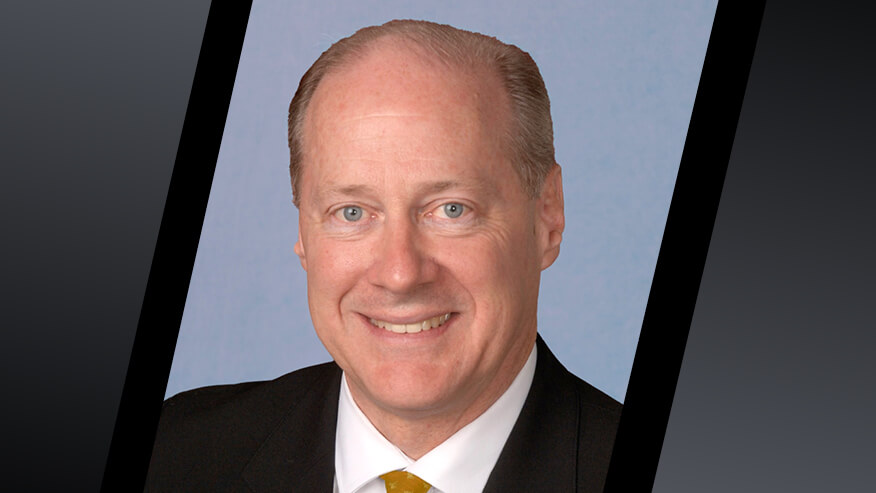
Purdue University Provost Patrick Wolfe announced yesterday (Thursday, October 24) that Dr. Bret Marsh, Indiana state veterinarian and the state’s top-ranking animal health leader, will join Purdue to serve as its next dean of the College of Veterinary Medicine and Purdue University Veterinary Hospital CEO.
Marsh, a first-generation college student from rural Indiana who earned his bachelor’s degree in animal sciences from Purdue’s College of Agriculture and his Doctor of Veterinary Medicine degree from the college he will now lead, has held several national leadership roles throughout his tenure with the state of Indiana. Among these, he served as special detail to the U.S. Secretary of Agriculture’s homeland security staff following 9/11 and has held leadership roles with the United States Animal Health Association, serving as president and as a member of its board of directors. He has also assisted the American Veterinary Medical Association — the primary accrediting body for colleges of veterinary medicine worldwide — as the state’s delegate and later as a six-term treasurer, and the Indiana Veterinary Medical Association as its president and board chair.
Marsh will step into his Purdue role on November 4 as dean and clinical professor of veterinary medicine, with a focus on Purdue’s One Health initiative. He succeeds distinguished veterinary pathologist and campus leader Willie Reed, who served 17 years as dean and for whom the Reed Animal Disease Diagnostic Laboratory on campus is named. Marsh’s appointment follows extensive consultation and feedback garnered through a national search led by Lucy Flesch, Purdue’s Frederick L. Hovde Dean of the College of Science, with input from a 10-person search advisory committee comprising faculty, staff, students and external stakeholders.
“I couldn’t be more pleased to have recruited someone of Dr. Marsh’s caliber to take our cherished college to new heights,” Wolfe said. “There is much work to do in advancing our land-grant mission, both by better serving our state and by advancing us to the top rank of colleges nationally.”
Following a strong slate of international finalists and key observations coming out of the search process, the priorities for Marsh as the college’s next leader are clear: enhance and expand its research profile, take a leading role in the university’s One Health strategic priority and concomitant design of a new Life Sciences Research Building, and create net “veterinarian brain gain” for Indiana.
“My career in veterinary medicine has been built on safeguarding animal health through innovation and partnerships, with a passion for public service to the people of Indiana. I look forward to continuing those efforts as dean,” Marsh said. “As Indiana state veterinarian, I saw how animal health is inextricably linked to environmental and human health — from food safety to farms to pets in our homes. I want to ensure Purdue is leading the way in One Health through research and preparing the next generation of veterinarians.”
Over the course of his career, Marsh has:
- Led a legislative effort to establish the Indiana Center for Animal Policy to explore creative solutions to the challenges of delivering high-quality veterinary medicine to citizens throughout the state.
- Established multiple programs focusing on animal health as well as public health.
- Established multiple collaborations with Purdue’s College of Veterinary Medicine, including coordination and interactions with the Willie M. Reed Animal Disease Diagnostic Laboratory, Purdue Veterinary Alumni Association, Boiler Vet Camp, the Canine Care Certified program, classroom interaction and instruction, and internships/externships for veterinary students.
- Established a historic initiative for a disaster preparedness plan for animals.
- Established an information network to alert veterinarians and animal owners to the threat of foreign animal diseases and emerging domestic diseases.
- Established an advanced Animal Disease Traceability system for the state, including requirements for premises registration for livestock, electronic tag distribution and advanced training for veterinarians statewide in the use of electronic certificates of veterinary inspection, improving speed and efficiency for disease investigations.
“Purdue’s leadership team looks forward to working with the College of Veterinary Medicine’s faculty, staff, students, and Dean Marsh, to take Purdue Veterinary Medicine to new heights, as we build on Dean Emeritus Willie Reed’s exceptional legacy,” Wolfe said. He also expressed appreciation to Professor of Small Animal Surgery and Associate Dean for Academic Affairs Kathy Salisbury, for her excellent service as interim dean over the past few months.
