
Healing Eyes, Changing Lives: Saving a White Tiger’s Vision

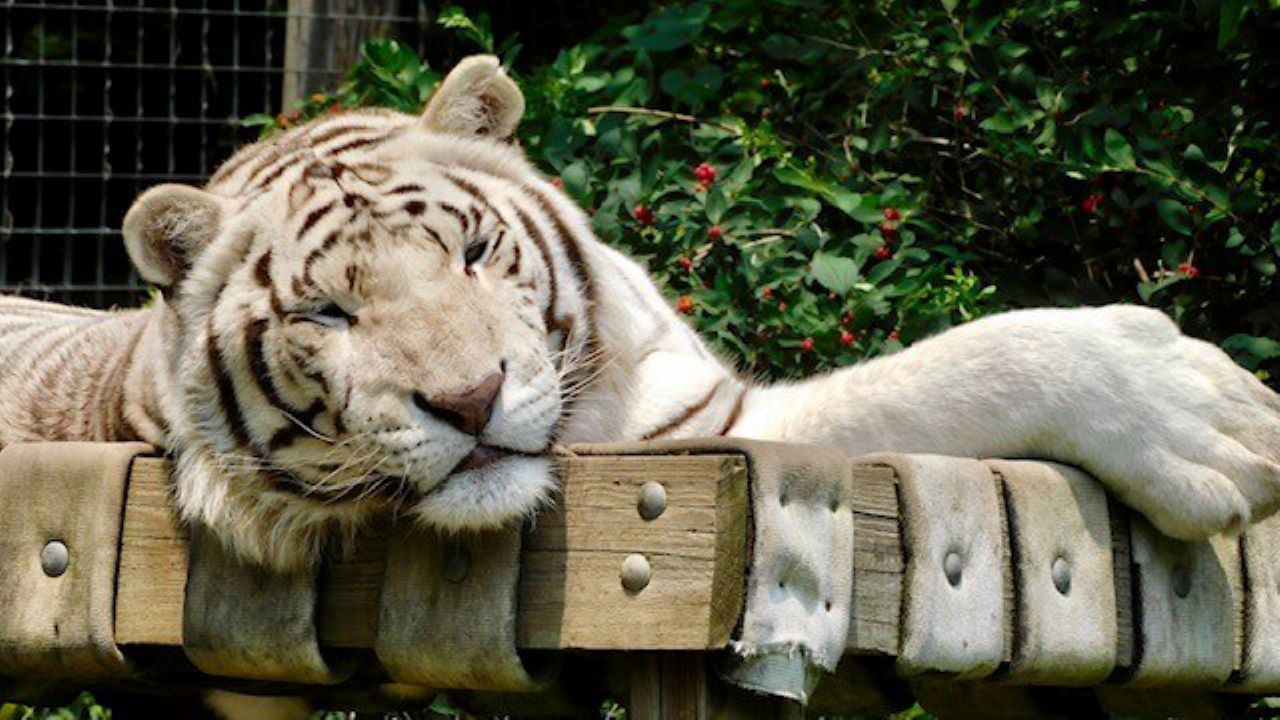
Prince, the white tiger at Black Pine Animal Sanctuary, lounging on a platform outdoors
A resident of Black Pine Animal Sanctuary in Albion, Indiana, Prince benefited from the Purdue Veterinary Hospital Ophthalmology team's expert care, which included cataract removal surgery on the white tiger.

The Purdue University Veterinary Hospital’s ophthalmology team recently conducted a life-changing surgery for Prince, a six-year-old white tiger residing at Black Pine Animal Sanctuary (BPAS) in Albion, Indiana. The procedure marked a significant step in restoring the tiger’s vision, which had been severely impaired due to poor breeding practices and inadequate care in his earlier years.

Prince’s journey to the sanctuary began in 2021 when BPAS took over the care of four tigers from the Greater Wynnewood Exotic Animal Park in Wynnewood, Oklahoma. The park, once owned by the infamous Joseph Allen Maldonado, also known as “Joe Exotic” from Netflix’s Tiger King, was closed to visitors after an investigation revealed mistreatment of animals. Among the four tigers rehomed at Black Pine, Prince in particular suffered from his deteriorated vision, which was comparable to that of a senior tiger despite his young age. Dr. Levi Smith, Purdue ophthalmology resident in the Department of Veterinary Clinical Sciences and one of the surgeons who operated on Prince, says that “white tigers in general are typically born with inherited, or genetic, problems. For Prince, that meant the development of genetic cataract in one eye.”

The Purdue Ophthalmology team, which included Dr. Smith, Dr. Morgan Johnson, clinical assistant professor of ophthalmology, and Megan Scheulin, BS, RVT, ophthalmology veterinary technician, performed cataract removal surgery on Prince on October 30.

Before the surgery, significant preparation had to take place. Prince was trained for three months with eye drops. Dr. Johnson noted BPAS’ care and preparation for Prince’s procedure, saying “Black Pine’s commitment to making it a success was remarkable. He was very lucky to end up with Black Pine where he receives such excellent care!”
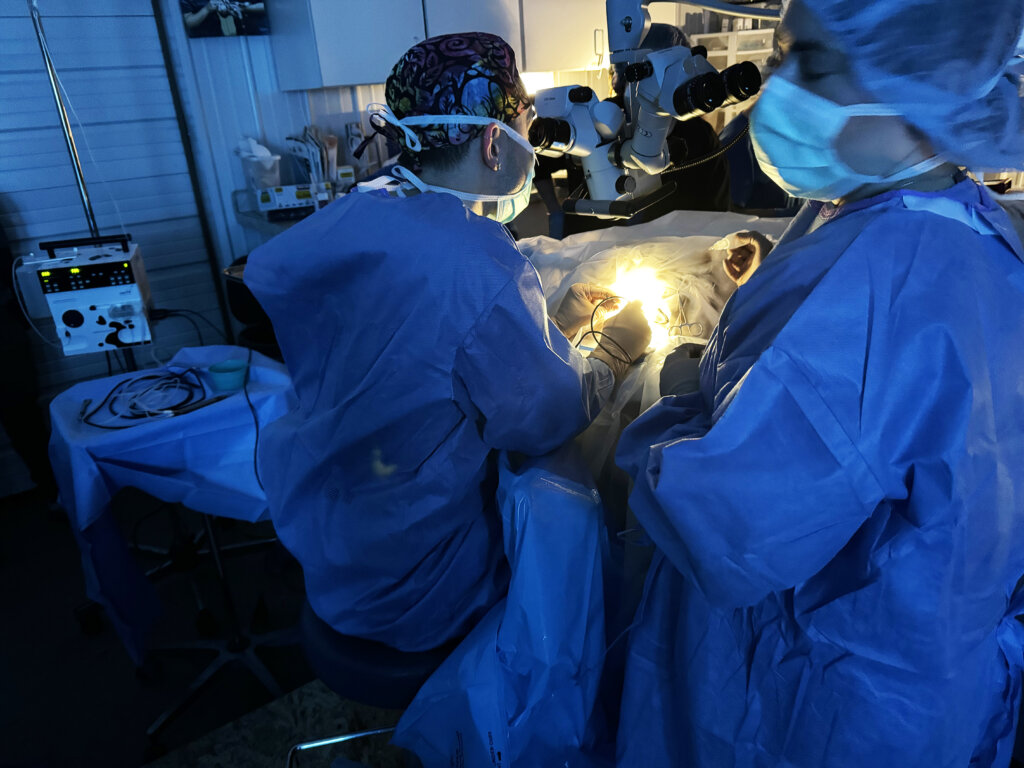

Dr. Levi Smith, Purdue ophthalmology resident, performs cataract surgery on Prince under the operating microscope.

After the surgery, Prince benefited from a lens insertion that was designed just for him. This is particularly notable, as Dr. Johnson explained, saying, “Ready-made lenses are only available for a few species – dogs, cats, horses and rabbits – so Prince needed a custom lens made to the correct size to fit his eye and the correct power to focus his vision.”

The operation was made possible thanks to the generosity and collaboration of numerous organizations and individuals including the Albion, Indiana restaurant One10 West Main; Tigers in America; several donors; veterinary teams from Purdue University and the Fort Wayne Children’s Zoo; engineers from Oertli Instrumente AG, Switzerland; an-vision Inc.; and Prescott’s, Inc. The collective time, resources, and equipment that were provided made it possible for Prince to receive the needed care.
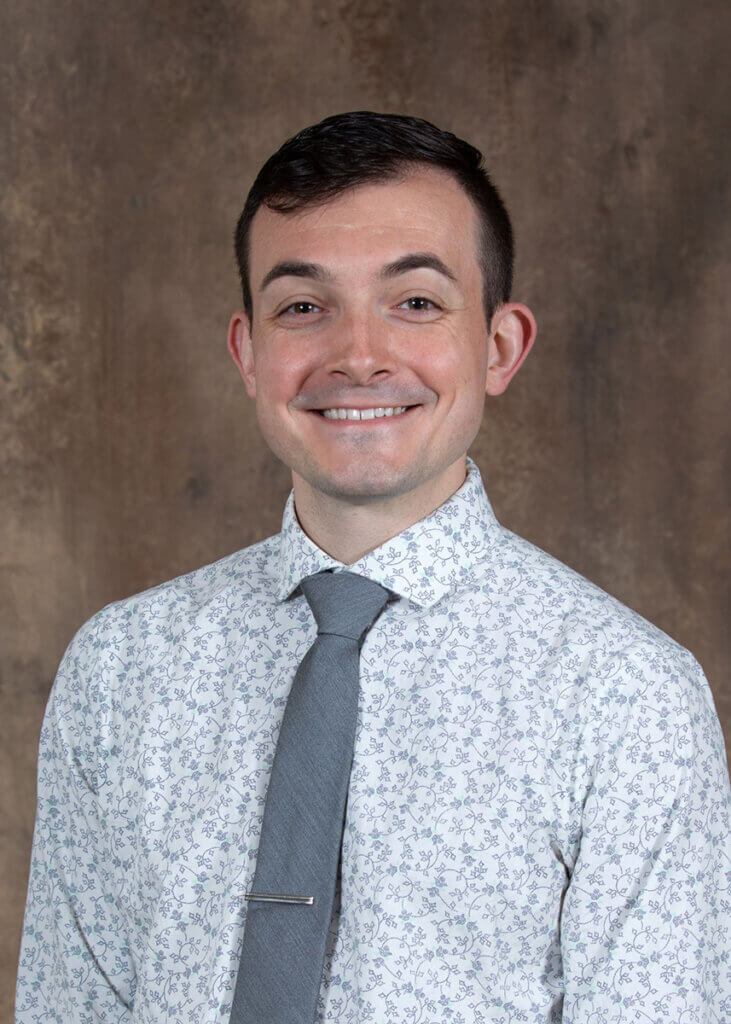
Dr. Levi Smith, Purdue ophthalmology resident,
Dr. Levi Smith, ophthalmology resident, Purdue Veterinary Hospital

Post-surgery, Prince has shown remarkable improvement. Caregivers report he is noticeably more engaged and curious, exploring his surroundings with a newfound sense of wonder. According to BPAS, Prince can sometimes be seen watching people at the gift shop entrance from his enclosure, which is a great distance away. Given that this is a recent development, this is a promising sign that his vision is better. His recovery underscores the critical role of advanced veterinary care and the power of community collaboration in improving the quality of life for exotic animals. A video created by Black Pine Animal Sanctuary about Prince’s procedure can be viewed by clicking here.

As he completes the final year of his ophthalmology residency at Purdue, Dr. Smith hopes to continue his ophthalmology work, and advocate for a true understanding of exotic animals like Prince. “My whole career, I have focused my education on exotic animal species. Being able to participate in Prince’s surgery was a task that I worked adamantly to achieve with the help of our faculty, nurses, and the staff at Black Pine Animal Sanctuary. My goal as I finish my training this year is to continue to devote my extra out-of-work time to continue helping zoo, wildlife, and exotic pets in the realm of ophthalmology.”

Writer(s): Nathan Dell | pvmnews@purdue.edu

Recent Stories

Purdue Veterinary Medicine’s Connection with Wildlife Rescue in Guatemala Highlighted during International Education Week

Hidden amid the dense forests near the shores of Lake Petén Itzá, the ARCAS Wildlife Rescue Center is one of Central America’s most active sanctuaries for endangered and trafficked wildlife. In addition to their conservation efforts, ARCAS (Asociación de Rescate y Conservación de Vida Silvestre) offers unparalleled hands-on experience for veterinary and biology students from around the world. The Purdue University College of Veterinary Medicine has proudly collaborated with ARCAS for many years, and International Education Week this week (November 16-22) provided the perfect opportunity to showcase this invaluable educational partnership.

Immersive Mixed Reality Experience Helps Purdue Veterinary Students Learn Cardiac Physiology

First year Doctor of Veterinary Medicine students at the Purdue University College of Veterinary Medicine recently stepped into a new era of learning — an immersive Mixed Reality (MR) experience at Purdue’s Envision Center. This cutting-edge session allowed students to interact with a dynamic, 3D representation of the heart, deepening their understanding of cardiac physiology in ways traditional methods cannot match.

Feathered Fame: Purdue Veterinary Medicine Research Featured on Journal Cover

The Department of Veterinary Clinical Sciences (VCS) at Purdue University is proud to announce that a recent study from its anesthesiology team has been selected as the cover feature for Veterinary Sciences (MDPI), Volume 12, Issue 11. Chosen from among 82 articles, the publication highlights the College of Veterinary Medicine’s growing impact in avian clinical research.

“Paws Up” – brought to you by the PVM Wellness Committee

Time to shine a spotlight on some “paws-itively” amazing work by one of our newest Purdue Veterinary Medicine staff members, Jennifer Hartman, VCS Curriculum Technologist in the Department of Veterinary Clinical Sciences.

“Paws Up” – brought to you by the PVM Wellness Committee

Today we are highlighting Rebecca Hoffman, BS, RVT, who is a veterinary technologist with the Bovine Field Service.

Learning Specialist Joins PVM Student Success Center Team

Purdue Veterinary Medicine’s Student Success Center is pleased to welcome Kelsey Luse Spille, who joined the team Monday, November 4, as a learning specialist.  In her new role, she will be supporting students with their academic needs while also serving as a member of the Veterinary Education Support Team (VEST), which assists faculty in developing inclusive teaching practices.

Purdue College of Veterinary Medicine Hosts Reception to Welcome New Dean Bret Marsh

Faculty, staff and students gathered at a reception in the Veterinary Medical Library Friday, November 8, to help extend a warm welcome the new dean of the Purdue University College of Veterinary Medicine, Dr. Bret Marsh.  The event marked the conclusion of the first week on the job for Dr. Marsh, who just started in the role Monday, November 4, after wrapping-up 30 years of service as Indiana State Veterinarian – the state’s top-ranking animal health leader.

Awareness Week to Shine Spotlight on Antimicrobial Resistance Next Week

Antimicrobial resistance (AMR) is a growing, significant One Health issue across the world. The WHO estimates that AMR was directly responsible for 1.27 million global deaths and contributed to 4.95 million deaths, with additional significant economic costs. AMR affects all countries and all income groups, and to tackle this urgent problem, researchers, producers, and practitioners from all areas must address the critical shortage of new antimicrobial drugs, and the use of antimicrobial drugs in medicine, farming, and industry. The week of November 18-24 is US Antibiotic Awareness Week and World AMR Awareness Week, and the College of Veterinary Medicine is taking advantage of these national and global campaigns to raise awareness about AMR and antimicrobial stewardship, and to highlight some of the research and practices being conducted at the college to address AMR.

PVM Faculty Honored for Research Success with Purdue Seed for Success Acorn Awards

When Purdue University’s Office of Research honored the accomplishments and innovative ideas of a host of researchers this week, several Purdue Veterinary Medicine scholars were among those recognized. At a ceremony Wednesday, November 14, in the Purdue Memorial Union North and South Ballrooms, the annual Seed for Success Acorn Awards were presented to Purdue Principal Investigators (PIs) and co-PIs who secured research awards of $1 million or more for a single proposal in fiscal year 2024.

Unlocking the Mysteries of the Brain

Despite more than six decades of research in the field of neuroscience, many functions of the brain — the most complex organ in the human body — remain a mystery. Recent research conducted in the Purdue University College of Veterinary Medicine and the Bindley Bioscience Center revealed that scientists are one step closer to understanding the process that activates and deactivates specific proteins within our cells. This breakthrough could one day lead to enhanced treatments that may slow down or perhaps reverse the advance of neurogenerative diseases such as Alzheimer’s, Parkinson’s and multiple sclerosis.