
Bringing the Most Advanced Diagnostic Imaging to Equine Athletes

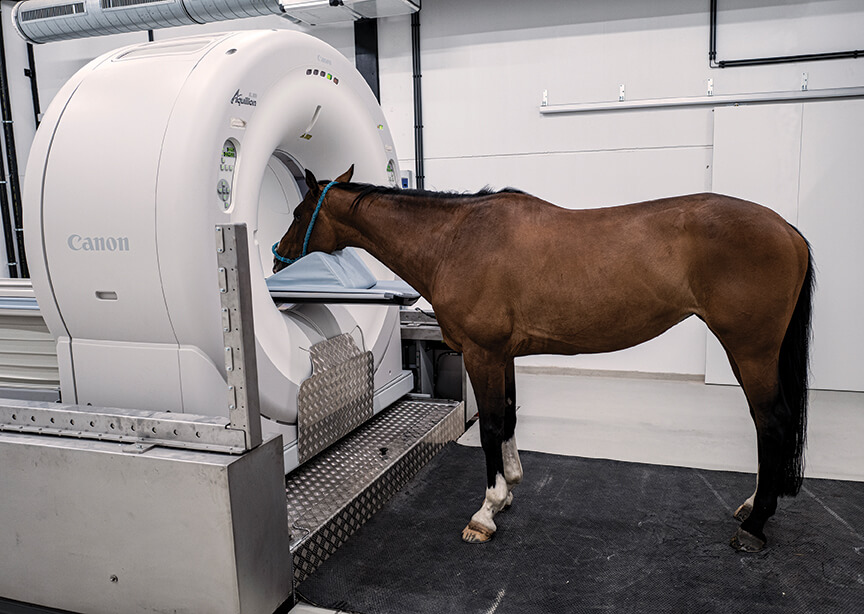
A horse is shown with its head resting on a pillow in the CT machine waiting to be scanned
The Qalibra system, recently installed in the Caesars Entertainment Equine Specialty Hospital, enables the CT machine to be adjusted in height to the size of the horse and moved horizontally over the patient during the scan, allowing the patient to stand without restraint. (Photo courtesy of Qalibra)
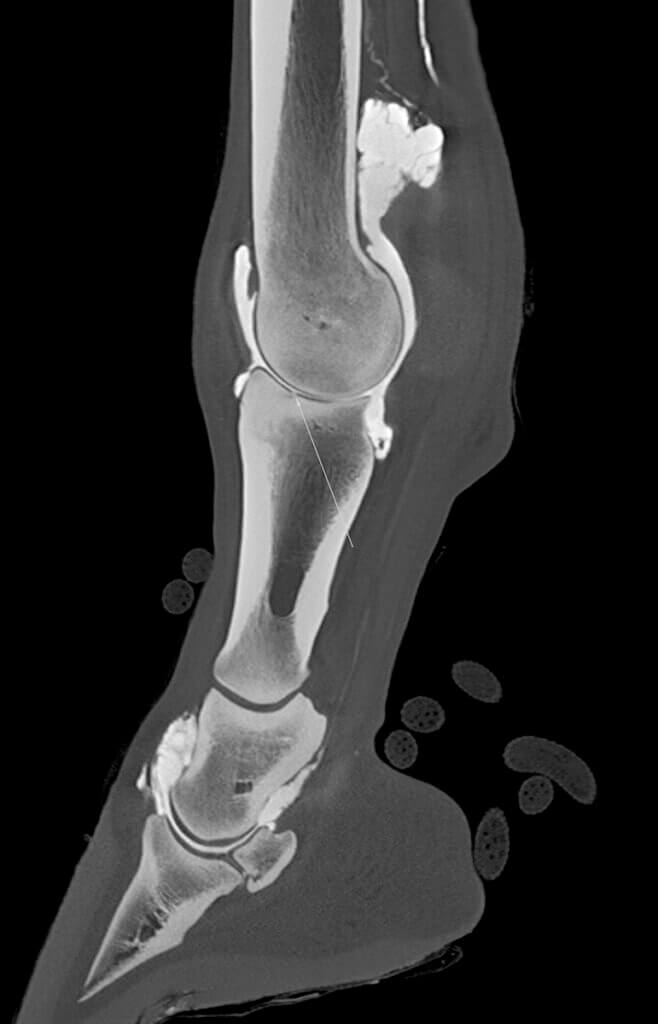
A digital scan showing the side of the horse's leg
A sagittal CT slice of a horse that presented with chronic lameness localized to the fetlock with previous diagnostic efforts unable to conclusively provide a diagnosis. The fetlock joint of the standing horse was examined in the CT with intra-articular contrast agent administration (arthrography). The patient’s veterinary team was able to diagnose the horse with mild osteoarthritis of the fetlock joint. (Photo courtesy of Qalibra)

Equine athletes in Indiana now have access to the latest diagnostic imaging technology thanks to installation of the Qalibra Computed Tomography (CT) machine at the Caesars Entertainment Equine Specialty Hospital, a satellite facility of the Purdue University College of Veterinary Medicine located in Shelbyville, Ind.  The helical (spiral) CT features the world’s largest field-of-view and can be adjusted in height according to the size of the horse, making it possible to scan patients while they are safely standing or under general anesthesia or light sedation.

Developed in Germany by equine specialists in conjunction with Canon Medical, the Qalibra CT system also will be installed in the new David and Bonnie Brunner Equine Hospital that is being built on the Purdue University campus with an anticipated opening in spring 2022.  At that point, of the three known Qalibra CT installations in the United States, the College of Veterinary Medicine will have two of them.
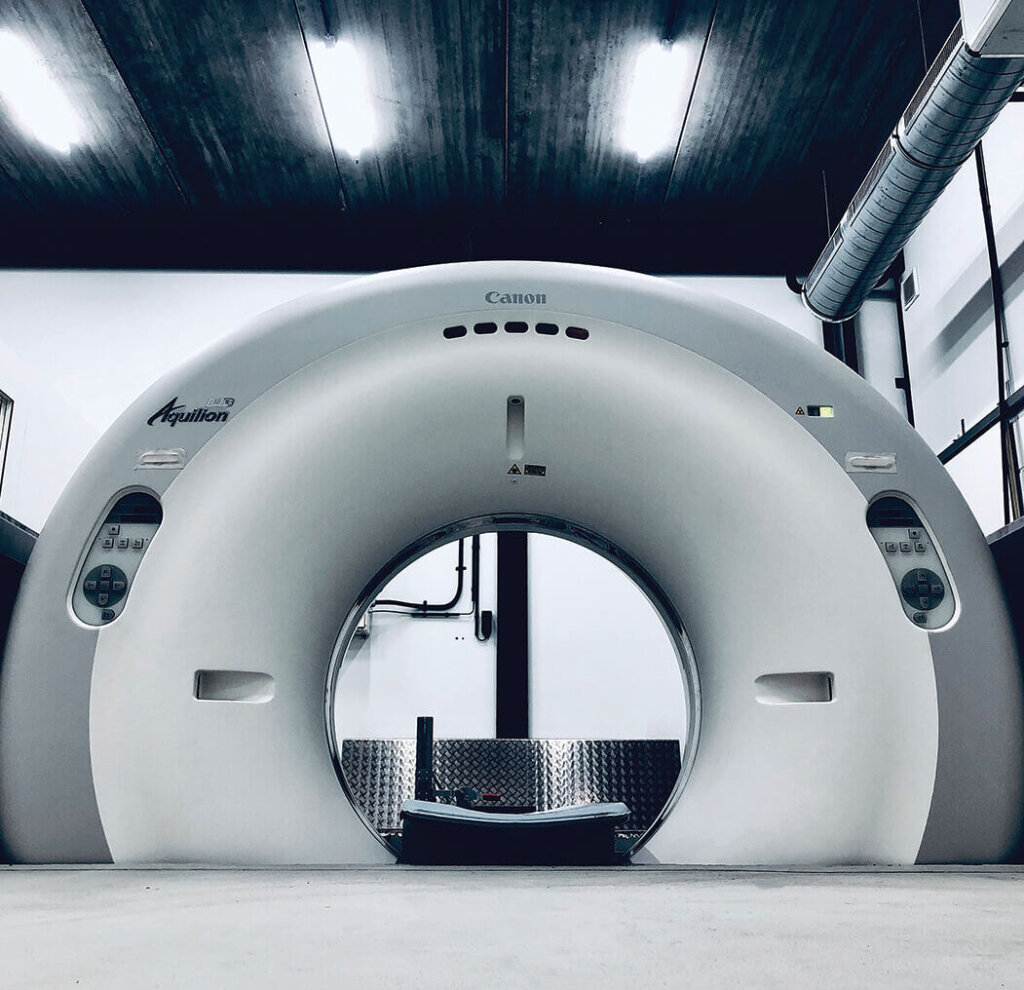
A front view of the large cylinder where a patient is placed for the computed tomography scan
A front view of the gantry on the Qalibra CT machine, which was specially designed to serve equine patients. (Photo courtesy of Qalibra)

Located near Indiana Grand Racing and Casino, the Caesars Entertainment Equine Specialty Hospital provides expert veterinary medical diagnostics and treatment for Indiana’s growing equine industry. Dr. Timm Gudehus, the hospital’s senior equine surgeon, explains the facility offers such specialized services as advanced equine surgery, including long-bone fracture repair; orthopedic examinations involving advanced diagnostic imaging, including nuclear scintigraphy (bone scan); other diagnostic services such as ultrasound and dynamic endoscopy; and treatments that incorporate a range of biologics and stem cell therapy.

Writer(s): Kevin Doerr | pvmnews@purdue.edu

Recent Stories

“Paws Up” – brought to you by the PVM Wellness Committee

This week, we are proud to recognize Lorraine Fox, who is a business assistant with the Veterinary Medicine Procurement Center.

PVM Interview Days Move College Closer to Admitting the DVM Class of 2030

After a total of three afternoons dedicated to conducting in-person interviews with 226 prospective veterinary students, the Purdue University College of Veterinary Medicine is close to completing the process of admitting 84 members of the incoming first-year DVM class – the Class of 2030.  The students invited for the interview days were selected from a total pool of 1,930 applicants from across the country as well as countries abroad.

Experts to Gather at Purdue for Conference Addressing the Public Health Threat of Antimicrobial Resistance

The ongoing challenges posed by multi-drug resistant infections will be the focus of a multidisciplinary conference taking place in three weeks at Purdue University.  The Fourth Annual Conference on Antimicrobial Resistance is set for February 25–26, 2026 at Purdue’s Stewart Center in West Lafayette. Registration is still open for the event, which will bring together scientists and scholars from human and veterinary medicine, public health, research, and industry to address the determinants, dynamics and deterrence of drug resistance.

PVM’s Upcoming Coppoc One Health Lecture to Focus on Dogs as Sentinels of Environmental Exposure

The Purdue University College of Veterinary Medicine brings a leading One Health scholar to campus each year to address vital health issues from a One Health perspective as part of the Coppoc One Health Lecture series.  This year’s presentation, scheduled for February 26 in Lynn Hall Room 2026, is on the engaging topic, “One Health at Home: Dogs as Sentinels of Environmental Exposure.” The speaker will be Audrey Ruple, DVM, MS, PhD, DACVPM, MRCVS, the Dorothy A. and Richard G. Metcalf Professor of Veterinary Medical Informatics at the Virginia-Maryland College of Veterinary Medicine at Virginia Tech.

“Paws Up” – brought to you by the PVM Wellness Committee

Today we are happy to acknowledge our Student Success Center Team.

One Health: A ‘digital twin’ model for predicting cancer outcomes

The striking similarities between invasive bladder cancer in dogs and humans have fueled research advances for more than three decades. Most of that work has looked at separate aspects of the disease — risk factors, early detection, symptoms, treatment and gene expression. But a new project at Purdue University that combines many types of available data in a “digital twin” model of bladder cancer may prove powerful enough to predict patient outcomes, starting with the probability of metastasis.

Purdue Professor Emeritus Bill Blevins Wins Lifetime Achievement Award at ACVR Annual Meeting

The American College of Veterinary Radiology (ACVR) gave its esteemed Lifetime Achievement Award for 2024 to Purdue Professor Emeritus Bill Blevins, who is well known to countless Purdue Veterinary Medicine alumni for the expertise he taught them about all things Diagnostic Imaging during his long Purdue career.