
A team of Purdue University scholars led by professors from the Colleges of Science and Veterinary Medicine have received new support as they work to develop solutions to what U.S. military officials call an alarming trend in dementia among wounded soldiers. The same researchers also seek solutions to better treat Alzheimer’s disease. Innovators from several disciplines across the university make-up the Purdue research team that received a $1.3 million grant from the Department of Defense for their work in this area.
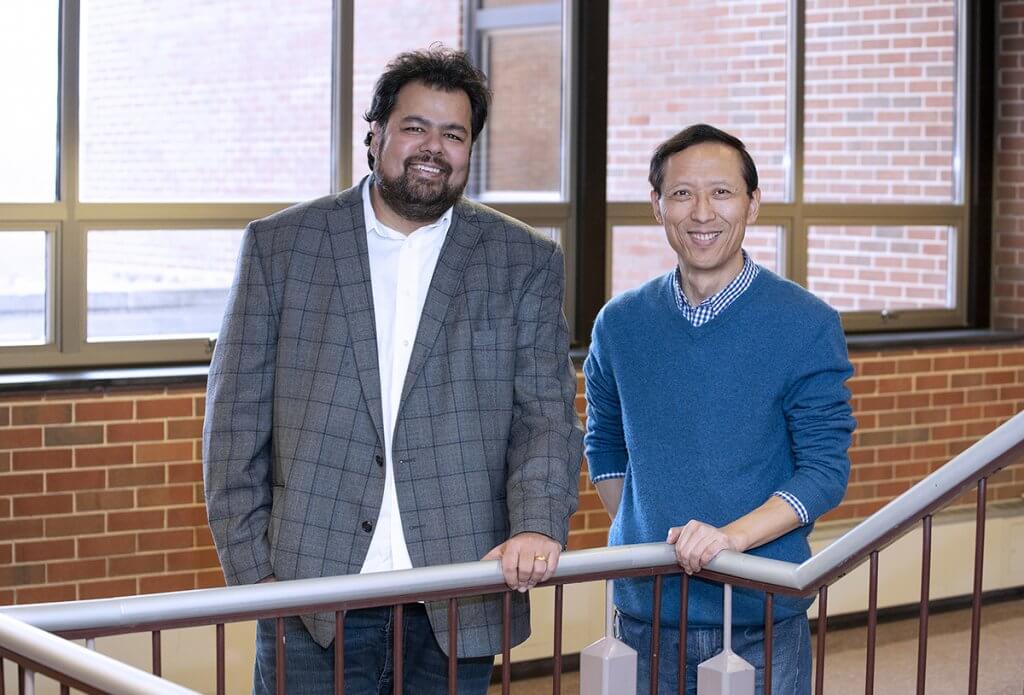
The principal investigator leading the team, Dr. Gaurav Chopra, assistant professor of analytical and physical chemistry in the College of Science, is joining forces with Dr. Riyi Shi, professor of basic medical sciences in the College of Veterinary Medicine and director of Purdue’s Center for Paralysis Research, who is a co-investigator on the grant. Dr. Shi also holds a joint appointment in the Weldon School of Biomedical Engineering. Dr. Chopra directs a laboratory in chemical immunology.
They are working with Purdue’s Bindley Bioscience Center; Purdue Center for Paralysis Research; Purdue Institute for Drug Discovery; Purdue Institute for Integrative Neuroscience; Purdue Institute of Inflammation, Immunology and Infectious Disease; Purdue University Center for Cancer Research; and Indiana University School of Medicine. “This project is highly relevant to the military, in that there is an alarming trend in the increasing reports of post-traumatic brain injury (TBI) Alzheimer’s disease and related dementia among wounded soldiers, imposing enormous emotional and economic burdens on military families, their communities and society as a whole,” said Dr. Chopra.
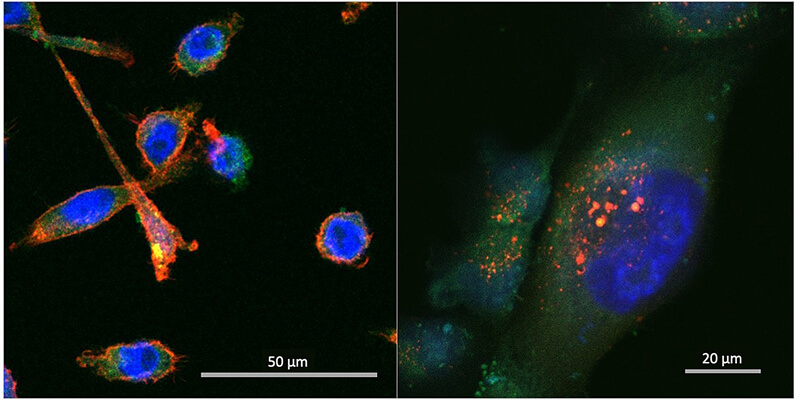
The work involves developing biomarkers and identifying new targets for phagocytic function of microglial cells, immune cells in the brain, in the context of brain injury related Alzheimer’s disease and other dementia. Dr. Chopra explained that brain tissue compression and damage can directly result from exposure to shock waves generated by explosive blasts to which soldiers are routinely exposed in combat and training exercises.
“Furthermore, intense combat conditions will also increase the incidence of traumatic brain injury in situations such as severe car accidents or accidental falls from varying heights,” Dr. Chopra said. “Therefore, uncovering the mechanisms responsible for this epidemic that detracts from the quality of life for thousands of veterans could profoundly benefit our soldiers who sacrifice a great deal to ensure our freedom.”
The current study will utilize new tools, such as, a pH-responsive Amyloid-beta and TBI-on-a-chip in vitro trauma model along with well-established preclinical neurodegenerative and blast injury models developed in Dr. Chopra’s and Dr. Shi’s laboratories to study microglial cell states in the context of TBI-related Alzheimer’s disease.
“Purdue features some of the most prominent trauma investigators and neuroimmunologists from around the world, and we are now merging this expertise together in an unprecedented symbiotic and focused manner to confront the epidemic of post-TBI mental abnormalities,” Dr. Shi said. “By bringing together a highly multidisciplinary team, we intend to not only improve our understanding of the mechanisms, but also diagnoses and treatments of TBI-related neurodegenerative dementia. The potential impacts of this study cannot be overestimated, and could lead to immeasurable clinical and societal benefits.”
The Purdue team received the grant through the DoD’s Congressionally Directed Medical Research Programs partnership award program. “The Purdue Institute for Integrative Neuroscience congratulates Drs. Gaurav Chopra and Riyi Shi for receiving this prestigious award from the DoD to support their research, which is closely aligned with the institute’s strategic initiatives in neurotrauma and Alzheimer’s disease,” said Dr. Chris Rochet, director of the Purdue Institute for Integrative Neuroscience.
The innovators have worked with the Purdue Research Foundation Office of Technology Commercialization on numerous technologies. The office is now housed in the Convergence Center for Innovation and Collaboration in Discovery Park District, adjacent to the Purdue campus.
Click here to view a complete news release on the research.
