
“A downside of working from home is that many of my important work conversations are interrupted by what I have begun to refer to as my fur-workers,” said Dr. Candace Croney, director of Purdue’s Center for Animal Welfare Science, as she fondly described her cat, Bernie, and Havanese mix, Desi. “They like to help me out by announcing the end of the world is coming because a delivery arrived or walking across my keyboard to end a web conference without my consent.”
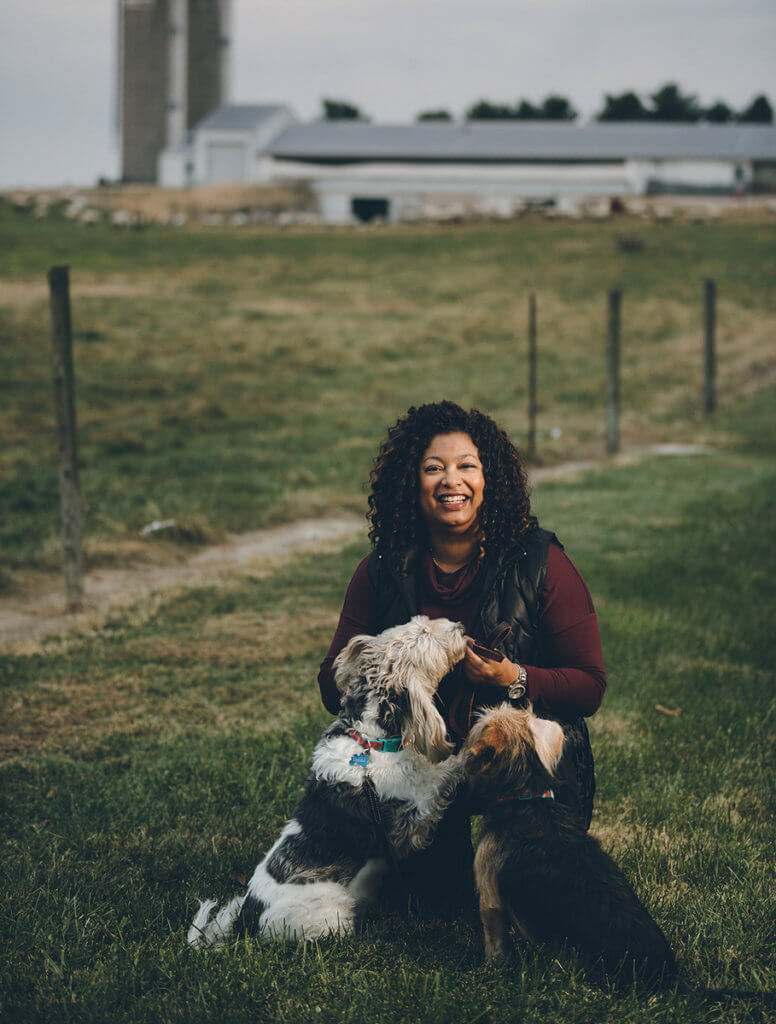
Dr. Croney, who holds a joint appointment in the Colleges of Veterinary Medicine and Agriculture as professor of animal behavior and well-being and professor of animal sciences, is used to sharing her workspace with companion animals. The same cannot be said for millions of Americans now working from home due to the COVID-19 pandemic.
Dr. Croney offers some thoughts about benefitting from and adjusting to new “fur workers.”
What are the benefits associated with having pets at home?
Companion animals are wonderful stress-buffers. It’s well-documented that people who own pets, especially dogs, find them helpful under times of stress. They provide psychological benefits in terms of comfort, reassurance, and social support. This is particularly true with people who live alone with a companion animal. They are serving roles and meeting needs that many people are probably under-appreciating, not to mention the well-documented physical benefits they also facilitate.
However, in situations like this, it’s important to remember that our pets are able to pick up on the stress that we’re experiencing. That can definitely impact how stressed they are. Dogs are quite attuned to our emotional states and often respond accordingly. All of this emotional support that our animals give us can therefore come at a cost to them. We want to pay attention to what they are communicating so that while they give us that great support, we can support them in turn.
What are some of the best ways to support them?
Since so many people are home now and because we will eventually go back to work, it’s important to set our companion animals up for success by setting a routine for them. I’ve been trying, imperfectly, to implement this myself. Pets do better when they have predictable routines, and this can help their people as well.
For example, if a dog knows when walks will occur, he won’t add additional stress to his humans by asking for one every six minutes. We need to establish a structured routine they can learn, remember, and predict.
Also, our pets need breaks from us from time to time. If you have the opportunity to work in a separate room away from your pets, do so and make sure they are well occupied during those times.
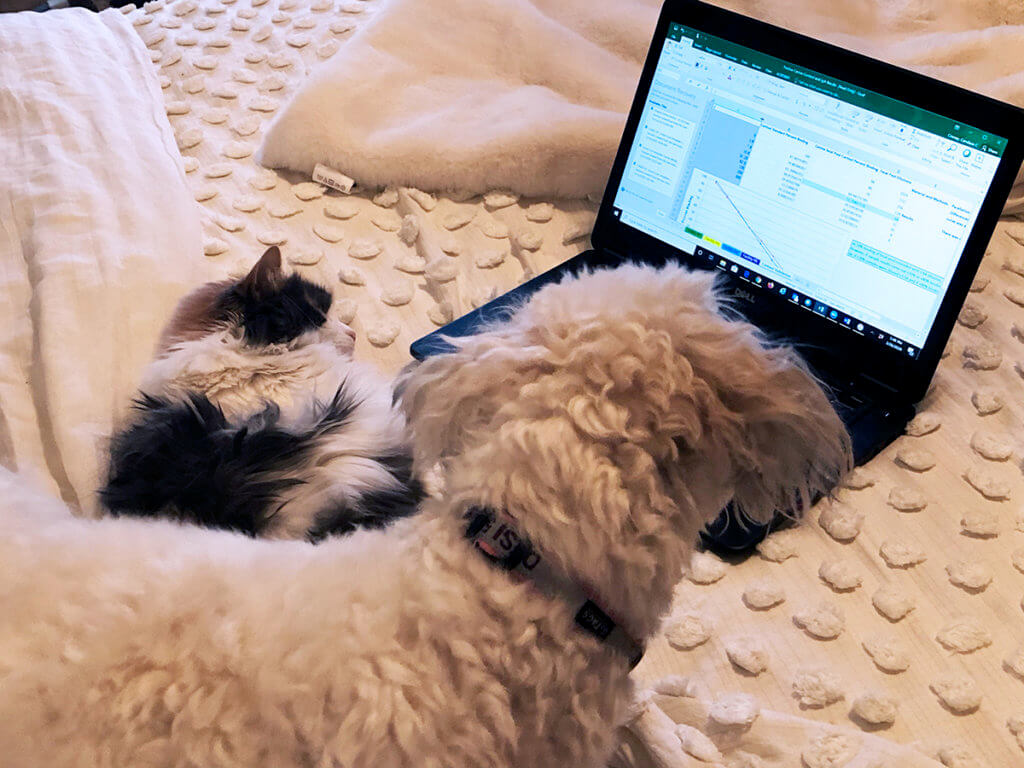
It is also important to simulate leaving the house to keep them practiced at being comfortable with not having constant access to you. When you eventually go back to work, it won’t set them up for success if they are suddenly deprived of constant attention.
We need to understand that animals have individual personalities. There are some pets who don’t necessarily want constant interaction. With us at home all the time, especially with larger families, we need to make sure they’re not being overstimulated. We should set up safe spaces at home where they can choose to retreat and have downtime. Particularly for cats, a quiet and warm, dimly lit space is ideal for resting (that’s not a bad set up for people who need a break, either!).
How can workers keep their pets entertained?
When you can’t give your pets one-on-one attention, it’s important they have things that occupy them and that are safe for them to use. For dogs, giving them high-value favorite toys and treats to keep their minds engaged is great, particularly puzzle toys.
The same things are important for cats. You can use puzzle feeders and preferred toys that they don’t get at other times. Give these at times that are particularly busy for you, where you need them not to be disruptive. And remember to change out the items from time to time to make sure they remain fun and exciting.
You’d be surprised how much enjoyment cats can get out of boxes and how creative dogs can be at offering new behaviors you can reward for interacting with cardboard boxes. Imagine what they could do with all those toilet paper rolls we’ve been hoarding! Small pets like rabbits and rodents can be greatly entertained by having food hidden in discarded toilet paper rolls.
What should someone do if their pet isn’t able to get as much exercise as they are accustomed to during this period?
I think many people underestimate how important mental stimulation is to companion animals. If you are in a situation where they are restricted in terms of opportunities for physical exercise, step it up with as much mental enrichment as you possibly can. You can be creative around the home by letting them hunt for their food, hiding it in different places. This is also a good time to practice obedience and learn new tricks. Use hallways, basements and other safe indoor spaces to practice recalls while playing fetch. Depending on how much space you have, obstacle courses can be set up, even just by rearranging a couple pieces of your furniture (which can be exercise for you too!). Cats can be entertained and exercised by using vertical spaces like shelves to perch and jump onto for treats, catnip, or feather toys.
Asked how her research team is adjusting to their new fur-workers, Dr. Croney said, “It’s been great!” She asked her entire lab to share their interactions through their weekly progress reports and lab meetings. Photos of their fur workers are included in the complete version of this story by Chad Campbell, of Purdue Agricultural Communication, which you can view by clicking here.
