
Interim Leadership Announced for Comparative Pathobiology Department

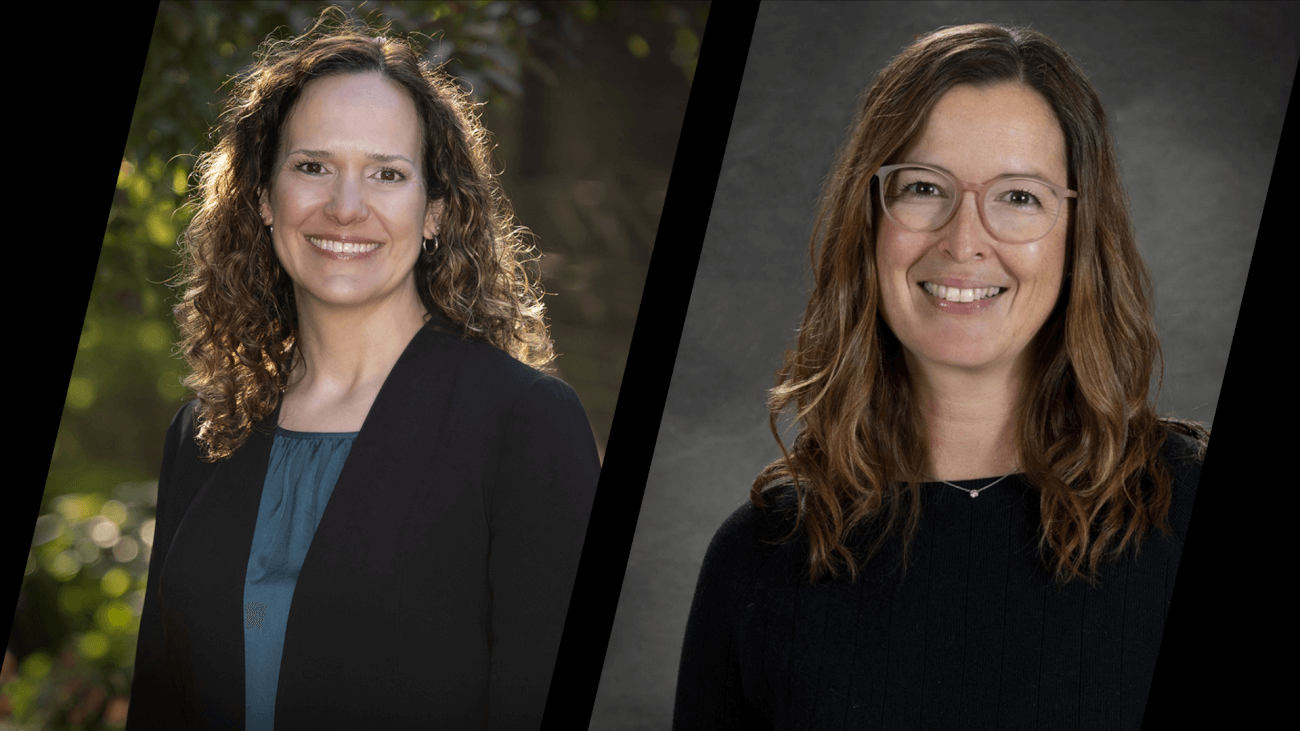
portraits of two women, the left is an outdoors portrait of a woman with brown hair wearing a teal shirt and a black jacket. The photo on the right is of a woman with brown hair, wearing glasses and a black shirt in front of a gray background.

Two faculty members in Purdue Veterinary Medicine’s Department of Comparative Pathobiology have been named as new interim leaders for the department. Clinical Professor and Associate Dean for the Veterinary Diagnostic Laboratories, Dr. Kenitra Hendrix, will serve as interim department head, and Dr. Abigail Cox, the Dr. William O. Iverson Associate Professor of Comparative Pathology, will work alongside her as assistant department head and will take the lead on the department’s graduate student affairs.  Announced December 18, the appointments took effect immediately.

“Dr. Hendrix will bring her extensive leadership experience as the director of the Indiana Animal Disease Diagnostic Laboratory to this new role, while an external search is conducted to identify the next CPB Department Head,” said Purdue Veterinary Medicine Dean Bret Marsh, DVM. He added that Dr. Cox’s knowledge of the department also will be very beneficial during this transition period. “I am grateful to both colleagues for their willingness to assume these roles on an interim basis, and I am confident they will provide the leadership and direction needed to guide the department until a permanent department head is named.”  

The department head search already is underway, and an external posting is now available online.

In her role as director of the Indiana Animal Disease Diagnostic Laboratory (ADDL), Dr. Hendrix oversees two laboratory facilities – the Willie M. Reed Animal Disease Diagnostic Laboratory located in West Lafayette, and the Dennis R. Heeke ADDL at the Southern Indiana Purdue Agricultural Center (SIPAC) in Dubois, Indiana. In July of 2025, she was promoted to associate dean, in recognition of the expanded scope of her leadership and strategic oversight across the diagnostic laboratory enterprise.

A DVM graduate of Auburn University, Dr. Hendrix completed a clinical microbiology residency and earned her PhD at Washington State University. She is board-certified by the American College of Veterinary Microbiologists in all three specialties – Virology, Immunology, and Bacteriology and Mycology, and joined the Purdue Veterinary Medicine faculty in 2013.

Dr. Cox earned her undergraduate degree in biology at Washington University in St. Louis before coming to Purdue where she earned her DVM degree in 2008. She then completed a residency in anatomic pathology and earned her Master of Science degree in 2011, after which she continued her studies at Purdue, earning her PhD in 2016. A diplomate of the American College of Veterinary Pathologists, Dr. Cox also serves as director of the college’s Histology Research Laboratory, and is the head of the Pathology Section of the Comparative Pathobiology Department.

Writer(s): Kevin Doerr | pvmnews@purdue.edu

Recent Stories

Contraceptive vaccine reduces fertility in animals to address wildlife overpopulation

A Purdue University contraceptive vaccine seeks to address animal overpopulation by markedly reducing fertility in feral horses, deer, swine and other animals. Dr. Harm HogenEsch, distinguished professor of immunopathology in Purdue University’s College of Veterinary Medicine, and Dr. Raluca Ostafe, director of Purdue University’s Molecular Evolution Protein Engineering and Production Facility, both members of the Purdue Institute for Inflammation, Immunology and Infectious Disease, have designed the vaccine based on the IZUMO1 mammalian sperm protein. It induces a robust and long-lasting immune response and infertility in female mammals.

“Paws Up” – brought to you by the PVM Wellness Committee

This week Dr. Kristy Faulkner, a specialty intern in neurology, is being appreciated for supporting students’ morale and being a “baker extraordinaire,” taking extra steps in sharing her beautifully decorated cupcakes with the Small Animal Internal Medicine team.

Coppoc One Health Lecture Brings Co-leader of Innovative Dog Aging Project to PVM

“One Health at Home: Dogs as Sentinels of Environmental Exposure” is the title of the 2026 Coppoc One Health Lecture presented by Dr. Audrey Ruple, co-principal investigator for the largest animal-health research initiative to date – the Dog Aging Project.  Dr. Ruple, the Dorothy A. and Richard G. Metcalf Professor of Veterinary Medical Informatics at the Virginia-Maryland College of Veterinary Medicine at Virginia Tech, gave her talk February 26 in Lynn 1136. The lecture was free and open to the public.

Three More Years: How Specialized Care Helped Extend One Dog’s Life

When Ella, a pittie beagle mix, was diagnosed with bladder cancer at age 11, Jennifer Turner knew she wanted to make every decision count. What she did not yet know was that a cross country drive to Purdue University would give her three more years with the dog she described as her constant companion.

“Paws Up” – brought to you by the PVM Wellness Committee

This week we feel grateful for Anita Wolf, RVT, who is a veterinary technician in Intermediate Care in the Brunner Small Animal Hospital facility.

In Memory – Dr. Janet Weiss (PU DVM ’91)

The Purdue Veterinary community is saddened by the recent passing of Dr. Janet Weiss, an alumna who served as a dedicated veterinarian in Northwest Indiana. A resident of La Porte, Indiana, Dr. Weiss passed away February 20, 2025. She was 61.

Upcoming PVM Veterinary Nursing Symposium Features Hands-On Learning

Veterinary professionals in the field of veterinary nursing have a special opportunity to expand their expertise and earn continuing education (CE) at Purdue Veterinary Medicine’s Annual Veterinary Nursing Symposium. The one day continuing education program will be held at Lynn Hall on the Purdue campus March 23, 2025.

Zebra Foal Gets Lifesaving Help at Purdue University Equine Hospital

It’s not surprising to see a foal receiving emergency care at the Purdue University Equine Hospital during foaling season. The hospital’s team of expert clinicians and veterinary nurses are used to coming to the rescue when foals need special help to survive. But it was a surprise to see a foal named Marty arrive at the hospital’s Intensive Care Unit in February, because Marty is a zebra, and the hospital is in Indiana.