
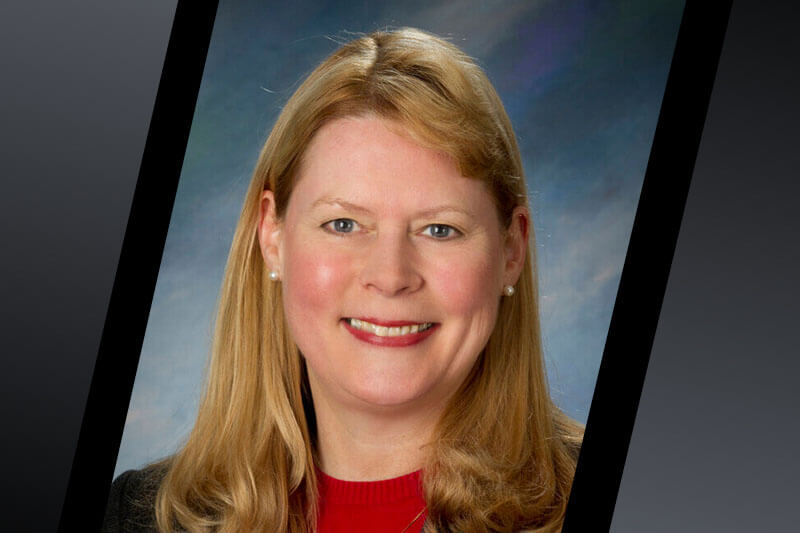
150th Anniversary Professor Kathy Salisbury Appointed Interim Purdue Veterinary Dean

S. Kathleen Salisbury

Associate Dean for Academic Affairs in the Purdue University College of Veterinary Medicine, Dr. S. Kathleen Salisbury, who is also a Purdue 150th Anniversary Professor and professor of small animal surgery, has been appointed interim dean of the college, effective July 1.  She succeeds Dr. Willie Reed, who is stepping down June 30 after serving more than 17 years as dean.

Dr. Salisbury, whose research areas include veterinary medical education and soft-tissue surgery, joined the college’s faculty in 1984. She was appointed chief of small animal surgery in 1988 and named assistant dean for academic affairs in 2005. A recognized leader in the field who is passionate about veterinary medical education, Dr. Salisbury has been involved in every major curriculum revision in the college and has been recognized for developing a national and international veterinary education model and specialist training.

In 2018, Dr. Salisbury was named a 150th Anniversary Professor by the Office of the Provost. She is a member of Purdue’s Book of Great Teachers, a charter member of the Teaching Academy and an honored mentor of the American College of Veterinary Surgeons Foundation. In 2007 she was named the recipient of the national Carl J. Norden-Pfizer Distinguished Teacher Award, considered the most prestigious teaching award in veterinary medicine. Dr. Salisbury also has received numerous college-level awards, including Purdue Veterinary Medicine’s Career Teaching Award, Alumni Outstanding Teaching Award and Weedon Faculty Recognition Award.

“Associate Dean Salisbury has exactly the right mix of expertise and experience to accelerate the college’s progress in this interim role as we launch our One Health initiative,” said Patrick Wolfe, Purdue provost and executive vice president for academic affairs and diversity.

“I look forward to leading our outstanding faculty, staff and students through this transition,” Dr. Salisbury said. “I will follow Dean Reed’s example of excellence and dedication in serving the college.”

Board certified by the American College of Veterinary Surgeons, Dr. Salisbury earned her DVM degree at Michigan State University in 1979 and went on to complete her residency and earn her Master of Science in veterinary medicine at Purdue in 1984. 

Lucy Flesch, Purdue’s Frederick L. Hovde Dean of the College of Science and professor of earth, atmospheric, and planetary sciences, is chairing an advisory committee to assist in the search for Dr. Reed’s permanent successor, with finalists expected to visit campus at the start of the fall semester.

Writer(s): Kevin Doerr | pvmnews@purdue.edu

Recent Stories

Purdue Veterinary Medicine Welcomes New Clinical Residents and Specialty Intern

A new class of clinical residents arrived this summer at the Purdue University College of Veterinary Medicine to begin their specialty training. On July 16, 2026, the Department of Veterinary Clinical Sciences (VCS) held a welcome breakfast to introduce the new VCS residents to faculty and staff. The breakfast provided the opportunity for the new residents and a new specialty intern in neurology to meet current VCS residents, as well as the faculty and staff they will be working closely with during their time at Purdue.

American Board of Veterinary Toxicology Honors Purdue Professor and ADDL Senior Veterinary Toxicologist Steve Hooser

Dr. Steve Hooser, DVM, PhD, DABVT, professor of veterinary toxicology at the Purdue University College of Veterinary Medicine and senior veterinary toxicologist for the Indiana Animal Disease Diagnostic Laboratory (ADDL), has received the American Board of Veterinary Toxicology's (ABVT) 2026 Service Award.  Given in recognition of a career that has shaped the field of veterinary toxicology for more than four decades, the award was announced July 13 at the ABVT Annual Business meeting held in Anaheim, California, in conjunction with the AVMA Convention 2026.

New Class of Veterinary Hospital Interns and Pharmacy Resident Welcomed to PVM

A total of 13 new interns and a new veterinary pharmacy resident began their advanced training in the Purdue University Veterinary Hospital this summer. The group of interns includes nine veterinarians who are completing a small animal rotating internship and four who are doing a large animal rotating internship. In addition, a pharmacy school graduate began the one year Wasson Veterinary Pharmacy Residency program, which is jointly offered by the Purdue Colleges of Veterinary Medicine and Pharmacy.

“Paws Up” for Lilia Beal-Preston and Mikey Galvin – brought to you by the PVM Wellness Committee

This week, we’re proud to recognize DVM students Lilia Beal-Preston and Mikey Galvin, who received a Paws Up recognition from a client after caring for the client's dog at the Purdue University Veterinary Hospital.

“Paws Up” for Jennifer Danaher – brought to you by the PVM Wellness Committee

Today we are congratulating Jennifer Danaher, who is a department secretary for Veterinary Clinical Sciences, for being recognized as a helpful colleague in our college.

Boo the Miracle Dog: A Story of Bravery, Breakthroughs, and a Bond That Inspires

Our series of articles about animals and their owners who've found help and healing at the Purdue University Veterinary Hospital continues with the story of "miracle dog" Boo Davis. At 13 years old, Boo Davis is living proof of the power of persistence, expert veterinary care, and the unshakable love between a pet and her person. Affectionately known as Lisa’s “miracle dog,” Boo’s journey is one that not only has extended her life, but also has helped shape the future of cancer treatment for other pets, too.

Placating Pets to Help them COPE this Fourth of July

Despite the excellent tips experts provide each year for pet safety and welfare on the 4th of July, many pet families still run into trouble and lose their pets. What are we missing and how can we even better protect our animal companions? That question is answered in an article by Dr. Candace Croney, director of the Center for Animal Welfare Science.