
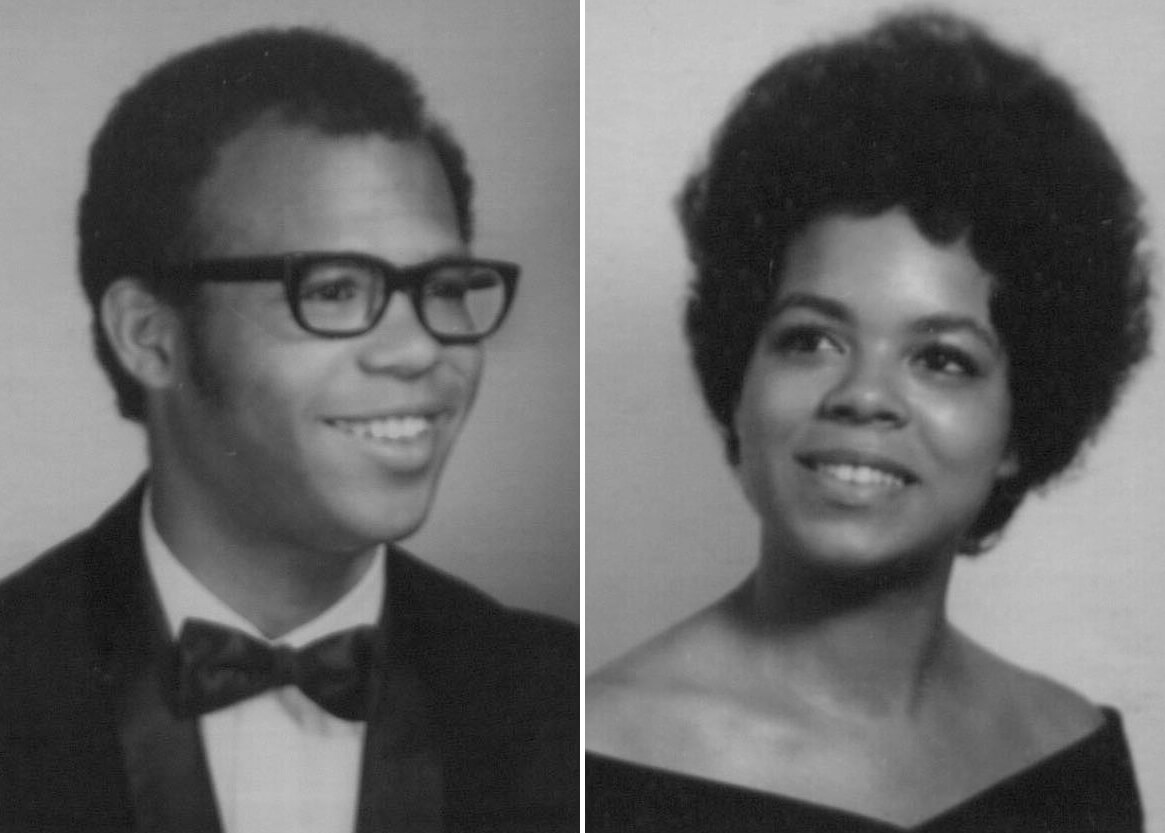
As Purdue University has honored the impact, contributions, and excellence of Black Boilermakers over the past few weeks as part of Black History Month, the College of Veterinary Medicine highlights a significant person in its own history. Dr. William Dunn (PU DVM ’71), is the first Black DVM graduate of the College. And, with today marking the beginning of Women’s History Month, we look forward to an upcoming feature on the college’s first Black woman DVM graduate, Dr. Doris Hughes-Moore (PU DVM ’73).
Dr. Dunn grew up in Indianapolis and recalls that his interest in veterinary medicine began at the age of eight when his family took their dog to the local veterinarian. Amazed at the fantastic work the veterinarian did to get their beloved pet feeling better again, Dr. Dunn knew from that moment on that he wanted to become a veterinarian. Resolute in his thinking, he never changed his mind all throughout his childhood and education.
Dr. Dunn attended Shortridge High School and remembers how he was blessed with the ability to take two years of biology from a teacher with a PhD in the field. This experience not only increased his interest in veterinary medicine, but also prepared him for the rigorous education he would receive at Purdue University.
At the time, there were just under 20 veterinary medical schools in the entire country and Dr. Dunn said he was fortunate to live in a state that had one, which was then called the Purdue University School of Veterinary Science and Medicine. During his time at Purdue, Dr. Dunn was a member of the Omega Psi Phi fraternity and also served as an advisor at McCutcheon Hall, a position that covered his tuition. Dr. Dunn encourages any college student in any major to take any kind of resident assistantship, work study position, or other job opportunity to be able to graduate with less debt.
When asked about advice for students studying veterinary medicine, Dr. Dunn explained that when students see any open door they should not be afraid to walk through it, and that sometimes you never know how your education may help you. He recalls that as veterinary students, he and his classmates in the DVM Class of 1971 were required to study all animal species regardless of their own particular interests. Even students who wanted to be small animal veterinarians had to take classes on treating livestock, which proved useful for Dr. Dunn because of the various fields he worked in later.
After earning his DVM degree, Dr. Dunn accepted a position at Merrick Animal Hospital in Brookfield, Illinois, where he worked until October 1972. He then returned to Indianapolis to work for Eli Lilly and Company, where his father also had worked. Dr. Dunn’s employment at Eli Lilly enabled him to serve in a myriad of positions and work with all sorts of animals from dogs and cats to pigs and horses. Dr. Dunn said he was well prepared to work with all of these creatures due to the College of Veterinary Medicine’s diverse curriculum.
After 28 years in the workforce, Dr. Dunn retired in January 2000 at the age of 52. When asked for a final piece of advice for soon-to-be-graduates of the College of Veterinary Medicine, Dr. Dunn replied that while being devoted to your career is important, enjoying life is equally so. “I got where I am by working hard when I needed to and playing as hard when I needed to,” said Dr. Dunn.
Two years after Dr. Dunn earned his veterinary degree, Dr. Doris Hughes-Moore became the first Black woman to graduate with a Purdue DVM degree. We plan to feature her story in an upcoming issue of the Vet Gazette as part of Women’s History Month.
