
PVM involved in Research on Microrobot Device that Removes Brain Hemorrhages Due to Strokes or Aneurysms

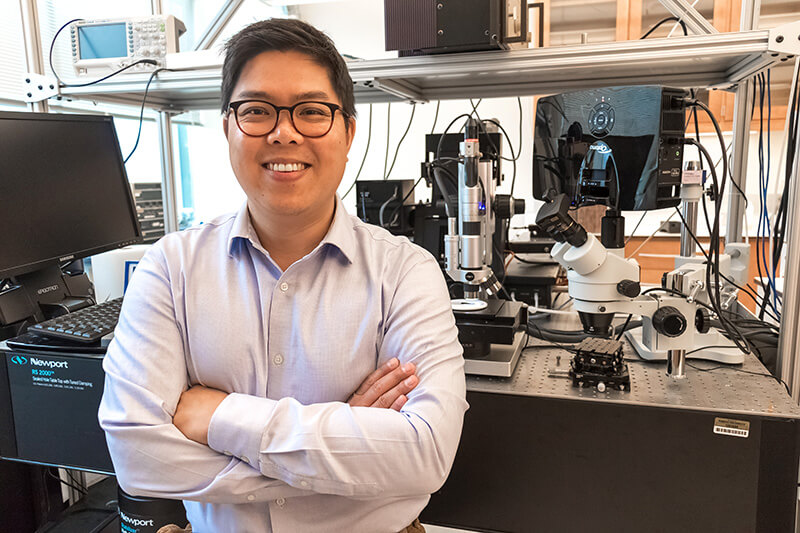
Dr. Lee stands smiling with his arms crossed in his lab
Dr. Hyowon “Hugh” Lee, a Purdue University associate professor of biomedical engineering, has created a magnetically controlled medical device to remove blood accumulating in the brain during a stroke. The research was published in Nature Communications. (Purdue University photo/Vincent Walter)

A new treatment for strokes caused by bleeding in the brain that uses a magnetically controlled microrobot-enabled self-clearing catheter has been shown to be 86% effective in animal models, according to a paper published in Nature Communications. The research led by Dr. Hyowon “Hugh” Lee, associate professor of biomedical engineering in Purdue’s Weldon School of Biomedical Engineering, involves collaboration with neurosurgeons in veterinary and human medicine.
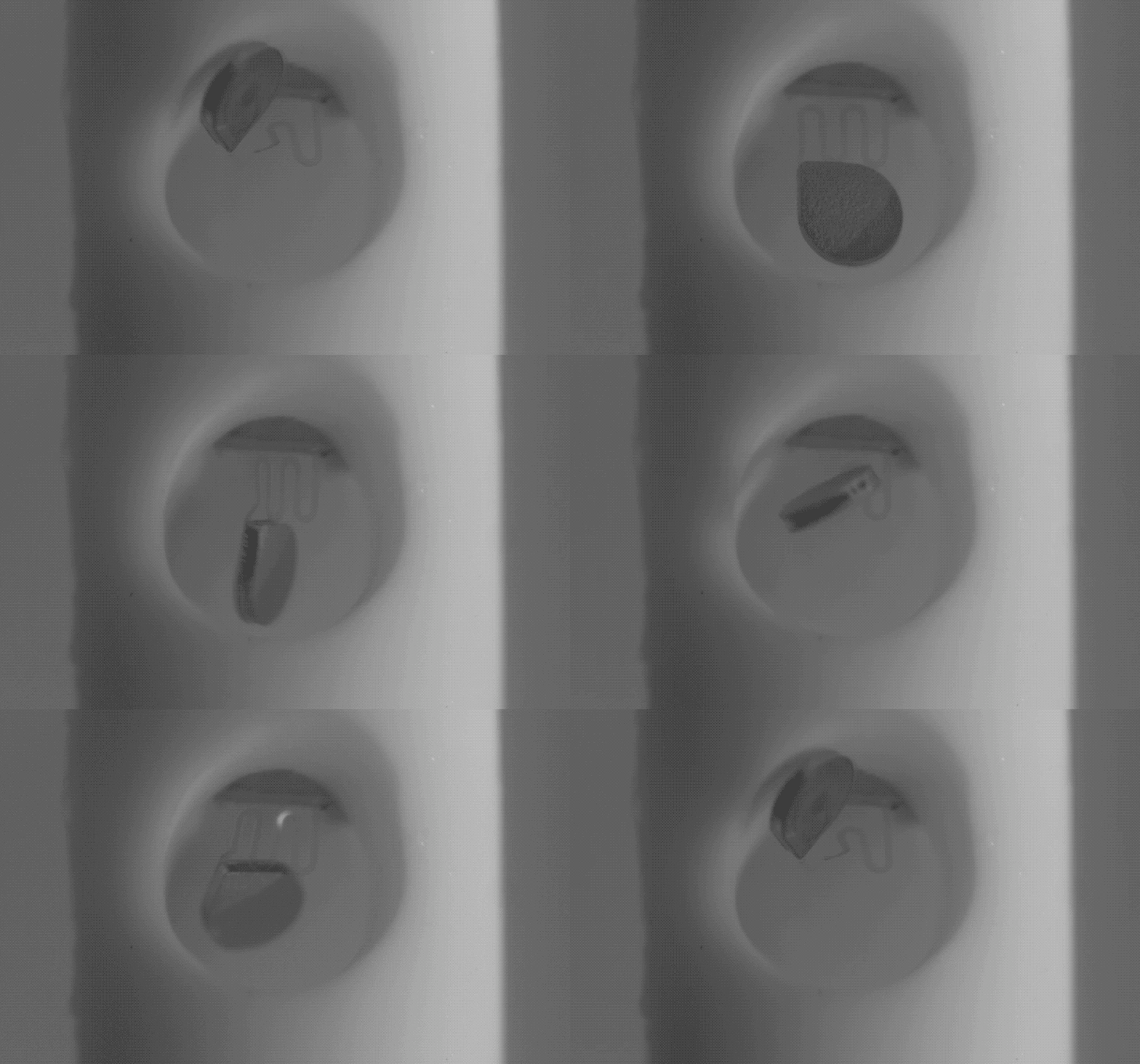
a gif of the microdevice in action making a flapping movement
The full range of motion of a magnetically controlled microdevice invented by Purdue University Associate Professor Hyowon “Hugh” Lee to remove blood accumulating in the brain during a stroke. (Video provided by Dr. Lee)

Dr. Lee created the magnetically controlled microdevice that removes blood accumulating in the brain during a stroke. The innovation was tested on porcine models of hemorrhage in collaboration with Dr. Timothy Bentley, associate professor of neurology and neurosurgery in the Purdue University College of Veterinary Medicine, and Dr. Albert Lee, from Goodman Campbell Brain and Spine in Carmel, Indiana.

The microrobots successfully removed the blood in six of the seven animals in the treatment animal model. “This innovation is a real advance in the care of strokes, which are notoriously difficult to treat,” Dr. Hugh Lee said.

The current gold standard to treat strokes is a blood thinner called tissue plasminogen activator, which cannot be used for some hemorrhagic strokes. “Patients with brain hemorrhages have a mortality rate of up to 50%,” Dr. Albert Lee said. “Currently there is no great therapeutic solution for intraventricular hemorrhage. The only other option is blood clot-dissolving drugs that have undesirable risks.”

Dr. Hugh Lee’s innovation, which was developed with a former graduate student, Dr. Qi Yang, can be remotely activated using externally applied magnetic fields. “There is no need for an implanted power source or complicated integrated circuit,” Dr. Hugh Lee said. “As you change the direction of the magnetic field, the microdevice moves like a compass needle with a magnet nearby. They can be part of an implantable shunt system or a part of extraventricular drainage systems.”
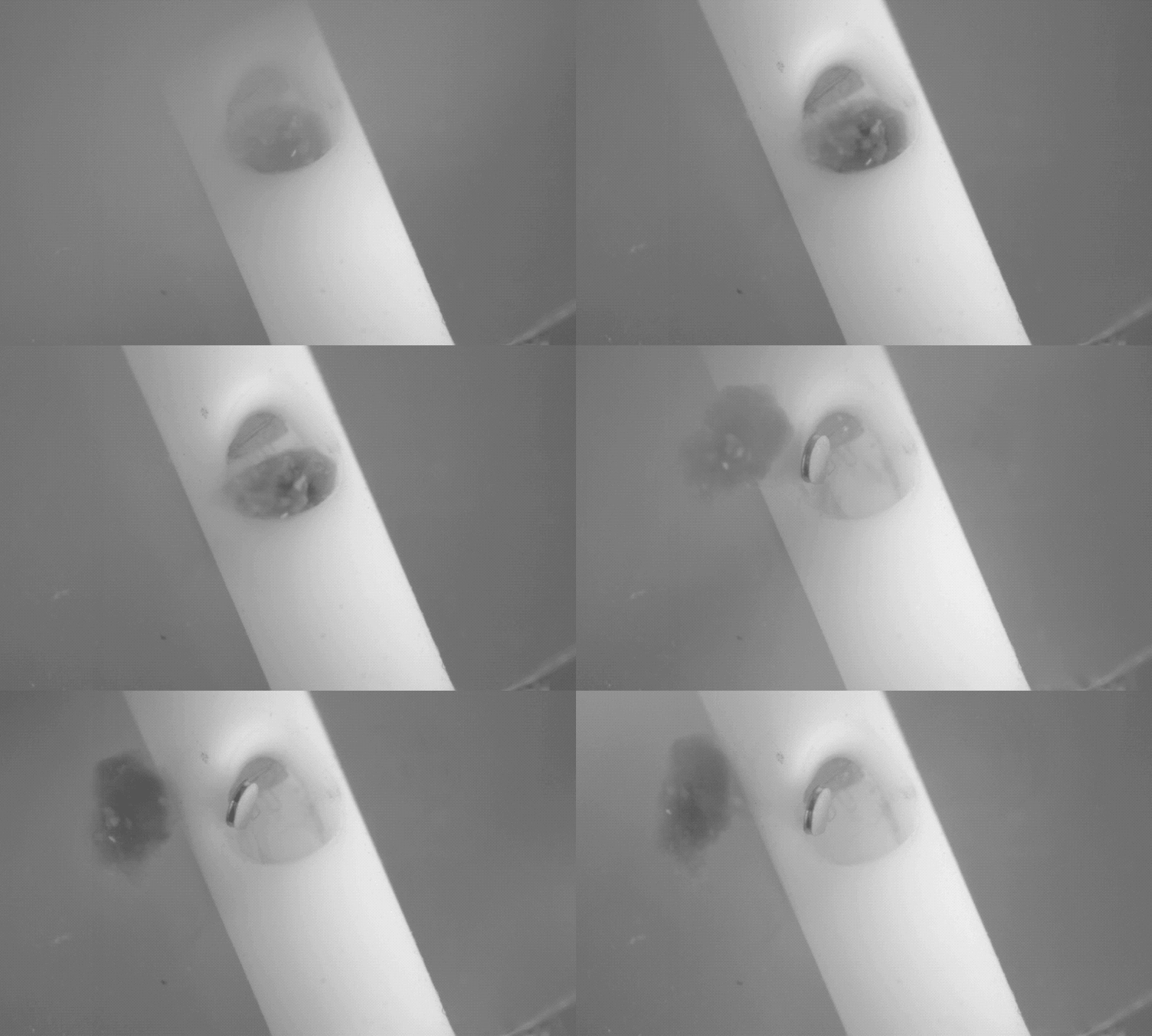
A gif of the magnetic device dislodging a blood clot
A magnetically controlled microdevice invented by Purdue University associate professor of biomedical engineering, Dr. Hugh Lee, removes a clot from the brain.

Dr. Hugh Lee disclosed the innovation to the Purdue Research Foundation Office of Technology Commercialization, which has filed for a patent on the intellectual property. The next step to further develop the device is to receive approval from the U.S. Food and Drug Administration for a first-in-human study.

Dr. Hugh Lee’s collaborative research was funded by grants from the Indiana Clinical and Translational Sciences Institute and the National Institutes of Health. 

The Purdue Research Foundation Office of Technology Commercialization operates one of the most comprehensive technology transfer programs among leading research universities in the U.S. The office provides services that support the economic development initiatives of Purdue University and benefit the University’s academic activities through commercializing, licensing, and protecting Purdue intellectual property. In fiscal year 2021, the office reported 159 deals finalized with 236 technologies signed, 394 disclosures received, and 187 issued U.S. patents. The office is housed in the Convergence Center for Innovation and Collaboration in Purdue’s Discovery Park District, which is located adjacent to the main Purdue campus in West Lafayette.

Click here to view a complete news release from the Purdue Research Foundation.

Writer(s): Steve Martin, Purdue Research Foundation | pvmnews@purdue.edu

Recent Stories

Fourth Purdue AMR Conference Promotes Collaboration to Address Global Health Threat of Antimicrobial Resistance through PVM’s One Health Initiative. 

Purdue University served as the place where local, national and international experts came together in-person and online recently for concentrated sharing of research, expertise and insight targeting the threat of multi-drug-resistant infections. The fourth annual AMR Conference February 25-26, 2026, held in Stewart Center, attracted more than 100 attendees from across the U.S. and six other countries.

Presentation of Research Poster Prizes Wraps up Antimicrobial Resistance Conference 

Purdue University’s fourth Antimicrobial Resistance Conference concluded February 26 with remarks from Purdue Vice President for Health Affairs and Jeannie and Jim Chaney Dean of Pharmacy Eric Barker, PhD, who also announced the winners of the conference’s research poster session.  The poster contest, which attracted more than 20 entries, was divided into categories for undergraduate and graduate students.

“Paws Up” – brought to you by the PVM Wellness Committee

Today we are glad to highlight one of our own committee members. Charlene Evans, Toxicology Laboratory Supervisor in the Reed Animal Disease and Diagnostic Laboratory, is a wonderful champion for mental health and wellbeing on the PVM Wellness Committee and within the ADDL community.

Purdue Professor of Large Animal Surgery Named Veterinary Clinical Sciences Department Head

Dr. Timothy Lescun, a board-certified large animal surgeon, has been appointed head of the Department of Veterinary Clinical Sciences in the Purdue university College of Veterinary Medicine.

Purdue Veterinary Medicine Engages with Swine Health Leaders at AASV

The Purdue University College of Veterinary Medicine was well-represented at the 2026 American Association of Swine Veterinarians (AASV) Annual Meeting, which provided important continuing education and networking opportunities for swine practitioners. The conference in Las Vegas February 28 through March 3, 2026, also provided the opportunity for the college to engage with alumni and partners who are influencing the future of animal agriculture.

Boilers, Ballgowns, Boilermaker Pride and PVM!

With a fun twist on classic title, the 2026 Purdue Boilermaker Ball provided a meaningful evening of celebrating Purdue University’s distinguished heritage and traditions, and the Purdue University College of Veterinary Medicine was proud to be part of the event. Dubbed “A Midwinter Night’s Dream,” the festive function February 28 at the Indianapolis Marriott Downtown proved to be one enchanted evening! PVM alumni and donors were among the guests for the creative black-tie event, and enjoyed the opportunity to visit and share the common commitment to veterinary medicine, animal health, and the mission of the College of Veterinary Medicine.

Purdue Alumni Honored with IVMA Awards for Achievement, Volunteer Service and Contributions to Profession

The Indiana Veterinary Medical Association (IVMA) recognized several Purdue Veterinary Medicine alumni with awards and honors at the association’s 2026 Crossroads Veterinary Conference.  The annual meeting in Noblesville, Indiana, was held February 5-7 and featured scientific and practice management sessions for veterinary professionals as well as an exhibit hall. As part of the conference, the IVMA hosted its membership meeting February 5, when awards and honors were presented.

Keeping Your Pets Safe from Highly Pathogenic Avian Influenza (HPAI)

The Purdue Veterinary Hospital has not detected Highly Pathogenic Avian Influenza (HPAI) in its practices but is providing important information to help pet and livestock owners stay informed. HPAI affects various species, including birds, cats, dogs, and livestock, and can spread through contact with infected animals or raw food. To reduce risk, avoid feeding raw meat or unpasteurized dairy to pets, limit wildlife exposure, and use protective gear when handling animals. Owners of feline and avian patients will be asked screening questions during appointments.

Purdue Engineering Hosts PVM Canine Educators for ‘Canines, Cookies, and Calm’ During Mental Health Action Week

Purdue Veterinary Medicine’s beloved Canine Educators found themselves amidst a throng of engineering students last Friday, March 7, in the Herman & Heddy Kurz Atrum of Armstrong Hall, where they were the center of attention during an event on the final day of Purdue’s Mental Health Action Week (MHAW). Named “Canines, Cookies, and Calm,” the event hosted by the College of Engineering fostered smiles, laughter, and endless thanks from a total of some 300 engineering students.

“Paws Up” – brought to you by the PVM Wellness Committee

March is National Social Work Month! It’s a perfect time to recognize our very own Veterinary Hospital Social Worker, Jennifer Dehn, LSW, MSW.