
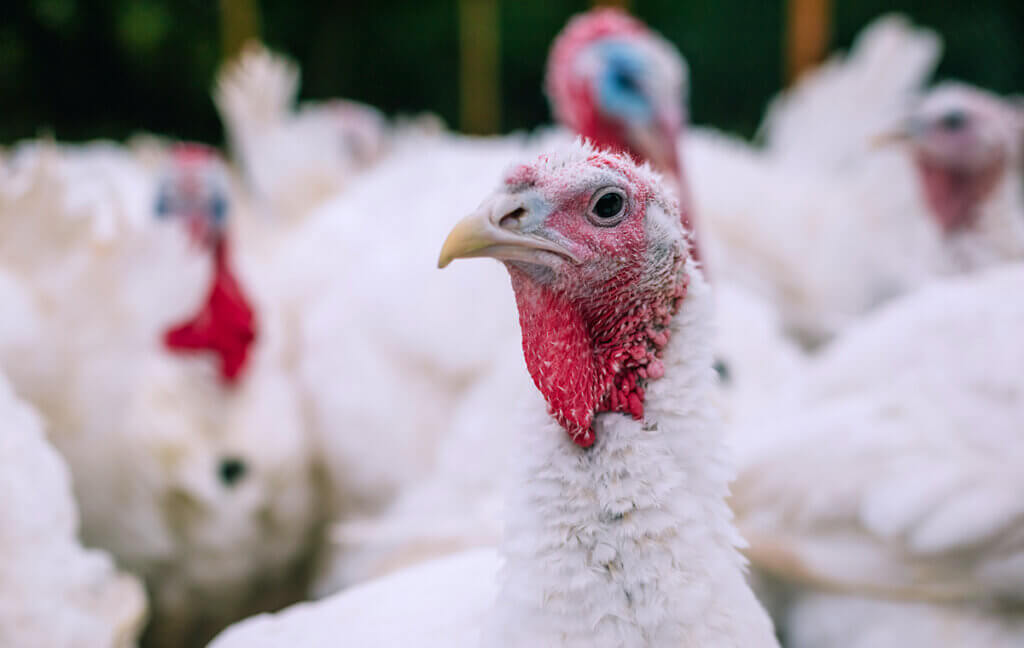
Even as poultry cases have ceased in Indiana as of March 2, Highly Pathogenic Avian Influenza (HPAI) continues to make headlines in other parts of the country. For Indiana, the outbreak dates back to February 7, 2022, when samples were collected from a commercial turkey flock in Dubois County and submitted to the Animal Disease Diagnostic Laboratory (ADDL) at the Purdue University College of Veterinary Medicine for testing. The testing was initiated after the birds in the affected barn began to appear lethargic and had markedly decreased water consumption followed by increased mortality.
The initial samples tested positive for avian influenza at the ADDL. Under standard protocols, those initial results were reported to the Indiana State Board of Animal Health (BOAH), which authorized prompt transport of the samples to the United States Department of Agriculture’s National Veterinary Services Laboratory in Ames, Iowa, where they were confirmed to be HPAI on February 9. This was the first report of HPAI in commercial poultry in the United States since 2020 and the first in Indiana since 2016.
Highly Pathogenic Avian Influenza has been a hot topic recently as more cases have been identified in both commercial and backyard poultry flocks. As of Wednesday, March 30, the USDA Animal and Plant Health Inspection Service (APHIS) confirmed the presence of HPAI in flocks in five other states, including a non-commercial, mixed-species backyard flock (non-poultry) in Berkshire County, Massachusetts; a non-commercial, mixed-species backyard flock (non-poultry) in Johnson County, Wyoming; a commercial poultry flock in Johnston County, North Carolina; a non-commercial, backyard chicken flock (non-poultry) in Franklin County, Ohio; and a non-commercial, backyard chicken flock (poultry) in Kidder County, North Dakota. Thankfully, there has not been a new case identified in Indiana since March 2.
So, what is Highly Pathogenic Avian Influenza? HPAI is an extremely contagious, multi-organ systemic disease of poultry often leading to death. The disease is caused by some subtypes of the type A influenza virus. Wild birds are common providers of test samples, as avian influenza circulates freely in those populations without any outward signs of sickness in the birds.
In Indiana, as of the end of March, there have been four confirmed infected commercial turkey flocks in Dubois County and two in Greene County, with the total number of infected birds amounting to 171,224 commercial turkeys. The control areas surrounding Dubois County sites have been lifted as of March 23, meaning the commercial farms with infected flocks are no longer under quarantine, weekly surveillance testing is no longer required, and movement permits have been eliminated.
The United States houses the strongest avian influenza surveillance program in the world, of which the ADDL at Purdue is an essential part. The USDA APHIS states, “With the recent detections of the Eurasian H5 strain of highly pathogenic avian influenza (HPAI) in wild birds and domestic poultry in the United States, bird owners should review their biosecurity practices and stay vigilant to protect poultry and pet birds from this disease.” Dr. Geoffrey Lossie, ADDL avian diagnostician, clinical assistant professor in the College of Veterinary Medicine’s Department of Comparative Pathobiology, and director of veterinary extension, who coordinated testing at ADDL during this year’s HPAI outbreak, provides valuable advice on the disease with recommendations for poultry farmers in handling suspected cases in their own flocks.
Q&A WITH DR. GEOFFREY LOSSIE
Is avian influenza communicable to humans?
Avian influenza is considered a zoonotic (disease transmitted from animals to humans), however each strain is different in terms of whether or not it may affect people. There have been no cases in humans associated with the current strain of HPAI, and the situation is monitored carefully by the Department of Health as part of the outbreak investigation. A statement by the USDA sums it up best, “According to the U.S. Centers for Disease Control and Prevention, the recent HPAI detections in birds do not present an immediate public health concern.”
How can one protect their flock?
The best thing to do is prevent interactions with wild waterfowl/shorebirds (the natural hosts for avian influenza). This goes as far as not frequenting places that waterfowl congregate such as public parks and fishing areas. Waterfowl hunting is also a high-risk activity, as those hunters could unknowingly bring back avian influenza to their flocks if they have them. I would also encourage poultry owners to keep all extraneous visitors, especially those with their own poultry, off their premises. Anytime someone interacts with your poultry, it’s a possible exposure event, so best not to let others interact with your poultry. It’s also important for poultry owners not to interact with other keeper’s birds. Owners should not share poultry equipment or tools between each other as these can act as “fomites”, inanimate objects that can harbor transfer of virus if it is present. These recommendations are part of what we call biosecurity. Click here to view additional information provided by the USDA on this topic.
Are suspected cases reportable to the USDA or respective state department of agriculture? How is that done?
The best contact is the state veterinary regulatory authority. In Indiana, for example, that would be the Indiana Board of Animal Health. I realize that it may be difficult to find which entity is the state veterinary regulatory authority. In Ohio, for example, the Ohio Department of Agriculture Division of Animal Health would be the agency to contact. There is a national toll-free number through USDA APHIS to call if you think your flock may have avian influenza: 1-866-536-7593.
What are symptoms to watch for?
With the current strain of HPAI that is circulating, the biggest thing to watch for is sudden death in your flock. HPAI can wipe out an entire flock in a short amount of time, with a majority of birds dying within 24-72 hours. Often times specific clinical signs are not noted before birds start dying. You might notice birds isolating themselves and they will likely stop eating and drinking, followed soon by birds beginning to die off.
Who can test for avian influenza, and is there any treatment?
Avian influenza can only be tested by a licensed veterinarian. As avian influenza is considered a foreign animal disease, it is vital that any suspected case be vetted by the state veterinary regulatory authority or the USDA. While private practitioners can be vital in reporting flocks that may be infected, you should not wait to see your regular veterinarian if you suspect your flock has avian influenza.
Unfortunately, there is no treatment for avian influenza, and any detection of the virus begins a rigorous state and federal response that requires depopulation of the affected flock. While this may seem harsh, it is the best way to keep this highly communicable disease in check and from spreading to additional poultry sites.
HELPFUL RESOURCES
Report dead poultry: Phone 1-866-536-7593
Report dead wild birds (5 or more): Phone 317-233-3293 or visit the Indiana Department of Natural Resources website for additional information.
For more information visit:
https://www.in.gov/boah/species-information/avianbirds/highly-pathogenic-avian-influenza/ https://www.in.gov/boah/files/SitUpdate9-CA-Release-3-23-22.pdf
