
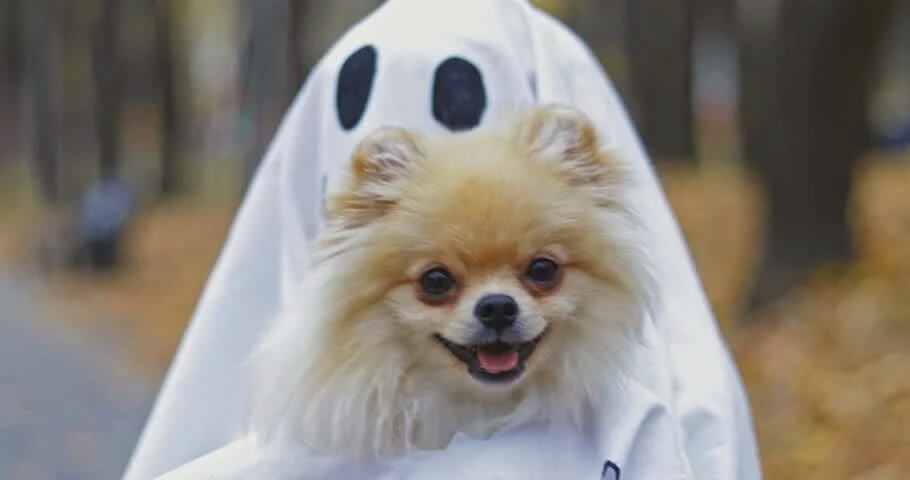
Halloween is an exciting time for children and parents alike, but it can be quite stressful for pets. Bags full of delicious candy, spooky costumes around every corner, and doorbells ringing over the sounds of scary movies on the TV all create the thrilling atmosphere of Halloween – but each of these factors can pose a threat to pets if not handled properly.
According to the American Animal Hospital Association (AAHA), pet owners should keep their furry friends safe each year on Halloween by being mindful of their F.E.A.R. – food, environment, attire, and recovery.
FOOD
It is commonly known that chocolate is dangerous for pets. But how much does it take to become toxic? According to Dr. Lorraine Corriveau, primary care clinician in the Purdue University Veterinary Hospital, it takes 8 ounces of sweetened chocolate and only 1.5 ounces of unsweetened chocolate to cause toxicity in a 10-pound dog. These amounts are even lower for cats. To lower the risk of your animal consuming sweet treats, keep bags and bowls of candy off the floor and out of reach of their sneaky paws.
If you believe your pet has consumed candy, contact your local veterinarian or the Animal Poison Control Center at 888-426-4435.
ENVIRONMENT
Ringing doorbells followed by a choral “Trick-or-Treat!” are a trademark of Halloween, but these constant noises may cause distress for pets. “Constant visitors to the door as well as the scary sights and sounds may cause some pets to become fearful. These pets could run away and become injured in a variety of ways,” said Dr. Corriveau. It may be best for your pets to spend the evening in a closed, comfortable room with their favorite toys to avoid escape or excessive barking throughout the night.
Decorations also pose a threat to pets as these furry friends may stumble into a tricky situation. “Wagging tails and curious cats can create a fire hazard, especially around candles in jack-o-lanterns and other decorative displays. Those decorations attract curious pets that can knock them over, causing burns and other damage.” Stringy decorations, such as faux cobwebs, may also be life threatening to pets; entanglement may result in a constricted airway or loss of circulation.
To prevent accidents, avoid placing any jack-o-lanterns, open candles, or stringy decorations in places that are easily accessible by your pets.
ATTIRE
Although our pets look adorable in Halloween costumes of their own, getting dressed up in costumes may frighten animals and cause them to behave strangely, including biting, barking, and even trying to escape. Costumes on pets also can be dangerous if they restrict movement or breathing with constrictive parts such as rubber bands.
To make your pets comfortable on Halloween, ensure their costume is free of any constrictive parts, or simply let them dress up in their “birthday suit!”
RECOVERY
Have a plan in case your pet consumes candy, gets injured, or escapes on Halloween – or any other day. Know the phone number and location of your local veterinarian along with their daily hours of operation. Not all veterinarians are available 24 hours a day. However, the Purdue University Small Animal Hospital Emergency Service takes emergencies 24 hours a day, 365 days a year.
You can contact the Emergency Service at 765-494-1107.
Dr. Corriveau works in the Veterinary Hospital’s Small Animal Primary Care Service, which provides full-service primary veterinary care to pets, emphasizing communication, education, and service to clients, while operating as a model of private small animal practice to allow veterinary medicine and veterinary nursing students to gain experience in primary veterinary care and client communication. The service provides veterinary care for dogs and cats as well as a variety of other exotic animal species including birds, fish, rabbits, ferrets, reptiles, and more.
