
2023 Indianapolis Prize Winner “Popi” Shares Penguin-related Conservation Lessons with PVM Students

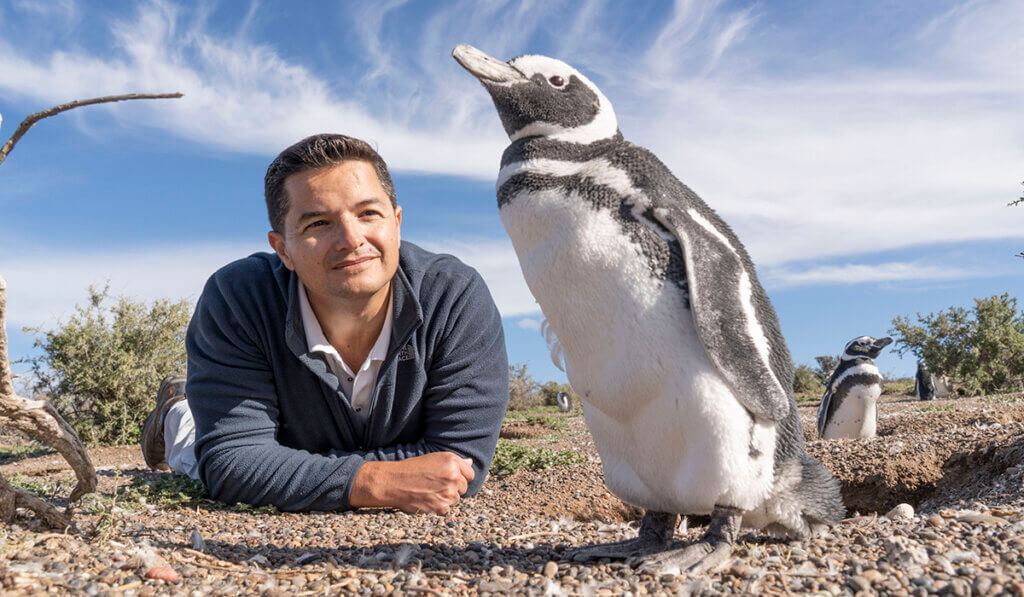
Dr. Borboroglu lays on his stomach on the ground smiling up at a penguin
Dr. Pablo Borboroglu, 2023 Indianapolis Prize Winner.

The Indianapolis Prize is the world’s leading award for animal conservation. Every two years, the world’s preeminent animal conservationists are celebrated and honored at the Indianapolis Prize Gala presented by Cummins Inc., which was held this year on Saturday, September 30. The next Monday, October 2, the winner of the 2023 Indianapolis Prize, Dr. Pablo Borboroglu, came to Lynn Hall to speak to the Purdue veterinary student body about his work to protect penguin species around the globe as the founder and president of the Global Penguin Society.

Dr. Borborgolu primarily works to improve penguin colony management by creating large areas of protected penguin habitat. Given his unwavering loyalty to his animals, his consistently encouraging spirit and his caring mentorship, it’s not surprising that Dr. Borboroglu goes by “Popi” for short.
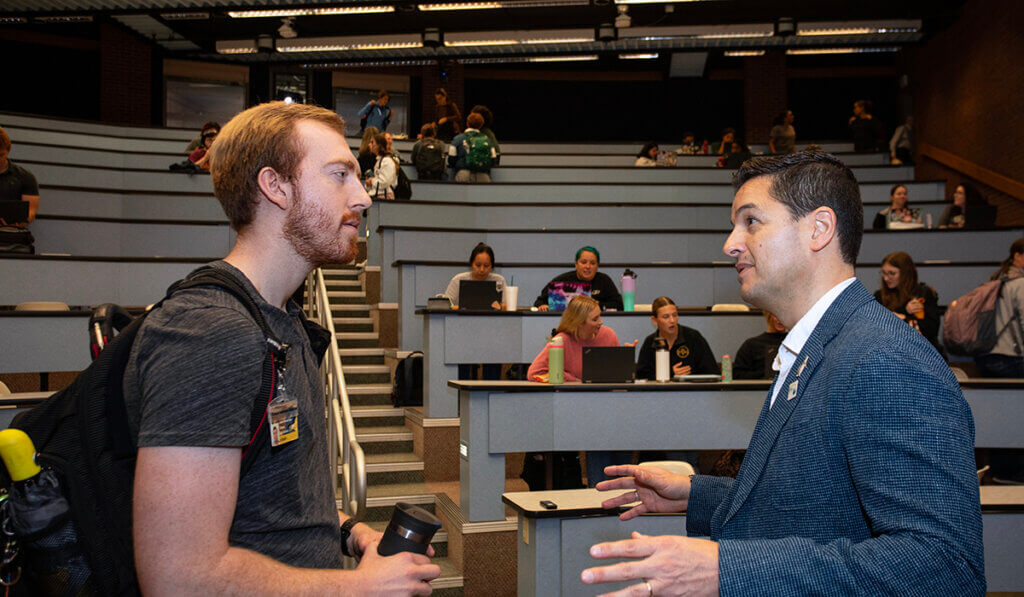
Liam and Dr. Borboroglu visit as students begin to clear out of the classroom
Dr. Borboroglu visits with first-year veterinary student Liam Quaas after the presentation.

“Every two years, the international conservation community turns its eyes toward Indianapolis for the awarding of the Indianapolis Prize,” said Dr. Rob Shumaker, president and CEO of the Indianapolis Zoo. “This event is a celebration of real-life heroes whose work makes a lasting impact on the future of our world.” This year, the hero soaring above the rest was Dr. Borboroglu, who was selected from a group of six finalists by a jury of distinguished scientists and conservation leaders to receive the Prize.

“I am incredibly grateful and honored to be named the 2023 Indianapolis Prize Winner,” said Dr. Borboroglu. “It’s a dream for conservationists. Receiving this award is validation that what you do is important. Wildlife conservation is critical for all of us because it helps us maintain the structure and function of the environment. This award provides motivation and more encouragement to continue pursuing my passion for protecting penguins.”

Dr. Borboroglu’s visit to Purdue as a guest speaker was arranged through a collaboration between PVM and the Indianapolis Zoo and attracted a capacity audience in Lynn 1136 with an overflow of students watching a livestream from a classroom below. Dr. Borboroglu’s passion for protecting penguins certainly shone through during the talk as he left attendees with heartwarming stories and the motivation to make their own impact on the world.
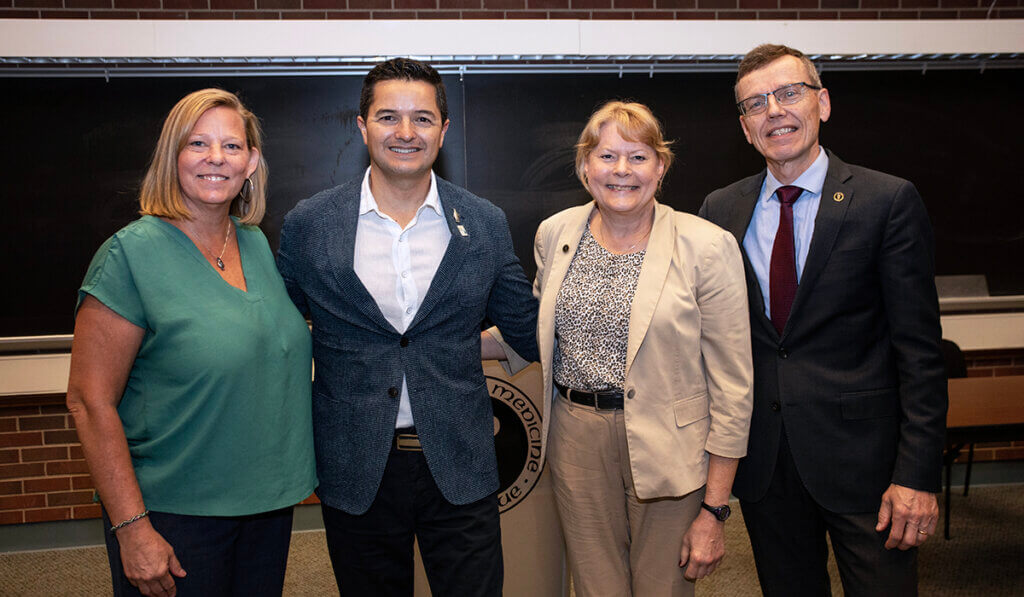
The group stand together smiling at the front of the classroom
Pictured left-right: Michelle Kolar, Indianapolis Zoo director of education and Marian L. McConnell Fellow, and 2023 Indianapolis Prize Winner Dr. Pablo Borboroglu with Dr. Kathy Salisbury, associate dean for academic affairs and Dr. Harm HogenEsch, associate dean for research, after Dr. Borboroglu’s lecture in Lynn Hall.

Dr. Borboroglu shared about the seeds that were planted very early in his life, which eventually blossomed into a successful career. It all began with his great-grandmother, who inspired him to pursue a career in education about protecting penguins after taking frequent excursions to the coast of his home country of Argentina to be surrounded by wildlife. As he grew into a teenager, oil spills began to plague the Argentinian coast, resulting in upwards of 40,000 penguin deaths per year in his region. To most, this was normal. To Dr. Borboroglu, this was heartbreaking – and he wanted to do something about it.

Dr. Borboroglu studied biological sciences at the National University of Patagonia and earned his PhD in marine biology from the National University of Comahue in Argentina with a specialization in sea birds and penguins. He is a researcher at Argentina’s National Research Council (CONICET) and an affiliate professor at the University of Washington. Now, after protecting over 32 million acres of marine and coastal areas, introducing more than 7,500 children to penguin colonies through an educational program, distributing 1,000 educational books for free in five Spanish-speaking countries, and benefiting over 2 million penguins through improved colony management and scientific implementation, Dr. Borboroglu can say his small steps have turned into giant leaps toward the protection of penguins and the education of thousands around the world.

Dr. Borboroglu concluded his presentation at Lynn Hall by leaving students with advice on how they – and everyone – can take small steps to protect penguins and oceans around the world: avoid single-use plastics, research supply chains of large companies and stop support of those with excess plastic use, and start conversations with others to spread the word on the importance of protecting our world.

Click here to learn more about the Global Penguin Society.

Click here to watch a recording of Dr. Borboroglu’s presentation at Purdue.
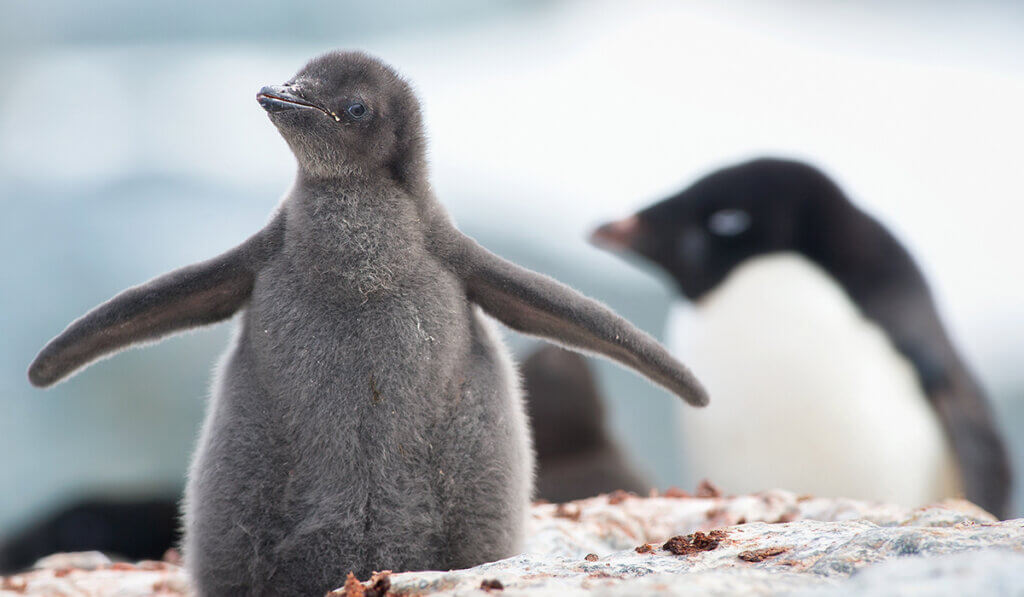
A gray fluffy baby penguin stands in the foreground with adult penguins in the background

Writer(s): Madeline Brod, communications intern | pvmnews@purdue.edu

Recent Stories

“Paws Up” – brought to you by the PVM Wellness Committee

This week our gratitude goes to Andrea Kellogg, who is the director of Lifelong Learning.

Purdue Veterinary Students Get Up Close View of Veterinary Care at Professional Bull Riding Event

During a weekend dedicated to championship-level competition, students from the Purdue University College of Veterinary Medicine gained a first-hand perspective on a unique aspect of the livestock industry with a behind-the-scenes pass to the Professional Bull Riding event held recently in Indianapolis.  Ram Trucks PBR Indianapolis presented by Cooper Tires was held at Gainbridge Fieldhouse March 21-22, even as first- and second-round NCAA Men’s Basketball Tournament games were held across the country the same weekend.

In Memory – Professor Emeritus of Veterinary Physiology Gerald Bottoms

The Purdue Veterinary Medicine community is deeply saddened to learn that Dr. Gerald D. Bottoms, a longtime faculty member and Professor Emeritus of Veterinary Physiology, passed away on February 24, 2026.  He was 95.

PVM Scholars Recognized at Purdue One Health and Well-Being Research Event

Purdue University’s recent One Health and Well-Being Research Event: A Celebration of Interdisciplinary Health Research, put the spotlight on several scholars in the College of Veterinary Medicine.  The one-day event was organized by the College of Health and Human Sciences in partnership with several other colleges including Purdue Veterinary Medicine. It is estimated that more than 300 people attended the event at the Purdue Memorial Union North and South Ballrooms March 10.

In Memory – Dr. Jeffrey Hanssen (PU DVM ’71)

The College of Veterinary Medicine mourns the passing of an alumnus and longtime practitioner from Greenfield, Indiana. Dr. Jeffrey Hanssen died March 12, 2026, at Brandywine - Brickyard Healthcare Center in Greenfield. He was 71.

Beautiful Spring Lilies Pose Serious Danger to Cats

Spring weather heralds the arrival of the beautiful blooms of true lilies (Lilium sp.) and daylilies (Hemerocallis sp.). Unfortunately, many cats have been poisoned by these lovely plants. The poisoning is so severe and the possible consequences so dire (even death) that in 2021, the FDA issued this warning: “Lilies in the “true lily” and “daylily” families are very dangerous for cats. The entire lily plant is toxic: the stem, leaves, flowers, pollen, and even the water in a vase. Eating just a small amount of a leaf or flower petal, licking a few pollen grains off its fur while grooming, or drinking the water from the vase can cause your cat to develop fatal kidney failure in less than 3 days. The toxin, which only affects cats, has not been identified. Dogs that eat lilies may have minor stomach upset but they don’t develop kidney failure.”

Through study abroad opportunities, Purdue’s Veterinary Technology Distance Learning program is helping students think globally

Promoting animal health is a value that transcends cultures and unites the world. That’s why there are veterinary professionals practicing in nearly every country around the globe. But access to high-quality, affordable veterinary care is far from universal — in many nations, particularly developing nations, access to veterinarians is inconsistent, and affordability is a concern all over the world. To confidently address these issues, veterinary professionals must be able to think globally. That’s why Purdue Veterinary Medicine encourages students to study abroad, including those in the Veterinary Technology Distance Learning Program (VTDL). “Study abroad enriches our online curriculum by bringing classroom concepts to life in a global, real-world context,” said Addison Sheldon, the college’s director of global engagement. The VTDL program offers students the option to study abroad in Guatemala, Japan and Zimbabwe by partnering with local universities and organizations.

Public Invited to Learn about Veterinary Medicine at 2026 PVM Open House April 18

The Purdue University College of Veterinary Medicine will welcome the public for its annual Spring Open House at Lynn Hall on Saturday, April 18, 2026. Scheduled from 9:00 a.m. to 4:00 p.m., the event will feature a hands-on look at the world of veterinary medicine.

Annual Purdue Veterinary Technician Symposium Remains Popular in 12th Year

The enduring popularity of the annual Purdue Veterinary Technician Symposium was evident again this spring as more than 125 participants turned out for the day-long continuing education program in Lynn Hall. The 12th annual symposium on Sunday, March 8, attracted attendees from Indiana and seven other states, including Illinois, Michigan, Wisconsin, South Carolina, Pennsylvania, Alabama and Ohio.

Ruby’s Road to Recovery

When Ruby first came to the Purdue University Veterinary Hospital, she was just nine months old, and her injuries were more complex than when they first appeared. Ruby is a toy poodle and over a month earlier, while playing, she jumped off a couch and fractured both of her front legs. Despite several weeks of treatment with splints and casts, her legs were not healing properly. She had surgery performed on both her front legs and received a bone graft to help speed up the healing process. With meticulous surgical aftercare and a planned series of rechecks, Ruby began her journey to recovery.
