
A Helmet That Fits: Making Equine-Assisted Services Safer for Participants
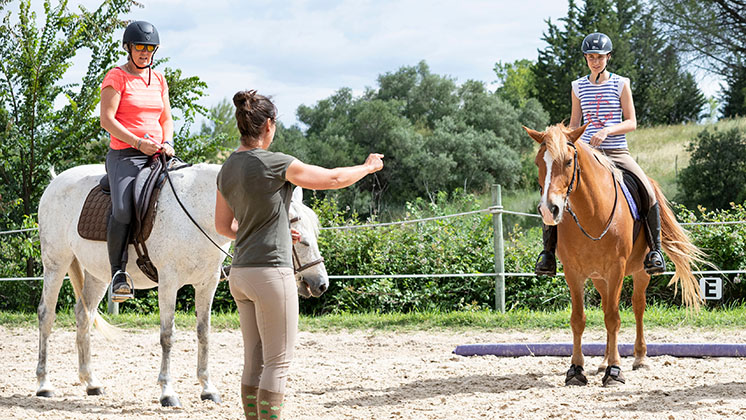
Helmets are critical for safety when interacting with horses (both during groundwork and riding), but there’s a problem: the standard helmet isn’t made for everyone. A new study focused on equine-assisted services (EAS) highlights how something as basic as a poorly-fitting helmet can limit access to services.
The Study
Researchers surveyed 201 Certified Therapeutic Riding Instructors and other EAS facilitators regarding their experiences of fitting helmets for their EAS participants.
Results showed that instructors faced obstacles when fitting helmets to individuals with:
- Physical disabilities
- Religious head coverings
- Protective hairstyles
- Sensory challenges
Because of these obstacles, 37.8% of programs had to modify or limit activities, and 6.5% had to turn participants away altogether.
Researchers suggest that the problem lies in equestrian helmet design and testing standards, which rely on fixed headforms that don’t account for different head shapes, sizes, or real-world conditions. Sports like football and cycling have already made advances to overcome these obstacles including custom padding to accommodate various hairstyles, readily available MIPS® technology that reduces concussion risk during angled impacts, and better guidance on fit from helmet manufacturers.
Findings call upon the need for:
- More helmet sizes and shapes (especially XXS and XXL)
- Designs that work with assistive devices and different hair types and textures
- Clearer safety guidance on what can be worn under helmets (e.g., religious head coverings, protective hairstyles)
- Inclusive testing methods that simulate real-world situations
Safety Shouldn’t Be a Privilege
Whether it’s a child with sensory challenges, a veteran with PTSD, or an individual wearing a protective hairstyle, everyone deserves the chance to work with the horses safely and confidently.
Read the Research Paper
This article was based on the research of Dr. Leanne Nieforth and the HAPI lab. Read the research:
Suggested Articles

Can Animals Help Military Families Thrive?
Explore how animal-assisted interventions, including equine-assisted services and service dogs, support military families by improving emotional connections, resilience, and communication amidst unique challenges.

How PTSD Service Dogs Are Transforming Military Family Life
Learn how PTSD service dogs transform military family life by alleviating stress, building emotional resilience, and fostering togetherness, despite challenges like caregiving responsibilities.
The Growing Global Landscape of Human-Animal Interaction Centers
Explore the rapid growth of human-animal interaction (HAI) research from 2016 to 2021, focusing on global collaboration, educational integration, and advancing the well-being of humans and animals alike.
