
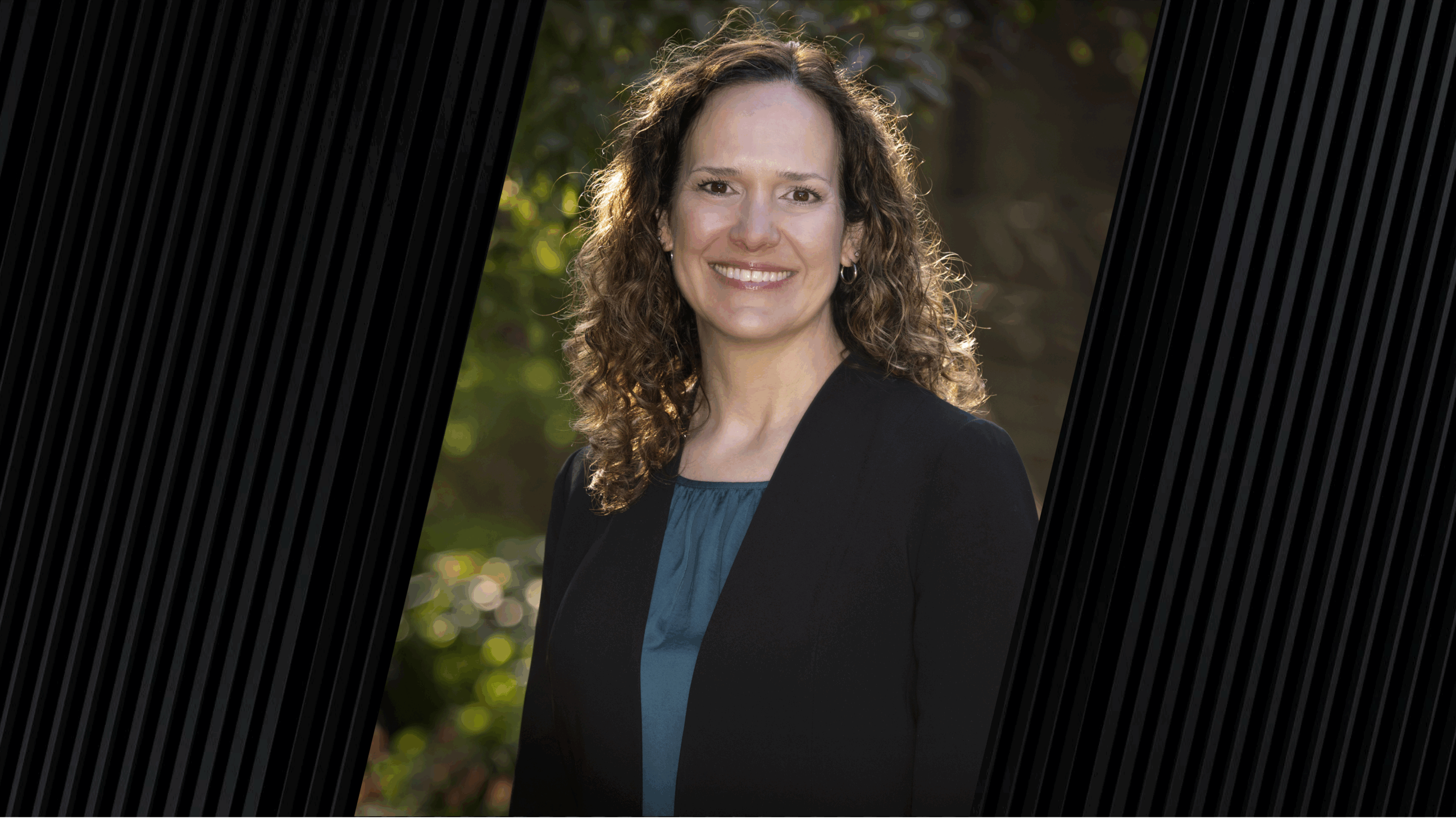
PVM Leader Lends Voice to the “Why I Give” Component of Purdue’s United Way Campaign

A professional headshot of a smiling individual with curly hair, set against a blurred natural background.

Giving is personal. So, several Purdue University faculty and staff are supporting the Purdue United Way Campaign by sharing their personal reasons for why they give.  Among those who have provided answers to that question is Purdue Veterinary Medicine faculty member and administrator Dr. Kenitra Hendrix.

Students, staff and faculty know Dr. Hendrix as a clinical professor in the Department of Comparative Pathobiology and the associate dean for the veterinary diagnostic laboratories.  But another important dimension of her life involves her commitment to a local organization that played a pivotal role in helping her through a time of personal crisis.  The organization is YWCA Greater Lafayette, and the crisis is part of her answer to “Why I Give.”

“Nine years ago, a case advocate in YWCA Greater Lafayette’s Domestic Violence Intervention and Prevention Program (DVIPP) helped me obtain a protective order—giving me the support I needed to safely leave an abusive marriage,” Dr. Hendrix shared. Now she seeks to ensure that the crucial help she received remains available to others in need.  

Her commitment to helping others through YWCA Greater Lafayette is expressed in multiple ways, including by giving her time.  “I joined the YWCA board of directors in 2023 because I want to help ensure that the services that helped me find my safety and freedom are available for others who need them for many years to come.”

While Dr. Hendrix is glad when people support the Purdue United Way Campaign in any way and with a donation of any amount, her encouragement for people to remember YWCA Greater Lafayette is heartfelt.  “If you choose to donate to the United Way campaign, please consider designating part—or all—of your gift to YWCA Greater Lafayette. Your support can help someone else find safety, hope, and a path forward.”

Now three weeks into the Purdue United Way campaign, support for the university’s community-focused fundraising effort is escalating.  Already, Purdue Veterinary Medicine is more than half-way to the college’s goal of raising $20,000 for Purdue United Way, with $11,182 contributed.  The university as a whole has raised more than $308,500 toward its goal of $700,000.

This year’s theme is “Local Giving. Lasting Impact.” Participation is the key, so peoples’ responses count, whether the choice is to give or to simply indicate that they do not wish to give.

To respond, simply

  • Click on the link for Purdue United Way
  • Choose “Give Now” or “I Don’t Wish to Give”
  • Log in, using your Purdue career account and authentication
  • If you want to give, select from the options, which include payroll deduction (begins Jan 2026), credit card, or other giving choices.

For instructions to give to your local United Way if you live outside of Greater Lafayette, just contact Angela Pickett, executive assistant to the dean and PVM’s United Way Champion. You can view the list of partner agencies your Purdue United Way campaign donation can support through United Way of Greater Lafayette or United Way of Central Indiana. Click here to view the “Purdue United Way – Why I Give” page.

Writer(s): Kevin Doerr | pvmnews@purdue.edu

Recent Stories

Purdue Veterinary Medicine’s Connection with Wildlife Rescue in Guatemala Highlighted during International Education Week

Hidden amid the dense forests near the shores of Lake Petén Itzá, the ARCAS Wildlife Rescue Center is one of Central America’s most active sanctuaries for endangered and trafficked wildlife. In addition to their conservation efforts, ARCAS (Asociación de Rescate y Conservación de Vida Silvestre) offers unparalleled hands-on experience for veterinary and biology students from around the world. The Purdue University College of Veterinary Medicine has proudly collaborated with ARCAS for many years, and International Education Week this week (November 16-22) provided the perfect opportunity to showcase this invaluable educational partnership.

Immersive Mixed Reality Experience Helps Purdue Veterinary Students Learn Cardiac Physiology

First year Doctor of Veterinary Medicine students at the Purdue University College of Veterinary Medicine recently stepped into a new era of learning — an immersive Mixed Reality (MR) experience at Purdue’s Envision Center. This cutting-edge session allowed students to interact with a dynamic, 3D representation of the heart, deepening their understanding of cardiac physiology in ways traditional methods cannot match.

Feathered Fame: Purdue Veterinary Medicine Research Featured on Journal Cover

The Department of Veterinary Clinical Sciences (VCS) at Purdue University is proud to announce that a recent study from its anesthesiology team has been selected as the cover feature for Veterinary Sciences (MDPI), Volume 12, Issue 11. Chosen from among 82 articles, the publication highlights the College of Veterinary Medicine’s growing impact in avian clinical research.

“Paws Up” – brought to you by the PVM Wellness Committee

Time to shine a spotlight on some “paws-itively” amazing work by one of our newest Purdue Veterinary Medicine staff members, Jennifer Hartman, VCS Curriculum Technologist in the Department of Veterinary Clinical Sciences.

“Paws Up” – brought to you by the PVM Wellness Committee

Today we are highlighting Rebecca Hoffman, BS, RVT, who is a veterinary technologist with the Bovine Field Service.

Learning Specialist Joins PVM Student Success Center Team

Purdue Veterinary Medicine’s Student Success Center is pleased to welcome Kelsey Luse Spille, who joined the team Monday, November 4, as a learning specialist.  In her new role, she will be supporting students with their academic needs while also serving as a member of the Veterinary Education Support Team (VEST), which assists faculty in developing inclusive teaching practices.

Purdue College of Veterinary Medicine Hosts Reception to Welcome New Dean Bret Marsh

Faculty, staff and students gathered at a reception in the Veterinary Medical Library Friday, November 8, to help extend a warm welcome the new dean of the Purdue University College of Veterinary Medicine, Dr. Bret Marsh.  The event marked the conclusion of the first week on the job for Dr. Marsh, who just started in the role Monday, November 4, after wrapping-up 30 years of service as Indiana State Veterinarian – the state’s top-ranking animal health leader.

Awareness Week to Shine Spotlight on Antimicrobial Resistance Next Week

Antimicrobial resistance (AMR) is a growing, significant One Health issue across the world. The WHO estimates that AMR was directly responsible for 1.27 million global deaths and contributed to 4.95 million deaths, with additional significant economic costs. AMR affects all countries and all income groups, and to tackle this urgent problem, researchers, producers, and practitioners from all areas must address the critical shortage of new antimicrobial drugs, and the use of antimicrobial drugs in medicine, farming, and industry. The week of November 18-24 is US Antibiotic Awareness Week and World AMR Awareness Week, and the College of Veterinary Medicine is taking advantage of these national and global campaigns to raise awareness about AMR and antimicrobial stewardship, and to highlight some of the research and practices being conducted at the college to address AMR.

PVM Faculty Honored for Research Success with Purdue Seed for Success Acorn Awards

When Purdue University’s Office of Research honored the accomplishments and innovative ideas of a host of researchers this week, several Purdue Veterinary Medicine scholars were among those recognized. At a ceremony Wednesday, November 14, in the Purdue Memorial Union North and South Ballrooms, the annual Seed for Success Acorn Awards were presented to Purdue Principal Investigators (PIs) and co-PIs who secured research awards of $1 million or more for a single proposal in fiscal year 2024.

Unlocking the Mysteries of the Brain

Despite more than six decades of research in the field of neuroscience, many functions of the brain — the most complex organ in the human body — remain a mystery. Recent research conducted in the Purdue University College of Veterinary Medicine and the Bindley Bioscience Center revealed that scientists are one step closer to understanding the process that activates and deactivates specific proteins within our cells. This breakthrough could one day lead to enhanced treatments that may slow down or perhaps reverse the advance of neurogenerative diseases such as Alzheimer’s, Parkinson’s and multiple sclerosis.