
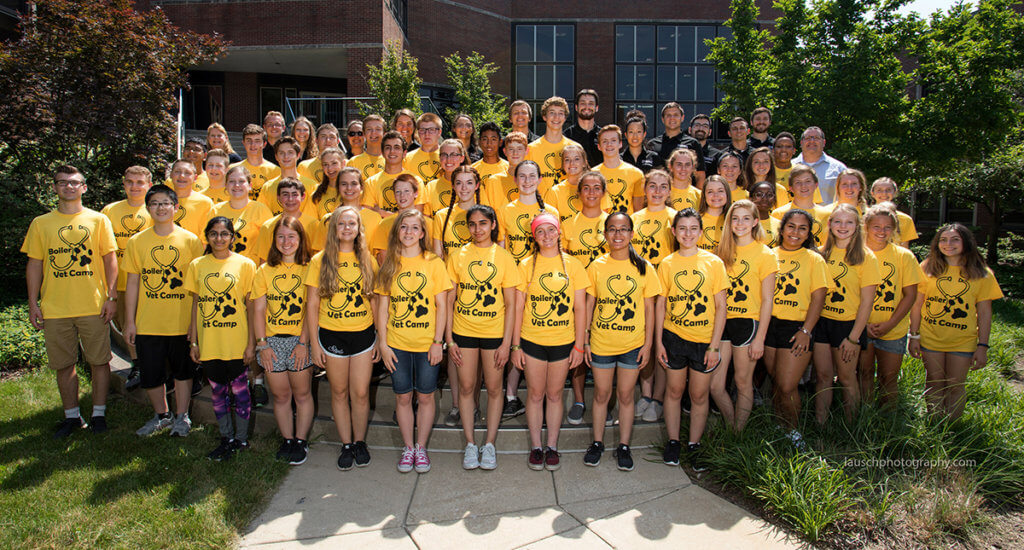
Over the course of the last two weeks, Purdue Veterinary Medicine hosted 100 campers to give them a first-hand look into the world of veterinary medicine. Unique in Indiana due to its week-long immersive, in-residence format, Boiler Vet Camp (BVC) provides participants with a preview of the roles of veterinary healthcare professionals through the contributions of a strong, broad team of faculty and staff with diverse representation, and dedicated 2nd and 3rd year DVM student camp counselors. BVC opens the pipeline between the college and young people by fueling the campers’ interests and getting them thinking at an early age about their future careers.
The 11th annual Junior Camp, June 10-17, welcomed 8th and 9th graders who aspire to be in the field of veterinary medicine. The campers participated in a week’s worth of hands-on learning sessions including: “Cud It Out,” “Dissecting to the Heart of It,” “Fish Need Doctors Too,” “After They Are Gone,” “Welcome to the Blood Bank,” and “From Our Farm to Yours,” which highlighted the different roles veterinarians and veterinary nurses can play. They also got to visit the Indianapolis Zoo for a behind the scenes tour and Fair Oaks to explore the Dairy Farm and Pig Adventure areas. The Indiana Board of Animal Health also engaged with the students in an interactive session about regulatory veterinary medicine titled, “The Amazing Trace.” The grand finale of the busy week occurred when the campers gave team presentation to their families, fellow campers, and counselors about a real case that the campers had to evaluate and determine the appropriate treatment. This closing ceremony was titled, “Follow the Clues.”
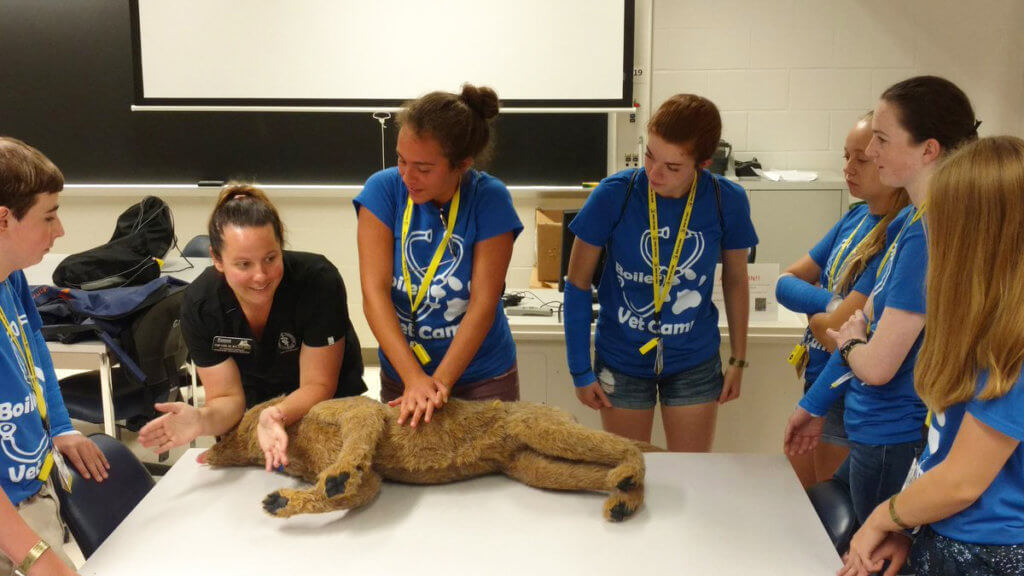
ICU/ECC Technologist Supervisor Tami Lind helps senior campers practice “staying alive” while sticking to the beat as they learn how to properly administer CPR.
Diving right into the next camp, the Boiler Vet Camp team checked-in 50 senior campers on Sunday, June 17, for an exciting week focusing on dogs! The 9th annual Senior Boiler Vet Camp was open to high school students in grades 10-12. This year, BVC had 29 Indiana residents participate, with the remaining campers traveling from Arizona, California, Illinois, Maryland, Massachusetts, North Carolina, New Jersey, Puerto Rico, Pennsylvania, Texas, Tennessee, and Virginia. The camp is centered on teaching the campers about the overall wellness care of dogs, especially those that come from a humane society, and the roles of veterinarians and veterinary nurses in preparing dogs for adoption. To help learn about the various aspects of wellness care of shelter animals, teams of campers cared for 10 dogs brought in by the Clinton County Humane Society and the Animal Welfare League of Montgomery County. Throughout the week, campers learned dog behavior and training techniques, performed physical exams, practiced life-saving skills, and learned about diagnostic blood work and the art of surgery. The campers also got to visit the Humane Society of St. Joseph County in South Bend, Ind., to learn the ins-and-outs of running a large-scale animal shelter. Purdue Veterinary Medicine alumna Carol Ecker (PU DVM ’64), who has retired from her position as medical director of the humane society, and her veterinary team met with the campers to teach about their roles in working with pets at a large shelter and the veterinary care animals receive in anticipation of them finding new homes.
During the closing ceremony, the 50 campers gave a special presentation to demonstrate what they had learned throughout the week. Boiler Vet Camp Student Director Brent Unruh, of the DVM Class of 2020, commented that his favorite part of the whole program is, “The last day when the campers can’t hide their excitement, and the bittersweet moment of them being homesick but wanting to stay.” By the end of the program, campers are able to take-away an understanding of the breadth of the profession and available career opportunities. The exposure helps the campers know what they truly want to do with their lives and if this is the right field for them. Dr. Jim Weisman, assistant dean for student affairs, who serves as the overall camp director, expressed his hope that, “I would like to spread and expand our camps, but we have to be respectful of our resources. The important point is we are cultivating the next generation of veterinary professionals and for me, being involved in that through these camps is an awesome experience.”
