
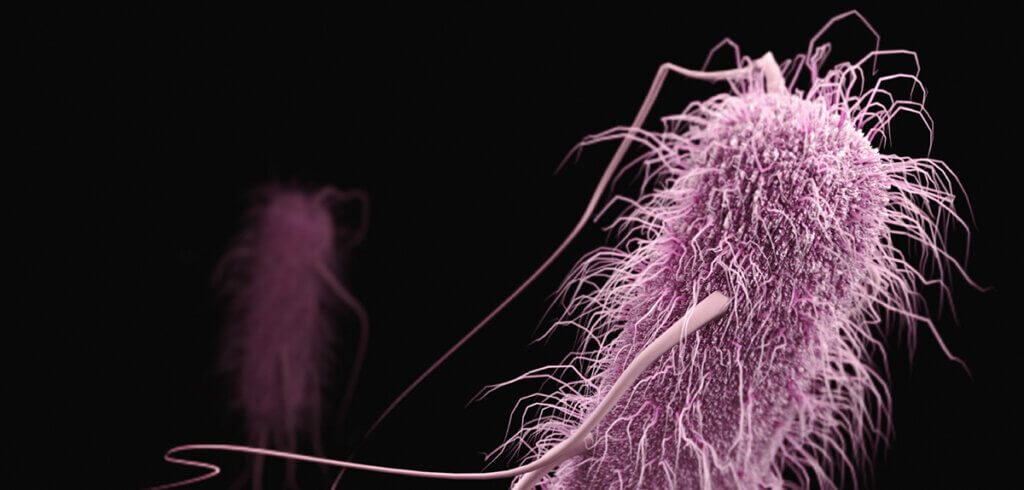
Combating the threat of Antimicrobial Resistance (AMR) will be the focus of a two-day conference next month on Purdue University’s West Lafayette, Indiana campus. Organized by faculty and staff in the College of Veterinary Medicine with additional support from the Colleges of Agriculture, Pharmacy, Engineering, and Science, the event February 27-28 will feature speakers from multiple disciplines.
Regarded as a significant public health threat globally, AMR involves multi-drug resistant infections that are predicted to only worsen over time (United Nations Foundation, 2021). In 2019, the U.S. Centers for Disease Control and Prevention (CDC) reported that more than 2.8 million cases of antibiotic-resistant infections occur annually in the U.S., resulting in 35,000 deaths (CDC, 2019). Increased incidence of hypervirulent and multidrug-resistant (MDR) bacterial pathogens has been attributed to the use, overuse, and misuse of antibiotics (FAO, 2016). However, AMR is a complex problem at the intersection of human, animal, and environmental health (“One Health”) that can only be addressed through a multidisciplinary approach.
The Purdue AMR Conference will feature three sessions, each covering an AMR-related area: Determinants, Dynamics, and Deterrence. Each session will feature a keynote speaker followed by three additional speakers who will highlight their work in AMR.
The conference will begin with Noelle Noyes, DVM, PhD, associate professor in the Department of Veterinary Population Medicine at the University of Minnesota, who will serve as the keynote speaker on Determinants. Dr. Noyes is a veterinary epidemiologist with diverse research interests including antibiotic resistance, microbial ecology, livestock production microbiomes, metagenomics, antibiotic use in veterinary medicine, bioinformatics, and statistics.
The next topic on the agenda is Dynamics, which will feature a keynote presentation by Paul Plummer, DVM, PhD, associate professor of veterinary diagnostic and production animal medicine at Iowa State University. Dr. Plummer’s clinical specialty is internal medicine and infectious disease of ruminants. He is the principal investigator leading an independent extramurally funded research laboratory with a significant focus on zoonotic pathogens of livestock; antimicrobial resistance, stewardship, and use; and livestock welfare. Dr. Plummer also serves as the executive director of the National Institute of Antimicrobial Resistance Research and Education (NIAMRRE), housed at the Iowa State University Research Park.
The conference will conclude with the session on Deterrence. Elizabeth Dodds Ashley, PharmD, MHS, FCCP, FSIDP, BCIDP will serve as the keynote speaker. Dr. Dodds Ashley is an associate professor of medicine with the Division of Infectious Diseases and International Health at Duke University. She serves as the director of operations and liaison pharmacist for the Duke Antimicrobial Stewardship Outreach Network (DASON). She earned her Doctor of Pharmacy degree from the Bouvé College of Pharmacy and Health Sciences at Northeastern University in Boston, Massachusetts, graduating Summa Cum Laude. She subsequently completed her pharmacy practice residency through the Duke University Health System and a specialty residency in adult internal medicine and infectious disease with the Duke University Health System and Campbell University before joining the Department of Medicine at the Duke University Medical Center. In 2006, she completed her master’s in health science in clinical research at the Duke University School of Medicine.
Antimicrobial stewardship has been the focus of Dr. Dodds Ashley’s clinical and research activities for nearly 20 years. Her experience includes managing antimicrobial stewardship programs at large academic medical centers as well as collaborating and guiding programs for small community hospitals and healthcare systems.
The conference also will include a poster session on research in antimicrobial resistance. There will be two divisions – one for undergraduate students and one for graduate/professional students. Each division will award prizes for first place ($300) and second place ($150).
The inaugural Purdue Antimicrobial Resistance Conference was held April 6-7, 2023 and attracted more than 100 attendees representing eleven states and seven countries.
