
Purdue Equine Hospital Team Comes to Aid of Horse Injured in Severe Storm in Michigan

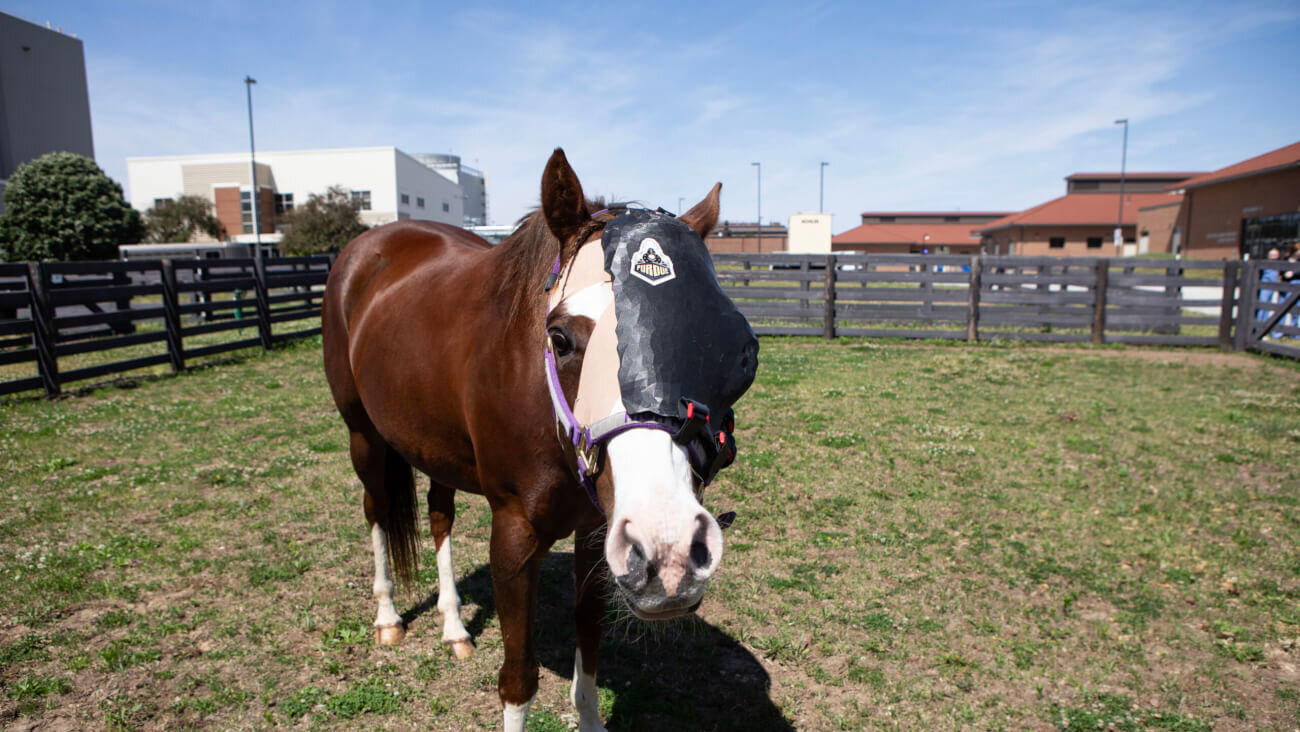
A horse is pictured wearing a mask that covers some of the face in order to protect it after suffering injuries from a storm
Sassy, a Quarter-Horse from Michigan, wears her custom 3D-printed mask to protect her eye as it heals after being injured in a severe storm.

For a horse named Sassy, Purdue Veterinary Medicine’s Brunner Equine Hospital proved to be the right place at the right time to recover from a scary accident that happened during a severe storm in Michigan two weeks ago.  According to Dr. Danielle Cucuzella, Purdue visiting assistant professor of large animal surgery, the Quarter Horse named Sassy was seriously hurt during near 100 mile-per-hour winds where she lived in Saint Louis, Michigan. 

“Due to severe trauma to Sassy’s face, skull, sinuses, and left orbit [eye socket] after being struck by a fallen tree limb during the storm, Sassy was seen by her local veterinarian and then referred and hospitalized for emergency stabilization by our colleagues at Michigan State University,” Dr. Cucuzella explained. Initial evaluation and x-rays showed severe fractures to multiple bones of her skull and face. “Additional imaging in the form of CT was recommended in order to more precisely map the damage,” Dr. Cucuzella said. Once she was stable enough for travel, Sassy was sent to Purdue where a standing CT of her head and neck were performed in the Brunner Equine Hospital.
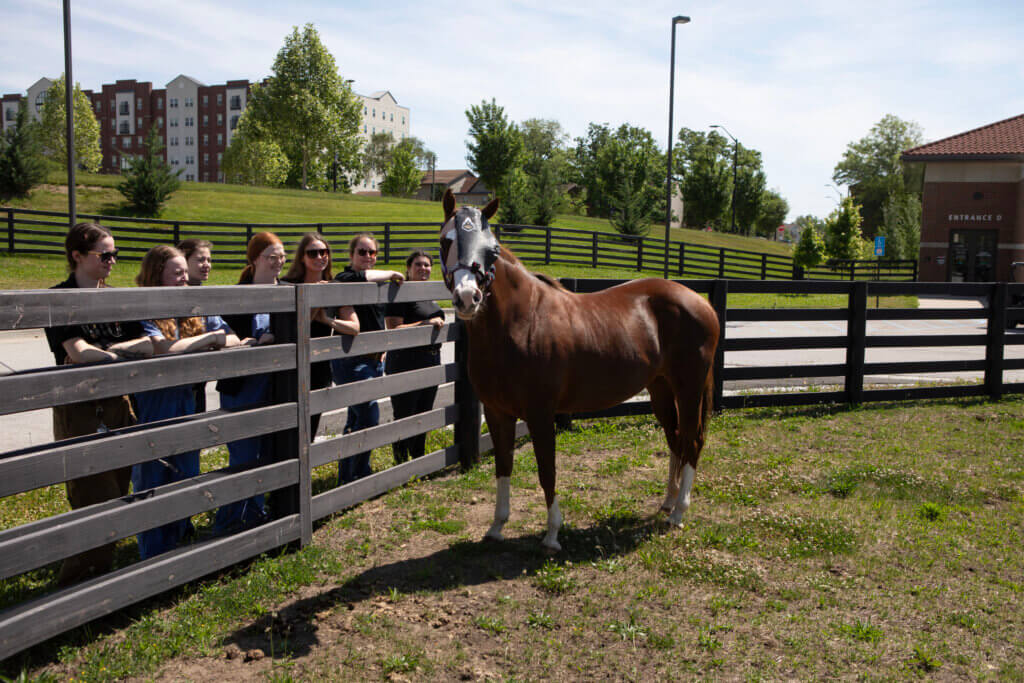
A group of equine veterinary medicine staff stand next to a horse, with a brown fence between them
The Purdue University Veterinary Hospital Equine Surgery team looks on as Sassy takes her first steps outdoors wearing her protective mask Friday, May 29.

“This scan unfortunately showed that there was much more extensive damage deeper in the skull, including multiple fractures of her orbit that were in danger of damaging her globe [eyeball] or optic nerve at any time if displaced,” Dr. Cucuzella shared. “This would result in Sassy losing her vision or her eye completely. For that reason, it was decided to pursue additional protective measures. Sassy’s CT was used to build her a 3D-printed reconstruction external fixation helmet to protect her eye and other important structures during healing.”

Together, the large animal surgery, diagnostic imaging, and ophthalmology services worked with the help of expertise from Purdue’s School of Aeronautics and Astronautics to 3D print Sassy a protective helmet that would hopefully prevent her fractured bones from dislodging and causing further complications, and allowing them time to heal.
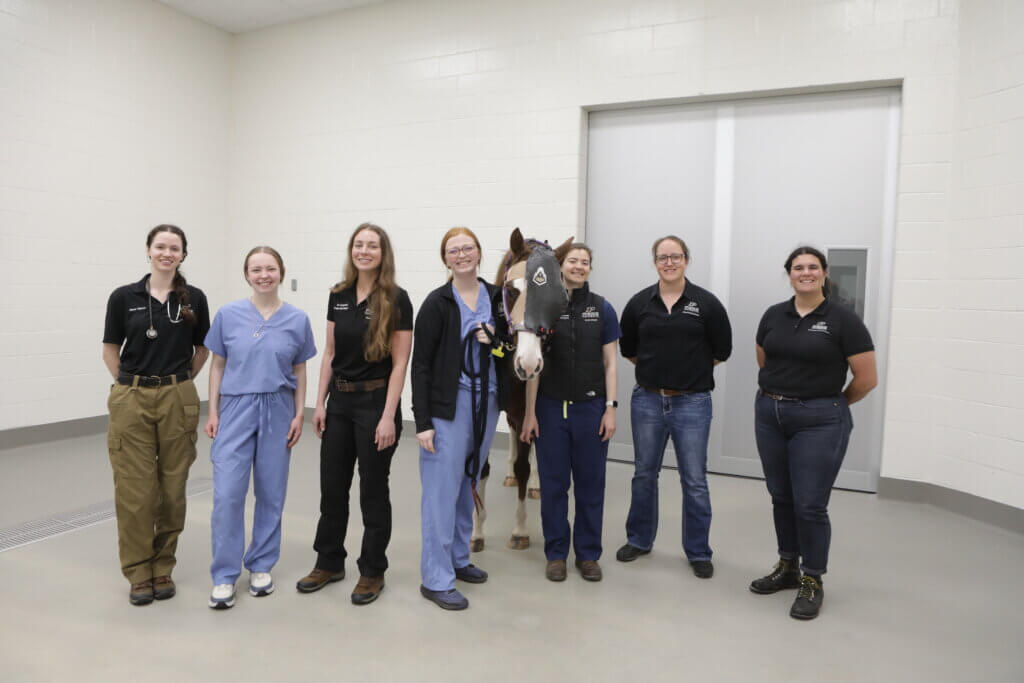
A large group of veterinary medicine professionals are standing in a white room with a horse.
Sassy with her Equine Surgery Team in the Brunner Equine Hospital (l-r): Emma Zaicow, third-year veterinary student; Sarah Larsen, veterinary assistant, large animal; Dr. Danielle Cucuzella, visiting assistant professor of large animal surgery; Micah Black, veterinary assistant, large animal surgery; Dr. Alexandra Usimaki, large animal surgery resident; Dr. Michelle Tucker, assistant professor of large animal surgery; and Ece Inanc, graduate research assistant.

The helmet has the appearance of a black mask that covers just the side of her face that was injured, giving her a Phantom of the Opera-esque look, and she wore it without objection as she recovered at the Equine Hospital.  With the recovery progressing smoothly, Sassy was released from the hospital Monday, June 1, to go home with her owner to continue recovering there.

“She has a great prognosis for survival, and with the addition of our 3D printed helmet, she also now has a good prognosis for maintaining her vision and hopefully can soon get back to the young child who rides her,” Dr. Cucuzella said. 

Sassy’s treatment proved to be a total team effort that even linked veterinary medicine and engineering, with the guidance of Dr. Michelle Tucker, assistant professor of large animal surgery, who also holds an engineering degree and works with 3D printing as part of her research. And just in time to help with Sassy’s care and treatment, she added a new research team member, Ece Inanc, a graduate research assistant currently working toward earning a PhD from the School of Aeronautics and Astronautics in Purdue’s College of Engineering. 
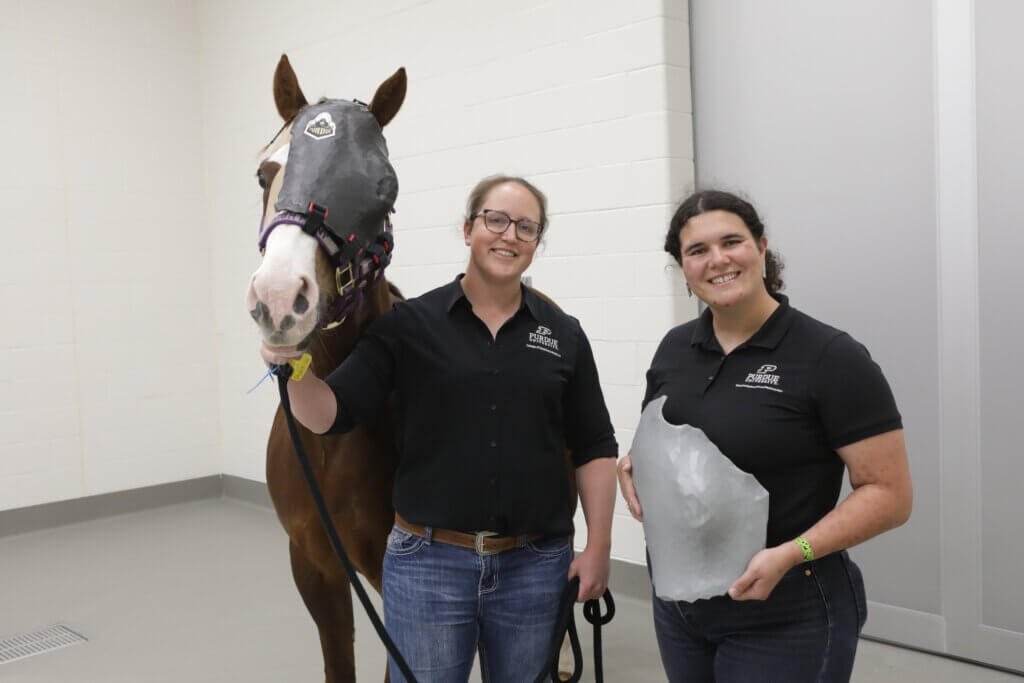
Two people are standing next to a horse. The person on the far right is holding a piece of medical equipment and the horse is wearing a recovery mechanism on its face
Dr. Michelle Tucker, engineer and board-certified large animal surgeon, and her graduate research assistant, Ece Inanc, show one of the 3-D printed masks they prepared for Sassy.

A big thank you to PVM’s Equine Surgery team for providing excellent care and treatment of Sassy, who hopefully will once again be able to carry her young rider at her home in Michigan.

Writer(s): Kevin Doerr | pvmnews@purdue.edu

Recent Stories

Purdue Veterinary Medicine Welcomes New Clinical Residents and Specialty Intern

A new class of clinical residents arrived this summer at the Purdue University College of Veterinary Medicine to begin their specialty training. On July 16, 2026, the Department of Veterinary Clinical Sciences (VCS) held a welcome breakfast to introduce the new VCS residents to faculty and staff. The breakfast provided the opportunity for the new residents and a new specialty intern in neurology to meet current VCS residents, as well as the faculty and staff they will be working closely with during their time at Purdue.

American Board of Veterinary Toxicology Honors Purdue Professor and ADDL Senior Veterinary Toxicologist Steve Hooser

Dr. Steve Hooser, DVM, PhD, DABVT, professor of veterinary toxicology at the Purdue University College of Veterinary Medicine and senior veterinary toxicologist for the Indiana Animal Disease Diagnostic Laboratory (ADDL), has received the American Board of Veterinary Toxicology's (ABVT) 2026 Service Award.  Given in recognition of a career that has shaped the field of veterinary toxicology for more than four decades, the award was announced July 13 at the ABVT Annual Business meeting held in Anaheim, California, in conjunction with the AVMA Convention 2026.

New Class of Veterinary Hospital Interns and Pharmacy Resident Welcomed to PVM

A total of 13 new interns and a new veterinary pharmacy resident began their advanced training in the Purdue University Veterinary Hospital this summer. The group of interns includes nine veterinarians who are completing a small animal rotating internship and four who are doing a large animal rotating internship. In addition, a pharmacy school graduate began the one year Wasson Veterinary Pharmacy Residency program, which is jointly offered by the Purdue Colleges of Veterinary Medicine and Pharmacy.

“Paws Up” for Lilia Beal-Preston and Mikey Galvin – brought to you by the PVM Wellness Committee

This week, we’re proud to recognize DVM students Lilia Beal-Preston and Mikey Galvin, who received a Paws Up recognition from a client after caring for the client's dog at the Purdue University Veterinary Hospital.

“Paws Up” for Jennifer Danaher – brought to you by the PVM Wellness Committee

Today we are congratulating Jennifer Danaher, who is a department secretary for Veterinary Clinical Sciences, for being recognized as a helpful colleague in our college.

Boo the Miracle Dog: A Story of Bravery, Breakthroughs, and a Bond That Inspires

Our series of articles about animals and their owners who've found help and healing at the Purdue University Veterinary Hospital continues with the story of "miracle dog" Boo Davis. At 13 years old, Boo Davis is living proof of the power of persistence, expert veterinary care, and the unshakable love between a pet and her person. Affectionately known as Lisa’s “miracle dog,” Boo’s journey is one that not only has extended her life, but also has helped shape the future of cancer treatment for other pets, too.

Placating Pets to Help them COPE this Fourth of July

Despite the excellent tips experts provide each year for pet safety and welfare on the 4th of July, many pet families still run into trouble and lose their pets. What are we missing and how can we even better protect our animal companions? That question is answered in an article by Dr. Candace Croney, director of the Center for Animal Welfare Science.