
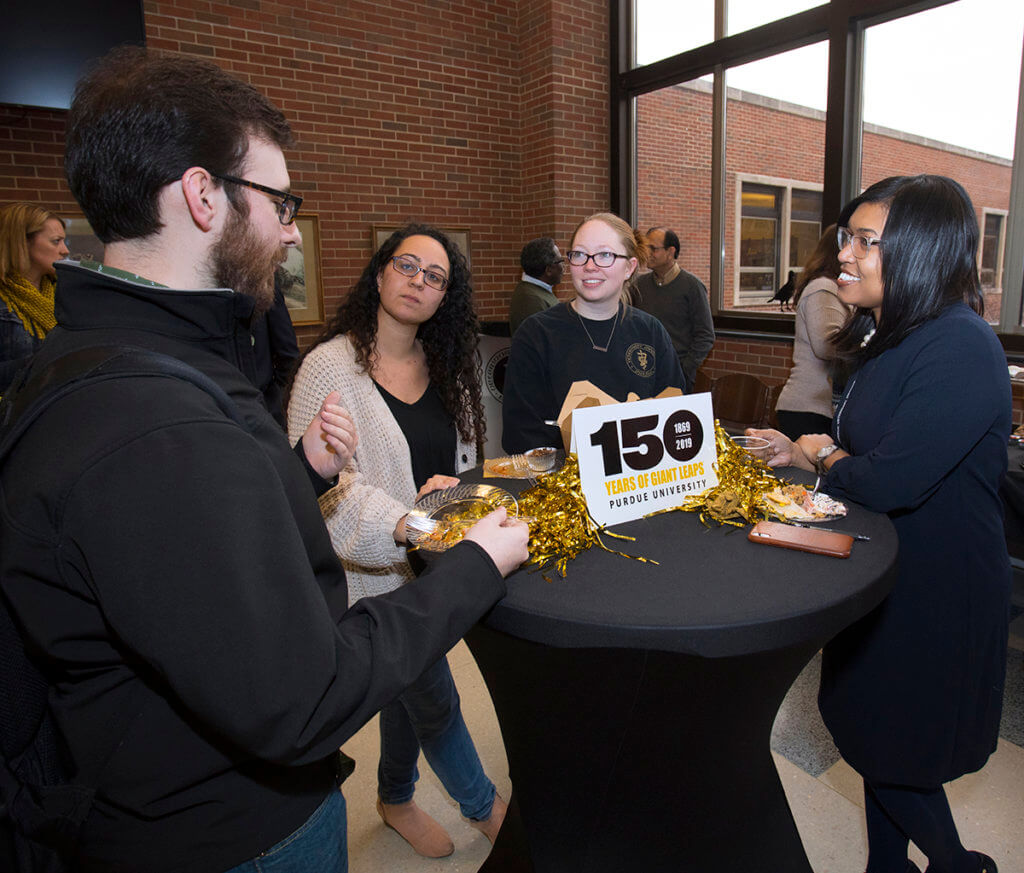
Veterinary students (left-right) Joe Devereaux, Jessica Linder, and Sara Canada, all of the DVM Class of 2020, help welcome Dr. Latonia Craig as the College of Veterinary Medicine’s new assistant dean for diversity and inclusion during a reception in the Continuum Café January 9. 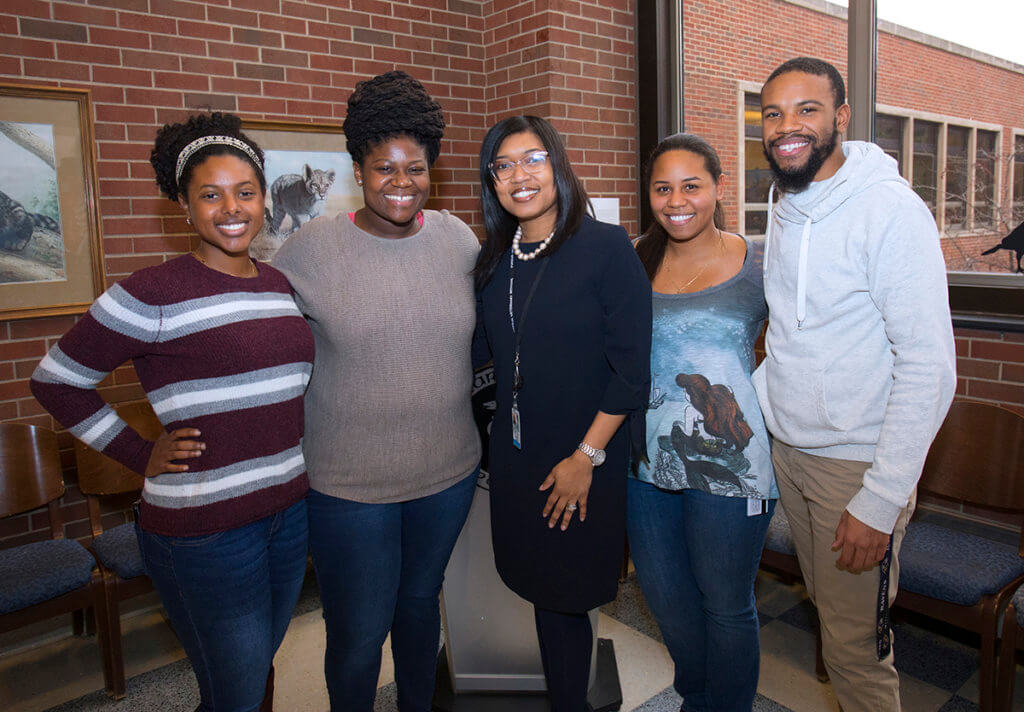
New Assistant Dean for Diversity and Inclusion Latonia Craig (center) with Purdue veterinary students (left-right) Asia Fernandez (DVM Class of 2020), Kristal Spann (DVM Class of 2021), Destiny Evans (DVM Class of 2020), and Edris Grate (DVM Class of 2021). 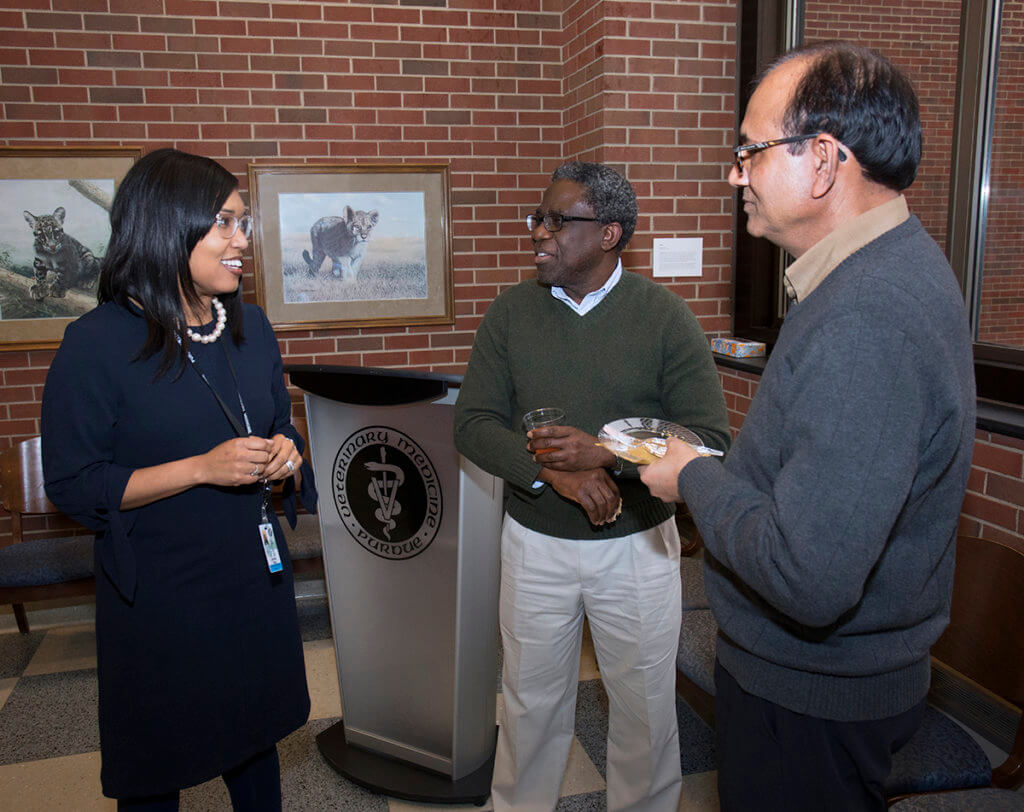
Dr. Latonia Craig visits with Dr. Eli Asem (center), professor of physiology in the Department of Basic Medical Sciences, and Dr. Suresh Mittal, Distinguished Professor of Virology in the Department of Comparative Pathobiology during the welcome reception.
Purdue Veterinary Medicine faculty, staff, and students joined Dean Willie Reed in extending a warm welcome to Dr. Latonia Craig as the College’s new assistant dean for diversity and inclusion at a reception held in her honor Wednesday, January 9, in the Continuum Café. Dr. Craig comes to Purdue from the University of Louisville, where she served as director of graduate recruitment and diversity retention. She also has more than ten years of experience as an instructor in the University of Louisville’s Department of Pan-African Studies, teaching a course on cultural diversity. Her first day on the job in Lynn Hall was Tuesday, January 2.
“What attracted me to Purdue’s College of Veterinary Medicine was the groundwork already established in the area of diversity and inclusion,” Dr. Craig explained. “I was equally impressed with the vested interest of faculty, staff, and students. The intentionality and programmatic efforts happening in the College speaks volumes about the direction, and with some continued momentum I think it can only go up from here.”
Dr. Craig received a bachelor’s degree in political science and a master’s in Pan-African studies from the University of Louisville, a master’s in educational leadership from the University of Cincinnati, and a doctor of education from Spalding University in Louisville. Dr. Craig then returned to the University of Louisville as associate director of graduate admissions and diversity recruitment before being promoted to her most recent position in July 2017. Additionally, Dr. Craig served as chair of both the Strategic Planning Committee and the Diversity Committee in the University of Louisville’s School of Interdisciplinary and Graduate Studies and as the commissioner of the university’s Commission on Diversity and Racial Equality.
Dean Reed said in Dr. Craig’s new role at Purdue, she will be responsible for providing administrative leadership for diversity and inclusion in the College of Veterinary Medicine and implementing the College’s Diversity and Inclusion Plan. “The PVM family has welcomed me with open arms and I am so grateful for the relationships already established. I am looking forward to the work we produce together in the very near future,” Dr. Craig said. Her office is located in Lynn 2133, or she can be reached at craig84@purdue.edu or by phone at extension 61908. If you didn’t have a chance to do so at the reception, please help extend a warm PVM welcome to Dr. Craig!
