
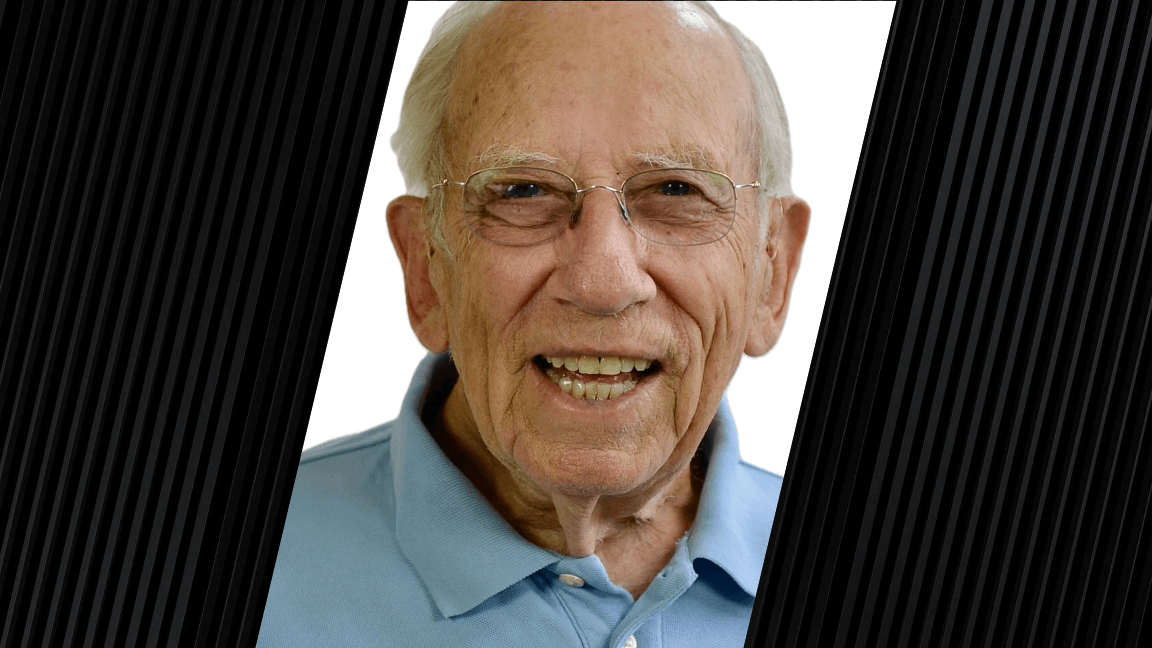
In Memory – Professor Emeritus of Veterinary Physiology Gerald Bottoms

A portrait of a man wearing a blue shirt and glasses

The Purdue Veterinary Medicine community is deeply saddened to learn that Dr. Gerald D. Bottoms, a longtime faculty member and Professor Emeritus of Veterinary Physiology, passed away on February 24, 2026.  He was 95.  

Raised in the small farming community of Holdenville, Oklahoma, Dr. Bottoms joined the Oklahoma National Guard at the age of 16, when he was a high school sophomore.  He served in the Korean Conflict as a Sergeant First Class and earned a Bronze Star for his meritorious service. As a result of serving in the military, he was able to use the GI Bill to fund his education.

Dr. Bottoms pursued a career dedicated to education. He earned his bachelor’s degree in biology at East Central Oklahoma State University (now East Central University) in 1955, and went on to receive his master’s and PhD degrees in physiology at Oklahoma State University in 1959 and 1966 respectively. Along with his wife Maxine, he taught at Holdenville High School from 1955 to 1963. After earning his PhD, he joined the Purdue University College of Veterinary Medicine faculty in 1966 as an assistant professor in what was then the Department of Physiology and Pharmacology (now part of the Department of Basic Medical Sciences). He also served as an assistant dean of the Graduate School. 

During his Purdue career, Dr. Bottoms authored numerous published articles, lectured internationally, obtained extensive research grants and mentored graduate students. His outstanding service was recognized when he received the college’s Alumni Faculty Award for Excellence. Upon retirement in 1998 he was honored with the title of Professor Emeritus of Veterinary Physiology.  

In 2009, Dr. Bottoms shared an oral history, which is part of the Purdue University Libraries Archives and Special Collections.  The 55 minute interview and a transcript are available here.  As part of the interview, Dr. Bottoms recalled when he first visited Purdue on what he described as a beautiful day in February 1966. “It was cool and crisp and the sun was shining and I had a great visit to Purdue. I met Dr. [Gerald] Goetsch, who was the head of the department at that time, and spent a lot of time with him and other members of the department. Things just really looked very nice at Purdue – the campus is beautiful, and the …veterinary school was very new at that time…”  He remembered calling his wife, Maxine, and sharing how much he liked things, explaining to her, “…if they offer me a job, I think we should seriously consider it.”  Within a few weeks he was offered a position, and so began a Purdue career that would span 32 years. 

After retiring, Dr. Bottoms settled in Cedar Hill, Texas, where he continued to live life fully. Beyond his academic achievements and military honors, Dr. Bottoms was regarded as an incredible handyman and mechanic – there was little he couldn’t fix. He also had a passion for flying and became a private pilot, which gave him both freedom and joy in the skies.

In his oral history, Dr. Bottoms shared that he was able to take flight lessons at the Purdue airport.  “And I guess, one of the happiest days of my life…was the day that I soloed,” Dr. Bottoms said. “My wife and my mother-in-law were there…they had happened to just come up to watch me fly. We are standing at the airport and some of my children, they saw me solo and so that was the highlight in my career.” Dr. Bottoms said he used his flying skills a lot and he described flying as “…the best therapy in the world.”

A proud father and a devoted grandfather, Dr. Bottoms, above all, loved life. He enjoyed travel, cherished his children and family, and found joy in spending time with loved ones.  He is remembered for his warm smile that could light up a room, and his gentle spirit that left a lasting impression on everyone who knew him.

Dr. Bottoms will be deeply missed, lovingly remembered, and ever honored by those whose lives he touched.

In 2002, Dr. and Mrs. Bottoms created the “Gerald and Maxine Bottoms Graduate Research Assistantship” to support doctoral graduate research assistants who show an interest in basic medical sciences at the College of Veterinary Medicine. The family asks that gifts in Dr. Bottoms’ memory be made to the fund.

Writer(s): Kevin Doerr | pvmnews@purdue.edu

Recent Stories

“Paws Up” – brought to you by the PVM Wellness Committee

This week our gratitude goes to Andrea Kellogg, who is the director of Lifelong Learning.

Purdue Veterinary Students Get Up Close View of Veterinary Care at Professional Bull Riding Event

During a weekend dedicated to championship-level competition, students from the Purdue University College of Veterinary Medicine gained a first-hand perspective on a unique aspect of the livestock industry with a behind-the-scenes pass to the Professional Bull Riding event held recently in Indianapolis.  Ram Trucks PBR Indianapolis presented by Cooper Tires was held at Gainbridge Fieldhouse March 21-22, even as first- and second-round NCAA Men’s Basketball Tournament games were held across the country the same weekend.

PVM Scholars Recognized at Purdue One Health and Well-Being Research Event

Purdue University’s recent One Health and Well-Being Research Event: A Celebration of Interdisciplinary Health Research, put the spotlight on several scholars in the College of Veterinary Medicine.  The one-day event was organized by the College of Health and Human Sciences in partnership with several other colleges including Purdue Veterinary Medicine. It is estimated that more than 300 people attended the event at the Purdue Memorial Union North and South Ballrooms March 10.

In Memory – Dr. Jeffrey Hanssen (PU DVM ’71)

The College of Veterinary Medicine mourns the passing of an alumnus and longtime practitioner from Greenfield, Indiana. Dr. Jeffrey Hanssen died March 12, 2026, at Brandywine - Brickyard Healthcare Center in Greenfield. He was 71.

Beautiful Spring Lilies Pose Serious Danger to Cats

Spring weather heralds the arrival of the beautiful blooms of true lilies (Lilium sp.) and daylilies (Hemerocallis sp.). Unfortunately, many cats have been poisoned by these lovely plants. The poisoning is so severe and the possible consequences so dire (even death) that in 2021, the FDA issued this warning: “Lilies in the “true lily” and “daylily” families are very dangerous for cats. The entire lily plant is toxic: the stem, leaves, flowers, pollen, and even the water in a vase. Eating just a small amount of a leaf or flower petal, licking a few pollen grains off its fur while grooming, or drinking the water from the vase can cause your cat to develop fatal kidney failure in less than 3 days. The toxin, which only affects cats, has not been identified. Dogs that eat lilies may have minor stomach upset but they don’t develop kidney failure.”

Through study abroad opportunities, Purdue’s Veterinary Technology Distance Learning program is helping students think globally

Promoting animal health is a value that transcends cultures and unites the world. That’s why there are veterinary professionals practicing in nearly every country around the globe. But access to high-quality, affordable veterinary care is far from universal — in many nations, particularly developing nations, access to veterinarians is inconsistent, and affordability is a concern all over the world. To confidently address these issues, veterinary professionals must be able to think globally. That’s why Purdue Veterinary Medicine encourages students to study abroad, including those in the Veterinary Technology Distance Learning Program (VTDL). “Study abroad enriches our online curriculum by bringing classroom concepts to life in a global, real-world context,” said Addison Sheldon, the college’s director of global engagement. The VTDL program offers students the option to study abroad in Guatemala, Japan and Zimbabwe by partnering with local universities and organizations.

Public Invited to Learn about Veterinary Medicine at 2026 PVM Open House April 18

The Purdue University College of Veterinary Medicine will welcome the public for its annual Spring Open House at Lynn Hall on Saturday, April 18, 2026. Scheduled from 9:00 a.m. to 4:00 p.m., the event will feature a hands-on look at the world of veterinary medicine.

Annual Purdue Veterinary Technician Symposium Remains Popular in 12th Year

The enduring popularity of the annual Purdue Veterinary Technician Symposium was evident again this spring as more than 125 participants turned out for the day-long continuing education program in Lynn Hall. The 12th annual symposium on Sunday, March 8, attracted attendees from Indiana and seven other states, including Illinois, Michigan, Wisconsin, South Carolina, Pennsylvania, Alabama and Ohio.

Ruby’s Road to Recovery

When Ruby first came to the Purdue University Veterinary Hospital, she was just nine months old, and her injuries were more complex than when they first appeared. Ruby is a toy poodle and over a month earlier, while playing, she jumped off a couch and fractured both of her front legs. Despite several weeks of treatment with splints and casts, her legs were not healing properly. She had surgery performed on both her front legs and received a bone graft to help speed up the healing process. With meticulous surgical aftercare and a planned series of rechecks, Ruby began her journey to recovery.

Third Antimicrobial Resistance Conference Brings Interdisciplinary Scholars Together at Purdue

Attendance figures for Purdue University’s third Antimicrobial Resistance Conference demonstrate increasing interest in the event’s interdisciplinary approach to the topic that the World Health Organization (WHO) identifies as one of the top global public health and development threats. The conference last month at Purdue’s Stewart Center featured distinguished keynote speakers and Purdue scholars from a variety of disciplines who shared the latest research findings and insights regarding the challenges posed by antibiotic resistance.