
Immersive Mixed Reality Experience Helps Purdue Veterinary Students Learn Cardiac Physiology

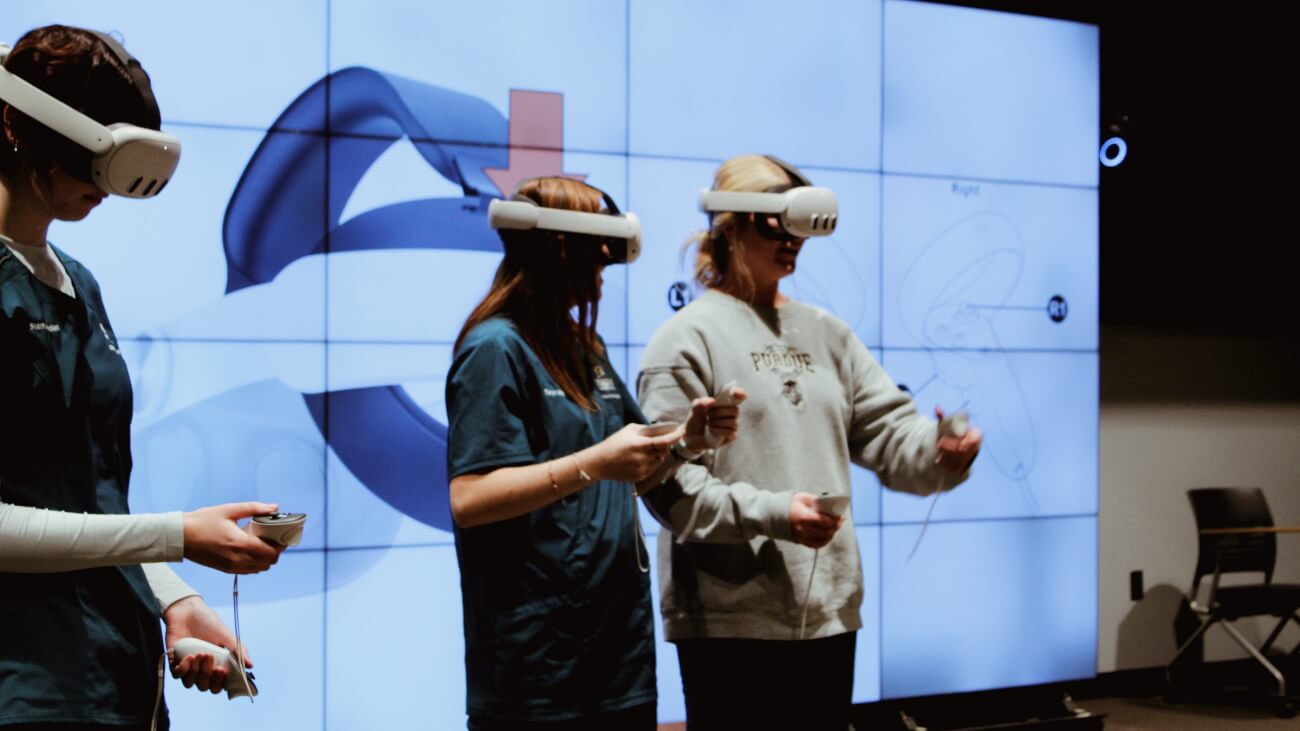
Mixed reality technology enabled first-year veterinary students at Purdue’s College of Veterinary Medicine to learn about cardiac physiology through an immersive experience.

First year Doctor of Veterinary Medicine students at the Purdue University College of Veterinary Medicine recently stepped into a new era of learning — an immersive Mixed Reality (MR) experience at Purdue’s Envision Center. This cutting-edge session allowed students to interact with a dynamic, 3D representation of the heart, deepening their understanding of cardiac physiology in ways traditional methods cannot match.
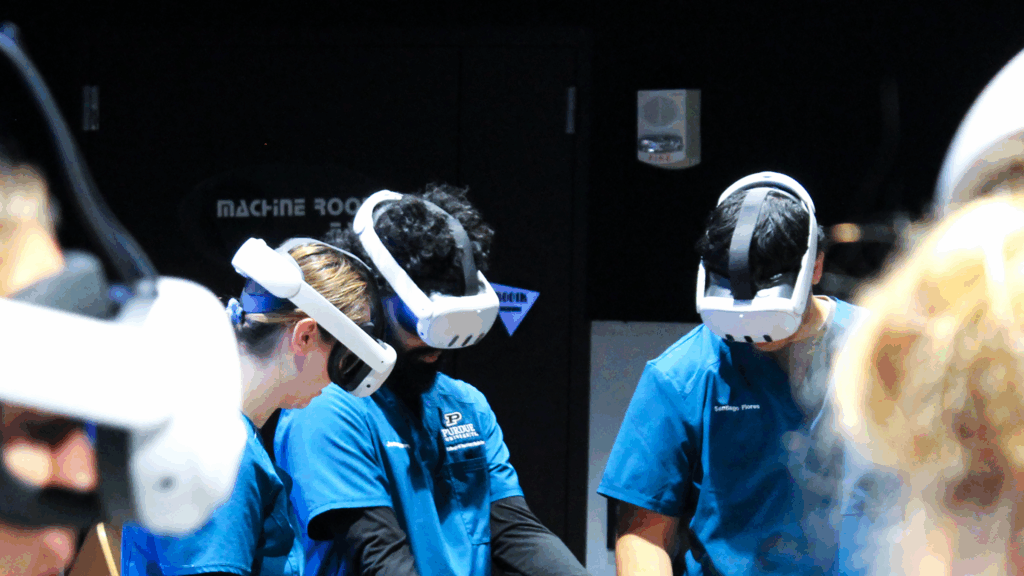
Veterinary students wear mixed reality headsets to learn about cardiac physiology at Purdue's Envision Center.
Veterinary students wear mixed reality headsets to learn about cardiac physiology at Purdue’s Envision Center.

The initiative is part of CollabXR, a program dedicated to creating next generation extended reality experiences for academic use. Purdue Veterinary Medicine’s Basic Medical Sciences Department together with the Envision Center participated in the project, in partnership with the Purdue Innovation Hub. The project exemplifies how technology and education can converge to enhance learning.

Earlier this year, Purdue nursing students piloted the same simulation under the guidance of Dr. Amy Nagle, clinical associate professor in the School of Nursing. That success paved the way for veterinary students to experience this innovative approach, reinforcing Purdue’s commitment to immersive learning across disciplines. 
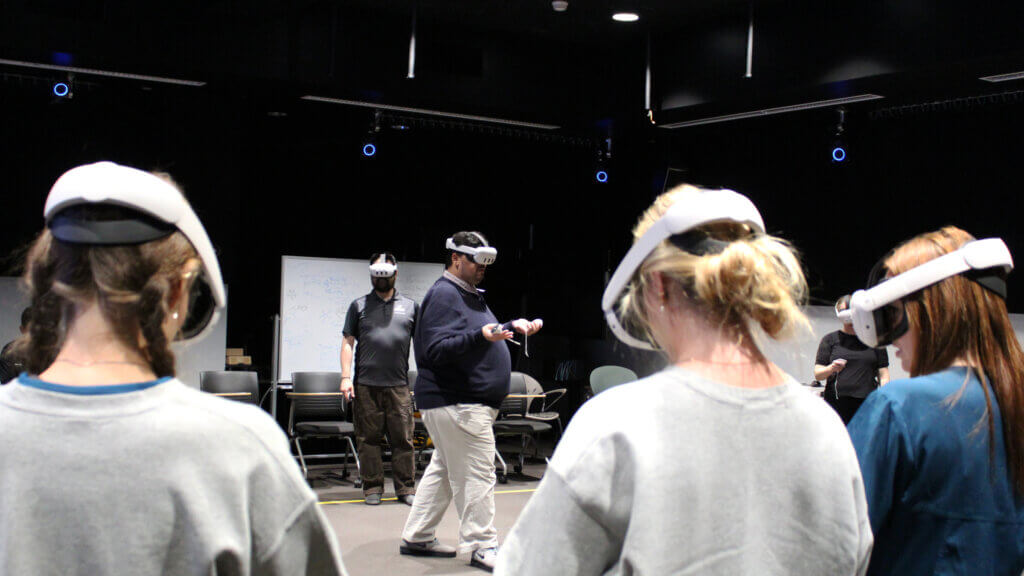
Dr. Dielson da Silva Vieira, clinical assistant professor of basic medical sciences, instructs students in this new way of studying cardiac physiology.
Dr. Dielson da Silva Vieira, clinical assistant professor of basic medical sciences, instructs students in this immersive way of studying cardiac physiology.

Dr. Dielson da Silva Vieira, clinical assistant professor of basic medical sciences and lead instructor for this exercise, stressed the transformative potential of the experience. “This activity introduces our first-year veterinary students to a new way of learning—one that blends science, creativity, and technology,” Dr. Vieira said. “It’s not just about understanding the cardiac system; it’s about inspiring curiosity and showing that veterinary medicine can be explored through innovative, animal-free tools. Ultimately, it’s an invitation to think differently, learn actively, and have fun using a gamified approach to anatomy and physiology.”

Dr. Susan Mendrysa, PVM associate dean for research and the course instructor of record, sees this resource as an essential component of veterinary education, “The moment I learned about this simulation, I knew we had to make it available to our DVM students,” Dr. Mendrysa said. “It represents an innovative approach to learning that truly enhances understanding. I’m deeply grateful to our veterinary medicine faculty—Drs. Dielson da Silva Vieira, Mi Ran Kim, Kevin Hannon, and Luis Dos Santos—for their collaboration, and to the Envision Center staff for their outstanding support in bringing this experience to life.”

This initiative reflects Purdue’s strategic One Health focus on the interconnectedness of human, animal, plant and environmental health. By sharing immersive learning tools across veterinary and nursing programs, Purdue fosters interdisciplinary collaboration and prepares future professionals to address complex health challenges through integrated, technology-driven education.

Writer(s): Nathan Dell | pvmnews@purdue.edu

Recent Stories

“Paws Up” – brought to you by the PVM Wellness Committee

This week, we are proud to recognize Lorraine Fox, who is a business assistant with the Veterinary Medicine Procurement Center.

PVM Interview Days Move College Closer to Admitting the DVM Class of 2030

After a total of three afternoons dedicated to conducting in-person interviews with 226 prospective veterinary students, the Purdue University College of Veterinary Medicine is close to completing the process of admitting 84 members of the incoming first-year DVM class – the Class of 2030.  The students invited for the interview days were selected from a total pool of 1,930 applicants from across the country as well as countries abroad.

Experts to Gather at Purdue for Conference Addressing the Public Health Threat of Antimicrobial Resistance

The ongoing challenges posed by multi-drug resistant infections will be the focus of a multidisciplinary conference taking place in three weeks at Purdue University.  The Fourth Annual Conference on Antimicrobial Resistance is set for February 25–26, 2026 at Purdue’s Stewart Center in West Lafayette. Registration is still open for the event, which will bring together scientists and scholars from human and veterinary medicine, public health, research, and industry to address the determinants, dynamics and deterrence of drug resistance.

PVM’s Upcoming Coppoc One Health Lecture to Focus on Dogs as Sentinels of Environmental Exposure

The Purdue University College of Veterinary Medicine brings a leading One Health scholar to campus each year to address vital health issues from a One Health perspective as part of the Coppoc One Health Lecture series.  This year’s presentation, scheduled for February 26 in Lynn Hall Room 2026, is on the engaging topic, “One Health at Home: Dogs as Sentinels of Environmental Exposure.” The speaker will be Audrey Ruple, DVM, MS, PhD, DACVPM, MRCVS, the Dorothy A. and Richard G. Metcalf Professor of Veterinary Medical Informatics at the Virginia-Maryland College of Veterinary Medicine at Virginia Tech.

“Paws Up” – brought to you by the PVM Wellness Committee

Today we are happy to acknowledge our Student Success Center Team.

One Health: A ‘digital twin’ model for predicting cancer outcomes

The striking similarities between invasive bladder cancer in dogs and humans have fueled research advances for more than three decades. Most of that work has looked at separate aspects of the disease — risk factors, early detection, symptoms, treatment and gene expression. But a new project at Purdue University that combines many types of available data in a “digital twin” model of bladder cancer may prove powerful enough to predict patient outcomes, starting with the probability of metastasis.

Purdue Professor Emeritus Bill Blevins Wins Lifetime Achievement Award at ACVR Annual Meeting

The American College of Veterinary Radiology (ACVR) gave its esteemed Lifetime Achievement Award for 2024 to Purdue Professor Emeritus Bill Blevins, who is well known to countless Purdue Veterinary Medicine alumni for the expertise he taught them about all things Diagnostic Imaging during his long Purdue career.