
Health, Genetics, and Behavior Featured at Annual Canine Welfare Science Forum

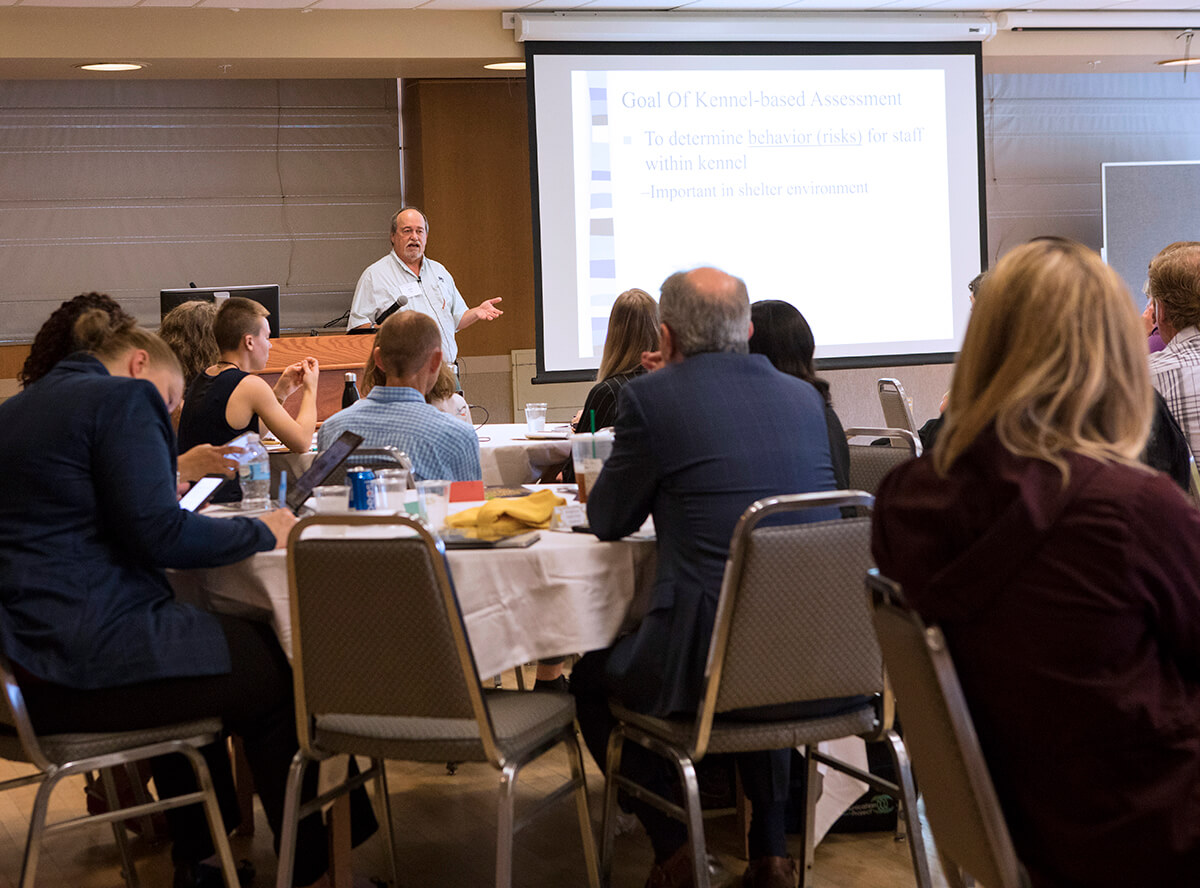
Dr. Ha presents in front of forum attendees seated in front of him
Dr. James Ha, University of Washington emeritus professor, gives a presentation during the Canine Welfare Science Forum entitled “Will Rehoming Go Well? What Does Current Science Imply for Breeders and Shelters?”

The 2019 Canine Welfare Science Forum held in Stewart Center at Purdue University on Saturday, June 8, attracted over 150 attendees from across the United States.  Registrants came from 13 states, including Colorado, Florida, Iowa, Louisiana, Michigan, Missouri, New York, North Carolina, Oklahoma, and Pennsylvania.  The annual program addresses canine welfare topics of relevance to dog breeders, shelters, kennel managers and caretakers, scientists, regulators, students, and pet industry personnel.  This year’s forum included presentations from industry experts who focused on directly applicable information related to health, genetics, and behavior. 

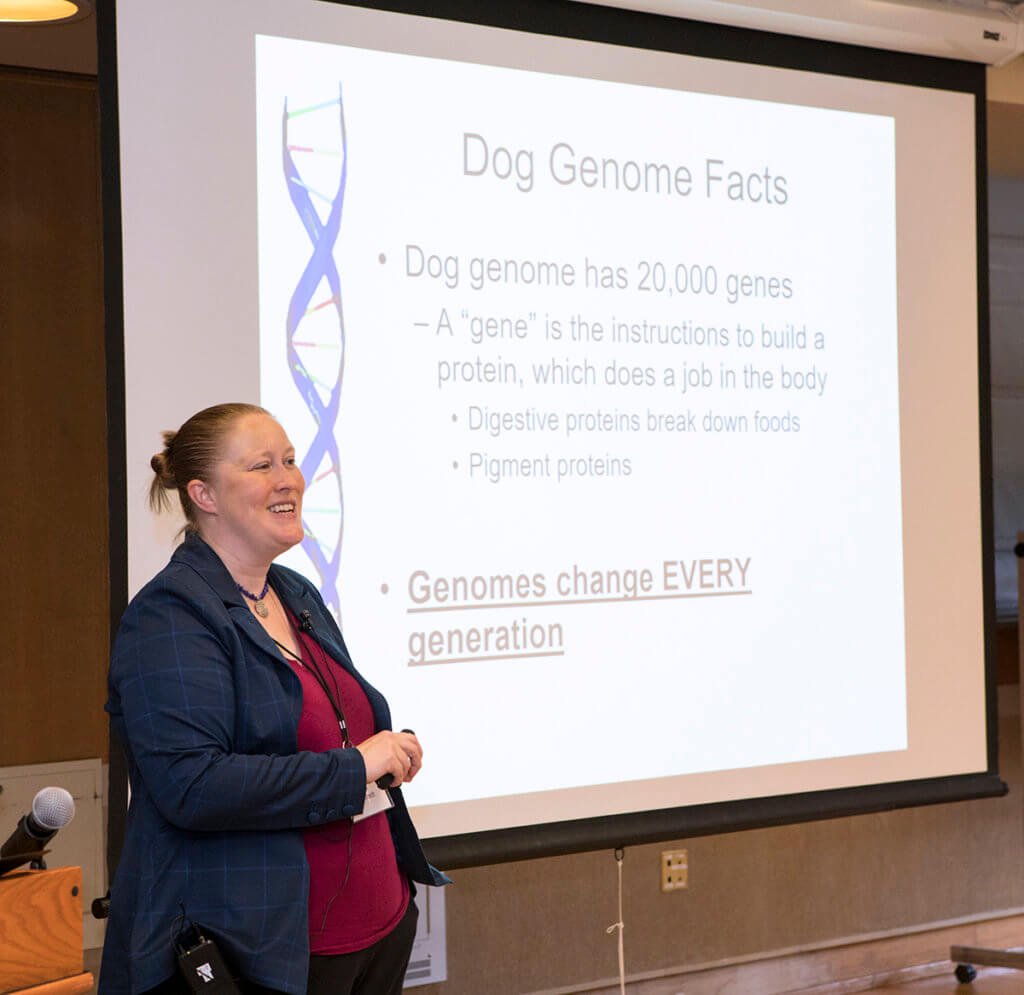
Dr. Bret Marsh, Indiana State Veterinarian with the Indiana Board of Animal Health, talked about canine health priorities and what can be done by the industry to be more effective and proactive.  Dr. Kari Ekenstedt, assistant professor of anatomy and genetics in Purdue Veterinary Medicine’s Department of Basic Medical Sciences, discussed canine genetics from a health and welfare standpoint.  She shared important scientific information about genetic testing as it relates to selection criteria and challenged participants to utilize these tools in their breeding decisions.

Dr. James Ha, emeritus research professor at the University of Washington, talked about the current scientific implications for breeders and shelters related to rehoming.  His presentation generated a unique dialogue about animal behavior and the role that both breeders and shelters play in successful rehoming of dogs.
Additionally Dr. Candace Croney, director of Purdue University’s Center for Animal Welfare Science, who holds a joint appointment as professor of animal behavior and well-being in the Department of Comparative Pathobiology and professor of animal sciences in the College of Agriculture, and a private consultant she works with, Traci Shreyer, led sessions about behavior, specifically socialization and reducing stress in kennels.  Following their presentations, participants joined together in break-out groups to discuss and share their concerns as well as success stories related to socialization and mitigating kennel stress.  The attendees also were encouraged to talk about how they will apply what they have learned, and how they can prioritize animal health and well-being in their operations.

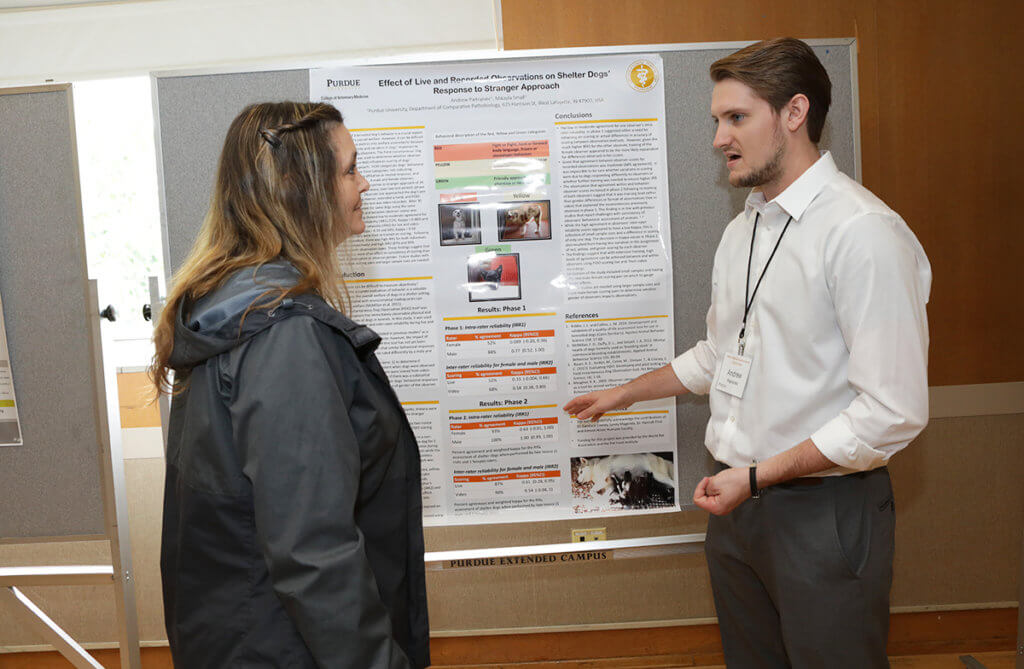
During lunch, participants were able to view several posters about canine welfare research projects.

At the conclusion of the forum, Dr. Croney explained the importance of and need for effective communication on canine welfare, and encouraged participants to continue an open dialogue on the subject.  Dr. Croney noted that canine welfare conversations start with breeders who do and say the right things and are able to maintain transparency in their operations.  She “double dog” dared them to implement science-based canine welfare practices and monitor for signs of improvement in order to continuously provide the best care for their dogs.

Special thanks to the following Canine Welfare Science Forum sponsors:  the American Kennel Club, Indiana Council for Animal Welfare, Inc., and the Illinois Husbandry and Animal Welfare Association. 

Writer(s): Andrea Brown | pvmnews@purdue.edu

Recent Stories

“Paws Up” – brought to you by the PVM Wellness Committee

This week, we are proud to recognize Lorraine Fox, who is a business assistant with the Veterinary Medicine Procurement Center.

PVM Interview Days Move College Closer to Admitting the DVM Class of 2030

After a total of three afternoons dedicated to conducting in-person interviews with 226 prospective veterinary students, the Purdue University College of Veterinary Medicine is close to completing the process of admitting 84 members of the incoming first-year DVM class – the Class of 2030.  The students invited for the interview days were selected from a total pool of 1,930 applicants from across the country as well as countries abroad.

Experts to Gather at Purdue for Conference Addressing the Public Health Threat of Antimicrobial Resistance

The ongoing challenges posed by multi-drug resistant infections will be the focus of a multidisciplinary conference taking place in three weeks at Purdue University.  The Fourth Annual Conference on Antimicrobial Resistance is set for February 25–26, 2026 at Purdue’s Stewart Center in West Lafayette. Registration is still open for the event, which will bring together scientists and scholars from human and veterinary medicine, public health, research, and industry to address the determinants, dynamics and deterrence of drug resistance.

PVM’s Upcoming Coppoc One Health Lecture to Focus on Dogs as Sentinels of Environmental Exposure

The Purdue University College of Veterinary Medicine brings a leading One Health scholar to campus each year to address vital health issues from a One Health perspective as part of the Coppoc One Health Lecture series.  This year’s presentation, scheduled for February 26 in Lynn Hall Room 2026, is on the engaging topic, “One Health at Home: Dogs as Sentinels of Environmental Exposure.” The speaker will be Audrey Ruple, DVM, MS, PhD, DACVPM, MRCVS, the Dorothy A. and Richard G. Metcalf Professor of Veterinary Medical Informatics at the Virginia-Maryland College of Veterinary Medicine at Virginia Tech.

“Paws Up” – brought to you by the PVM Wellness Committee

Today we are happy to acknowledge our Student Success Center Team.

One Health: A ‘digital twin’ model for predicting cancer outcomes

The striking similarities between invasive bladder cancer in dogs and humans have fueled research advances for more than three decades. Most of that work has looked at separate aspects of the disease — risk factors, early detection, symptoms, treatment and gene expression. But a new project at Purdue University that combines many types of available data in a “digital twin” model of bladder cancer may prove powerful enough to predict patient outcomes, starting with the probability of metastasis.

Purdue Professor Emeritus Bill Blevins Wins Lifetime Achievement Award at ACVR Annual Meeting

The American College of Veterinary Radiology (ACVR) gave its esteemed Lifetime Achievement Award for 2024 to Purdue Professor Emeritus Bill Blevins, who is well known to countless Purdue Veterinary Medicine alumni for the expertise he taught them about all things Diagnostic Imaging during his long Purdue career.