
Easter Bunny Upstaged by Easter Goats at Purdue University Veterinary Hospital

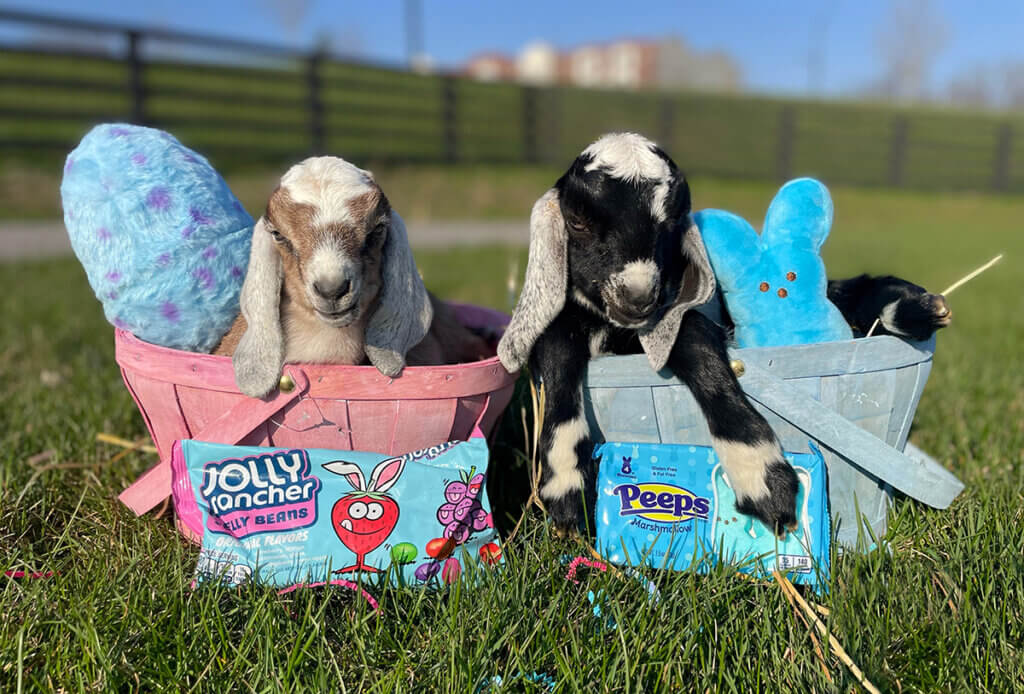
Jelly Bean and Peep pictured in Easter baskets alongside packages of their namesake treats

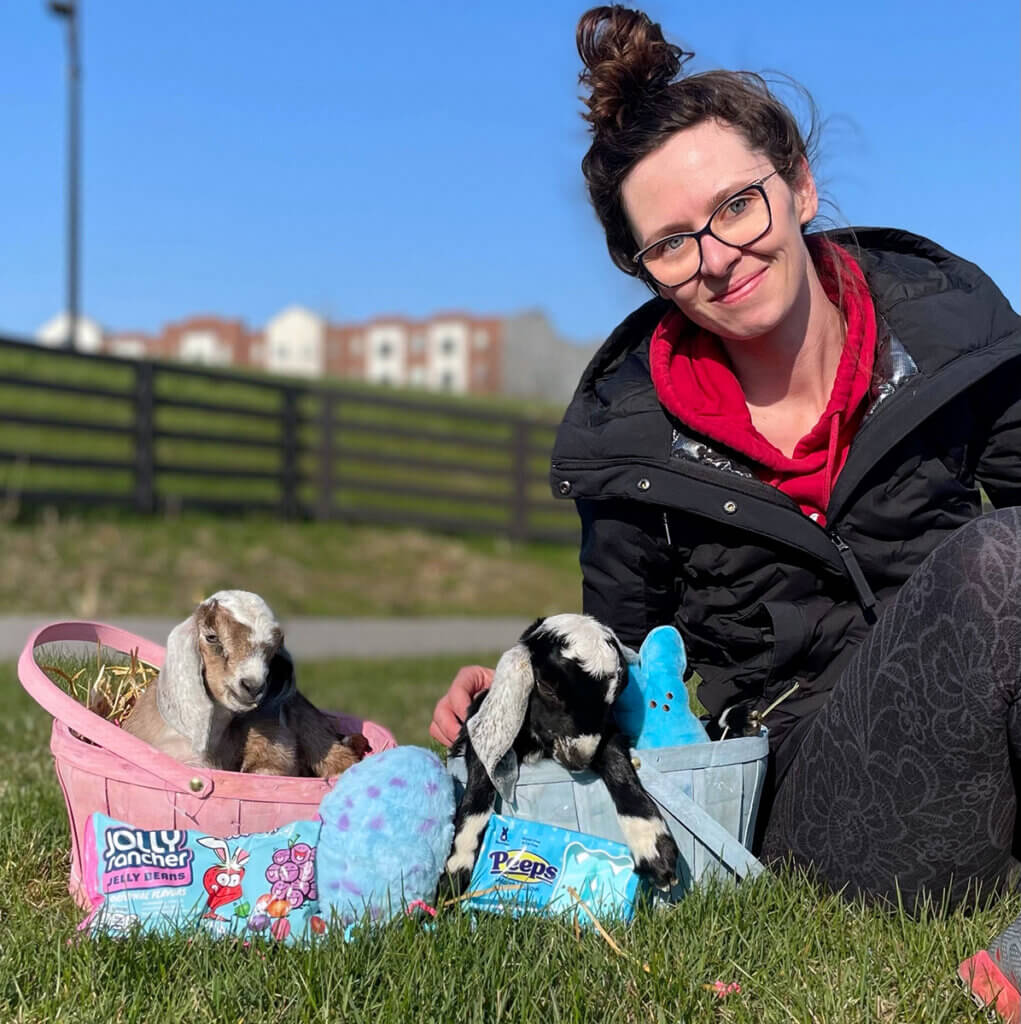
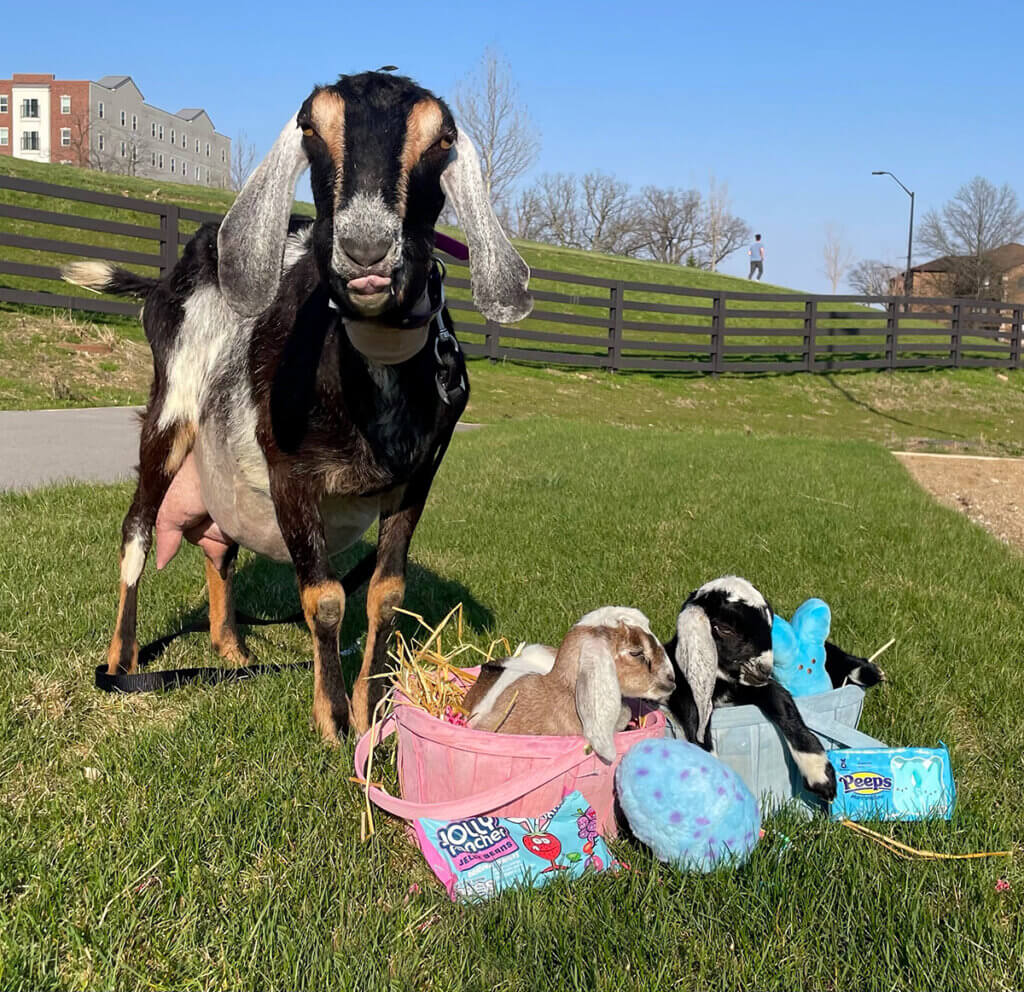
Two adorable newborn goats commanded the attention normally reserved for the traditional Easter Bunny last weekend when they were delivered safely at the Purdue University Farm Animal Hospital on the eve of Easter Sunday. They are named, appropriately, Jelly Bean and Peep, and have something of a famous mom (doe), named Selena Goatmez. The happy family belongs to Dr. Amanda Falcone, a small animal veterinarian and Purdue alumna who earned her undergraduate degree in animal sciences before enrolling in the Ross University School of Veterinary Medicine and returning to Purdue during the fourth year of the program in 2015 to complete her clinical rotations.

While the case of Jelly Bean and Peep is one of “all’s well that ends well,” this story got off to a rocky start, when Selena was brought to the Farm Animal Hospital for pregnancy toxemia shortly before she went into labor. “This is a common problem in sheep and goats, especially since they usually have more than one fetus,” commented Dr. Sandra Taylor, associate professor of large animal internal medicine. “All their nutrients go to the kids during their final growth phase and the doe develops low blood sugar and ketosis.” Dr. Taylor was on the care team with Dr. Heather Bornheim, farm animal medicine and surgery clinician, who served as the main senior clinician on the case. 

Selena gave birth naturally to Jelly Bean and Peep, but a few hours after kidding (giving birth), her abdomen became distended and an ultrasound exam showed fluid in her abdomen, outside of the uterus. Exploratory surgery revealed that there was a hole in her uterus and part of the placenta had slipped through the hole and was floating in the abdominal fluid. After the surgeon removed the placenta and sewed up the hole, Selena was put on antibiotics and recovered. Meanwhile, Jelly Bean and Peep settled comfortably into their Easter baskets, seeming to enjoy stealing some of the Easter bunny’s limelight.  Selena and her Easter babies went home Tuesday, April 11. The Farm Animal Hospital is part of the new David and Bonnie Brunner Purdue Veterinary Medical Hospital Complex.
Writer(s): Kevin Doerr | pvmnews@purdue.edu

Recent Stories

“Paws Up” for Jennifer Danaher – brought to you by the PVM Wellness Committee

This week we express our gratitude to Jennifer Danaher, who is department secretary for Veterinary Clinical Sciences.

‘Purdue Pursuits’: A PVM angle on Purdue’s teaching and learning reading groups

Crafting meaningful and engaging course experiences has been at the top of Dielson Vieira’s mind ever since he joined the Purdue University College of Veterinary Medicine’s faculty in 2024. As a clinical assistant professor in the Department of Basic Medical Sciences, Vieira is already adept at applying innovative teaching practices to classroom environments, but that doesn’t stop him from seeking out new ideas, approaches and perspectives — insights he gains through outlets like Purdue’s teaching and learning reading groups.

Top tier biology journal publishes PVM study that unlocks secrets of a drug-resistant fungal pathogen, which causes serious infections in humans

Though the name “Candida auris” is far from a household term, public health experts know it well because the multi-drug-resistant fungal pathogen, which causes serious human infections, has been classified as an urgent threat by the U.S. Centers for Disease Control and Prevention (CDC) Antibiotic Threats Report (2019). Dr. Shankar Thangamani, Associate Professor of Microbiology and University Faculty Scholar in the Purdue University College of Veterinary Medicine’s Department of Comparative Pathobiology, is researching C. auris, aided by a 2.4 million grant from the National Institutes of Health (NIH). New research findings, just published in Nature Microbiology, show how C. auris adapts and evades the immune system.

In Print: ‘Translational Research Methods for Tauopathies’

A just-published 300-page volume edited by Jessica Fortin, Purdue assistant professor in the College of Veterinary Medicine’s Department of Basic Medical Sciences, provides a significant new resource for researchers studying a group of neurodegenerative diseases known as tauopathies. “Translational Research Methods for Tauopathies” provides detailed protocols intentionally selected to serve as a basis for research laboratories seeking to further treatments for such debilitating neurodegenerative diseases as Alzheimer’s and chronic traumatic encephalopathy (CTE).

It’s Almost Here!

Though the annual Purdue Veterinary Conference is almost upon us, there’s still time to register and take advantage of this time-honored College of Veterinary Medicine fall tradition that combines excellent continuing education with fun opportunities for reconnecting with colleagues and classmates, networking, and learning about the latest veterinary trends and products. The 2026 Purdue Veterinary Conference takes place September 23–26 on the Purdue University campus. The annual event has something for everyone, from veterinarians to veterinary technicians, faculty, staff and students.
